


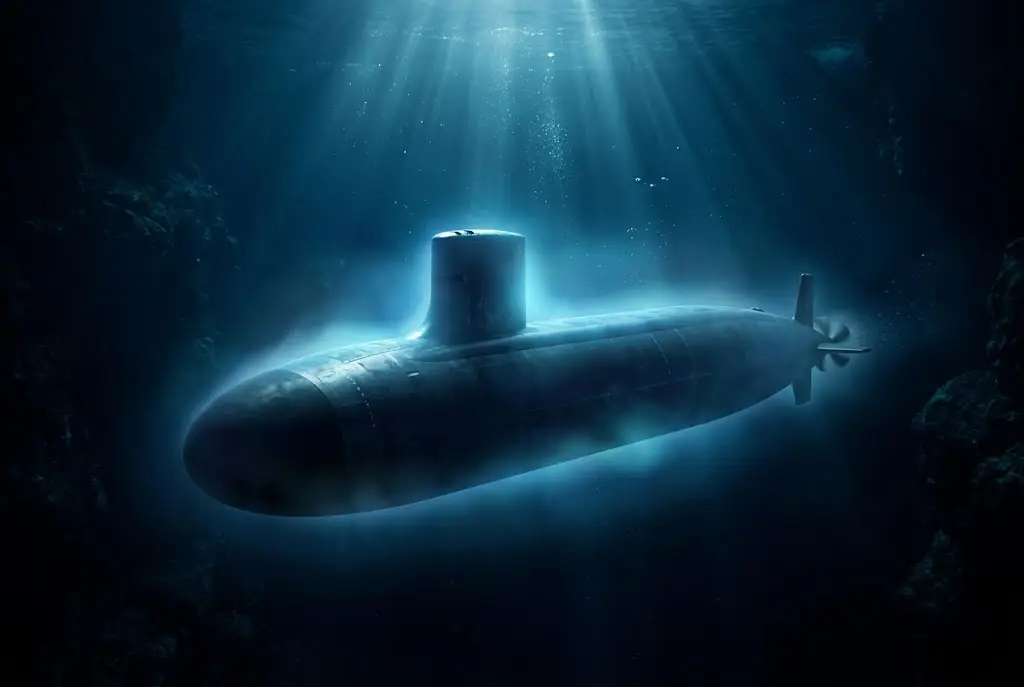
I was chatting with a retired navy veteran recently, and one detail completely blew my mind. He told me about a patrol where his submarine submerged off the coast of Florida and didn’t surface again for over two months. Two months! No windows, no fresh breezes, and absolutely no running to the surface for a quick breath of fresh air.
When you think about it, a modern submarine is basically a giant metal tube packed with over a hundred people, plunged into the crushing blackness of the ocean. It sounds like a claustrophobic nightmare. But it also raises a massive scientific question: How do they keep the air clean and breathable for months on end?
If you've ever felt sleepy in a stuffy meeting room, that is what happens when carbon dioxide levels rise slightly. Imagine what would happen to a crew of 130 people trapped in a sealed box closer to the mysterious deep ocean vents than to the surface!
To survive underwater, a submarine must constantly balance two sides of the breathing equation: generating fresh oxygen and removing the toxic gases we exhale. Let’s look at the amazing technology that makes this happen.
The Real Problem: It’s Not What You Breathe In
Most people assume the biggest threat to submariners is running out of oxygen. Surprisingly, that is not what would kill them first. The real enemy is the invisible buildup of carbon dioxide (CO2).
When we breathe, we absorb oxygen and exhale carbon dioxide. In an enclosed space, CO2 levels rise long before oxygen levels drop low enough to cause suffocation. High CO2 levels cause headaches, confusion, and eventually unconsciousness. This is why houses feel stuffy when all the windows are closed, but on a grand, life-or-death scale inside a submarine.
Therefore, submarine life support is a double-sided battle. On one side, they must manufacture new oxygen. On the other side, they must chemically trap and destroy carbon dioxide.
Step 1: The Magic of Splitting Seawater
To create fresh oxygen, you need a massive amount of electrical power. This is where nuclear submarines (opens in a new tab) have a massive advantage over older diesel-electric models. A nuclear reactor provides virtually unlimited electrical power, which can be harnessed to split water molecules.
Submarines do not carry giant tanks of pressurized oxygen. Instead, they manufacture it directly from the surrounding ocean. Here is the simplified process:
- Desalination: The submarine pulls in seawater and distills it to remove the salt and impurities, leaving pure, fresh H2O.
- Electrolysis: This fresh water is routed to an electrolytic oxygen generator. By passing a powerful electric current through the water, the molecules are split apart in a process known as electrolysis of water (opens in a new tab).
Here is the basic chemical equation behind the science:
This means that for every two water molecules split, the system produces two molecules of hydrogen gas and one molecule of pure, breathable oxygen.
But what happens to the hydrogen? Since hydrogen is highly explosive, the submarine cannot allow it to accumulate inside the cabin. The excess hydrogen gas is pressurized and pumped directly out into the ocean, leaving only clean oxygen to be mixed back into the submarine's ventilation system. This is not some futuristic fantasy or one of those elusive clean energy dreams that always feel decades away—it is a technology that has been operating reliably in our oceans for over half a century.
Step 2: Fighting the Silent Killer (Carbon Dioxide)
Now that the crew has oxygen, how do they get rid of the carbon dioxide they exhale? The answer lies in heavy-duty chemical systems called carbon dioxide scrubbers (opens in a new tab).
Most modern submarines use liquid chemicals called amines (specifically monoethanolamine) to clean the air.
- The submarine's ventilation system forces stale cabin air through a chamber where it is sprayed with a cold amine solution.
- This cold chemical acts like a sponge, binding tightly with the carbon dioxide molecules while letting other gases pass through.
- Once the amine solution is saturated with CO2, it is heated up in a separate chamber.
- Heating reverses the chemical bond, releasing the trapped CO2 gas, which is then pumped overboard.
- The cooled amine solution is then recycled back to clean more air.
In emergency scenarios, or on smaller submersibles, the crew will use solid chemical canisters filled with lithium hydroxide (opens in a new tab) or soda lime. These white powder canisters absorb carbon dioxide on contact, though they are consumable and must eventually be discarded.
What Happens if the Power Goes Out?
In a worst-case scenario where the nuclear reactor scramms and the main electrical generators go offline, the submarine has emergency backups to prevent the crew from suffocating.
The primary emergency tool is a chemical device known as a sodium chlorate candle (or chemical oxygen generator (opens in a new tab)). These cylindrical canisters contain a mixture of sodium chlorate and iron powder.
When ignited, the iron burns at extremely high temperatures, triggering a chemical reaction that releases pure oxygen gas. A single candle can provide enough oxygen for a crew of over a hundred people to breathe for several hours.
Submarine Life Support at a Glance
To make it easy to understand, here is a quick breakdown of how these different systems compare to everyday technology you might recognize:
| Submarine System | What It Uses | What It Produces / Removes | Real-World Equivalent |
|---|---|---|---|
| Electrolytic Generator | Desalinated water + electricity | Pure oxygen (H2 is pumped out) | High-end water-splitting lab experiments |
| Amine Scrubbers | Liquid amine + heat | Removes CO2 from the cabin air | An industrial-grade home air purifier |
| Desalination Units | Seawater + waste heat | Pure drinking water | Household reverse-osmosis systems |
| Catalytic Burners | Metal catalysts + heat | Burns off carbon monoxide and hydrogen | A car's catalytic converter |
If you have ever used a household humidifier, you know how tricky it is to maintain the perfect moisture level in a single bedroom. Now imagine balancing the oxygen, carbon dioxide, moisture, and temperature for 130 tired sailors living right next to a nuclear reactor. It is an engineering marvel that operates silently beneath the waves every single day.
The Ultimate Survival Engineering
Living in a submarine for months teaches us just how resilient modern technology can be. By combining the power of nuclear energy with simple chemical principles, engineers have managed to recreate Earth’s natural atmospheric cycle inside a steel tube.
The next time you take a deep breath of fresh morning air, think of the submariners hundreds of feet below the ocean's surface, breathing air manufactured from seawater. It is a stunning reminder of what human ingenuity can accomplish when forced to survive in the most hostile environments on Earth.
What do you think? Could you survive living in a steel bubble for two months without seeing the sun? Let me know in the comments below!


Conversation0
No comments yet. Be the first to share a thought — the best questions often become new stories.