


What Is Greek Fire? Byzantium's Fiercest Weapon Explained
Discover what Greek fire really was, how Byzantine engineers built ancient flamethrowers, and why modern chemistry still debates its lost secret formula.
7 min read48views
Category
Real artifacts, inventions and riddles from history — and what the evidence actually says.
84 stories · page 1 of 7
Discover what Greek fire really was, how Byzantine engineers built ancient flamethrowers, and why modern chemistry still debates its lost secret formula.

Ever wonder how Damascus steel was made? Discover the ancient metallurgy, Indian wootz ingots, and microscopic carbon nanotubes behind legendary blades.

Curious how Roman concrete works after 2,000 years in seawater? Discover how ancient hot-mixing and lime clasts trigger self-healing chemistry inside the rock.
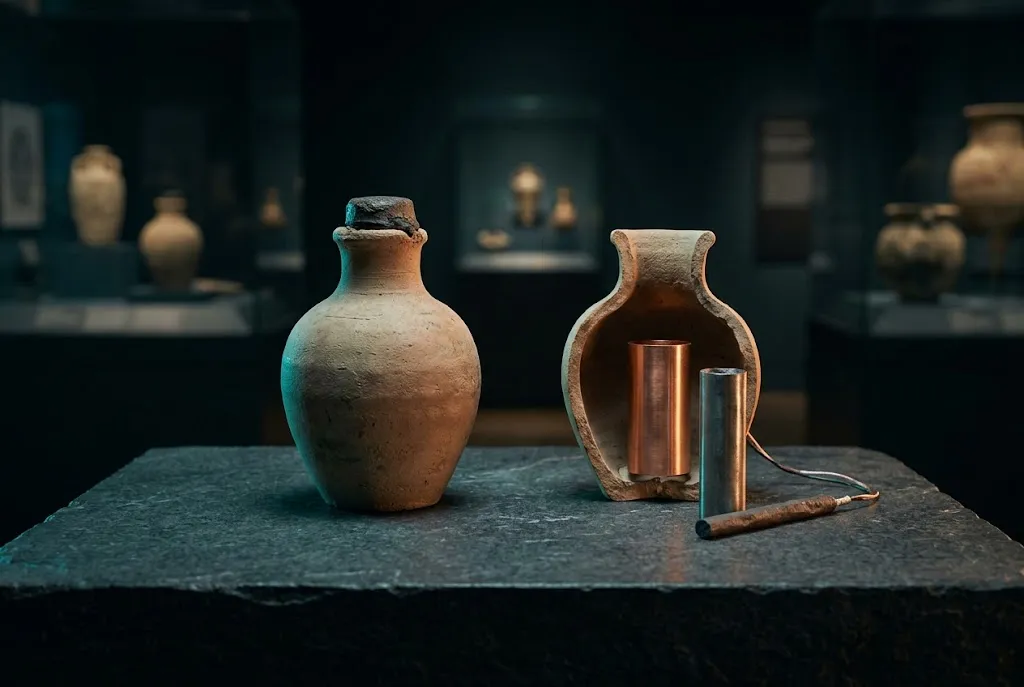
Could the Baghdad Battery really generate electricity? See how its copper, iron and electrolyte can form a cell, and why historians still debate its purpose.
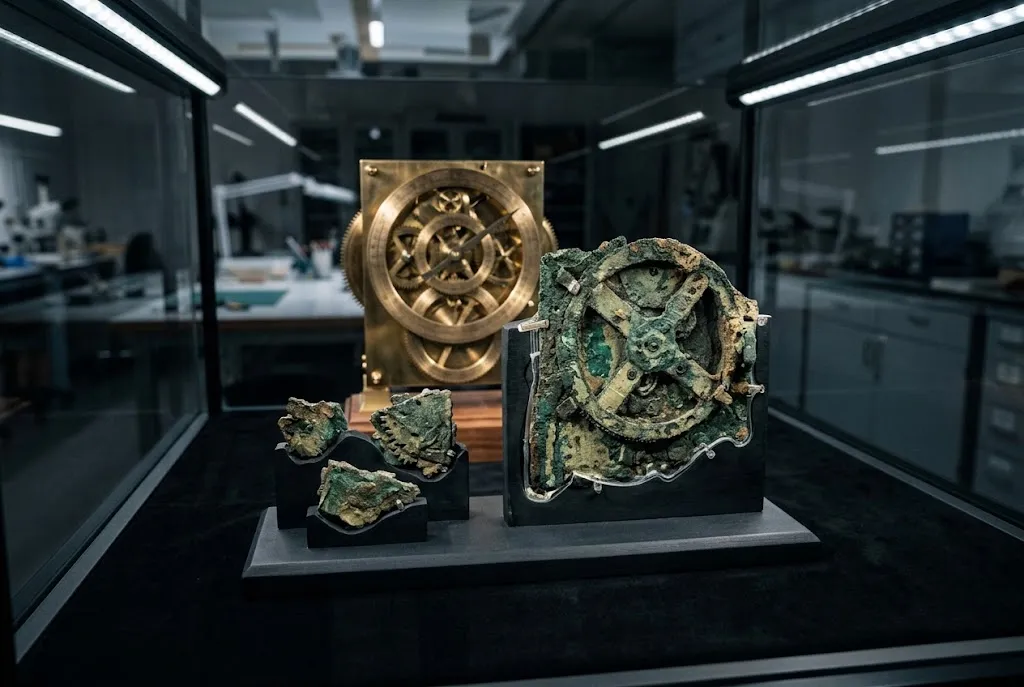
The Antikythera Mechanism used interlocking gears to model lunar cycles. See how its dials worked and why this ancient Greek calculator was so advanced.
Uncover the fascinating truth behind historical claims of ancient earthquake prediction systems. Were forgotten civilizations privy to seismic secrets lost to time?

Uncover the mysteries of archaeoacoustics and explore whether ancient architects engineered sound with sophisticated, forgotten techniques. Dive into the sonic marvels of Mayan pyramids, Roman theaters, and Neolithic tombs.

Explore the mysterious descriptions of Vimanas, ancient flying machines from Sanskrit texts. Were they mythical tales or hints of advanced historical technology?

Dive into the intriguing possibility that ancient artisans possessed advanced metallurgical knowledge, potentially creating materials with superconducting properties long before modern science.

Dive into the extraordinary theory that ancient megalithic sites like Stonehenge and Chichen Itza were more than just observatories; they might have functioned as sophisticated "cosmic supercomputers" designed to predict celestial events and model the universe.
Uncover the stunning possibility that ancient civilizations possessed an advanced understanding of cosmic time cycles like precession, using methods akin to "algorithms" to track the universe's grandest movements. Explore how megalithic observatories, myths, and architecture might have encoded this...

Explore how ancient civilizations observed celestial patterns to create sophisticated predictive models. Did they uncover the universe's hidden algorithms? Dive into historical astronomy and its curious links to modern computation.