


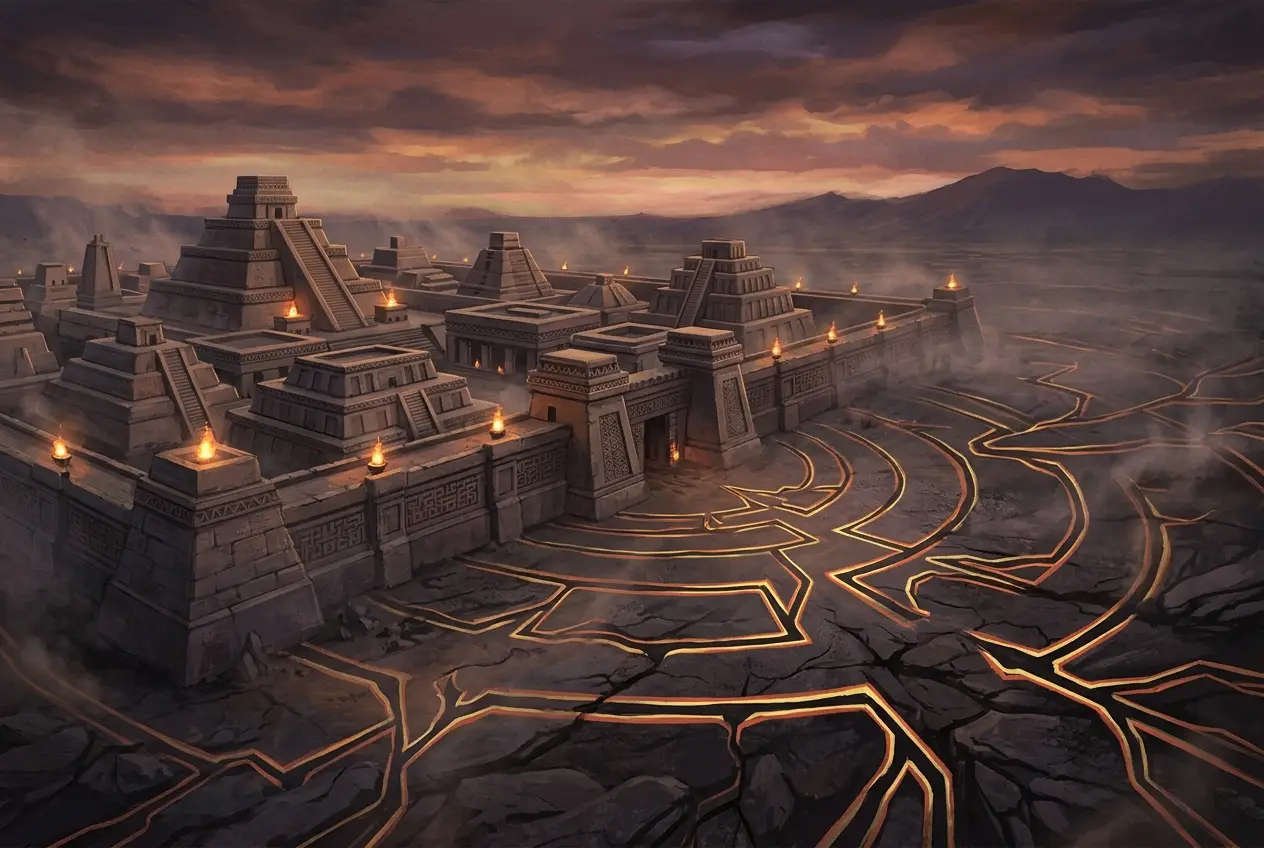
The ground beneath our feet feels solid, unchanging, a bedrock of our existence. Yet, beneath this reassuring surface lies a restless, dynamic planet, constantly shifting, grinding, and occasionally unleashing its raw power in the form of earthquakes. For millennia, humanity has lived with this unpredictable force, often at its mercy. Today, with sophisticated seismographs, satellite monitoring, and complex algorithms, we strive to predict these subterranean tremors, albeit with limited success. But what if I told you that our ancestors, without any of our modern instruments, might have possessed methods or even technologies to anticipate these devastating events? It's a question that has long intrigued me, stirring my curiosity about forgotten wisdom and lost innovations.
For centuries, anecdotal accounts, ancient texts, and even archaeological findings have hinted at an astonishing possibility: that certain ancient civilizations had developed rudimentary, yet effective, ways to predict earthquakes. Were they simply keen observers of nature, interpreting subtle precursors that we now overlook, or did they possess a deeper, perhaps even technological, understanding of our planet's seismic rhythms?
Whispers from the Past: Early Observations of Seismic Activity
Long before the advent of modern seismology, ancient peoples across the globe were intimately connected to their environments. Their survival often depended on their ability to read the subtle signs of nature. In regions prone to earthquakes, this acute observation likely extended to unusual animal behavior, changes in water levels, or even peculiar atmospheric phenomena. The Chinese, for instance, have records stretching back thousands of years describing events where animals—snakes emerging from burrows, birds fleeing, fish jumping—exhibited strange behavior hours or even days before a major quake.
The ancient Greeks, too, were known for their philosophical and scientific inquiries into the natural world. While often attributed to divine intervention, thinkers like Thales of Miletus and Aristotle speculated about the natural causes of earthquakes. Aristotle, in his work Meteorologica, proposed that earthquakes were caused by winds trapped beneath the Earth's surface trying to escape. While scientifically inaccurate by today's standards, it demonstrates an early attempt to understand and explain seismic events rather than just attribute them to gods. This foundational curiosity, I believe, laid the groundwork for more practical, observation-based approaches.
The Enigma of Ancient Seismic Devices
The idea that ancient civilizations built "earthquake predictors" might sound like something out of a science fiction novel, yet historical records offer tantalizing clues. Perhaps the most famous, and well-documented, example comes from ancient China: the Zhang Heng Seismoscope.
The Zhang Heng Seismoscope: A Mechanical Marvel
In 132 AD, during the Eastern Han Dynasty, the brilliant polymath Zhang Heng unveiled a device that could detect distant earthquakes. This isn't just a legend; historical accounts vividly describe its existence and function. Imagine a large bronze urn, adorned with eight dragons, each holding a bronze ball in its mouth. Below each dragon sat a bronze toad, mouth open. When an earthquake occurred, a mechanism inside the urn would cause one of the dragons to drop its ball into the toad's mouth directly below it. The direction of the dropped ball indicated the direction of the seismic event's origin.
This device wasn't a predictor in the modern sense—it didn't foretell when an earthquake would happen in advance. Instead, it was an incredibly sophisticated seismoscope, accurately detecting earthquakes as they occurred, often long before the tremors were felt locally. This distinction is crucial. Its significance lay in its ability to inform the imperial court of distant seismic events, allowing aid to be dispatched promptly. This level of mechanical precision in the 2nd century AD is nothing short of astonishing and points to an advanced understanding of mechanics and observation. You can read more about Zhang Heng's incredible contributions on Wikipedia: https://en.wikipedia.org/wiki/Zhang_Heng (opens in a new tab).
Beyond China: Other Contenders for Ancient Seismic Foresight
While Zhang Heng's device is the most concrete example, other cultures have left behind intriguing hints.
Water Levels and Gas Emissions: Roman Insights?
The Romans, renowned for their engineering prowess, built extensive aqueduct systems. Some historians speculate that changes in water flow or quality, particularly in areas near seismic fault lines, might have been observed and correlated with impending quakes. Earthquakes are known to affect groundwater levels and can release gases like radon from the Earth's crust. Could Roman engineers, meticulously maintaining their complex water infrastructure, have noticed such anomalies and developed an empirical understanding?
Similarly, ancient accounts from regions like Pompeii and Herculaneum, which suffered catastrophic volcanic and seismic events, sometimes mention peculiar atmospheric conditions or unusual smells preceding disasters. These might be attributed to gas emissions from the Earth's interior, changes in electromagnetic fields, or other precursors that are still being studied today. This isn't direct "tech," but an accumulated body of knowledge.
Unusual Animal Behavior: A Timeless Warning System
Perhaps the oldest and most consistently reported "predictor" throughout history is the unusual behavior of animals. From ancient Greece to pre-Columbian America, records describe snakes, rats, birds, and fish acting erratically before earthquakes. This phenomenon, often dismissed as folklore, is now a subject of serious scientific inquiry.
- Hypotheses: Some theories suggest animals are sensitive to subtle changes that humans cannot perceive:
- Electromagnetic Field Changes: Earthquakes involve significant geological stress, which can generate electromagnetic anomalies. Animals, particularly those with specialized sensory organs, might detect these shifts.
- Subtle Ground Vibrations: Animals often have a broader range of hearing and touch, allowing them to detect imperceptible micro-tremors or infrasound waves that precede a larger quake.
- Gas Release: The release of gases like radon or methane from the ground before an earthquake could also affect animal behavior.
I remember reading accounts from the 1755 Lisbon earthquake where people reported animals behaving strangely for days before the devastating tremor. While not a piece of "tech," the systematic observation and interpretation of such behavior could have constituted an ancient, organic "early warning system." This connection between animal behavior and seismic activity is explored further in various scientific studies, including those summarized on Wikipedia: https://en.wikipedia.org/wiki/Animal_prediction_of_earthquakes (opens in a new tab).
Modern Parallels and the Search for Precursors
Our quest for earthquake prediction continues today with far more advanced tools, yet the challenge remains immense. We use:
- Seismographs: To measure ground motion and analyze seismic waves.
- GPS and InSAR: To detect subtle ground deformation.
- Satellite Monitoring: To track changes in Earth's crust and gravitational field.
- Deep Earth Sensors: To monitor fluid pressure and strain along fault lines.
Despite these, reliable, short-term prediction remains elusive. The complexity of fault systems, the non-linear nature of stress accumulation, and the sheer unpredictability of underground dynamics make it one of the grand challenges of geoscience.
Perhaps the ancients didn't have "predictive computers" as we imagine them, but rather sophisticated systems of observation and empirical knowledge passed down through generations. These systems, combined with remarkable mechanical inventions like Zhang Heng's seismoscope, represent a profound testament to their ingenuity and adaptability.
Could We Rediscover Lost Knowledge?
The question lingers: are there other "lost technologies" or forgotten observational methods that could offer clues for modern seismology? Could studying ancient practices, even those seemingly rooted in superstition, yield valuable insights? It makes me wonder if we, in our reliance on high-tech solutions, sometimes overlook the subtle, natural indicators our ancestors were so adept at perceiving.
For instance, understanding the full context of how ancient sites like those discussed in our blog, "Did Ancient Sites Process Cosmic Data?" Did ancient sites process cosmic data? (opens in a new tab), were oriented or constructed might reveal connections to environmental monitoring. Similarly, contemplating if "Did Ancient Maps Map Galaxies?" Did ancients map galaxies? Unpacking lost cosmic charts (opens in a new tab) could imply a level of observational sophistication we've underestimated across various scientific domains. Even the notion that "Did Ancient Astronomers Decode Cosmic Time Algorithms?" Did ancient astronomers decode cosmic time algorithms? (opens in a new tab) suggests a deep, methodical approach to understanding cycles and patterns, which could have been applied to terrestrial phenomena as well.
The pursuit of earthquake prediction is not just a scientific endeavor; it's a humanitarian one. Unlocking the secrets of ancient "seismic foresight" might not provide us with a magic bullet, but it could certainly enrich our understanding of Earth's complex systems and perhaps even inspire new approaches to protecting lives.
Conclusion
While the notion of a purely "predictive" ancient computer for earthquakes remains largely in the realm of speculation, the evidence suggests that ancient civilizations were not passive observers. They actively sought to understand, detect, and even prepare for seismic events. From the ingenious mechanics of Zhang Heng's seismoscope to the astute observations of animal behavior and environmental shifts, our ancestors demonstrated a profound connection to the Earth and a remarkable capacity for innovation. It serves as a powerful reminder that sometimes, the answers we seek in the future might just be echoes from the past, waiting to be fully heard and understood.




Conversation0
No comments yet. Be the first to share a thought — the best questions often become new stories.