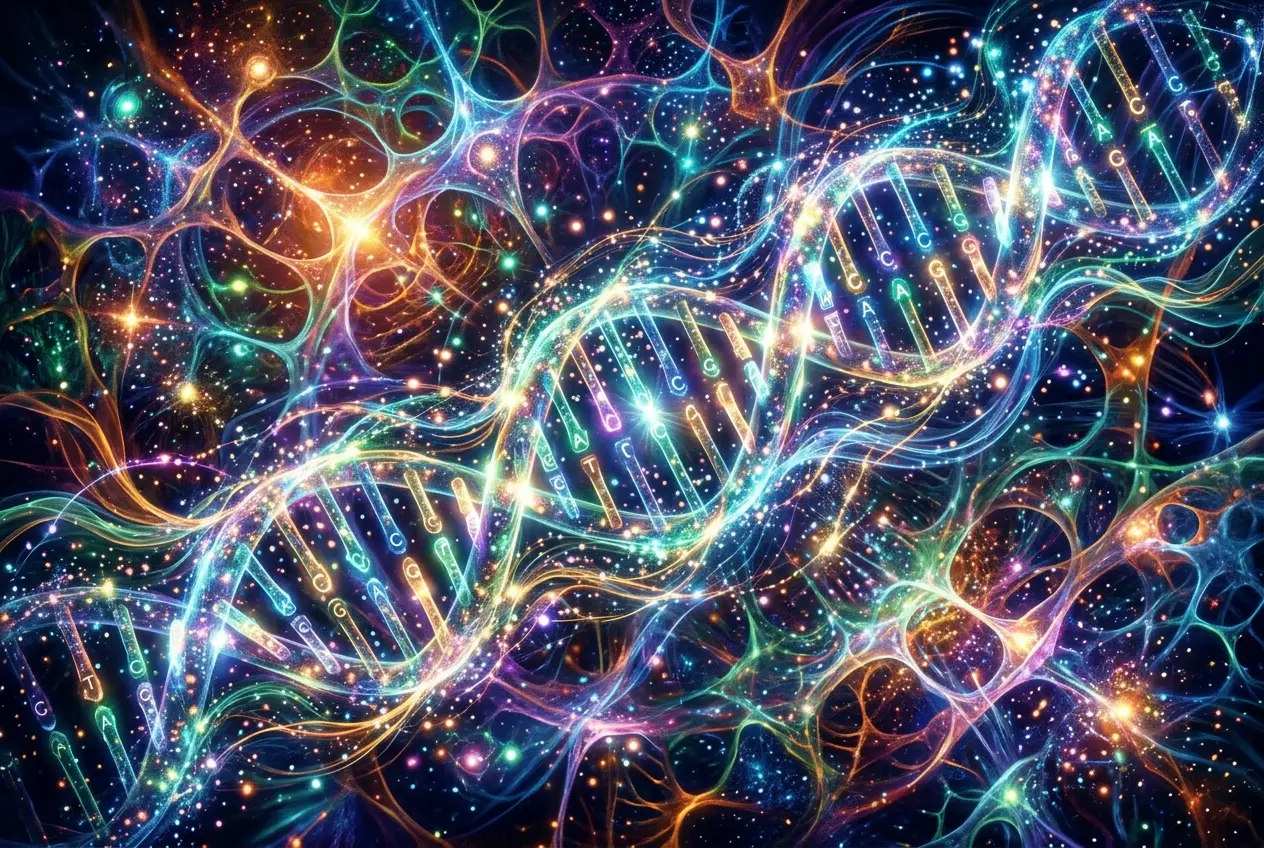
I often marvel at the intricate dance of life, from the smallest bacterium to the towering redwood. The sheer complexity and efficiency of biological systems have always fascinated me. We’ve unraveled DNA’s code, mapped neural networks, and understood cellular machinery in exquisite detail. But recently, I've found myself asking a deeper, stranger question: **what if the fundamental processes of life aren't just classical chemistry, but are deeply entangled with the bizarre rules of quantum mechanics?** What if the very essence of existence, the efficient conversion of sunlight into energy, the perfect navigation of a bird, or even the subtle nuances of our consciousness, relies on phenomena like superposition and entanglement?
This isn't science fiction; it’s the burgeoning field of **quantum biology**, a discipline that explores how quantum mechanical phenomena might play a role in biological processes. For decades, it was assumed that biological systems, being warm, wet, and noisy, were too chaotic for delicate quantum effects to persist. Quantum mechanics, with its wave functions and probabilities, seemed reserved for the cold, isolated realms of laboratories. Yet, mounting evidence suggests that nature, in its infinite wisdom, found ways to harness these enigmatic forces, turning them into engines of biological efficiency.
## The Unseen Architects of Life: Bridging Two Worlds
The very notion of "quantum biology" sounds like a paradox. On one hand, you have biology, the study of living organisms, characterized by macroscopic, complex systems. On the other, quantum mechanics, the study of matter and energy at the most fundamental level, revealing a reality far stranger than our everyday experience. **But what if these two seemingly disparate worlds aren't separate at all?** What if the fundamental building blocks of life — atoms, molecules, electrons — are constantly engaging in quantum interactions that are crucial for survival?
This isn't about entire cells existing in a quantum state, but rather specific molecular mechanisms within living organisms leveraging quantum effects for optimized function. Think about it: biological processes need to be incredibly precise and efficient. A single misstep can be catastrophic. Classical physics alone often struggles to explain the sheer speed and flawlessness of some biological reactions. This is where quantum mechanics steps in, offering elegant, counter-intuitive solutions to some of biology's oldest puzzles. For a more detailed understanding of this revolutionary field, I often refer to the comprehensive overview on [Wikipedia's Quantum Biology page](https://en.wikipedia.org/wiki/Quantum_biology).
## When Quantum Meets Biology: A Paradigm Shift
The concept gained serious traction with discoveries that began to chip away at the classical view. Initially, many scientists were skeptical, attributing observed efficiencies to clever classical mechanisms. But as experimental techniques became more refined, and the ability to detect subtle quantum phenomena in complex environments improved, the evidence started becoming harder to ignore.
Early proponents like Roger Penrose and Stuart Hameroff even speculated about quantum effects in consciousness, though this remains highly controversial. However, the true strength of quantum biology lies in more tangible, measurable phenomena, primarily at the molecular level. It's about how electrons, protons, and even entire molecules behave in ways that defy classical expectations, granting biological systems unique advantages.
### Quantum Coherence: Life's Invisible Symphony
One of the most mind-bending quantum phenomena is **coherence**. In quantum mechanics, particles can exist in multiple states simultaneously (superposition) and interact in a coordinated, wave-like fashion. If these quantum states maintain their phase relationship, they are said to be coherent. In a classical world, a photon would just hop from one molecule to the next in a random walk. But in a coherent system, it can explore all possible paths simultaneously, effectively choosing the most efficient one.
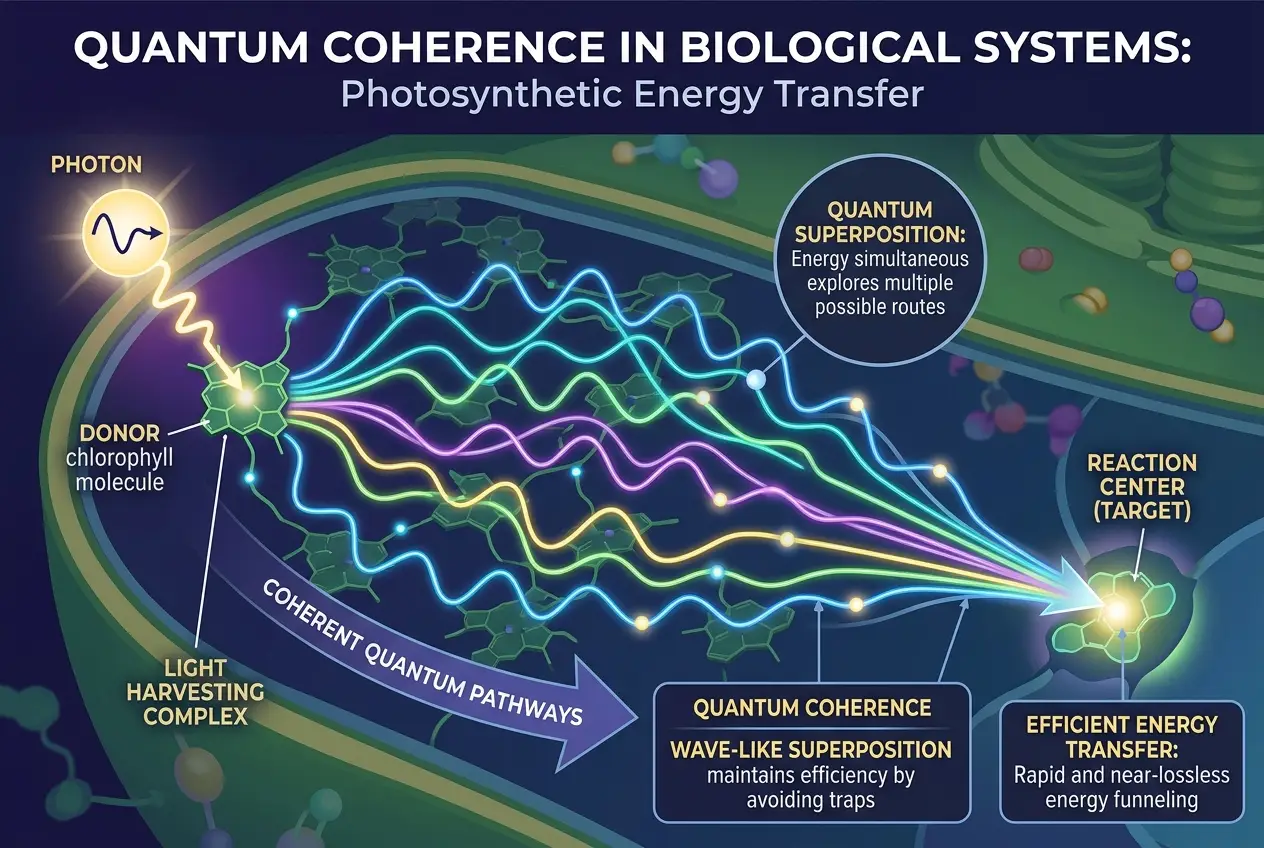
For a long time, scientists believed that the warm, messy environment of a living cell would instantly destroy such delicate coherence. Yet, in groundbreaking experiments on **photosynthesis**, coherence has been observed. This is where plants convert sunlight into energy. The light-harvesting complexes within plant cells appear to use quantum coherence to funnel excitation energy from absorbed photons to the reaction center with near-perfect efficiency. This "quantum highway" allows energy to explore multiple pathways at once, finding the fastest route with minimal loss – a feat classical physics struggles to explain. This incredible efficiency is detailed on [Wikipedia's Photosynthesis page](https://en.wikipedia.org/wiki/Photosynthesis).
## Nature's Quantum GPS: The Magnetosensing Birds
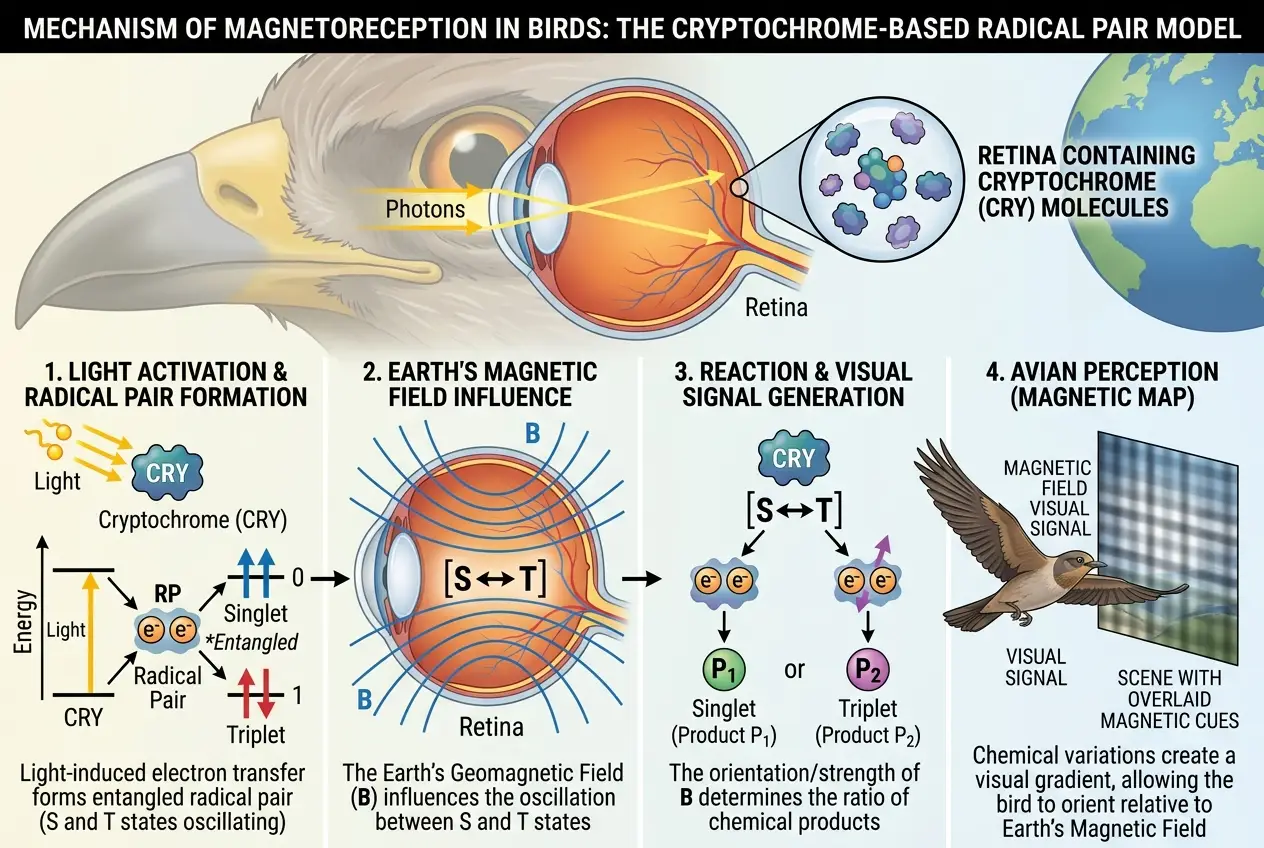
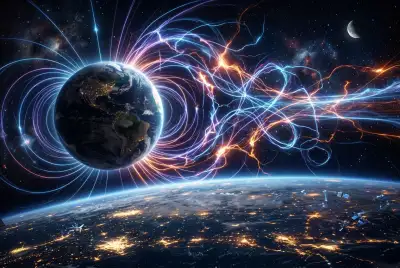
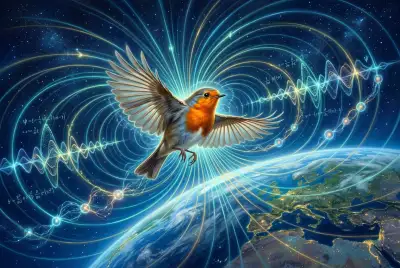
Another compelling piece of evidence comes from the animal kingdom, particularly in the incredible navigational abilities of migratory birds. Birds can "see" the Earth's magnetic field, allowing them to navigate vast distances with astonishing accuracy. This phenomenon, known as **magnetoreception**, is thought to involve a quantum mechanical mechanism.
In the eyes of certain birds, there are molecules called cryptochromes. When these molecules absorb light, an electron is excited, forming a pair of **radical electrons**. These radical pairs can exist in entangled spin states – a fundamentally quantum phenomenon. The external magnetic field of the Earth can then influence the spin states of these entangled electrons, which in turn affects the rate at which they react chemically. The bird's brain then interprets these chemical changes as visual cues, essentially allowing them to "see" the magnetic field lines. This is a brilliant example of how quantum entanglement, a concept famously described by Einstein as "spooky action at a distance," might be directly influencing macroscopic biological behavior. You can dive deeper into this fascinating topic on [Wikipedia's Magnetoreception page](https://en.wikipedia.org/wiki/Magnetoreception).
### Enzyme Catalysis: Tunnelling Through Barriers
Enzymes are the workhorses of life, accelerating biochemical reactions by millions or even billions of times. Classically, enzymes reduce the activation energy barrier, allowing reactions to proceed faster. However, some enzymes demonstrate efficiency that goes beyond classical explanations. This is where **quantum tunnelling** might be at play.
Quantum tunnelling is a phenomenon where a particle can pass through an energy barrier even if it doesn't have enough classical energy to overcome it. Imagine rolling a ball up a hill – classically, it needs enough momentum to reach the top. Quantum mechanically, there's a small probability it can just *appear* on the other side, without ever going over the peak. In enzyme catalysis, protons or electrons are thought to quantum tunnel through energy barriers, significantly speeding up reactions that would otherwise be sluggish. This makes the enzyme's job incredibly efficient, a critical factor for life. The intricacies of this process are explored on [Wikipedia's Enzyme Catalysis page](https://en.wikipedia.org/wiki/Enzyme_catalysis).
## The Future is Quantum-Biological: From Medicine to AI
The implications of quantum biology are vast and revolutionary, extending far beyond simply understanding how nature works. If we can truly understand and replicate these quantum phenomena, it could unlock unprecedented technological advancements.
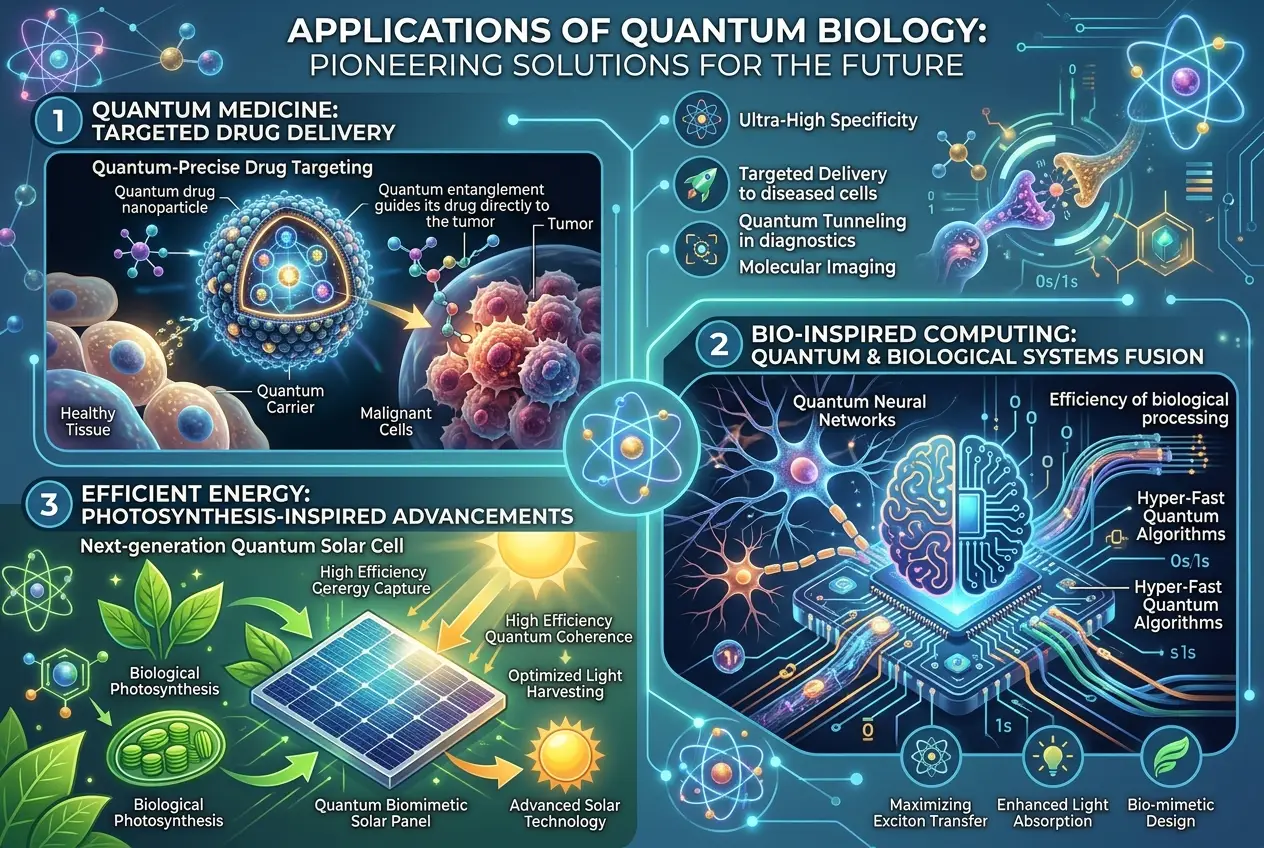
1. **Medicine and Drug Discovery:** Imagine designing drugs that target specific molecular pathways with quantum precision. Understanding how enzymes use tunnelling could lead to more effective drug design, or even new diagnostic tools. For instance, if you're interested in how nanobots could one day repair our bodies, a deeper understanding of molecular interactions at the quantum level could be foundational, as discussed in our blog, [Could Nanobots Repair Our Bodies From Within?](https://www.curiositydiaries.com/blogs/could-nanobots-repair-our-bodies-from-within-3681).
2. **Quantum Computing and Bio-Inspired AI:** Nature has already built highly efficient quantum systems. Could we learn from photosynthesis to create more robust and error-resistant quantum computers? Or develop bio-inspired AI algorithms that leverage quantum principles for incredibly efficient problem-solving? The idea of using living cells to build supercomputers isn't as far-fetched as it sounds when you consider quantum biological processes, a topic we explored in [Can Living Cells Build Our Next Supercomputers?](https://www.curiositydiaries.com/blogs/can-living-cells-build-our-next-supercomputers-6472).
3. **Materials Science and Energy:** Developing synthetic materials that mimic the quantum efficiency of biological light-harvesting systems could revolutionize solar energy technology, leading to far more efficient solar cells.
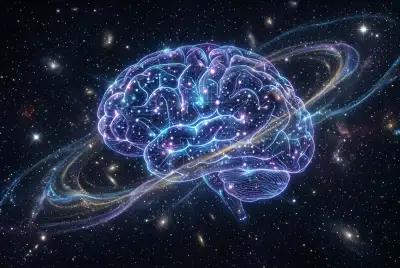
4. **Beyond: The Enigma of Consciousness:** While still speculative, some theories suggest that quantum effects might play a role in complex cognitive functions and even consciousness. Deciphering how the universe might be encoded at a fundamental level, as we discussed in [Is Our Universe a Hologram? Decoding Cosmic Data](https://www.curiositydiaries.com/blogs/is-our-universe-a-hologram-decoding-cosmic-data-8116), could potentially intersect with understanding the quantum underpinnings of our minds.
Quantum biology is still a young field, riddled with mysteries and challenges. Proving the existence of quantum phenomena in warm, wet biological environments requires exquisitely sensitive experiments and careful interpretation. The line between classical and quantum effects can be blurry, and the mechanisms are incredibly subtle.
Yet, the promise of this field is undeniable. It forces us to reconsider our understanding of life itself, suggesting that the seemingly magical efficiency of biological processes might not be magic at all, but a sophisticated exploitation of the universe's most fundamental rules. As we continue to delve into the quantum realm, we might just discover that the deepest secrets of life are woven into the very fabric of reality, waiting for us to unveil their quantum symphony.
Frequently Asked Questions
While still an emerging and rapidly developing field, quantum biology is gaining significant traction and acceptance within the scientific community as more experimental evidence supports the role of quantum phenomena in biological processes. It's moving from fringe theory to a respected interdisciplinary science.
Traditional biology and chemistry primarily rely on classical physics to explain molecular interactions and biological functions. Quantum biology specifically investigates phenomena that cannot be explained by classical physics alone, such as superposition, entanglement, and quantum tunnelling, seeking to understand how living systems exploit these quantum effects.
Key examples include the highly efficient energy transfer during photosynthesis (quantum coherence), the ability of migratory birds to sense Earth's magnetic field (magnetoreception, potentially involving entangled radical pairs), and the rapid rates of some enzyme-catalyzed reactions (quantum tunnelling of protons or electrons).
The idea that quantum mechanics plays a role in consciousness is highly speculative and a subject of intense debate, notably in theories like Orch-OR. While some physicists and biologists explore this, current scientific consensus on quantum biology focuses more on molecular and cellular level processes, not higher-level cognitive functions. More research is needed to explore any potential links.
Unlocking the secrets of quantum biology could lead to revolutionary advancements in various fields. This includes developing ultra-efficient solar cells inspired by photosynthesis, designing more effective drugs through quantum-precise targeting, creating novel quantum computing architectures based on biological systems, and even developing new sensors or materials.
Verified Expert
Alex Rivers
A professional researcher since age twelve, I delve into mysteries and ignite curiosity by presenting an array of compelling possibilities. I will heighten your curiosity, but by the end, you will possess profound knowledge.
Leave a Reply
Comments (0)
No approved comments yet. Be the first to share your thoughts!
 Join Us

 Unknown Author
















Leave a Reply
Comments (0)