


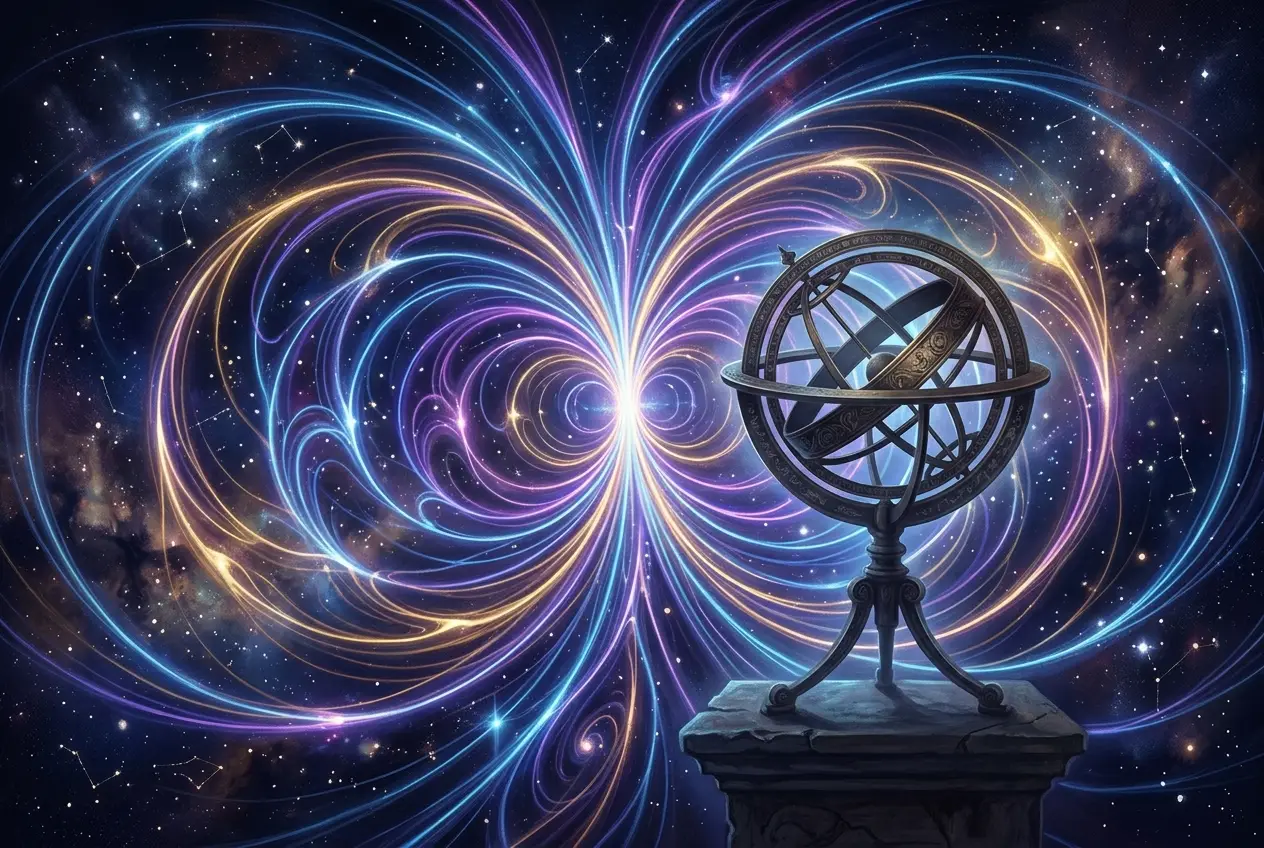
I often find myself gazing at the night sky, or even just the glow of my smartphone screen, and marveling at the invisible forces that govern our world. Light, radio waves, magnetism—they all seem so distinct, yet deeply interconnected. How did we come to understand these fundamental principles? It’s a journey that takes us back to the 19th century, to a Scottish genius whose insights reshaped physics forever. This exploration, I warn you, is a deep dive—a very long blog, indeed—into the life and monumental work of James Clerk Maxwell, a man who, in my opinion, crafted one of the most elegant and profound theories in the history of science.
Maxwell didn't just explain light; he unveiled its true nature, demonstrating that electricity, magnetism, and light itself are merely different manifestations of the same underlying electromagnetic field. His equations are the bedrock of virtually every piece of electrical and communication technology we use today, from your Wi-Fi router to the very satellites orbiting Earth. So, buckle up. We’re about to explore how a quiet, intensely curious Scot, with a mind brimming with mathematical poetry, connected the cosmos in a way no one had before.
The Genesis of a Genius: Early Life and a Prodigal Mind
James Clerk Maxwell was born on November 13, 1831, in Edinburgh, Scotland, into a family of comfortable means. His father, John Clerk Maxwell, was a lawyer with a keen interest in science and invention, a trait James undoubtedly inherited. His early years were spent on the family estate of Glenlair in Kirkcudbrightshire, a rural setting that fostered a deep connection to nature and an insatiable curiosity about the world around him. I believe this early exposure to the natural world, coupled with his father’s encouragement, laid the groundwork for his later scientific pursuits.
His mother, Frances Cay, took an active role in his early education, encouraging his voracious appetite for learning. Tragically, she passed away when James was just eight years old. This loss, while profound, did not diminish his intellectual drive. His father oversaw his education, which included private tutoring before he was sent to the Edinburgh Academy.
At the Edinburgh Academy, young James was initially perceived as a bit of a country bumpkin, with his unusual clothes and thick Scottish accent. But beneath the unassuming exterior lay a mind of extraordinary power. He quickly began to excel, particularly in mathematics and geometry. By the age of 14, he had already written a scientific paper describing a method of drawing perfect oval curves, which was presented to the Royal Society of Edinburgh. Imagine a teenager developing insights worthy of a scientific society – it truly speaks to his innate genius. For more on his early life and education, the Wikipedia article on James Clerk Maxwell offers a comprehensive overview. [https://en.wikipedia.org/wiki/James_Clerk_Maxwell (opens in a new tab)]
The Scholarly Path: Universities of Edinburgh and Cambridge
Maxwell's academic journey continued with distinction. He entered the University of Edinburgh at the remarkably young age of 16. There, he studied under renowned professors like Sir William Hamilton (logic and metaphysics) and James David Forbes (natural philosophy). His time in Edinburgh honed his mathematical skills and broadened his scientific interests, leading him to submit two more papers to the Royal Society of Edinburgh on the properties of elastic solids and rolling curves.
In 1850, at 19, Maxwell moved to the University of Cambridge, a move that would prove pivotal. He enrolled at Peterhouse, then transferred to Trinity College, known for its rigorous mathematical tripos. This was a challenging environment, even for someone of Maxwell's caliber, but he thrived. He became a Senior Wrangler (the top mathematics graduate) in 1854 and was soon after elected a Fellow of Trinity College. During these years, he immersed himself in the latest developments in physics and mathematics, preparing himself for the revolutionary work that lay ahead. I often reflect on how these foundational years, steeped in both Scottish curiosity and English academic rigor, forged the unique intellectual blend that was Maxwell.
Illuminating the Invisible: Early Scientific Explorations
Maxwell's early research interests were remarkably diverse, showcasing his intellectual breadth. Before his monumental work in electromagnetism, he made significant contributions to several other fields:
Color Vision and Color Photography
One of Maxwell's early passions was the study of color perception. Building on the work of Thomas Young and Hermann von Helmholtz, he proposed that the human eye perceives color through three types of receptors, sensitive to red, green, and blue light respectively. In 1861, he spectacularly demonstrated this theory by producing the world's first durable color photograph of a tartan ribbon. He achieved this by photographing the ribbon three times, each time with a different colored filter (red, green, and blue), then projecting the three images simultaneously onto a screen using three separate projectors with corresponding filters. The result was a full-color image.
This experiment was a technological marvel for its time and laid the foundation for all subsequent color photography and display technologies. It's fascinating to think that the RGB model we use in our digital screens today has its roots in Maxwell's 19th-century insights.
The Kinetic Theory of Gases
Maxwell also made profound contributions to the kinetic theory of gases, explaining macroscopic properties like temperature and pressure in terms of the microscopic motion of atoms and molecules. In 1859, he formulated the Maxwell-Boltzmann distribution, a statistical law that describes the distribution of speeds of molecules in a gas at a certain temperature. This was a crucial step in understanding thermodynamics at a fundamental level and showed his mastery of statistical mechanics. It connected the chaotic dance of countless tiny particles to the observable properties of matter. For more technical details, the Wikipedia article on the Maxwell-Boltzmann distribution is an excellent resource. [https://en.wikipedia.org/wiki/Maxwell–Boltzmann_distribution (opens in a new tab)]
The Stability of Saturn's Rings
In 1857, the University of Cambridge set a prize question on the stability of Saturn's rings. This was a formidable mathematical challenge. Maxwell, applying his deep understanding of dynamics and stability, proved that the rings could not be solid or liquid bodies, as they would be unstable and break apart. Instead, he demonstrated that they must be composed of countless small, independently orbiting particles. This deduction, made purely from mathematical reasoning, was later confirmed by direct observation with space probes like Voyager and Cassini. It’s a testament to his extraordinary foresight and analytical power. I personally find this a remarkable example of how theoretical physics can reveal truths about the universe even before direct observation is possible.
The Unification: Electricity, Magnetism, and Light
While his other contributions were significant, Maxwell's towering achievement, the one that cemented his place as one of history's greatest scientists, was his work on electromagnetism.
From Faraday's Fields to Maxwell's Equations
The stage for Maxwell's work was set by Michael Faraday, whose groundbreaking experiments had revealed the intricate relationship between electricity and magnetism. Faraday introduced the revolutionary concept of "fields" – invisible regions of influence emanating from electric charges and magnets. However, Faraday, lacking formal mathematical training, expressed his ideas qualitatively.
It was Maxwell who took Faraday’s intuitive concept of fields and translated it into a rigorous mathematical framework. He recognized the profound implications of Faraday's lines of force and embarked on a decade-long intellectual journey to formalize them. His aim was to create a unified theory that could describe all known electrical and magnetic phenomena. This involved synthesizing the experimental observations of Faraday, André-Marie Ampère, Carl Friedrich Gauss, and others into a coherent mathematical language. It was a monumental undertaking, akin to what Isaac Newton did for gravity and motion (see our blog: Isaac Newton: Unraveling the Universe's Code).
The Four Pillars: Maxwell's Equations
Between 1861 and 1862, and then in his seminal 1865 paper "A Dynamical Theory of the Electromagnetic Field," Maxwell published the set of equations that bear his name. These four equations are the cornerstone of classical electromagnetism:
- Gauss's Law for Electricity: Describes how electric charges create electric fields.
- Gauss's Law for Magnetism: States that there are no magnetic monopoles (isolated north or south poles), meaning magnetic field lines always form closed loops.
- Faraday's Law of Induction: Explains how changing magnetic fields create electric fields (the principle behind generators and transformers). You can read more about the impact of Michael Faraday in our blog: Michael Faraday: The Mind Who Illuminated Our Modern World.
- Ampère's Law with Maxwell's Addition: Describes how electric currents and changing electric fields create magnetic fields. Maxwell's crucial addition of the "displacement current" term was the stroke of genius that completed the theory.
These equations are often presented in their differential form, using vector calculus, which succinctly expresses their profound relationships.
| Equation Name | What it describes | Key Insight |
|---|---|---|
| Gauss's Law (Electricity) | Electric fields originate from electric charges. | Electric flux through a closed surface is proportional to the enclosed charge. |
| Gauss's Law (Magnetism) | Magnetic fields have no isolated poles (monopoles). | Magnetic flux through a closed surface is always zero; magnetic field lines are continuous. |
| Faraday's Law | A changing magnetic field induces an electric field. | This is the basis of electric generators and transformers. |
| Ampère-Maxwell Law | Magnetic fields are generated by electric currents AND changing electric fields. | Maxwell's "displacement current" term was crucial, showing that changing electric fields produce magnetic fields. |
The Speed of Light and the Electromagnetic Universe
The most astonishing consequence of Maxwell's equations was his prediction that disturbances in the electromagnetic field would propagate through space as waves. Even more remarkably, when he calculated the speed of these waves using experimentally determined constants for electricity and magnetism, he found a value that was almost identical to the known speed of light.
This was no coincidence. Maxwell famously concluded, "We can scarcely avoid the inference that light consists in the transverse undulations of the same medium which is the cause of electric and magnetic phenomena."
This was a revelation:
- Light is an electromagnetic wave: It's not some separate phenomenon but a specific part of a much broader spectrum of electromagnetic radiation.
- A unified field: Electricity, magnetism, and light are intimately linked, all governed by the same set of laws.
His work predicted the existence of other electromagnetic waves, beyond visible light, such as radio waves, microwaves, infrared, ultraviolet, X-rays, and gamma rays. These predictions were experimentally confirmed by Heinrich Hertz nearly two decades later, who generated and detected radio waves, directly validating Maxwell's theory. Imagine the power of a theory that not only explains existing phenomena but also predicts entirely new ones that are later discovered.
The Aether and Its Demise
Like many scientists of his era, Maxwell initially believed in the existence of a "luminiferous aether"—a hypothetical medium thought to permeate all space and through which light waves propagated. After all, if light was a wave, it needed a medium to wave in, just as sound needs air or water. Maxwell's equations described waves, but the conceptual need for a medium persisted.
However, subsequent experiments, most notably the Michelson-Morley experiment in 1887, failed to detect this aether. This negative result ultimately led to Albert Einstein's theory of special relativity in 1905, which discarded the concept of the aether entirely, demonstrating that light waves can propagate through a vacuum. Maxwell's equations, however, remained perfectly valid and were even central to Einstein's insights. You can delve into Einstein's contributions in our blog: Albert Einstein: The Mind Who Rewrote Reality.
Founding the Cavendish Laboratory
In 1871, Maxwell was appointed the first Cavendish Professor of Experimental Physics at the University of Cambridge. His primary task was to establish and oversee the development of a new laboratory for experimental physics, generously funded by the Duke of Devonshire (who was the Chancellor of the university and also named Cavendish).
Maxwell dedicated himself to this monumental task, personally designing the building and equipping it with state-of-the-art apparatus. The Cavendish Laboratory, under Maxwell's leadership and subsequent brilliant directors like Lord Rayleigh and J.J. Thomson, became one of the world's foremost centers for physics research. It was here that the electron was discovered, and many other foundational experiments of modern physics were conducted. His vision for a place where theory and experiment could flourish side-by-side fundamentally shaped physics education and research for generations.
A Legacy That Continues to Resonate
James Clerk Maxwell's life was cut tragically short when he died of abdominal cancer on November 5, 1879, just shy of his 48th birthday. Despite his relatively brief life, his impact was immeasurable.
The Architect of Modern Technology
It is no exaggeration to say that Maxwell's work is the invisible foundation of almost all modern electrical and communication technologies.
- Radio and Wireless Communication: Marconi's first transatlantic radio transmission, your Wi-Fi, Bluetooth, and cellular networks are all direct applications of electromagnetic waves, whose existence and properties were predicted by Maxwell. Nikola Tesla, another titan of electricity, built extensively on these principles (see our blog: Nikola Tesla: The Enigmatic Genius Who Wired Our Modern World).
- Optics and Photonics: From lasers to fiber optics, Maxwell's theory of light as an electromagnetic phenomenon is fundamental. The idea that light can 'think' or be computed with, as explored in articles like Can Light Think? The Dawn of Optical Computing, directly springs from understanding its electromagnetic nature.
- Electronics: Every circuit, every capacitor, every inductor in our electronic devices operates according to the principles laid down by Maxwell's equations.
- Astronomy: Telescopes that observe the universe in radio, infrared, and X-ray wavelengths rely entirely on the electromagnetic spectrum that Maxwell theorized.
Bridging Classical and Quantum Physics
Maxwell's work completed the classical description of electromagnetism, but it also inadvertently laid the groundwork for the quantum revolution of the 20th century. Problems arising from classical electromagnetism, such as the ultraviolet catastrophe, eventually led to the development of quantum mechanics by Max Planck and Niels Bohr (read about their contributions in our blogs: Max Planck: The Reluctant Revolutionary of Quantum Physics and Niels Bohr: The Architect of Quantum Reality). While Maxwell's equations describe the behavior of macroscopic electromagnetic fields perfectly, quantum electrodynamics (QED) extends this framework to describe the interactions of light and matter at the quantum level. The idea that light has both wave and particle properties, for instance, a cornerstone of quantum theory, still acknowledges its fundamental electromagnetic wave nature.
A Mind of Philosophical Depth
Beyond his scientific prowess, Maxwell was a man of deep philosophical and religious conviction. He saw no conflict between his scientific discoveries and his Christian faith, viewing his exploration of the natural world as an unfolding of divine order. He possessed a humble and gentle nature, often using humor and poetry to explain complex scientific concepts. His writings reveal a profound respect for the mysteries of the universe and an appreciation for the beauty and elegance of natural laws.
He was known for his clarity of thought and his ability to synthesize disparate ideas. His personal integrity and dedication to truth were as remarkable as his scientific genius. I find his ability to maintain such a rich inner life while revolutionizing scientific thought truly inspiring.
Conclusion: The Enduring Resonance of a Unifier
James Clerk Maxwell’s work stands as a monumental testament to the power of human intellect and curiosity. He took seemingly disparate phenomena—the spark of static electricity, the pull of a magnet, and the warmth of sunlight—and revealed them to be facets of a single, majestic force. His equations are not just mathematical formulas; they are a poem of the universe, describing how light dances, how electricity flows, and how magnetism embraces.
Every time I flip a light switch, use my phone, or gaze at a picture of a distant galaxy, I'm reminded of Maxwell's profound vision. He didn't just explain the world; he revealed its hidden harmonies, laying the foundation for an entire technological age and inspiring generations of scientists to continue exploring the unseen forces that shape our reality. His legacy reminds us that the greatest leaps in understanding often come from daring to unify what once seemed separate.



Conversation0
No comments yet. Be the first to share a thought — the best questions often become new stories.