


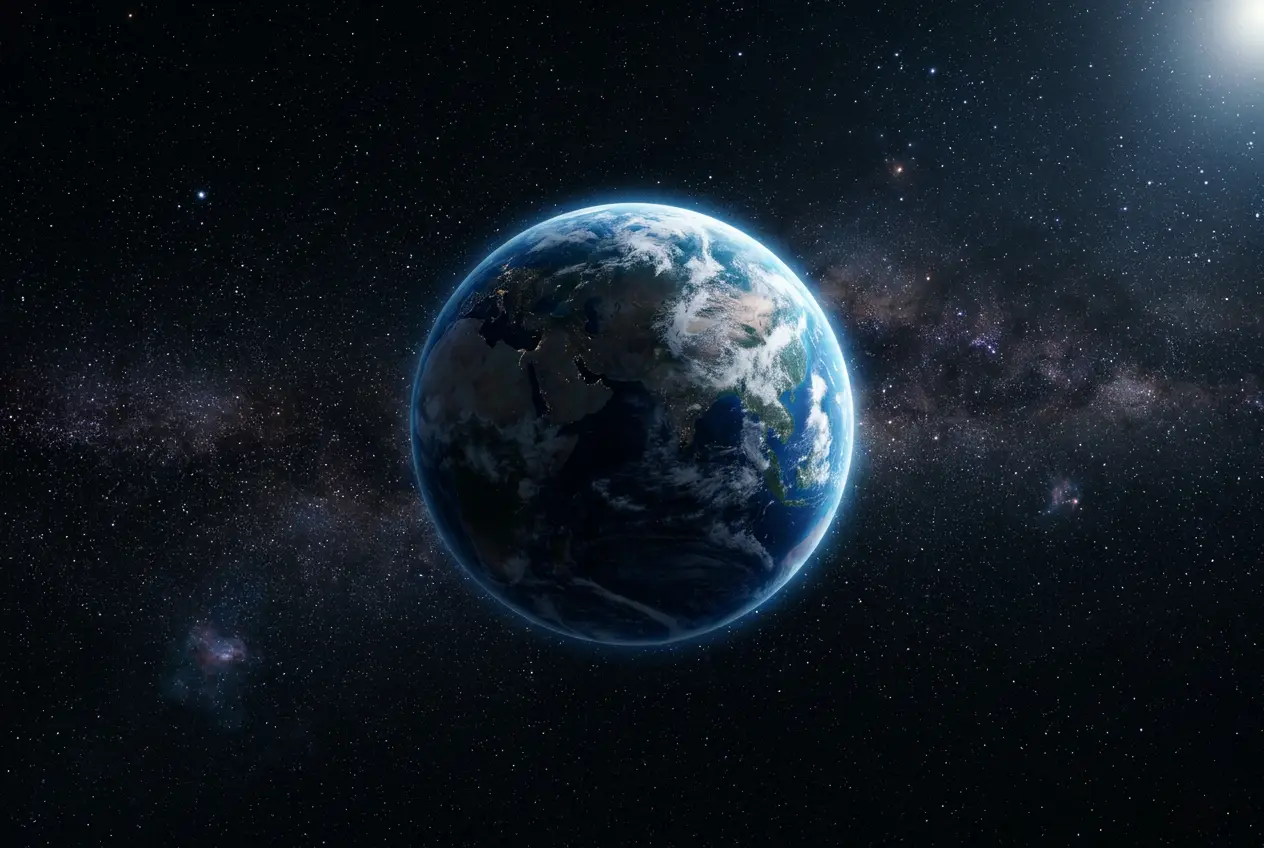
I often find myself gazing at the night sky, lost in thought about the sheer immensity of the cosmos. We live on a planet bathed in the warmth of our Sun, a constant companion providing light and life. But what if that wasn't always the case? What if Earth, our familiar home, was somehow ripped from the Sun's embrace, sent hurtling into the cold, dark abyss of interstellar space? It’s a terrifying yet utterly fascinating thought, one that takes us to the realm of rogue planets.
These aren't planets orbiting distant stars, nor are they the familiar worlds of our solar system. Rogue planets are true cosmic nomads, adrift in the vast emptiness between star systems, untethered to any sun. They are celestial bodies that have been violently ejected from their birth systems, or perhaps even formed in isolation in the darkest corners of the galaxy. The very idea of a world without a star to call home challenges our fundamental understanding of planetary existence, and I can't help but wonder about the secrets they hold.
The Cosmic Castaways: What Are Rogue Planets?
Imagine a planetary system in its turbulent early years. Young planets jostle for position, their gravitational pulls warring with each other. Sometimes, these chaotic dance routines end with a planet being flung out of the system entirely, like a slingshot sending a stone flying. This is the most common theory behind the formation of rogue planets, often called interstellar planets or free-floating planets.
These planetary wanderers don't follow the predictable orbits we're used to. Instead, they travel through the galactic plane, driven by their initial momentum and the subtle, diffuse gravitational forces of the galaxy itself. For a long time, their existence was purely theoretical, a mathematical possibility stemming from simulations of planetary formation. But in recent years, astronomers have gathered compelling evidence suggesting these cosmic orphans are not only real but potentially abundant.
How Do We Even Find a Planet Without a Sun?
Detecting a rogue planet is an incredible feat, akin to finding a needle in a cosmic haystack—a needle that emits no light of its own. Unlike stars that blaze brightly or exoplanets that reveal themselves by dimming their host star, rogue planets are cloaked in darkness. So, how do we find them?
The primary method relies on a phenomenon called gravitational microlensing. When a massive object (like a rogue planet) passes directly in front of a more distant star, its gravity acts like a lens, bending and magnifying the light from that background star. This creates a temporary, brief brightening of the star that can be observed from Earth. By analyzing the unique light curve of this brightening event, astronomers can infer the mass of the lensing object, even if it's completely dark.
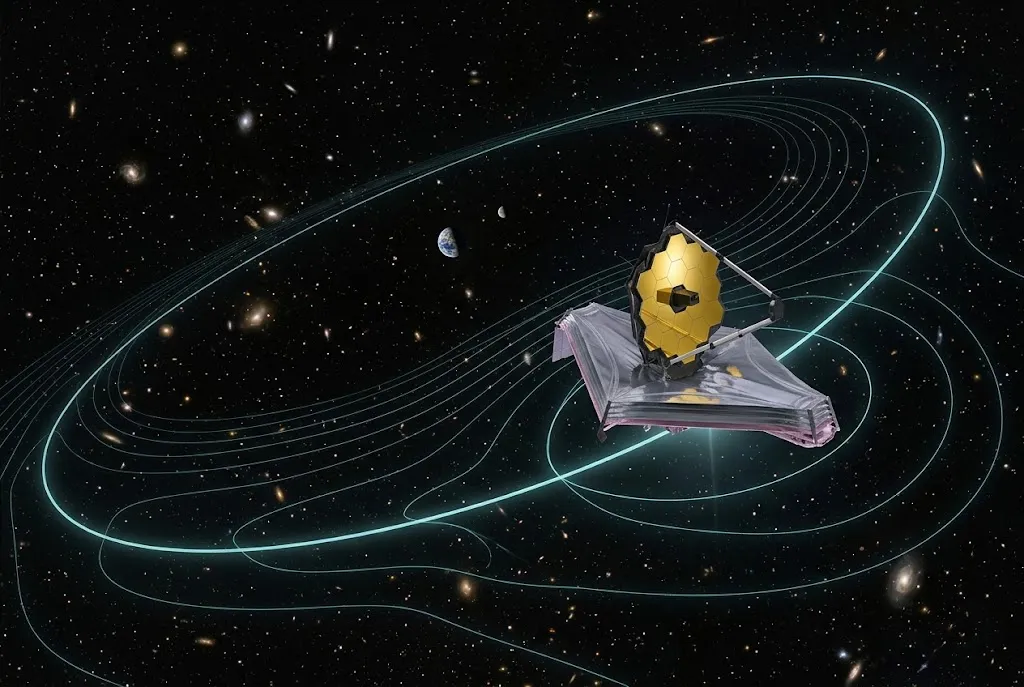
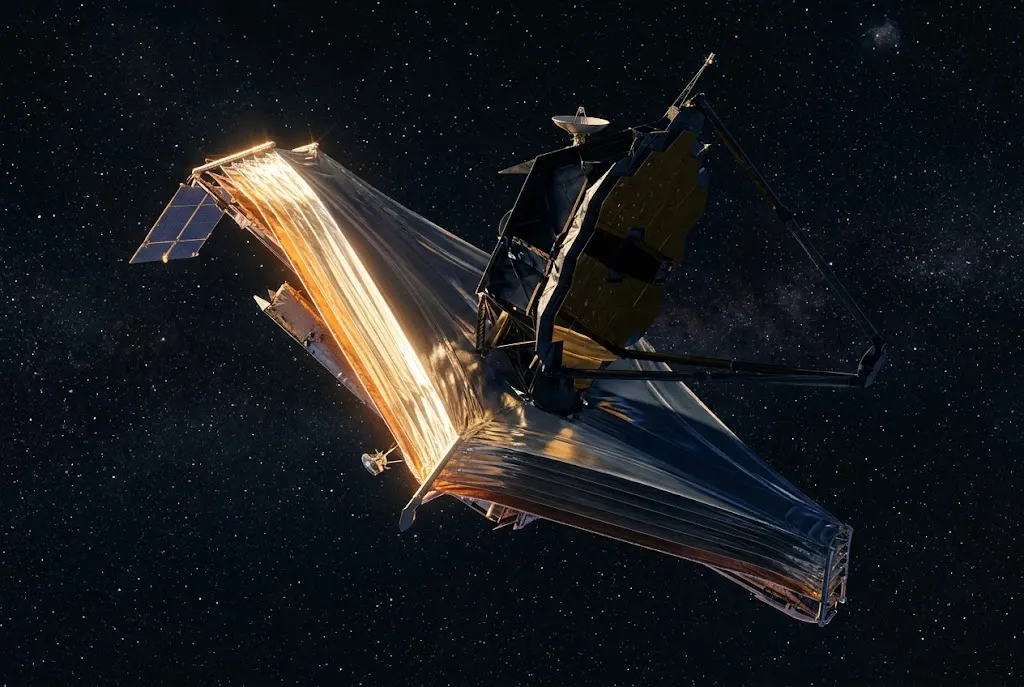
I find this method absolutely brilliant. It’s an indirect detection technique that leverages Einstein's theory of general relativity to reveal objects we could never see directly. Recent surveys, such as those conducted by the Kepler and now the James Webb Space Telescope (though JWST is primarily infrared), as well as ground-based observatories, have begun to unveil these elusive worlds. One notable example is OGLE-2016-BLG-1195, a cold, Earth-mass rogue planet discovered using microlensing. More recently, projects like the Nancy Grace Roman Space Telescope are being designed with microlensing capabilities specifically to hunt for more of these interstellar wanderers. You can read more about microlensing on Wikipedia (opens in a new tab).
Are Rogue Planets More Common Than Stars?
This is where the numbers get truly mind-boggling. Some scientific models and observations suggest that rogue planets might vastly outnumber stars in our galaxy, perhaps by a factor of hundreds or even thousands. Imagine billions upon billions of these dark, cold worlds silently traversing the Milky Way. A 2011 study published in Nature suggested that free-floating planets with masses similar to Jupiter could be twice as common as main-sequence stars in our galaxy. More recent estimates, leveraging data from observatories like the Vera C. Rubin Observatory, are pushing these numbers even higher, suggesting an astronomical population of smaller, Earth-mass rogue planets.
This vast population has significant implications for our understanding of planetary formation and evolution. It tells us that planet ejection is not a rare anomaly but a common outcome in the violent nurseries of young star systems. It also expands the potential "real estate" for life, even if such life would be vastly different from what we know.
Life in the Dark? The Unlikely Habitation of Rogue Worlds
My first thought about a rogue planet is often one of extreme cold and darkness – a desolate, frozen wasteland. And largely, that's true. Without the warmth of a star, the surface temperatures of these planets would plummet to hundreds of degrees below zero, making liquid water, a key ingredient for life as we know it, impossible on the surface.
However, scientists have theorized about potential oases of life beneath their icy crusts. If a rogue planet is massive enough, it could retain a significant amount of internal geological heat generated by radioactive decay in its core. This heat could potentially sustain a subsurface ocean of liquid water, much like the moons Europa or Enceladus in our own solar system. Hydrothermal vents on the ocean floor, powered by this internal heat, could provide the energy and chemical nutrients necessary for chemosynthetic life, independent of sunlight.
Another fascinating idea is that if a rogue planet retained a thick hydrogen-helium atmosphere, it could act as a powerful insulator, trapping geothermal heat and creating a habitable zone below the surface. While the odds might seem slim, the sheer number of rogue planets means that even a tiny percentage developing subsurface habitats could represent an enormous reservoir of potentially undiscovered life in the galaxy. It really makes you think about how adaptable life might be, even in the most extreme conditions. If you're curious about other cosmic anomalies and potential for life, I suggest reading our article on Galactic Anomaly: What Explains Tabby's Star?.
Could Earth Itself Become a Rogue Planet?
This is the ultimate question that sparks fear and wonder in equal measure. While our solar system has been remarkably stable for billions of years, it won't last forever. In the distant future, billions of years from now, our Sun will exhaust its nuclear fuel, swell into a red giant, and eventually shrink into a white dwarf. During its red giant phase, the Sun will expand dramatically, likely engulfing Mercury and Venus, and possibly even Earth.
Even if Earth somehow escapes engulfment, the loss of significant mass from the Sun during its evolution could weaken its gravitational hold on our planet. This weakened gravity, coupled with potential close encounters with other stars or rogue objects in the galaxy over eons, could theoretically nudge Earth out of its orbit. The chances of this happening in the observable future are astronomically small, thankfully. Our solar system is in a relatively quiet region of the galaxy, and close stellar encounters that could destabilize planetary orbits are exceedingly rare.
However, the universe is a dynamic place. Gravitational interactions are complex. As the famous astronomer Carl Sagan once said, "The cosmos is all that is or ever was or ever will be. Our feeblest contemplations of the cosmos stir us." The laws of physics allow for such ejections, even if the timescale for our Earth to become a rogue planet is unimaginably vast, stretching into cosmological epochs. For now, we are firmly bound to our Sun. Yet, the possibility serves as a humbling reminder of our place in a constantly evolving, sometimes violent, universe. For other deep dives into cosmic physics, check out Beyond Light Speed: Can Particles Break the Cosmic Limit?.
You can learn more about the Sun's eventual fate and its impact on the Earth on Wikipedia's page about the Sun's future (opens in a new tab).
The Unseen Majority: Why Rogue Planets Matter
The study of rogue planets is more than just an academic curiosity. It profoundly impacts our understanding of planet formation, the prevalence of habitable environments, and even the search for extraterrestrial life. If these dark worlds are indeed the galactic majority, they represent a vast, unexplored frontier. They challenge our geocentric (and sol-centric) biases, forcing us to consider life in contexts vastly different from our own.
Their very existence also highlights the sheer dynamism and occasional brutality of cosmic evolution. While we cherish the stability of our solar system, it’s a tiny, stable island in a churning ocean of gravitational forces and celestial migrations. Discoveries of interstellar objects passing through our solar system, like 'Oumuamua, further underscore that our solar system is not entirely isolated but interacts with the interstellar medium.
I believe that as our detection capabilities improve, especially with next-generation telescopes, we will uncover more and more of these lonely travelers. Each discovery will add another piece to the grand puzzle of cosmic origins, pushing the boundaries of what we thought possible in the universe. Who knows what incredible secrets these silent wanderers might eventually reveal? The universe is full of mysteries, from the incredibly small to the impossibly vast. Our understanding of space is constantly expanding, hinting at even greater wonders, like those discussed in Beyond Our Universe: What Types of Multiverses Exist?.
The journey of discovery continues, and the universe, with its rogue planets and countless other phenomena, always has more surprises in store.

Conversation0
No comments yet. Be the first to share a thought — the best questions often become new stories.