


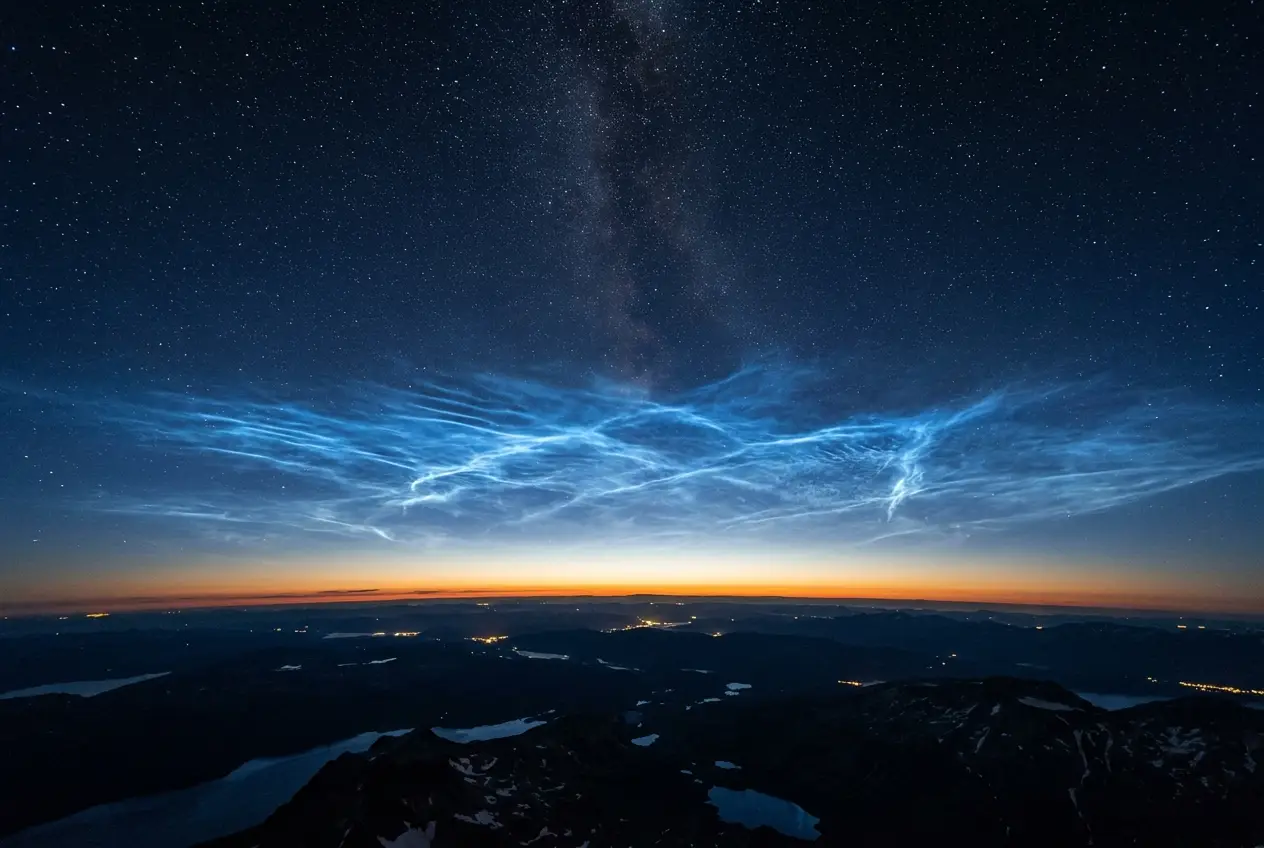
I vividly recall the first time I saw them. It was a late summer evening, long after sunset, and the sky, usually fading into predictable darkness, suddenly erupted with an otherworldly blue glow. Not the soft pastels of regular twilight clouds, but sharp, shimmering tendrils that seemed to be illuminated from within, like a ghostly aurora. These were noctilucent clouds, also known as "night-shining clouds," and they are one of Earth's most enigmatic atmospheric phenomena.
For centuries, these spectacular displays were rare, almost mythical sightings, mostly confined to high latitudes. Yet, in recent decades, their frequency, brightness, and geographical reach have been steadily increasing, pushing them further south than ever before. This raises a fascinating question: are these celestial spectacles just pretty lights, or do they hint at unknown atmospheric physics unfolding right above our heads? I believe their growing presence is a silent signal, a cosmic postcard from the edge of space, urging us to decipher its hidden message.
What Exactly Are Noctilucent Clouds?
Unlike ordinary clouds, which form in the troposphere (the lowest layer of Earth’s atmosphere), noctilucent clouds form much, much higher – in the mesosphere, at altitudes of approximately 76 to 85 kilometers (47 to 53 miles). This region, often called the "ignorosphere" because it’s too high for aircraft and too low for satellites to orbit stably, is an extreme environment. The air is incredibly thin, about 100,000 times less dense than at sea level, and temperatures plunge to astonishing lows, sometimes below -130 degrees Celsius (-200 degrees Fahrenheit).
It’s in this frigid, rarefied air that tiny ice crystals form around specks of meteoric dust, creating these luminous clouds. They appear "night-shining" because their extreme altitude allows them to reflect sunlight long after the sun has set on the ground below, casting an eerie, electric blue-white glow against the deepening twilight. The visual effect is absolutely captivating, like a curtain of iridescent gossamer fluttering at the very fringe of space.
The Mystery of Their Increasing Frequency
Historically, noctilucent clouds were rare. First systematically recorded in 1885, two years after the massive eruption of Krakatoa, which spewed enormous amounts of water vapor and dust into the upper atmosphere, scientists initially linked their appearance to such dramatic events. However, their continued rise in prevalence cannot solely be explained by volcanic activity. Modern observations, both from ground-based cameras and sophisticated satellites like NASA's Aeronomy of Ice in the Mesosphere (AIM) mission, confirm an undeniable trend: these clouds are becoming brighter, more extensive, and more frequent.
This surge puzzles atmospheric scientists. The conditions required for noctilucent clouds are incredibly specific: extremely cold temperatures, sufficient water vapor, and condensation nuclei (like meteoric dust). While meteoric dust is constantly streaming into our atmosphere, its rate isn't drastically increasing to explain this phenomenon. This leaves temperature and water vapor as the prime suspects, and their changes hint at deeper atmospheric shifts.
One leading hypothesis points to climate change. While global warming heats the lower atmosphere, it appears to have a paradoxical cooling effect on the upper mesosphere, allowing more ice crystals to form and persist. Additionally, increased methane emissions, a potent greenhouse gas, can oxidize into water vapor in the upper atmosphere, providing more fuel for these high-altitude ice clouds. This fascinating link suggests that even the subtle changes we observe on the ground can ripple upwards, altering the very fabric of our atmosphere in unexpected ways. For more on how human activities impact the upper atmosphere, I found this detailed article on Wikipedia's page about the mesosphere (opens in a new tab) incredibly insightful.
Unseen Energy and Atmospheric Waves
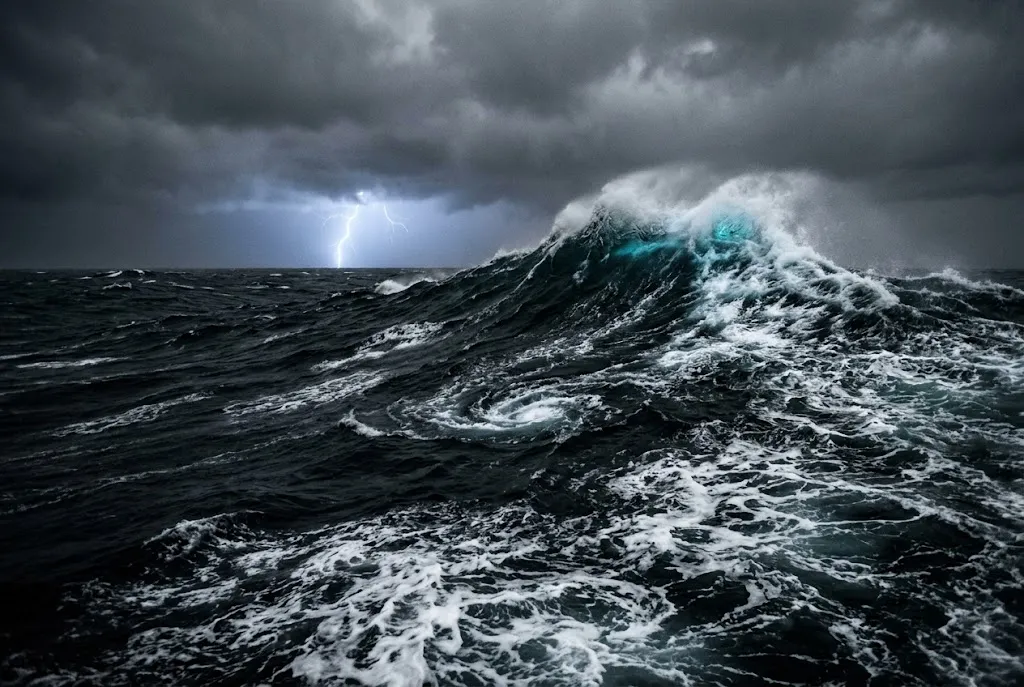
Beyond climate change, some researchers speculate that noctilucent clouds might be influenced by or even reveal more obscure atmospheric dynamics, perhaps related to gravity waves. These are not gravitational waves in the cosmic sense, but rather atmospheric disturbances caused by anything from thunderstorms to airflow over mountains, which propagate upwards through the atmosphere. As they rise into thinner air, these waves amplify, eventually breaking in the mesosphere, similar to ocean waves breaking on a shore.
This breaking process can lead to localized pockets of extreme cold, creating perfect nurseries for noctilucent clouds. Could the increasing prevalence of these clouds be a visual indicator of changes in the patterns or intensity of these atmospheric gravity waves? If so, what is driving these changes? Are there undiscovered forces at play in the chaotic dance of our upper atmosphere? Understanding these intricate connections could unlock new insights into how our planet's various atmospheric layers interact, a dynamic system where even events near the ground can influence phenomena at the edge of space. The interactions of atmospheric layers are complex; you can delve deeper into atmospheric dynamics on Wikipedia's page on atmospheric waves (opens in a new tab).
Sentinels of Space Weather and Earth's Shield
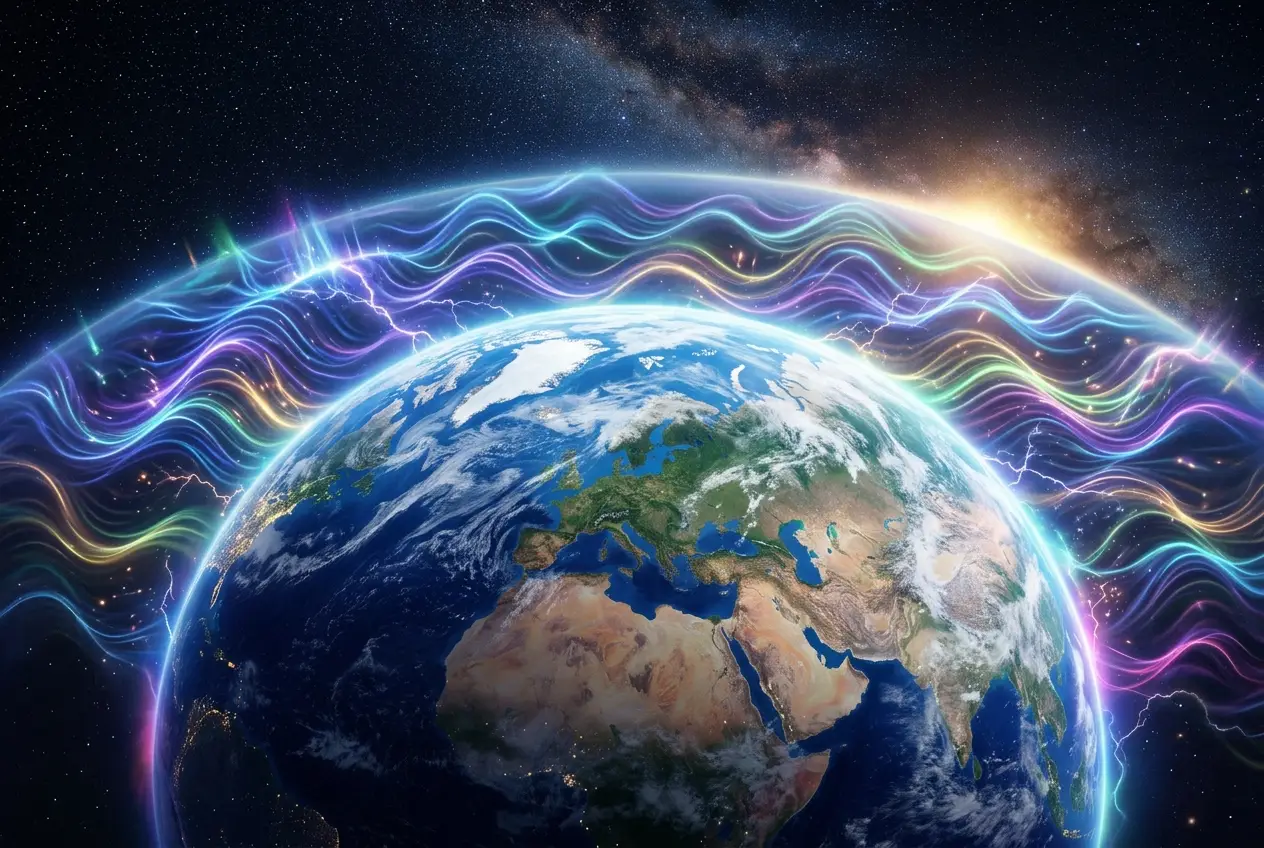
Noctilucent clouds aren't just pretty. They serve as valuable indicators for space weather and the health of Earth’s invisible shields. The mesosphere is a crucial transition zone where Earth's atmosphere begins to thin out into the vacuum of space. It’s also where many meteoroids burn up, creating the "shooting stars" we sometimes see. The composition and dynamics of this region directly influence how our planet interacts with the solar wind and cosmic rays, which could potentially glitch our technology. If you're curious about how cosmic dust might affect electronics, I recommend checking out our blog post on whether does cosmic dust interfere with our modern electronics?.
Changes in noctilucent cloud activity could signal alterations in the mesosphere's temperature or composition, which in turn might affect how well Earth's upper atmosphere protects us from incoming radiation. A more active or warmer mesosphere, for instance, might be less effective at shielding us from charged particles during a solar storm. Could the increasing visibility of these clouds be a subtle warning sign, indicating shifts in our planet's first line of defense against the harsh realities of space? The continuous monitoring of these clouds could become an essential tool in understanding and predicting space weather events that could impact everything from satellite communications to power grids. For further reading on solar storms and their impact, our article on could solar storms ignite digital chaos? provides a fascinating perspective.
The Future of Night-Shining Secrets
The study of noctilucent clouds is a testament to the ongoing mysteries that lie just beyond our immediate reach, even in our own planet's backyard. Their growing prominence challenges our assumptions about atmospheric stability and forces us to consider the far-reaching consequences of both natural and human-induced changes.
I find it inspiring how something so ethereal and beautiful can hold such profound scientific significance. Are these clouds merely a beautiful side effect of a changing climate, or are they a gateway to understanding entirely new processes in our upper atmosphere? Perhaps they are silent sentinels, reflecting not just sunlight, but also the subtle, profound shifts occurring in Earth's outermost veil. As our technology advances, allowing us to probe these elusive clouds with greater precision, I am confident we will uncover more of their secrets, revealing deeper truths about the intricate, interconnected systems that govern our living planet. We are constantly learning about Earth's protective layers; our blog on do Earths invisible shields guard unseen secrets? explores another facet of this fascinating topic.
The mesosphere, once deemed too inaccessible for detailed study, is slowly yielding its secrets, and the noctilucent clouds are among its most eloquent messengers. Continuing to observe and analyze them will be crucial, not only for their aesthetic appeal but for what they tell us about the hidden physics and future health of our planet's atmosphere.
Reference:

Conversation0
No comments yet. Be the first to share a thought — the best questions often become new stories.