


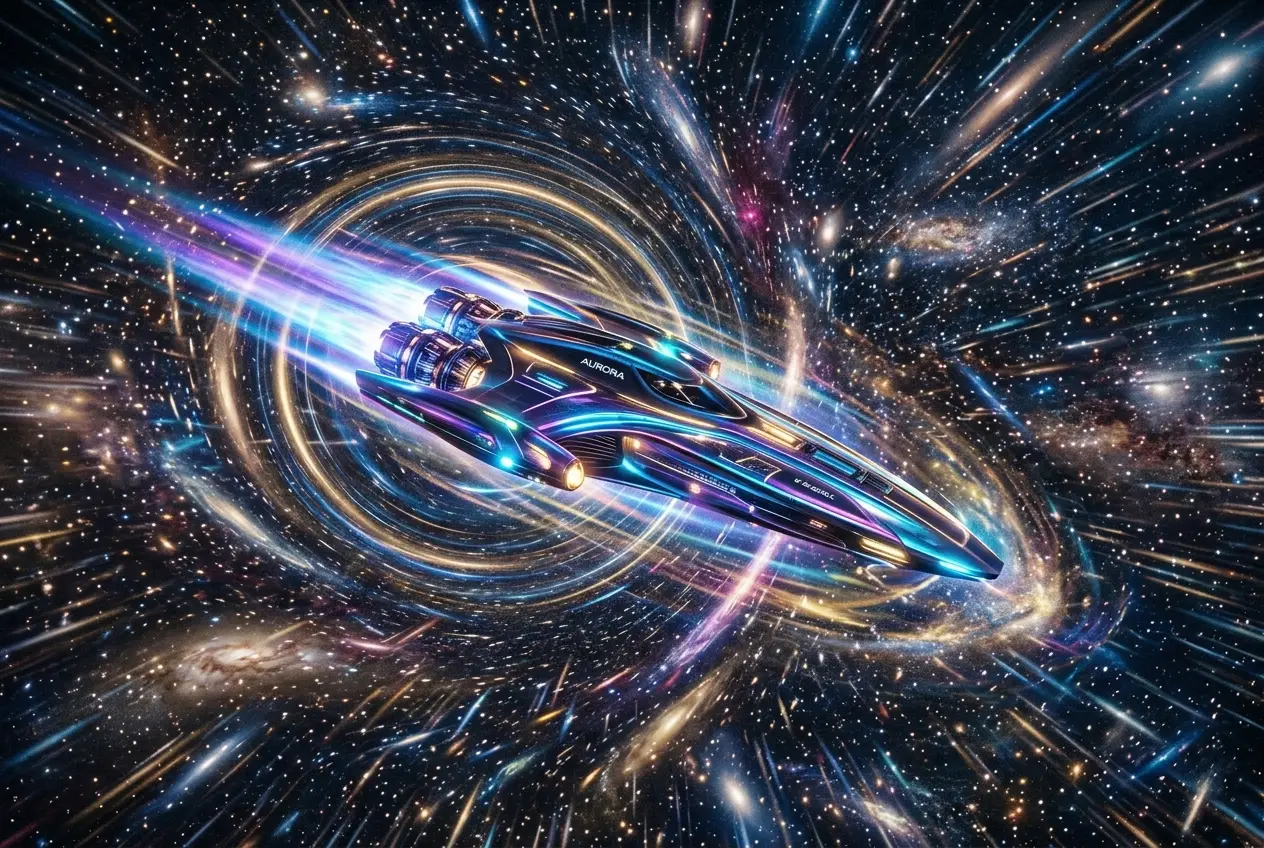
The allure of interstellar travel, traversing vast cosmic distances in mere moments, has captivated humanity for generations. I’ve often found myself lost in the pages of science fiction, picturing starships bending space and time to leap between galaxies. It’s a dream that pushes the boundaries of our imagination, but what if I told you that the key to unlocking this extraordinary feat might lie not in some fantastical energy source, but in something far more peculiar: exotic matter?
For decades, the speed of light has stood as an unyielding cosmic speed limit, a barrier imposed by Albert Einstein's theories of relativity. Nothing with mass, we're told, can accelerate to or beyond this ultimate velocity. But theoretical physicists, relentless in their pursuit of the impossible, have explored loopholes—conceptual pathways that don't violate relativity but rather exploit its nuances. One of the most intriguing involves exotic matter, a hypothetical substance with properties so bizarre they could fundamentally reshape spacetime itself.
The Cosmic Speed Limit: Why Light Wins
Before we dive into the extraordinary, let’s quickly acknowledge the ordinary. Einstein’s special theory of relativity dictates that as an object with mass approaches the speed of light, its mass increases infinitely, requiring an infinite amount of energy to accelerate further. This makes conventional faster-than-light (FTL) travel, where a ship accelerates to break the light barrier, impossible. It's a fundamental pillar of modern physics, and bypassing it directly would require rewriting our understanding of the universe.
However, the theoretical "loopholes" don't involve traveling faster than light in a local sense. Instead, they propose warping spacetime itself, effectively bringing distant locations closer without violating any local speed limits. Think of it like walking across a folded piece of paper instead of traversing its full, flat length. One of the most famous theoretical constructs for achieving this is the Alcubierre warp drive.
What Exactly is Exotic Matter?
When I mention "exotic matter," I'm not talking about some rare element found deep within a nebula. In physics, exotic matter refers to hypothetical substances that possess properties not found in normal matter. The most crucial property for FTL travel, particularly for warp drives, is negative energy density.
Normal matter, like everything we interact with daily, has positive energy density. It has mass, it attracts other matter via gravity, and it occupies space. Exotic matter, on the other hand, would have an inverse gravitational effect. It wouldn't just be light, it would actively repel gravity. Imagine a material that, instead of pulling things in, pushes them away. This counter-intuitive property is key.
"The concept of negative energy density is not entirely alien to physics; it arises in certain quantum field theories," as noted by a theoretical physicist studying warp drive mechanics. While direct observation remains elusive, the mathematics suggests it's not strictly forbidden. You can delve deeper into the theoretical underpinnings of negative energy on Wikipedia.
The Alcubierre Drive: A Spacetime Surfer
In 1994, Mexican theoretical physicist Miguel Alcubierre proposed a solution to Einstein's field equations that would allow a spacecraft to travel faster than light without violating relativity. His concept involved a "warp bubble" that would contract space in front of the ship and expand space behind it. The ship itself would remain stationary within this bubble, effectively surfing a wave of spacetime distortion.
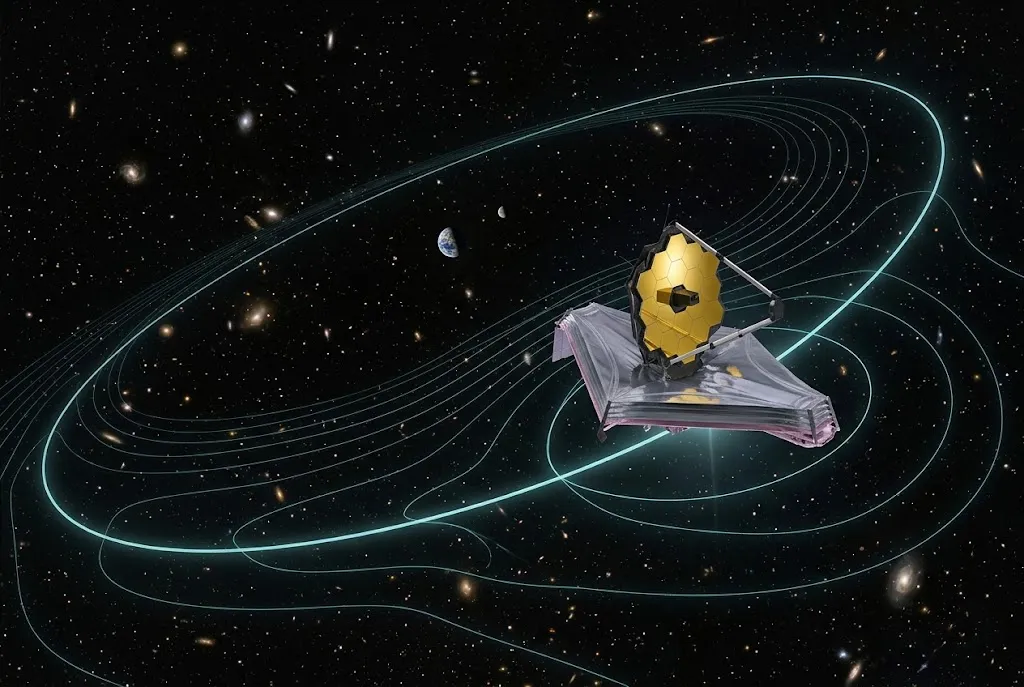
To create this warp bubble, however, you need exotic matter. Specifically, a ring of exotic matter would be required to generate the negative energy density needed to contract space ahead of the ship. The spacetime ahead would effectively be compressed, while the space behind would be expanded, creating a path for superluminal travel. The ship inside the bubble would never exceed the speed of light relative to its local spacetime, thus upholding Einstein's principles.
The elegance of the Alcubierre drive lies in this distinction: it's not the ship moving through space faster than light, but space itself moving around the ship. This is similar to how the universe's expansion can cause distant galaxies to recede from us faster than light, without any individual galaxy exceeding the cosmic speed limit in its local frame.
The Immense Hurdles and Theoretical Puzzles
While mathematically intriguing, the practical challenges of an Alcubierre drive are, to put it mildly, monumental.
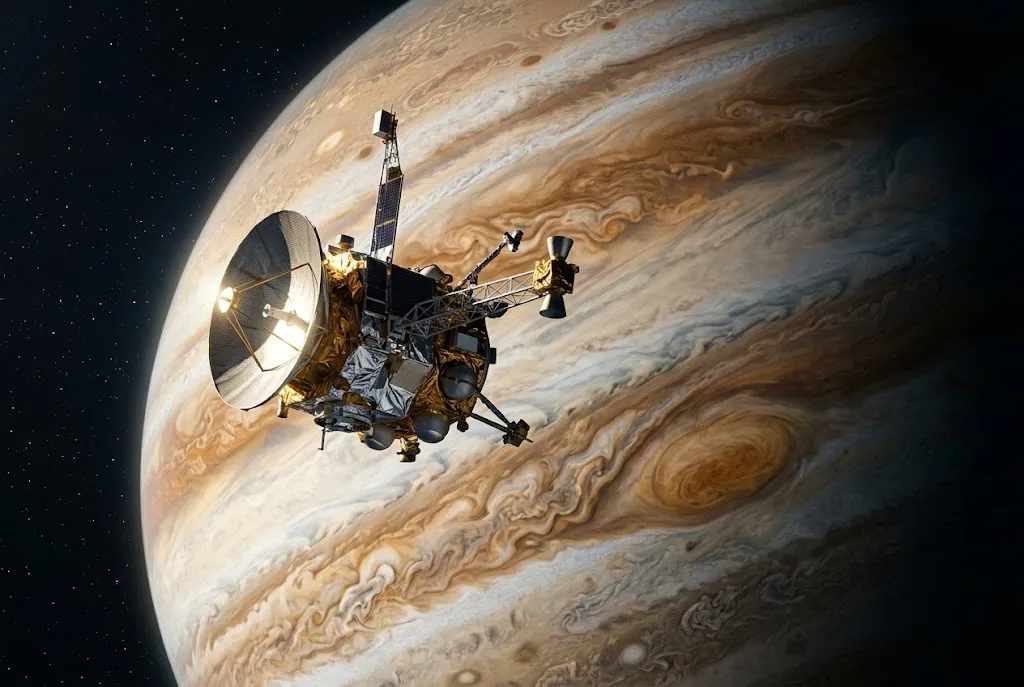
- The Energy Requirement: The initial estimates for the amount of negative energy required were astronomically large, equivalent to the mass of Jupiter or even an entire galaxy. Subsequent theoretical refinements by physicists like Harold White at NASA have suggested that by altering the shape of the warp bubble, the energy requirements could be reduced to something closer to the mass of a Voyager-1 spacecraft. Still, generating even this reduced amount of exotic matter remains far beyond our current technological capabilities.
- Generating Exotic Matter: How do you create something with negative energy density? Current physics suggests that quantum phenomena, like the Casimir effect, produce localized regions of negative energy. However, these are fleeting, microscopic, and insufficient for macro-scale manipulation. The vacuum of space, far from being truly empty, teems with quantum fluctuations that briefly pop into and out of existence. Could we somehow harness this quantum vacuum energy? It's a profound question that touches on fundamental physics. You can read more about the Casimir effect and its implications here: https://en.wikipedia.org/wiki/Casimir_effect (opens in a new tab).
- Causality Violation: One of the most significant theoretical problems is the potential for causality violations. If FTL travel were possible, it could theoretically allow for communication or even travel into the past, leading to paradoxes. Most physicists agree that any true FTL mechanism would likely be forbidden by some deeper physical principle to preserve causality.
- The "Front of the Bubble" Problem: A ship inside a warp bubble would be causally disconnected from the spacetime in front of it. This means you couldn't steer the ship, stop it, or even avoid obstacles ahead. You would need some pre-programmed trajectory, or perhaps a way to "see" and interact with spacetime beyond the bubble, which itself poses another physics puzzle.
- Exotic Matter Stability: Even if generated, could exotic matter be stabilized long enough to form and maintain a warp bubble? Its ephemeral nature in current theoretical contexts makes this highly improbable.
These challenges highlight that the Alcubierre drive, while a compelling theoretical model, is still firmly in the realm of speculative physics, requiring breakthroughs in quantum gravity and energy manipulation that are currently unimaginable.
Beyond the Warp Bubble: Other FTL Concepts
While the Alcubierre drive is the most widely discussed, other theoretical FTL concepts also rely on similar extraordinary physics:
- Wormholes: These hypothetical "tunnels" through spacetime could connect two distant points, dramatically shortening the travel distance. However, maintaining a traversable wormhole also requires exotic matter to keep its "mouths" open against gravitational collapse. Our previous blog, "Can Wormholes Really Connect Two Universes? Science vs Theory" (/blogs/can-wormholes-really-connect-two-universes-science-vs-theory), dives deeper into this fascinating concept.
- Faster-Than-Light Particles (Tachyons): These hypothetical particles are theorized to always travel faster than light. However, they are also purely theoretical and would present their own set of paradoxes if they existed. Our article, "Do Tachyons Exist? Decoding Faster-Than-Light Travel" (/blogs/do-tachyons-exist-decoding-faster-than-light-travel-4797), explores this possibility further.
Both wormholes and tachyons, much like the Alcubierre drive, bump up against the need for physics beyond our current understanding—often involving exotic matter or energy.
Is It Pure Science Fiction?
For now, the dream of FTL travel remains firmly rooted in science fiction. The exotic matter required to power an Alcubierre drive or stabilize a wormhole is purely hypothetical. However, the history of science is filled with "impossible" ideas that eventually became reality. From powered flight to quantum mechanics, humanity has repeatedly pushed the boundaries of what was once considered impossible.
The theoretical work on warp drives and exotic matter is valuable not just for its FTL implications, but for the deeper understanding it provides about the nature of spacetime, gravity, and quantum mechanics. Even if we never build a warp drive, the pursuit of such grand challenges helps us unravel the fundamental laws of the universe. Studying these concepts can push the boundaries of what we understand about spacetime, quantum fields, and the very fabric of reality. You can find more detailed discussions on the theoretical physics involved in warp drives and FTL concepts on the NASA warp drive studies page, or specifically on the Alcubierre drive via its Wikipedia page: https://en.wikipedia.org/wiki/Alcubierre_drive (opens in a new tab).
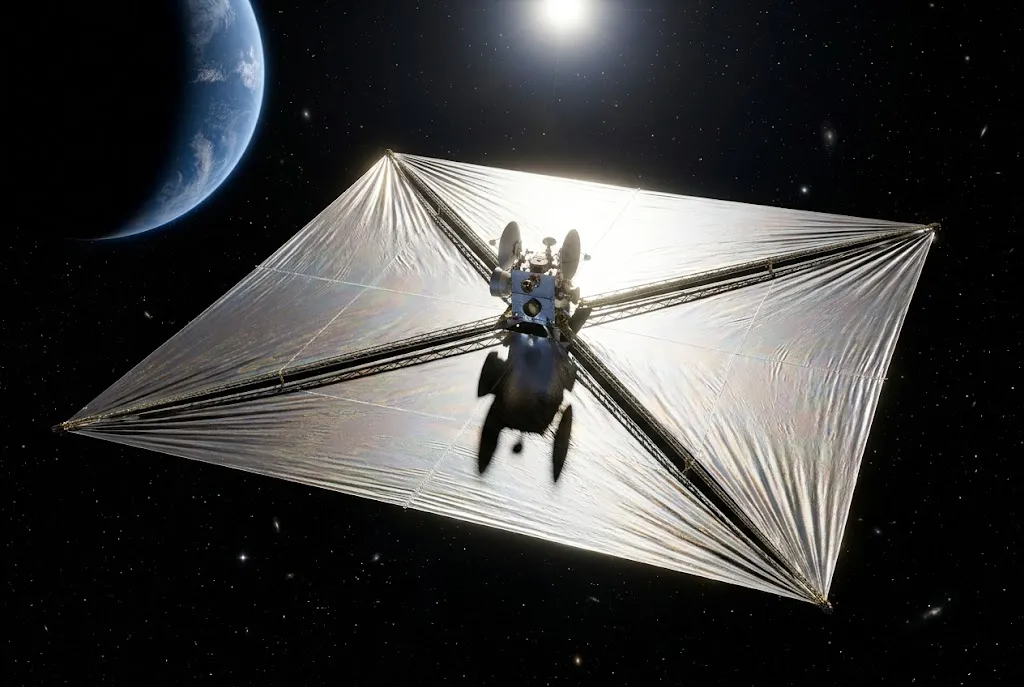
The future of space travel might still involve decades, or even centuries, of conventional propulsion, pushing the limits of ion engines and nuclear rockets. But the allure of FTL travel, driven by concepts like exotic matter, will continue to inspire physicists to peer into the deepest mysteries of the cosmos, wondering if one day, we might just learn to surf the very fabric of spacetime itself. Until then, I'll keep my eyes on the stars, and my mind open to the possibilities.
Conversation0
No comments yet. Be the first to share a thought — the best questions often become new stories.