I remember staring up at the night sky as a child, lost in the shimmering tapestry of stars, and wondering if we were truly alone. That profound question, a blend of hope and fear, has driven humanity’s quest for discovery for millennia. But what if the answer isn't light-years away, whispered on the solar winds from distant galaxies? What if, instead, ancient, derelict alien technology lies dormant, hidden in plain sight, right here within our own cosmic backyard? The thought sends a shiver down my spine, a mix of thrill and unsettling possibility.
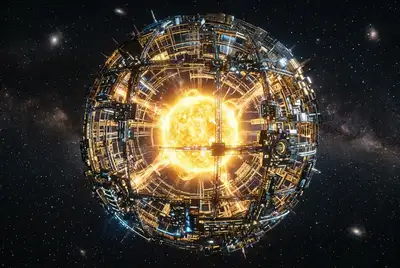
For decades, the search for extraterrestrial intelligence (SETI) has primarily focused on radio signals, listening for deliberate broadcasts across the vast interstellar ocean. More recently, the concept of **technosignatures** has broadened our scope. Technosignatures aren't just radio signals; they're any observable indicator of technology developed by an alien civilization. This could range from the tell-tale atmospheric pollution of an industrial civilization on a distant exoplanet (as discussed in a previous blog, could-ai-uncover-hidden-cosmic-anomalies-3679) to the colossal energy collectors of a Dyson Sphere, a hypothetical megastructure that completely encloses a star to harness its energy output. The hunt for these cosmic calling cards typically looks outwards, towards other star systems. But what if we should be looking *inwards*, examining the nooks and crannies of our own solar system with fresh eyes?
The Case for Relics: Why Look So Close to Home?
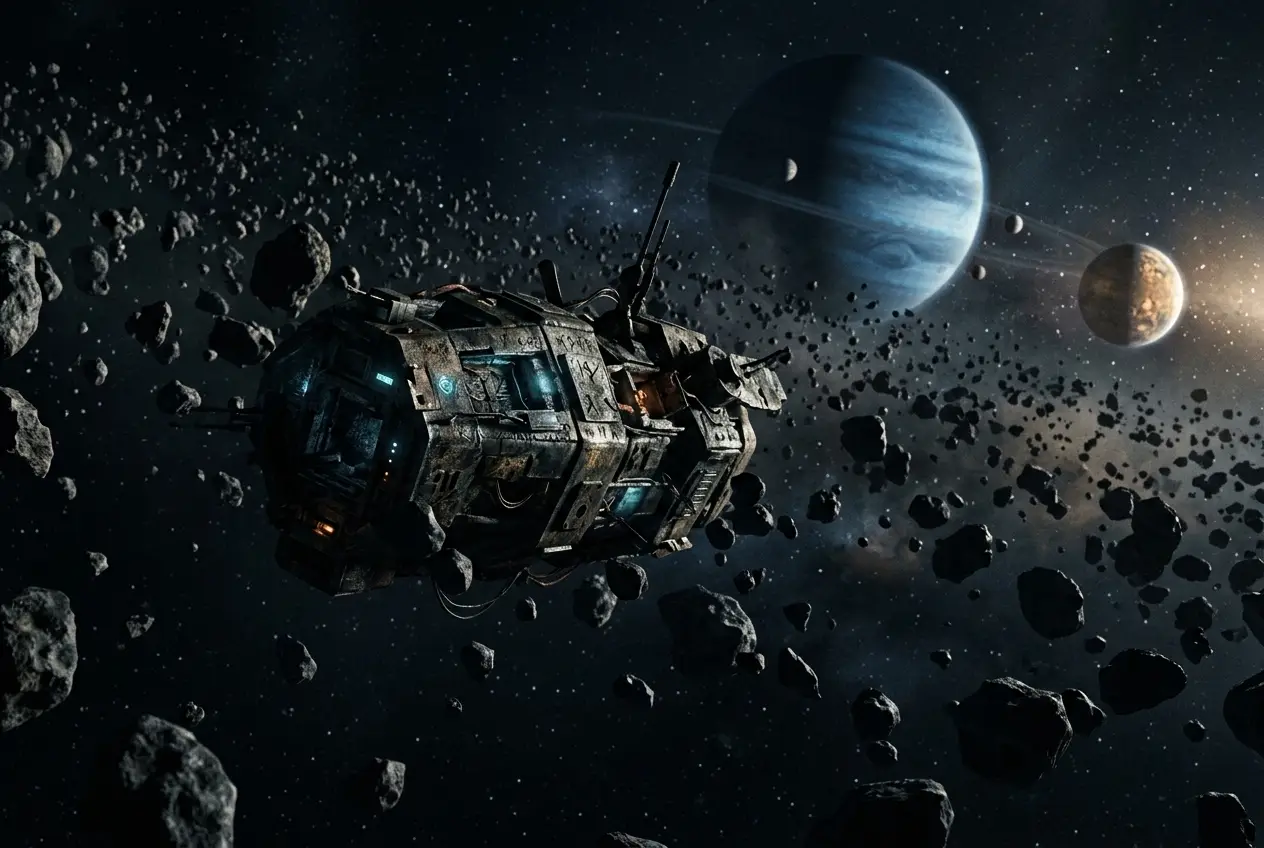
The idea of alien artifacts in our solar system might sound like the stuff of science fiction novels, but it's a concept that increasingly intrigues astrobiologists and astronomers. Our solar system is ancient, over 4.5 billion years old. Even if intelligent life is rare, it could have arisen elsewhere in the galaxy billions of years ago. A highly advanced civilization might have explored the galaxy long before humanity even existed, leaving behind probes, mining equipment, or even abandoned outposts. Consider how far our own probes have traveled in just a few decades; imagine what a civilization thousands or millions of years ahead of us could achieve.
The vastness of space is our greatest ally in hiding things. The asteroid belt alone contains millions of objects larger than a kilometer, and countless smaller ones. The Kuiper Belt and the Oort Cloud, even further out, are veritable cosmic junkyards of icy bodies. These regions are largely unexplored. We have only scratched the surface of mapping and understanding them. If an alien probe, for instance, were the size of a bus or even a small asteroid, camouflaged or simply dormant, it could easily go unnoticed for eons.
Anomalous Objects: Whispers in the Void?
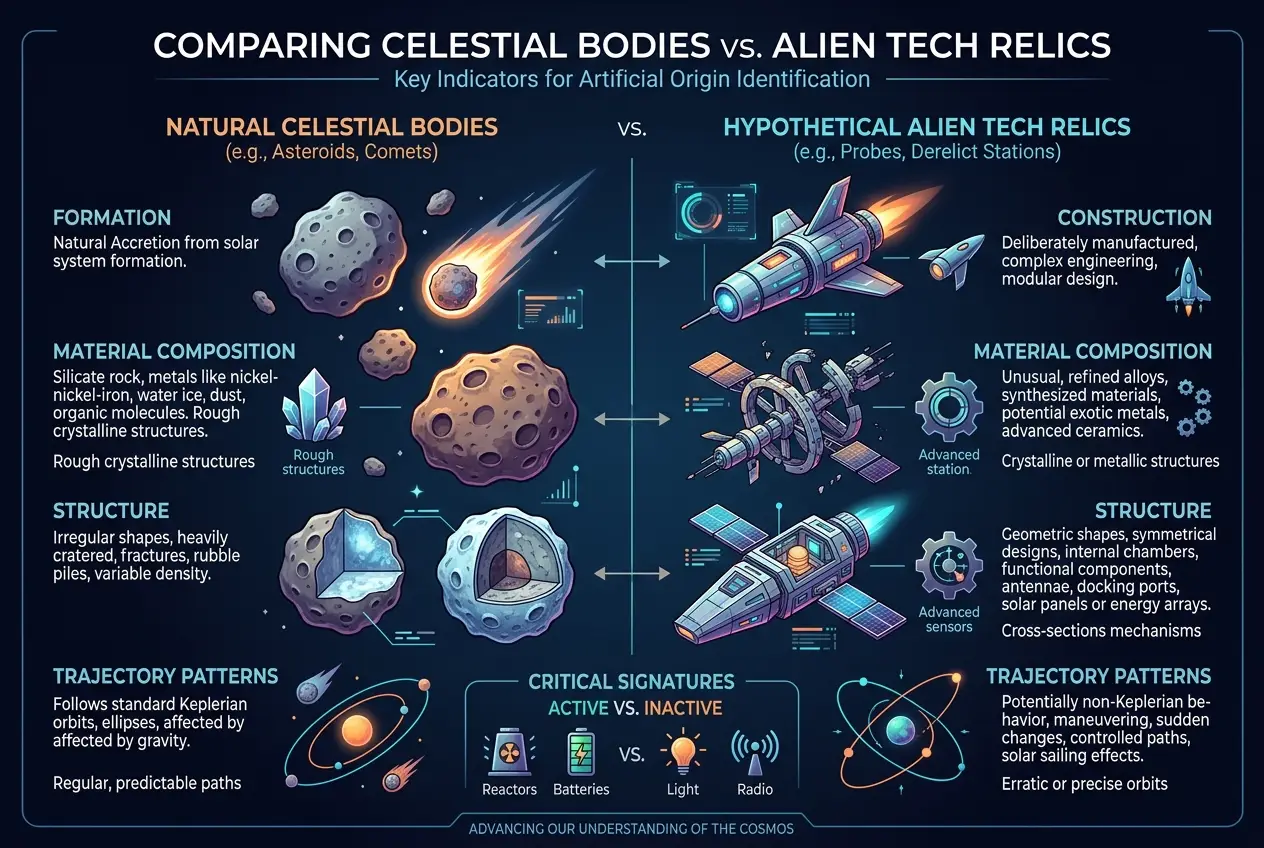
When we discuss "alien tech relics," we're talking about objects that defy natural explanation. They might exhibit unusual trajectories, chemical compositions, or structural integrity that suggests artificial origin. Think about the now-famous interstellar object **'Oumuamua'**. When it passed through our solar system in 2017, its highly unusual cigar shape and non-gravitational acceleration sparked intense debate. While most scientists concluded it was a natural comet or asteroid, the anomalies were significant enough for some, like Harvard astrophysicist Avi Loeb, to seriously consider the possibility of it being an alien probe. This type of analysis, looking at unusual characteristics and considering artificial origins, is exactly what the search for relics entails. You can dive deeper into this fascinating debate by reading our blog on /blogs/is-oumuamua-alien-tech-deciphering-interstellar-visitors-5571.
The Kuiper Belt and Beyond: A Cosmic Graveyard?
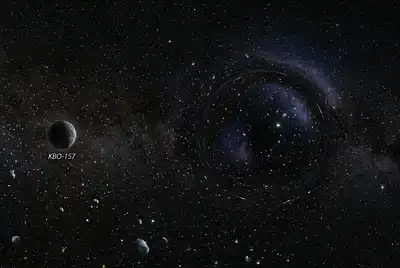
The Kuiper Belt, extending beyond Neptune, is a frigid reservoir of icy bodies, a leftover from the solar system's formation. It's also an incredibly stable environment where objects can persist for billions of years without significant erosion from solar winds or atmospheric entry. If an ancient alien probe or structure entered our solar system millions or billions of years ago and became dormant, the Kuiper Belt would be an ideal place for it to remain preserved, like an archaeological site frozen in time. The same applies to the even more distant Oort Cloud.
Unusual Asteroids and Moons
Beyond the Kuiper Belt, even within the main asteroid belt between Mars and Jupiter, we find objects with peculiar properties. Some asteroids have unexpectedly high densities, unusual rotational patterns, or spectral signatures that don't quite match known natural compositions. Could these be mere geological oddities, or might some represent highly eroded or cleverly disguised alien artifacts? The question is not about certainty, but about the scientific imperative to investigate anomalies fully. For instance, the discussion around certain anomalous meteorites has always sparked curiosity – are-some-meteorites-alien-tech-9812 delves into this intriguing possibility.
How Would We Find Them? The Search for Technosignatures
The challenge of finding these relics is immense, but not insurmountable. We'd need to employ advanced observational techniques and re-evaluate existing data with a new hypothesis in mind.
Enhanced Telescopic Surveys
New generations of telescopes, both ground-based and space-based, offer unprecedented resolution and light-gathering capabilities. Projects like the Vera C. Rubin Observatory (formerly LSST) will conduct vast surveys of the night sky, cataloging billions of objects. Anomalies in shape, reflectivity, or unexpected spectral properties could flag potential targets for closer examination. For example, a perfectly geometric shape or an unnaturally smooth surface might suggest artificial construction, even if heavily weathered.
Infrared and Radio Signatures
Even a dormant relic might emit a faint heat signature, different from natural thermal emissions, or reflect radio waves in unusual patterns. Advanced infrared telescopes could pick up subtle thermal differences, while radio telescopes could search for strange reflections or even a minimal power signature from a hibernating system.
In-Situ Missions and Robotic Exploration
Ultimately, direct investigation would be required. Missions designed to specifically seek out and analyze anomalous objects in regions like the asteroid belt or the Kuiper Belt could be deployed. Imagine a swarm of small, autonomous probes, each equipped with spectrometers, cameras, and magnetic sensors, systematically scanning potential sites. This would be a monumental undertaking, but one that could rewrite our understanding of life in the universe. The sheer scale of such a project would necessitate advancements in autonomous robotics and artificial intelligence, topics explored in blogs like /blogs/can-ai-design-its-own-evolution-decoding-future-machines-4579.
The Fermi Paradox and the Great Filter
The search for alien relics ties directly into the **Fermi Paradox**, the puzzling contradiction between the high probability of extraterrestrial civilizations existing and the lack of observational evidence for them. If advanced civilizations are common, why haven't we seen any clear signs? One explanation, often referred to as the "Great Filter," suggests that something prevents intelligent life from reaching a stage where it can spread across the galaxy. However, another less talked-about resolution to the Fermi Paradox is that they *have* been here, or their probes have, and they simply left. They might be here now, unnoticed, or their traces are so ancient they are mistaken for natural phenomena. You can learn more about the Fermi Paradox on its Wikipedia page: [https://en.wikipedia.org/wiki/Fermi_paradox](https://en.wikipedia.org/wiki/Fermi_paradox).
The concept of ancient alien technology also connects to discussions about **alien megastructures** – colossal constructions built by advanced civilizations, like the aforementioned Dyson Spheres. If such an advanced civilization existed, their exploratory probes might well precede their megastructures, or indeed, be the only evidence left if their civilization has long since vanished. We have an interesting read on that topic too: /blogs/alien-megastructures-are-we-missing-cosmic-architects-6667.
The Ethics and Implications of Discovery
If we ever *did* discover an alien artifact in our solar system, the implications would be profound. It would instantly answer the question of whether we are alone and force a fundamental re-evaluation of humanity's place in the cosmos.
* **Scientific Advancement:** Analyzing alien technology could revolutionize our understanding of physics, engineering, and materials science. We might discover entirely new principles or applications.
* **Philosophical Impact:** The discovery would challenge religious beliefs, philosophical frameworks, and our self-perception as the sole intelligent species.
* **Security Concerns:** What would be the intent behind the object? Is it a dormant observer, a defunct tool, or something with a hidden purpose? Who would control it? These are questions that would immediately arise.
* **Interstellar Archaeology:** Such a discovery would open up an entirely new field: interstellar archaeology, seeking out and deciphering the remnants of ancient cosmic travelers.
Conclusion: A New Frontier of Exploration
The search for alien tech relics within our solar system shifts the focus of our quest for extraterrestrial life, moving it from distant stars to our immediate cosmic neighborhood. While highly speculative, it’s a scientifically valid line of inquiry that encourages us to look closer, question anomalies, and expand our definition of what we might find. It reminds us that the universe is full of mysteries, and sometimes, the most astonishing discoveries might be awaiting us just beyond the familiar, silently orbiting our sun. Keeping an open mind, while rigorously applying scientific methodology, is key to uncovering whether our solar system truly holds secrets from civilizations past.
Perhaps the next time I gaze at the stars, I won't just wonder what's out there, but what hidden wonders might already be *in here*, waiting for us to notice them.
**External Sources:**
* Wikipedia: Technosignature - [https://en.wikipedia.org/wiki/Technosignature](https://en.wikipedia.org/wiki/Technosignature)
* Wikipedia: 'Oumuamua - [https://en.wikipedia.org/wiki/%CA%BBOumuamua](https://en.wikipedia.org/wiki/%CA%BBOumuamua)
* Wikipedia: Dyson sphere - [https://en.wikipedia.org/wiki/Dyson_sphere](https://en.wikipedia.org/wiki/Dyson_sphere)
Frequently Asked Questions
While a radio signal is a specific type of technosignature, the term 'technosignature' is much broader. It encompasses any observable evidence of technology used by an extraterrestrial civilization, including atmospheric pollutants, artificial light patterns, megastructures like Dyson Spheres, or even the remnants of derelict probes and spacecraft.
These distant regions of our solar system are extremely cold, stable, and have very little activity, acting as a natural deep-freeze. Objects within them are less subject to erosion from solar radiation, planetary atmospheres, or gravitational perturbations, making them ideal places for ancient artifacts to remain preserved for billions of years.
Yes, the interstellar object 'Oumuamua' which passed through our solar system in 2017, exhibited several highly unusual characteristics, including its elongated shape and unexpected non-gravitational acceleration. While most scientists concluded it was a natural phenomenon, some prominent astrophysicists, like Avi Loeb, have argued that its anomalies warrant serious consideration of an artificial origin.
The primary challenges include the immense vastness of space, the small size of hypothetical relics compared to celestial bodies, potential camouflage or dormancy of such objects, and the difficulty in distinguishing natural anomalies from artificial ones without direct observation or detailed analysis. Current observational capabilities are limited for comprehensive surveys of distant solar system regions.
The discovery would have a revolutionary impact, providing definitive proof of extraterrestrial intelligence. It would fundamentally alter humanity's scientific, philosophical, and religious perspectives, potentially leading to unprecedented technological advancements through reverse-engineering, and raising complex questions about interstellar ethics and security.
Verified Expert
Alex Rivers
A professional researcher since age twelve, I delve into mysteries and ignite curiosity by presenting an array of compelling possibilities. I will heighten your curiosity, but by the end, you will possess profound knowledge.
Leave a Reply
Comments (0)
No approved comments yet. Be the first to share your thoughts!
 Join Us

 Unknown Author






















Leave a Reply
Comments (0)