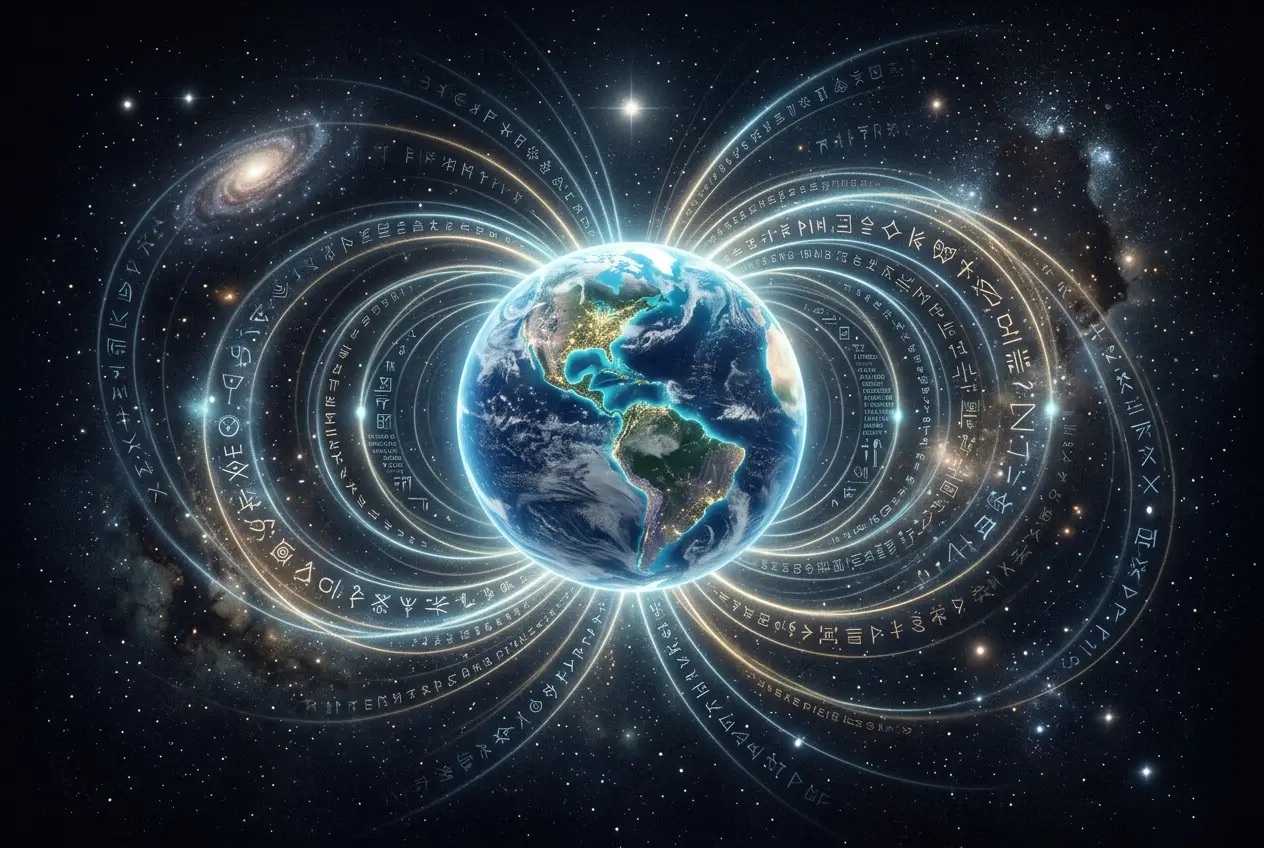
The air around us, the ground beneath our feet, the vast expanse of space—they all hum with invisible forces. Among them, Earth’s magnetic field stands as a silent sentinel, shaping our planet and influencing life in ways we’re only beginning to understand. But what if this ubiquitous, ever-present force is more than just a shield against solar winds? What if, in its ancient and dynamic dance, it acts as an unseen archive, holding echoes of the past, perhaps even **lost memories**?
I often find myself contemplating the nature of information. We store it on hard drives, in the cloud, even within our very DNA. Yet, the universe itself seems to be a grand repository of data, from the cosmic microwave background radiation to the faint whispers of gravitational waves. The idea that Earth's own fundamental fields could participate in this cosmic information storage is a captivating one, pushing the boundaries of what we consider possible. Could ancient civilizations have instinctively sensed or even interacted with such a system? The concept might sound like science fiction, but when you delve into the deep science, curious anomalies, and even historical legends, a fascinating narrative begins to unfold.
## The Earth's Invisible Shield: Our Dynamic Geomagnetic Field
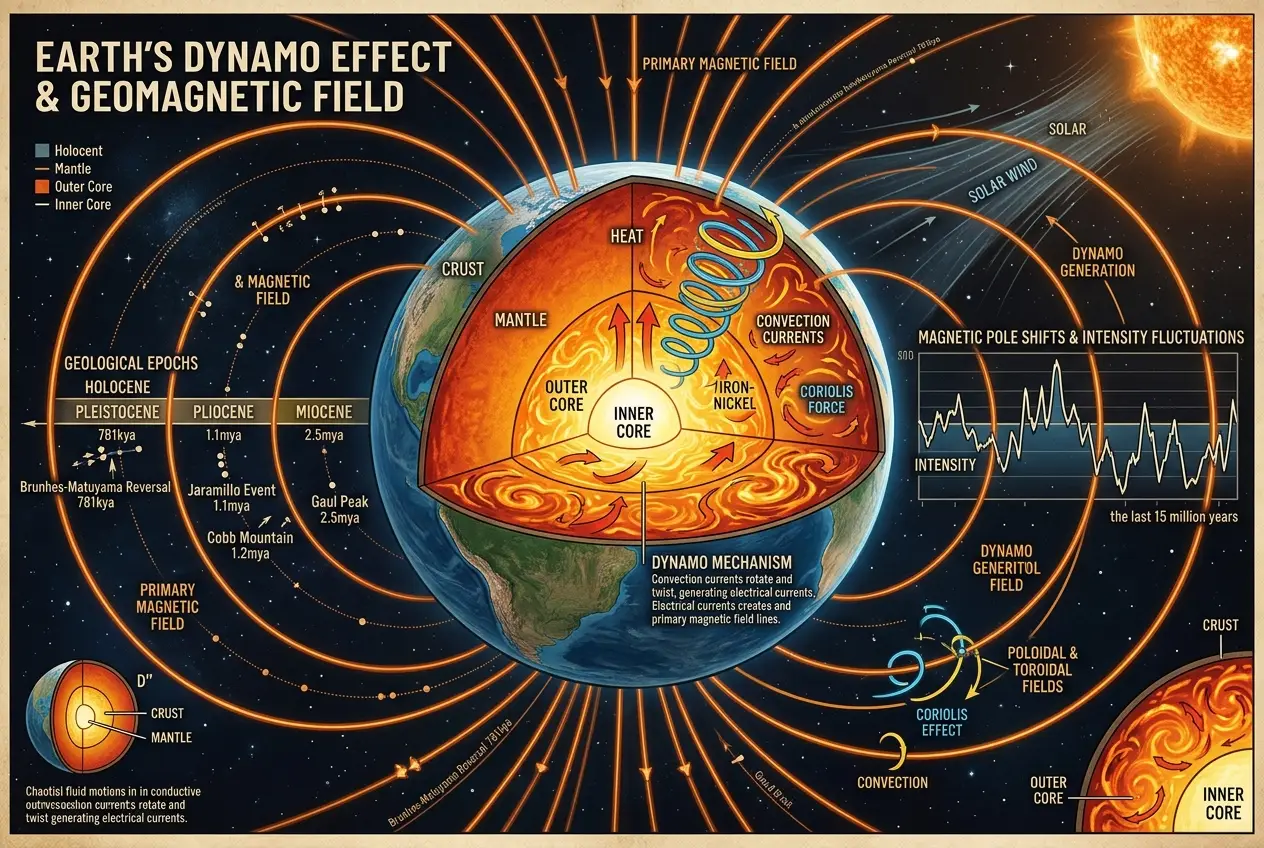
At its heart, our planet is a colossal, self-sustaining dynamo. Deep within its core, molten iron churns and swirls, generating electric currents that, in turn, create a vast and powerful magnetic field extending thousands of kilometers into space. This **geomagnetic field** is vital for life as we know it, deflecting harmful solar radiation and maintaining our atmosphere. Without it, Earth would likely resemble Mars – barren and exposed.
This field isn't static; it’s a living, breathing entity. Over geological timescales, it strengthens and weakens, drifts, and even undergoes dramatic reversals, where the magnetic North and South poles swap places. Think of it as a dynamic, constantly evolving invisible architecture that has been present since our planet's early days. You can learn more about its fascinating complexities on [Wikipedia's page on the Geomagnetic Field](https://en.wikipedia.org/wiki/Earth%27s_magnetic_field).
## A Cosmic Tape Recorder? Paleomagnetism and Its Secrets
If the Earth’s magnetic field is a dynamic entity, could its history be imprinted somewhere? The answer, in part, lies in a scientific discipline known as **paleomagnetism**. When volcanic lava cools and solidifies, or when sediments settle at the bottom of ancient seas, tiny magnetic minerals within them align with Earth’s magnetic field at that precise moment. These minerals then "lock in" that orientation, providing a permanent record of the field’s direction and intensity from millions of years ago.
Scientists use these geological "tape recordings" to reconstruct past magnetic field behavior, revealing everything from continental drift to the timing of pole reversals. It’s a powerful tool for understanding Earth’s deep history. But here’s where the curiosity deepens: if rocks can store information about the magnetic field's *state*, could the field itself, in a more complex, energetic sense, store other forms of information? Perhaps not in a digital "1s and 0s" way, but as resonant frequencies, subtle modulations, or energetic imprints that persist over time. The concept of [Paleomagnetism](https://en.wikipedia.org/wiki/Paleomagnetism) itself is a testament to the Earth's capacity for natural data recording.
## Beyond Navigation: Magnetoreception in Life
The idea of organisms interacting with magnetic fields isn't new; it's a well-established scientific fact. Many animals, from birds and sea turtles to salmon and even insects, possess a remarkable "sixth sense" called **magnetoreception**. They use Earth’s magnetic field as an invisible compass and map, guiding their epic migrations across vast distances. They can sense its direction, inclination, and even intensity, effectively "seeing" the magnetic landscape.
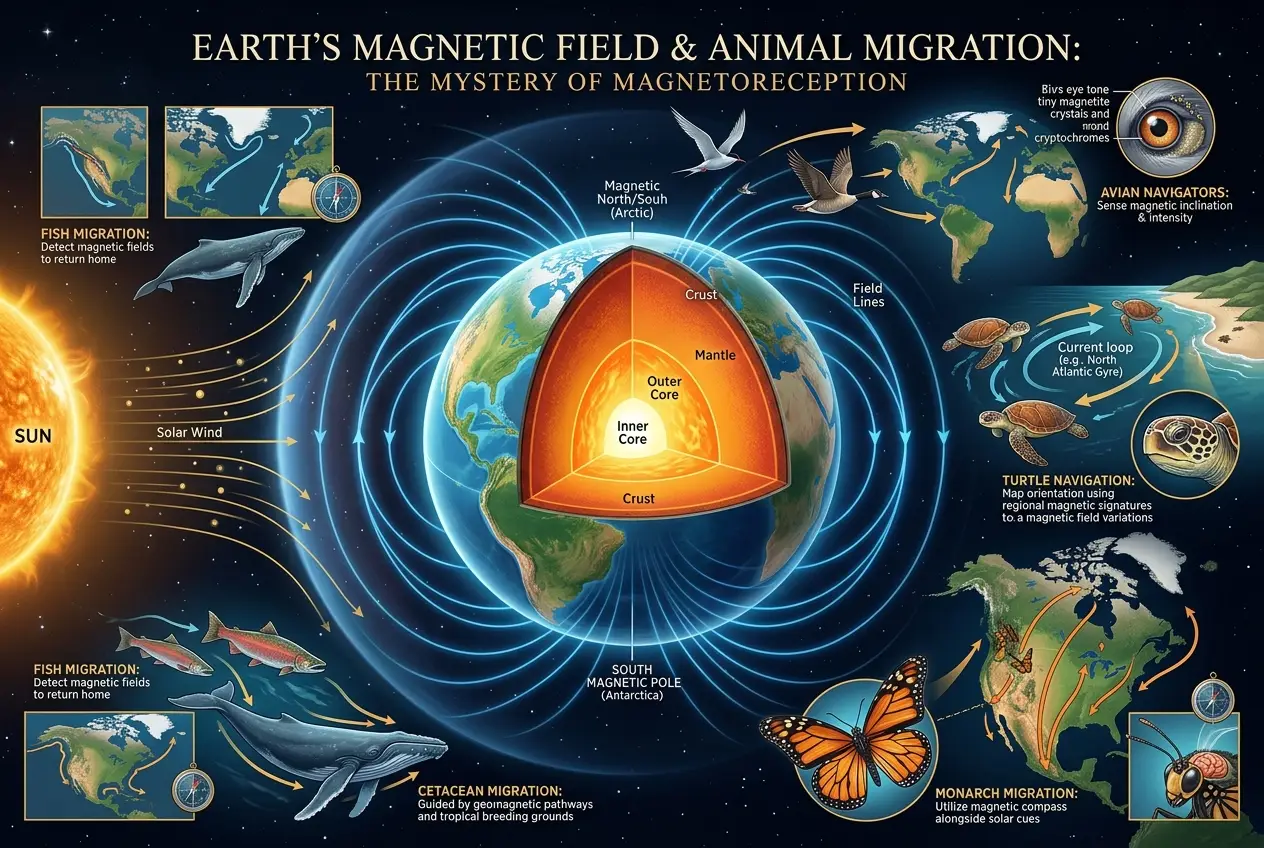
What fascinates me is the sheer precision and complexity of this biological interaction. If organisms can actively *perceive* and *interpret* magnetic information for navigation, could there be other, more subtle forms of interaction? Could living systems, particularly the human brain, also be subtly influenced or even act as receivers for information carried by these fields? We've explored related ideas in our blog, such as whether [Earth's magnetic field affects our minds](https://curiositydiaries.com/blogs/does-earths-magnetic-field-affect-our-minds-6923), hinting at this profound connection.
## The Brain, Memory, and Magnetic Influences
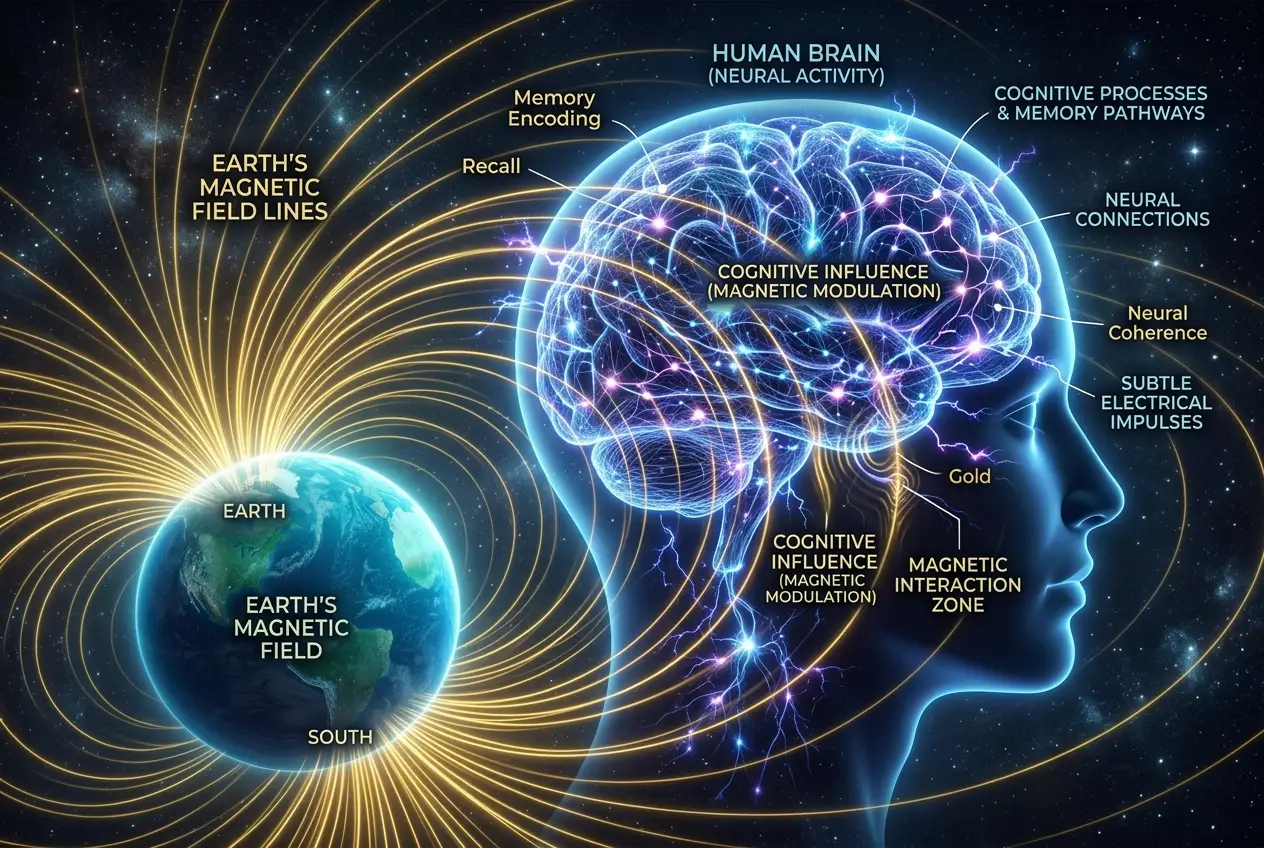
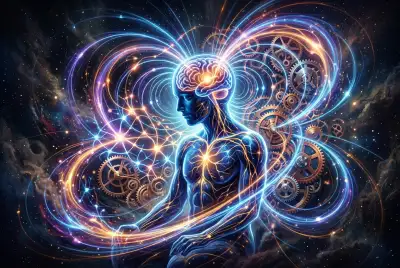
This brings us to the most intriguing and speculative part of our journey: the human connection. Our brains are incredibly complex bio-electrical systems, generating their own minute magnetic fields. Could our cognitive processes, particularly memory formation and retrieval, be influenced by external magnetic fields, perhaps even by the Earth’s own?
Some theories propose that the brain’s intricate neural networks, with their electrical signals, might be sensitive to external magnetic fluctuations. While mainstream science is still debating direct evidence for human magnetoreception on a conscious level, intriguing studies have explored the impact of subtle magnetic changes on brain activity and even reported anomalous experiences in areas with strong magnetic fields.
Consider the nature of [memory in biology](https://en.wikipedia.org/wiki/Memory). It's not just stored in individual neurons but emerges from complex patterns and connections. What if the very fabric of our memories, or the processes by which we access them, are subtly modulated by the geomagnetic environment? This doesn't suggest that memories are *stored* in the magnetic field, but rather that the field might act as a background medium, influencing the *accessibility* or *stability* of neural data. It’s a thought-provoking overlap between neuroscience and geophysics, asking if our brains are more attuned to the planetary pulse than we realize.
## Ancient Structures: Antennas or Archives?
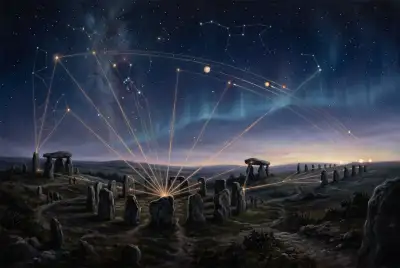
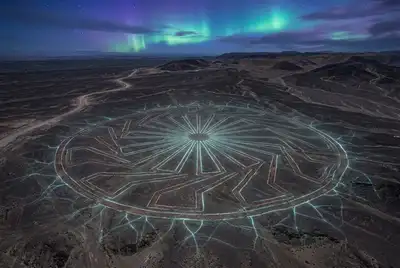
Throughout history, countless ancient cultures constructed megalithic structures – stone circles, pyramids, and massive temples – often aligned with celestial events or geological features. Many of these sites also exhibit curious magnetic anomalies. Were these alignments purely astronomical, or did ancient builders possess a deeper, intuitive understanding of Earth’s energetic grid?
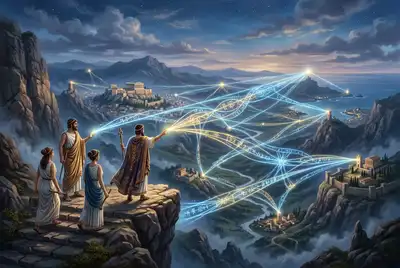
It’s tempting to wonder if these structures, much like colossal antennas, were designed not just to observe the heavens, but to interact with terrestrial fields. Could they have been places where the veil between the physical and the informational was thinner, allowing for a form of communal memory retrieval or energetic communication? This idea resonates with our previous explorations into how [ancient sites might have processed cosmic data](https://curiositydiaries.com/blogs/did-ancient-sites-process-cosmic-data-4975) or if [ancient cultures decoded nature's hidden sounds](https://curiositydiaries.com/blogs/did-ancient-cultures-decode-natures-hidden-sounds-8216). Perhaps these early civilizations understood the Earth’s fields as a form of "natural network," much like we use the internet today, as discussed in the context of [ancient megaliths as Earth's first global network](https://curiositydiaries.com/blogs/were-ancient-megaliths-earths-first-global-network-3626).
## The Quantum Leap: Could Information Be Stored Quantically?
Moving into the realm of cutting-edge physics, some scientists are exploring theories of **quantum information** and the universe as a vast, interconnected quantum system. Could the Earth’s magnetic field, at a fundamental level, exhibit quantum properties that allow for the storage or transmission of information in ways we don't yet grasp?
The concept of "zero-point energy" or the idea that empty space itself hums with quantum fluctuations suggests that reality might be far more information-rich than our classical models predict. If biological systems can leverage quantum phenomena, as suggested by quantum biology, then perhaps the interaction between consciousness, memory, and geomagnetism also has a quantum component. This isn't about traditional data storage but about subtle imprints or resonant patterns that could, theoretically, be accessed or "read" under specific conditions. It's a challenging but deeply fascinating avenue of inquiry.
## Challenges and the Path Forward
The idea that Earth’s fields could hold lost memories is, admittedly, highly speculative and far from scientific consensus. Proving such a hypothesis would require revolutionary breakthroughs in understanding the nature of consciousness, memory, and the quantum interface between biology and physics. The challenges are immense: how would such information be encoded? How could it be reliably accessed or decoded? And how do we differentiate between random fluctuations and meaningful data?
Despite these hurdles, the pursuit of such questions pushes the boundaries of our knowledge. Interdisciplinary research, combining geophysics, neuroscience, quantum physics, and even archaeology, could slowly unravel these profound mysteries. What we consider "memory" might be far more expansive than the purely biological, perhaps echoing in the very fabric of our planet.
## Conclusion: An Unseen Archive?
The Earth’s geomagnetic field is a marvel of natural engineering, vital for our survival. But the thought that it might also be a silent, ancient archive, subtly influencing life and perhaps even holding echoes of past events or collective consciousness, is profoundly exciting. While concrete evidence remains elusive, the anomalies and unanswered questions ignite our curiosity. Could the next great scientific discovery be hidden not in distant galaxies, but in the invisible forces right beneath our feet, waiting for us to learn how to listen? Perhaps, one day, we will learn to decode the whispers of Earth’s deep past, stored in its very heart.
Frequently Asked Questions
Geomagnetism refers to the study of Earth's magnetic field, which is generated by the movement of molten iron in the planet's outer core. It extends thousands of kilometers into space and protects Earth from solar radiation.
While highly speculative, theories suggest that information might be stored not as digital data but as subtle modulations, resonant frequencies, or energetic imprints within the field. This could involve quantum phenomena or complex interactions with biological systems.
Paleomagnetism is the study of the Earth's past magnetic field, recorded in rocks and sediments. It demonstrates that geological materials can preserve magnetic information over vast timescales, prompting questions about what other types of information might be stored.
While many animals undeniably use magnetoreception for navigation, direct evidence of conscious human magnetoreception is debated. Some studies explore subconscious effects or influences on brain activity, but it's not widely accepted as a conscious human sense.
Some theories propose that ancient megalithic structures, often aligned with celestial events and situated on magnetic anomalies, might have been designed to interact with or even amplify Earth's energetic fields, possibly for communal memory or communication.
This interdisciplinary concept draws from geophysics, neuroscience, quantum physics, and even archaeology. Researchers are exploring the subtle interactions between magnetic fields, biological systems, and the nature of information storage in the universe.
Verified Expert
Alex Rivers
A professional researcher since age twelve, I delve into mysteries and ignite curiosity by presenting an array of compelling possibilities. I will heighten your curiosity, but by the end, you will possess profound knowledge.
Leave a Reply
Comments (0)
No approved comments yet. Be the first to share your thoughts!
 Join Us


 Unknown Author

















Leave a Reply
Comments (0)