


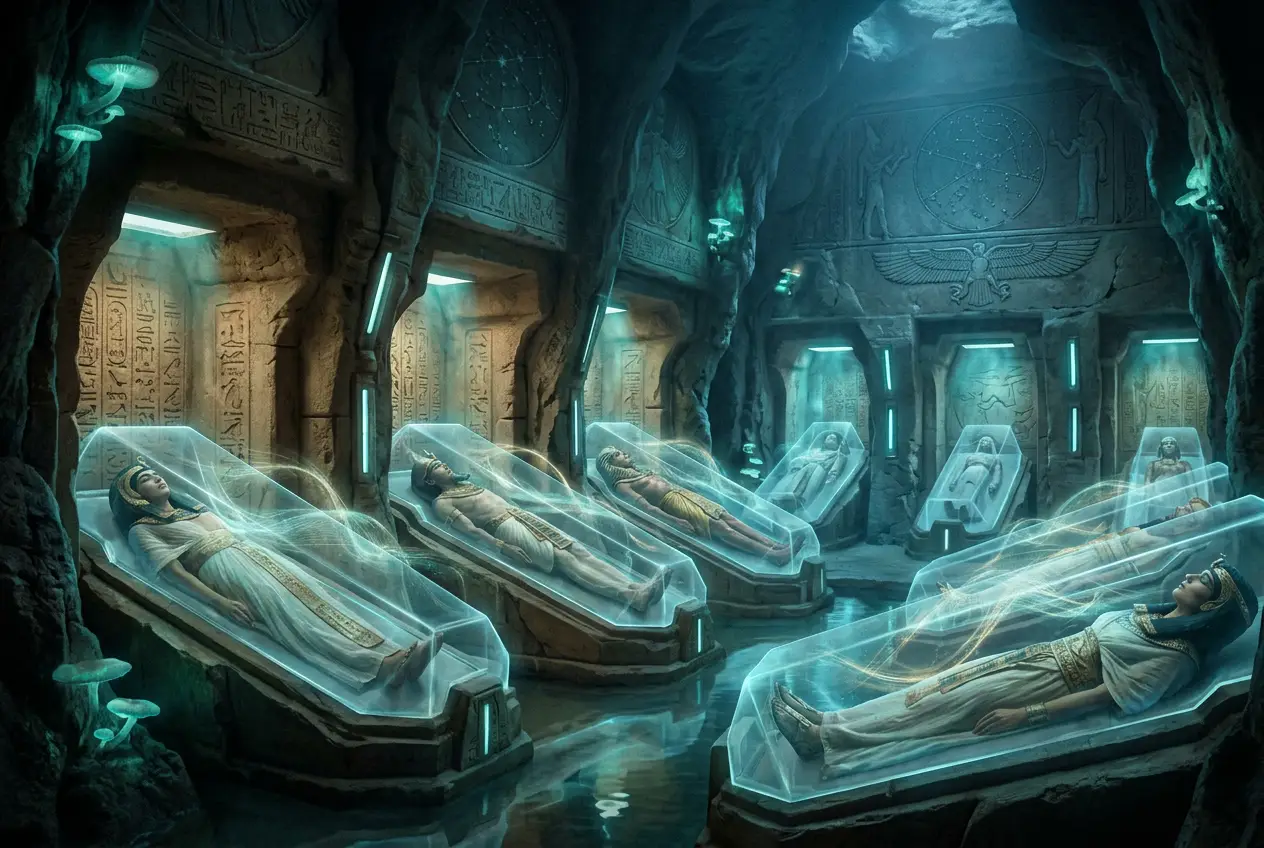
I’ve often found myself captivated by the sheer audacity of human ambition, especially when it confronts the ultimate frontier: mortality. Modern science, with its whispers of cryonics and genetic engineering, is striving to cheat death, to extend life, or even to suspend it indefinitely. But what if this wasn't a uniquely modern aspiration? What if, buried deep within the sands of time and the annals of forgotten civilizations, lay a secret, an ancient knowledge of biostasis that rivals our most futuristic dreams?
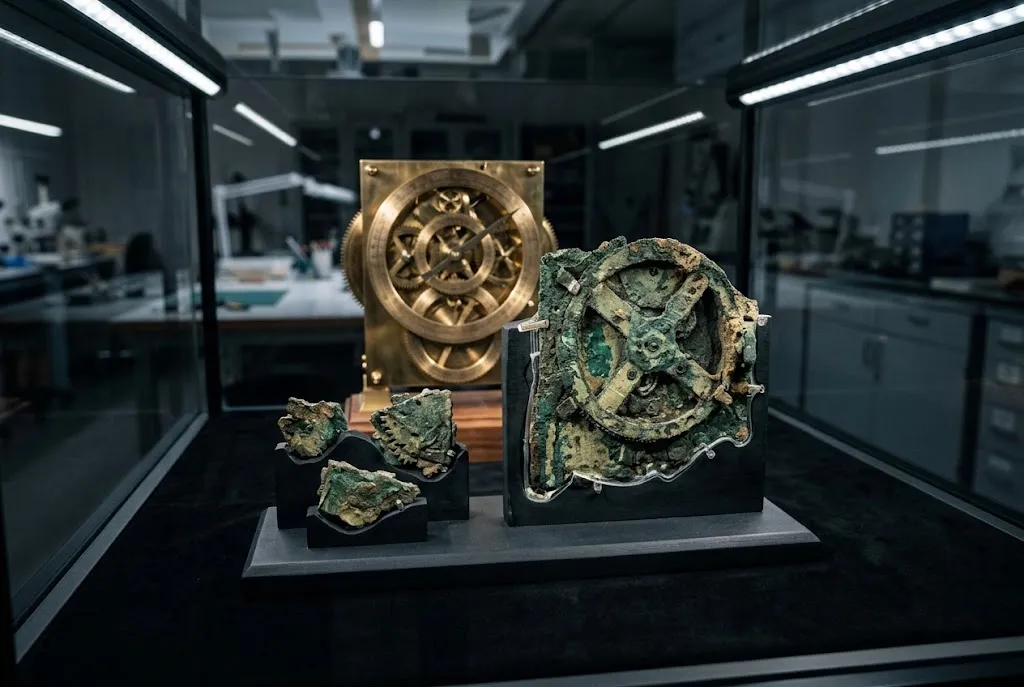
Recently, I was contemplating the incredible complexity of the Antikythera Mechanism, a marvel of ancient Greek engineering that functioned as a cosmic computer. It made me wonder: if they could build such intricate devices, what other sophisticated understandings might they have possessed, particularly in areas we consider exclusively modern? This thought led me down a fascinating rabbit hole, exploring whether ancient civilizations might have somehow mastered forms of biological suspension, not just for mummification, but for genuine, long-term biostasis.
The Modern Dream: Cryonics and Biostasis
Before we dive into the ancient world, let's briefly touch upon what modern science means by biostasis. Essentially, it's the ability of an organism to survive periods of extreme environmental change in a state of reduced metabolic activity, sometimes called "suspended animation." Think of bears hibernating or tardigrades entering a cryptobiotic state. Humans are far more complex, and achieving biostasis for us is currently the holy grail of cryonics – preserving bodies or brains at ultra-low temperatures, hoping for future revival when technology permits. It involves complex processes like vitrification to prevent ice crystal formation, a challenge that still baffles even our advanced laboratories. You can learn more about modern cryonics on Wikipedia's page on Cryonics (opens in a new tab).
The goal is not merely preservation, like a museum exhibit, but the potential for reanimation. It’s a bold scientific gamble, a desperate reach for a future that might overcome the limitations of the present. But did ancient cultures, perhaps intuitively or through forgotten technologies, stumble upon similar pathways?
Beyond Mummification: Hints of Ancient Biostasis?
When we talk about ancient preservation, mummification is the first thing that springs to mind, especially the elaborate rituals of ancient Egypt. The Egyptians meticulously embalmed their dead, removing organs, drying the body with natron salt, and wrapping it in linen. This was driven by a profound belief in the afterlife and the necessity of preserving the body for the soul's return. It was an incredible feat of ancient chemistry and anatomy.
However, mummification, as we understand it, is about preventing decomposition, not suspending life. The body is very much dead. Yet, some intriguing anomalies suggest a deeper, perhaps more sophisticated understanding of preservation, or even accidental biostasis, in different ancient contexts:
- Bog Bodies: Across northern Europe, remarkably preserved "bog bodies" have been discovered. These individuals, often dating back thousands of years, were preserved not by human intent (beyond perhaps ritual sacrifice), but by the unique anaerobic, acidic, and cold conditions of peat bogs. The low temperature and lack of oxygen halt decomposition, often preserving skin, hair, and even internal organs with astonishing detail. While natural, these discoveries reveal nature's own form of "biostasis," where extreme conditions lead to long-term preservation.
- Ice Mummies: Perhaps the most famous example is Ötzi the Iceman, a Chalcolithic man found frozen in the Ötztal Alps. His body, along with his clothes and tools, was remarkably preserved for over 5,300 years. Similarly, Inca ice mummies found high in the Andes offer poignant glimpses into ancient life, frozen solid by the extreme mountain environment. These are instances of accidental cryopreservation, but they show that cold can indeed be a powerful agent for suspending the clock of decay.
These natural phenomena highlight that ancient peoples were undoubtedly aware of the preservative power of certain environments. Did this awareness, coupled with their often-advanced understanding of natural compounds and the human body, lead them to attempt to replicate or manipulate these processes intentionally? I often wonder if their extensive knowledge of herbs, poisons, and natural anesthetics, which was quite profound, could have been leveraged in ways we haven't yet comprehended. For instance, some plants can induce states of profound torpor, mimicking elements of suspended animation.
Lost Biological Tech or Forgotten Rituals?
The leap from preserving a corpse to suspending a living organism is immense. Modern cryonics is still grappling with the complexities. So, if ancient civilizations did achieve a form of biostasis, it would imply a "lost technology" or a biological understanding far beyond our current historical narrative.
I've speculated about this extensively. Could certain ancient rituals, often shrouded in mysticism and symbolic language, have contained practical elements of biological manipulation? Consider tales from various cultures:
- Sleeping Heroes: Myths across the world speak of heroes or enlightened beings who enter a long sleep, only to awaken centuries later to guide their people. King Arthur, Rip Van Winkle (a more modern take, but the trope is ancient), and figures from Buddhist and Hindu traditions who enter deep meditative states for extended periods, almost achieving a form of non-death. Are these mere metaphors, or echoes of a practice we've lost?
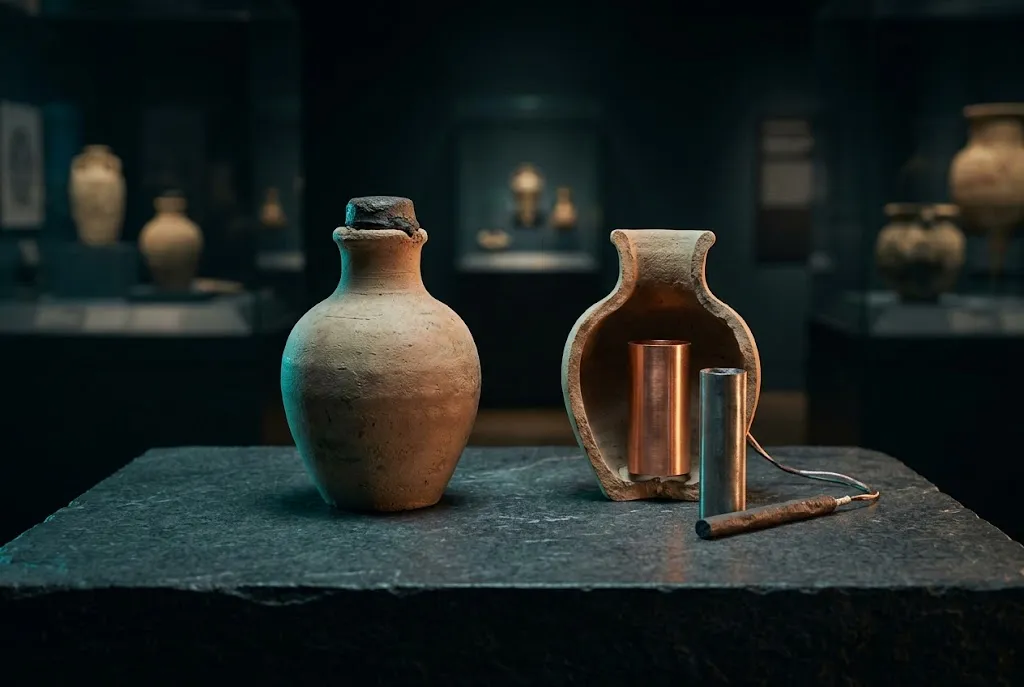
- The Power of Anesthesia and Induced States: Ancient cultures certainly developed sophisticated anesthetics and sedatives from natural sources. Opium, mandrake, belladonna – these were used in medicine and religious rites. Could a precise, controlled cocktail of such substances, perhaps combined with specific environmental conditions (like cold chambers or anoxia), have induced a state of minimal metabolic activity, a true biological stasis? This might resonate with the idea discussed in /blogs/quantum-healing-did-ancients-tap-bio-fields-5348, suggesting a subtle manipulation of the body's energy or biological state.
This isn't about simply stopping the heart, but slowing cellular processes to an almost imperceptible crawl, without causing irreparable damage upon awakening. It's a concept that touches upon the very essence of life and its boundaries. I believe if we look closely at ancient texts and archaeological finds, we might find more than just embalming instructions. Perhaps some symbols or architectural features could point towards specific environmental controls or chemical preparations. The level of detail and scientific acumen shown in other areas, such as the construction of megalithic structures or the intricate astronomical calculations of the Maya, suggests a capacity for sophisticated experimentation.
The Missing Link: Evidence for Revival
The biggest challenge to this fascinating hypothesis is the lack of verifiable evidence for revival. While we have preserved bodies, we have no credible accounts of someone successfully reanimated after centuries of induced biostasis. This is where the ancient ambition likely diverged from our modern one.
Perhaps their goal wasn't a full, conscious return to their original life, but a spiritual transition, or a state of prolonged "waiting" for a specific cosmic alignment or future event. This aligns with many ancient belief systems that emphasize a cyclical view of time and existence. For more on ancient ideas of life and death, the Wikipedia article on Ancient Egyptian beliefs about the afterlife (opens in a new tab) offers a rich perspective on their unique approach to preserving life for eternity.
We've explored how ancient cultures might have coded biological information, as seen in topics like /blogs/did-ancient-egypt-code-life-unveiling-bio-techs-secret-dawn-7248. Could this "coding" extend to preserving the functionality of that biological code through biostasis? It’s a tantalizing thought.
One could argue that even mummification, as discussed in /blogs/did-ancient-mummification-hold-keys-to-immortality-8219, was an early, albeit primitive, attempt at "biostasis" in the broadest sense – an effort to defeat decay and extend a form of existence. The conceptual gap between preserving a dead body and suspending a living one is massive, yet the intent to defy biological limitations remains constant across millennia.
Could They Have Engineered Nature?
Another angle to consider is how ancient civilizations interacted with and understood natural processes. We know they observed hibernation in animals. Did they try to emulate it? Some scholars suggest that ancient people had a much deeper, intuitive understanding of their environment and the subtle energies within it. Could they have engineered specific environmental conditions, perhaps using naturally occurring compounds or even manipulating local flora and fauna (as explored in /blogs/ancient-ecosystems-did-they-engineer-nature-1440), to achieve a state of biological slowing?
For example, certain plants contain compounds that can induce extreme hypothermia or alter metabolic rates. A profound knowledge of these botanical "medicines," combined with specialized chambers that could maintain specific temperatures or atmospheric compositions (e.g., lower oxygen levels), might have created conditions conducive to a deep, prolonged torpor. It wouldn't be cryonics as we know it, but a primitive, bio-chemical form of biostasis.
Conclusion: A Legacy of Curiosity
The idea that ancient civilizations mastered biostasis for eternity remains firmly in the realm of intriguing speculation. However, the consistent human desire to overcome mortality, coupled with compelling archaeological anomalies and widespread myths of suspended animation, compels me to keep the question open.
While they may not have had liquid nitrogen or vitrification solutions, their intimate knowledge of nature, their sophisticated understanding of chemistry (as evidenced in dyes, metallurgy, and medicine), and their architectural prowess suggest a capacity for innovation that we often underestimate. The "cosmic computer" of the Antikythera mechanism reminds us that ancient minds were capable of extraordinary scientific and technological leaps.
Perhaps their biostasis wasn't about a literal return, but about a symbolic journey, a suspended state that bridged the physical and spiritual realms. Regardless, the pursuit of eternal life, in whatever form, is a testament to the enduring curiosity and ambition of humanity, a legacy that continues to inspire our quest to push the boundaries of science, even today.
Conversation0
No comments yet. Be the first to share a thought — the best questions often become new stories.