


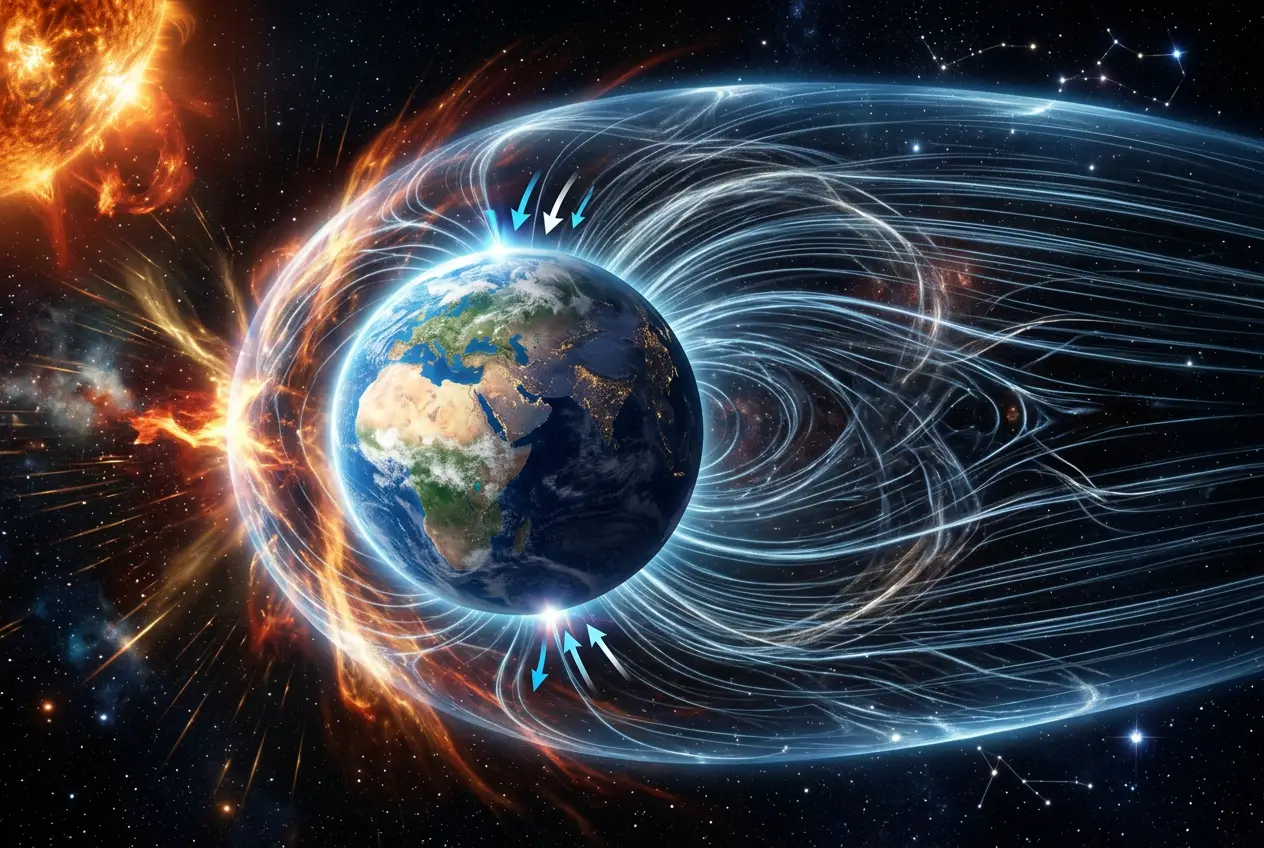
I remember a time, not so long ago, when finding true north was as simple as pulling out a compass. A tiny needle, governed by an invisible force, would dutifully point the way. But recently, I've been hearing more and more about something quite extraordinary: Earth’s magnetic poles are on the move, and not just a little wiggle. The North Magnetic Pole has been accelerating its migration, prompting whispers and even some scientific headlines about a potential geomagnetic reversal. It makes me wonder if our trusty compasses—and even the very fabric of our technological world—are poised for a significant cosmic shake-up.
This isn't just about a moving needle on a map; it's about our planet’s fundamental shield, its ancient protector against the harsh realities of space. What would happen if this shield wavered, or even flipped completely? That's a question that has captivated me, and I suspect it sparks curiosity in many who rely on GPS, power grids, and even just the sun's gentle warmth.
The Invisible Shield: Earth’s Magnetic Field Explained
To understand a potential flip, we first need to appreciate what we have. Earth’s magnetic field, or magnetosphere, is a colossal, dynamic force field that extends thousands of kilometers into space. It's generated by the convection of molten iron and nickel in our planet’s outer core, often described as a self-sustaining "dynamo effect." Think of it as a gigantic, swirling liquid metal engine deep beneath our feet, constantly churning and generating electric currents that, in turn, create a powerful magnetic field. This field is crucial for life on Earth. It deflects harmful charged particles from the sun (solar wind) and cosmic rays from deeper space, protecting our atmosphere and preventing it from being stripped away, much like Mars experienced in its distant past.
North on the Run: The Wandering Magnetic Poles
The magnetic poles are not fixed points. They drift, often by dozens of kilometers per year. The North Magnetic Pole, in particular, has been making headlines due to its accelerated journey. For centuries, it hovered around northern Canada. But in the past few decades, it's picked up speed, crossing the International Date Line and heading towards Siberia. This rapid movement has even required more frequent updates to global navigation systems and models, highlighting that the Earth's magnetic field is anything but static. This drift is a natural phenomenon, driven by changes in the liquid iron flow within the outer core. But what if this drift is not just a wander, but a precursor to something far more dramatic?
Geomagnetic Reversals: History's Great Reset
The idea of Earth’s magnetic field flipping isn't science fiction; it's a documented geological fact. Geologic records show that over Earth's history, the magnetic poles have completely reversed numerous times. During a geomagnetic reversal, the North Magnetic Pole becomes the South Magnetic Pole, and vice versa. This isn't an instantaneous event; it's a gradual process that can take thousands of years.
How do we know this? Scientists study paleomagnetism, examining magnetic signatures locked into ancient rocks, particularly those formed from volcanic lava flows. As molten rock cools, magnetic minerals within it align themselves with Earth's magnetic field at that time, essentially "fossilizing" its direction. By analyzing rock samples of different ages from around the world, scientists have constructed a detailed timeline of past reversals. The last full reversal, known as the Brunhes–Matuyama reversal, occurred about 780,000 years ago. Historically, these reversals happen, on average, every 200,000 to 300,000 years. As you can tell, we are overdue, which only adds to the intrigue. You can learn more about this fascinating process on Wikipedia's Geomagnetic Reversal page (opens in a new tab).
The Dynamics of a Flip: What Happens?
A geomagnetic reversal isn't like flicking a switch. It's a complex, multi-stage process:
- Weakening Field: Before a reversal, the overall strength of Earth's magnetic field typically weakens significantly, sometimes by as much as 90%. This is what we're seeing some evidence of today, with the field having weakened by about 15% over the last two centuries, and particularly rapidly in certain regions like the South Atlantic Anomaly.
- Multiple Poles: During the transition, the field becomes unstable. Instead of distinct north and south poles, there can be multiple, temporary poles appearing in different locations, causing compasses to point in various, confusing directions.
- Transition Period: This unstable phase can last for hundreds or even thousands of years. The magnetosphere doesn't disappear entirely, but it becomes much weaker and more complex, offering less protection.
NASA closely monitors these changes, and their dedicated research highlights the ongoing shifts in our planet's magnetic shield. You can read more about it on NASA's Earth's Magnetic Field page (opens in a new tab).
Potential Impacts on Earth and Humanity
The thought of our planetary shield faltering naturally raises concerns. What would a prolonged period of weakened or reversing magnetic field mean for us?
Space Weather and Radiation Exposure
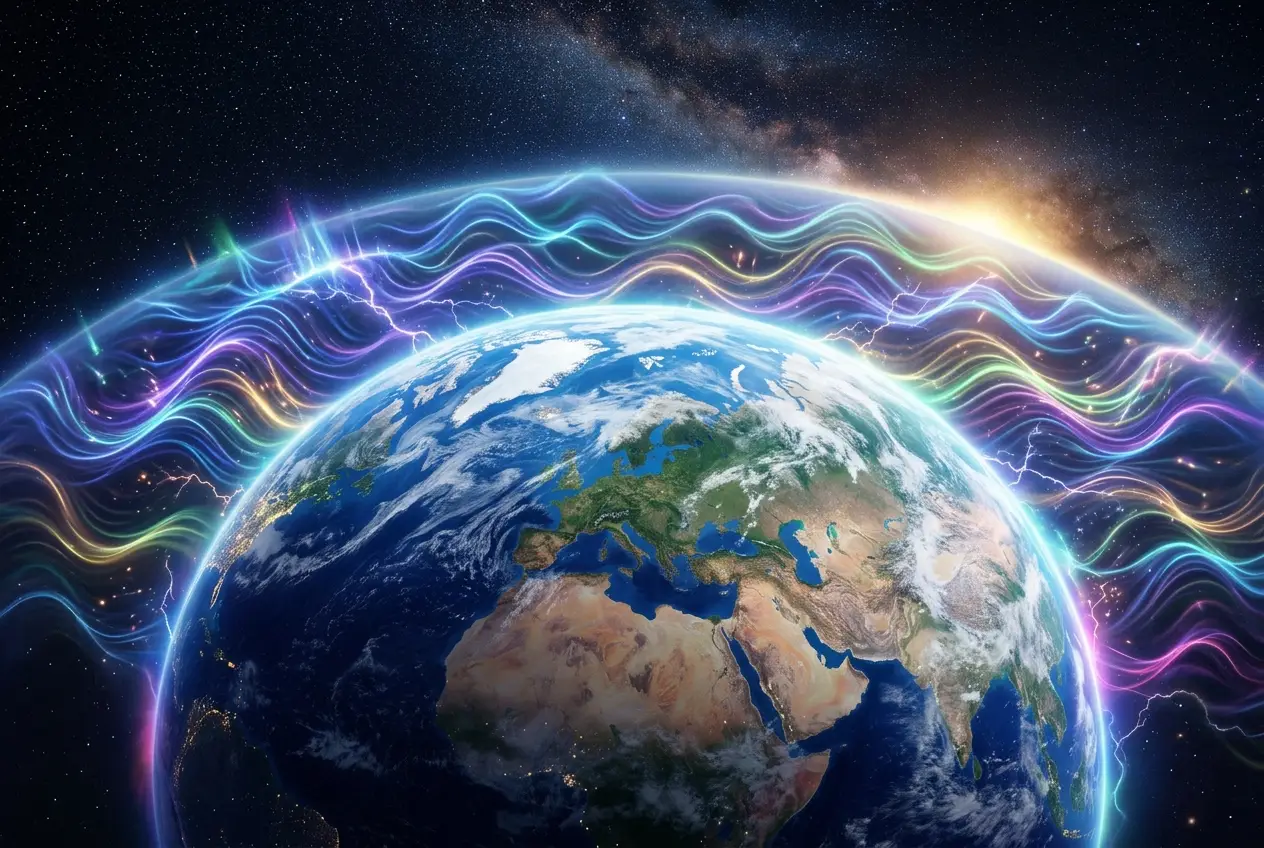
The most immediate and significant concern is increased exposure to solar wind and cosmic rays. With a weaker magnetosphere, these high-energy particles would penetrate deeper into Earth’s atmosphere. This could lead to:
- Increased Radiation at Altitude: Air travel would be riskier for passengers and crew due to higher radiation doses, especially on polar routes.
- Surface Radiation: While Earth's atmosphere still offers considerable protection, surface radiation could increase, particularly at higher latitudes, potentially impacting human health over long durations. This could be a dramatic shift, making us more vulnerable to space phenomena, akin to how some theorize about the extreme conditions that might lead to a planet becoming a rogue planet, wandering through space.
Technology on the Brink
Our modern world is intrinsically linked to technology, much of which relies on Earth's magnetic field or is vulnerable to space weather.
- Satellites and GPS: Satellites, crucial for communication, navigation (GPS), weather forecasting, and surveillance, would be highly susceptible to radiation damage. This could lead to widespread outages, disrupting everything from global logistics to personal navigation.
- Power Grids: Enhanced solar storms, unhindered by a strong magnetosphere, could induce powerful currents in power lines, causing transformer failures and widespread blackouts.
- Communications: Radio communications, including crucial emergency services and internet infrastructure, could be severely disrupted, similar to what happens during strong solar flares, but on a much larger scale. Even seemingly robust technologies that might detect strange radio bursts could find their signals drowned out by increased cosmic noise.
Biological and Climatic Effects
The impact on biology and climate is a subject of ongoing research and debate:
- Migratory Animals: Many animals, from birds to turtles, use Earth’s magnetic field for navigation. A reversal could disorient them, potentially affecting their populations and ecosystems.
- Climate Change: While some studies suggest a correlation between past reversals and minor climatic shifts, the scientific consensus is that a geomagnetic reversal alone wouldn't trigger a catastrophic climate event. Earth’s atmosphere and oceans play a much larger role in regulating climate. However, increased cosmic rays could lead to more cloud formation, which might have subtle climatic effects, though the scale is still being investigated. The scientific debate around this can be found in discussions like this Science article on magnetic field flips (opens in a new tab).
Are We Due for a Flip?
The accelerated movement of the North Magnetic Pole and the overall weakening of the field, particularly in regions like the South Atlantic Anomaly, have many wondering if a reversal is imminent. While we are "overdue" based on the average cycle, averages don't dictate exact timing. Reversals are irregular. The current weakening is not unprecedented in the geological record, and previous periods of weakening have not always led to a full reversal.
However, the speed of current changes is noteworthy. The transition phase could last for centuries, meaning our descendants could live through a period of significantly reduced magnetic protection. This isn't a sudden cataclysm, but a gradual shift that would require adaptation and resilience in our technological infrastructure. It makes me think about how much we understand about the fundamental forces at play, like the concept of unseen energy that underpins so many natural phenomena.
Preparing for the Inevitable (or Not-So-Inevitable)
While we can't stop Earth's magnetic field from changing, understanding the process allows us to prepare. Researchers worldwide are continuously monitoring the field, developing better models of its behavior, and investigating potential impacts. This includes designing more resilient satellites, hardening power grids against geomagnetic storms, and enhancing our understanding of space weather. The more we learn, the better equipped we will be to navigate a future where our invisible shield might temporarily thin or shift, even as we continue to ponder the greater mysteries of our universe, sometimes even looking for anomalies on the moon or beyond.
The shifting magnetic poles are a powerful reminder of our dynamic planet and the subtle yet profound forces that shape our existence. It’s a compelling scientific mystery unfolding in real-time, inviting us to look deeper into the heart of our world and consider our place within its grand, ever-changing dance.



Conversation0
No comments yet. Be the first to share a thought — the best questions often become new stories.