


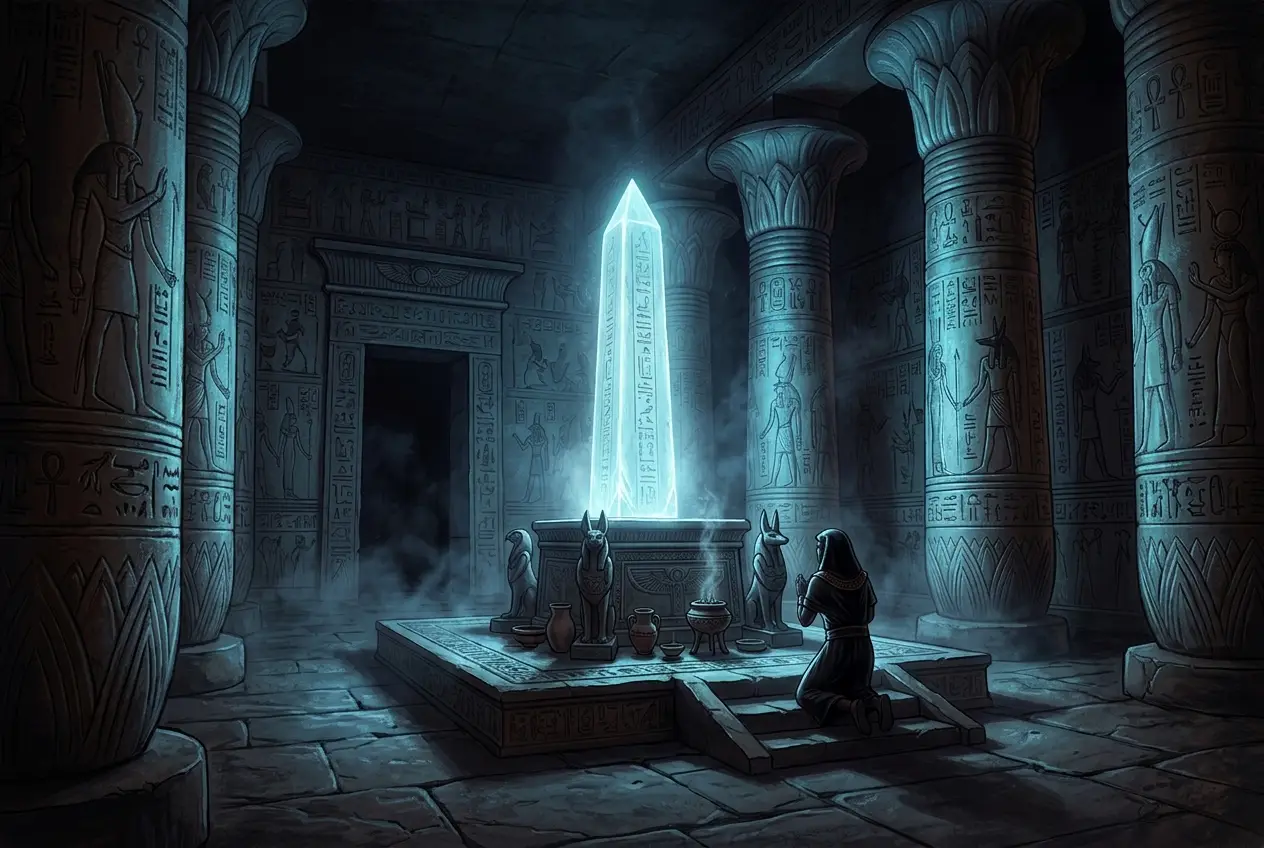
I remember stepping into the dimly lit, labyrinthine corridors of an ancient Egyptian tomb for the first time. The air was thick with history, the hieroglyphs whispered silent stories, and a profound question settled in my mind: How did they see in here? Torch soot, I reasoned, should stain the ceilings, yet many chambers remain remarkably pristine. Oil lamps? Perhaps, but maintaining them in such vast, enclosed spaces would have been an immense, constant chore, and the smoke would eventually accumulate. What if, just perhaps, the ancient Egyptians possessed a secret, an understanding of natural phenomena that allowed them to illuminate their sacred spaces without flame? This isn't about aliens or magic, but a fascinating, albeit speculative, look at the possibility of them harnessing something we now call static electricity.
For centuries, our understanding of ancient Egyptian technology has largely focused on their monumental architecture, intricate irrigation systems, and sophisticated crafts. We marvel at the pyramids, the advanced medical practices, and their mastery of papyrus. Yet, the question of consistent, smoke-free illumination in deep, unventilated tombs and temples remains a persistent whisper in the annals of Egyptology.
The Riddle of the Unlit Chambers
Conventional wisdom suggests that ancient Egyptians used oil lamps and torches for illumination. While undoubtedly true for many everyday scenarios and accessible areas, the deeper, more intricate chambers and passageways of tombs like those in the Valley of the Kings present a unique challenge. Archeologists have consistently noted the striking absence of soot on the ceilings and walls of these remote sections. If torches or open-flame lamps were the sole source of light, the evidence of smoke residue should be undeniable, particularly in confined spaces with poor ventilation.
The logistics of supplying fuel and maintaining hundreds, if not thousands, of lamps deep within a pyramid or a rock-cut tomb for extended periods, especially during construction and decoration, are staggering. It implies a dedicated workforce solely for lighting, constantly ferrying fuel in and out, risking fires, and dealing with significant air quality issues. This puzzling lack of sooty evidence has fueled alternative theories, pushing some researchers to explore unconventional interpretations of ancient Egyptian artifacts and scientific knowledge.
Static Electricity: Nature's Unseen Spark
Before delving into the "how" for the Egyptians, let's briefly revisit static electricity. I often think of it as electricity on pause, an imbalance of electric charges within or on the surface of a material. You've experienced it: rubbing a balloon on your hair, shuffling across a carpet and getting a shock, or seeing your clothes cling together fresh from the dryer. It's generated when certain materials come into contact and separate, causing electrons to transfer between them. This phenomenon is known as the triboelectric effect.
Common materials known to generate static electricity include amber, wool, silk, and various plastics. When rubbed, these materials either gain or lose electrons, creating a temporary charge imbalance. While the current flow is minimal, the voltage can be surprisingly high, enough to generate a visible spark or a faint glow under specific conditions, such as in a vacuum or a rarefied gas. It wasn't until the 17th and 18th centuries that scientists like Otto von Guericke and Benjamin Franklin began to systematically study and understand these phenomena, leading to the development of early electrostatic generators.
Electrum and Amber: Egyptian Connections to Charge
The ancient Egyptians were keen observers of nature and master artisans. Their understanding of materials was profound. Among the materials they highly valued was electrum, a naturally occurring alloy of gold and silver. This material was not just aesthetically pleasing; it adorned obelisks, the tips of pyramids (pyramidia), and many sacred objects. Electrum is known to be a good conductor, but more importantly, when certain electrum alloys are rubbed against specific fabrics or animal hides, they can exhibit triboelectric properties, generating a static charge.
While amber (fossilized tree resin) was not native to Egypt in large quantities, it was known and traded in the ancient world, including the Mediterranean. The Greeks, in fact, derived their word for electricity, "elektron," from the Greek word for amber, recognizing its unique ability to attract light objects after being rubbed. Could the Egyptians, through trade or independent observation, have also become aware of similar phenomena with other materials? It's a question worth asking, especially considering their extensive knowledge of natural resources.
The Djed Pillar and Benben Stone: Electrical Resonators?
Perhaps the most compelling "evidence" for an advanced understanding of electrical phenomena comes from the symbolic realm. The Djed pillar, a recurring motif in Egyptian art and architecture, is traditionally interpreted as representing stability, the backbone of Osiris. However, its stacked, segmented appearance has led some to draw parallels with insulators or even an early form of a high-voltage electrical device, like a Tesla coil or a stack of insulators. While purely speculative, the visual resemblance is striking.
Even more intriguing is the Benben stone, often crafted from electrum, which crowned the apex of obelisks and small pyramids. These structures, soaring towards the sky, naturally act as lightning rods, attracting atmospheric electrical charges. If the Benben stone was designed to capture this energy, even passively, for observation or controlled release, it would indicate a sophisticated, albeit empirical, understanding of atmospheric electricity. For instance, the renowned Egyptologist Sir Flinders Petrie noted the incredible precision of some ancient Egyptian stonework and speculated about knowledge lost to time. You can read more about the fascinating interpretations of their structures and symbols on Wikipedia's page about Djed pillars (opens in a new tab).
Dendera Light Reliefs: Myth or Machine?
No discussion about ancient Egyptian electricity is complete without mentioning the controversial Dendera Light reliefs. Found in the crypts beneath the Hathor Temple at Dendera, these carvings depict figures seemingly interacting with large, bulb-like objects. These "bulbs" appear to be connected to cables and supported by Djed pillars. To many mainstream Egyptologists, these are purely symbolic representations, likely depicting mythical concepts related to the Djed pillar as a source of stability or a stylized lotus flower.
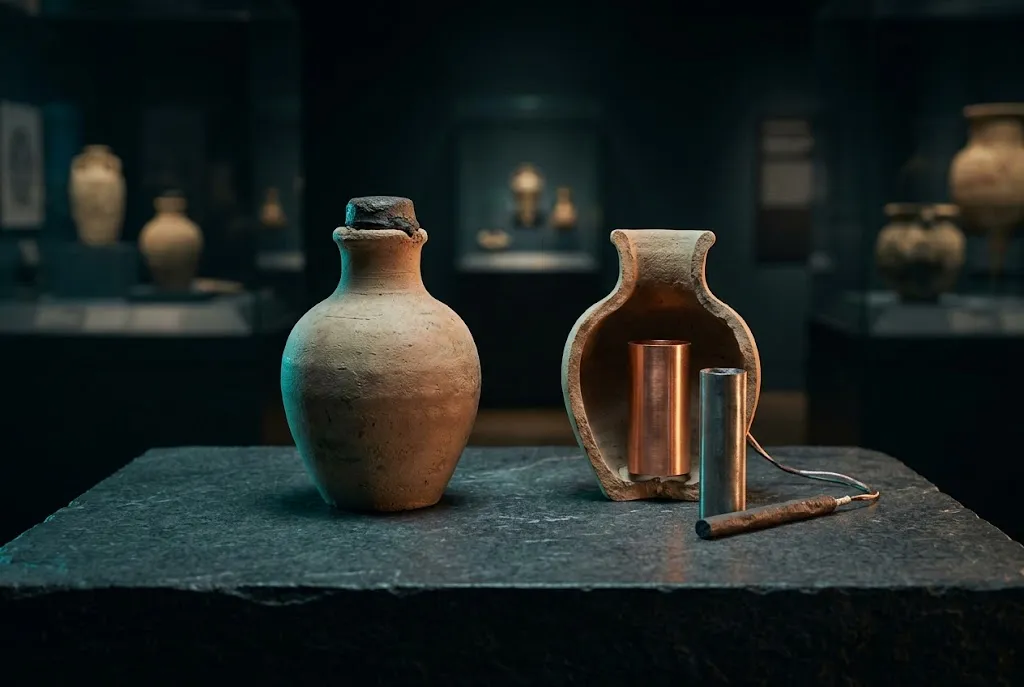
However, a fringe theory, often championed by alternative historians, argues that these reliefs depict an actual ancient electrical lighting device, perhaps akin to a Crookes tube or a gas-discharge lamp. The "snake" inside the bulb is interpreted as the filament, and the Djed pillar as a generator or power source. While largely dismissed by academic scholarship due to the lack of archaeological evidence for such advanced technology, the imagery's striking resemblance to modern electrical apparatus continues to spark debate and curiosity. The existence of the Baghdad Battery (opens in a new tab), an artifact from ancient Mesopotamia that shows a rudimentary understanding of electrochemistry, further tantalizes us with the possibility that ancient cultures might have dabbled in forms of electricity beyond our current understanding. For a deeper dive into the Baghdad Battery, check out our blog post, "Baghdad Battery: Could Ancients Spark Our Electric Age?" /blogs/baghdad-battery-did-ancients-spark-our-electric-age-7832.
How Could it Have Worked? (Theoretical Scenarios)
If the Egyptians did harness static electricity for light, how might they have achieved it? Here are a few theoretical scenarios:
- Triboelectric Generators: Imagine a large "device" involving electrum plates or rods, rubbed vigorously with special fabrics (perhaps linen, known for its triboelectric properties when new and dry). This friction could build a significant static charge. This accumulated charge could then be discharged through a specially designed "lamp" containing a rarefied gas, creating a brief flash or glow.
- Atmospheric Collectors: Obelisks and pyramids, particularly those capped with electrum Benben stones, could have acted as passive collectors of atmospheric electricity during thunderstorms or even daily atmospheric charging. This collected charge, though intermittent, could potentially be stored in a primitive capacitor (much like a Leyden jar) and then discharged for specific purposes.
- Piezoelectric Effects: While less directly linked to static electricity, the Egyptians extensively used quartz, a material known for its piezoelectric properties (generating an electric charge under mechanical stress). Could certain rituals involving pressure or vibration on quartz-containing artifacts have been designed to produce fleeting electrical phenomena?
- Biological Electricity: Even more esoteric, some theories ponder whether certain biological phenomena were observed. For instance, some fish generate electric shocks. Did they try to emulate natural wonders? Our understanding of ancient civilizations' deep connection to nature and their observations of its hidden processes is still evolving, as explored in "Did Ancient Cultures Decode Nature's Hidden Sounds?" /blogs/did-ancient-cultures-decode-natures-hidden-sounds-8216.
The Skeptic's Lens: Why It's Unlikely (But Still Intriguing)
While these theories are captivating, mainstream science rightfully demands direct, unambiguous archaeological evidence. Here are the primary counter-arguments:
- No Direct Evidence: We have no ancient Egyptian texts describing electrical devices, no blueprints, no batteries, and no definitive "lamps" beyond symbolic interpretations. The Dendera reliefs remain highly ambiguous.
- Limited Power: Static electricity, even when generated in significant voltages, produces very low current. It's challenging to sustain a consistent, usable light source from it, especially for illuminating large areas for extended periods. The energy would be difficult to control and harness effectively for practical, continuous lighting.
- Safety Concerns: High voltage static electricity, while low current, can still be dangerous. Handling it would require knowledge of insulation and safe practices, for which there is no historical record.
- Alternative Explanations: Simpler explanations for the lack of soot include meticulous cleaning, the use of enclosed lamps with minimal smoke, or specialized mirror systems to reflect sunlight. While none fully resolve the "deep tomb" issue, they are considered more plausible than complex, unproven electrical systems.
The lack of definitive evidence doesn't, however, entirely extinguish the spark of curiosity. It merely shifts the discussion from "did they" to "could they have, and if so, how?" The ancient world was full of ingenious minds and unexpected technological feats, as evidenced by the advanced engineering found in structures that still baffle us today. Consider the remarkable craftsmanship of the Romans, which we explored in "Roman Diodes: Did Ancient Artisans Craft Semiconductors?" /blogs/roman-diodes-did-ancient-artisans-craft-semiconductors-4128. Their ability to work with materials and understand their properties often exceeded what we credit them with. More information on the principles of static electricity can be found on Wikipedia (opens in a new tab).
Beyond Illumination: Other Potential "Static" Uses?
If the Egyptians did indeed have some practical understanding of static electricity, its applications might not have been limited to mere lighting. Could it have been used for:
- Awe and Mysticism: Creating dramatic, unexplained sparks or glows during religious ceremonies, enhancing the perception of divine power or magical phenomena?
- Therapeutic Practices: Early forms of "electrotherapy" for ailments, leveraging the perceived energetic properties of static discharge?
- Electrolytic Processes: While more advanced, a rudimentary understanding of electricity could theoretically have led to early experiments with electroplating or other chemical processes, perhaps for purification or ornamentation. A general overview of ancient Egyptian technology (opens in a new tab) on Wikipedia provides context on their diverse innovations.
Conclusion: A Light in the Darkness of History
The theory that ancient Egyptians harnessed static electricity for illumination or other purposes remains a fascinating hypothesis, challenging our often-linear view of technological progress. While definitive proof eludes us, the absence of soot in many unlit chambers, the intriguing iconography of the Djed pillar and Dendera reliefs, and their advanced knowledge of materials like electrum, collectively paint a picture that invites deeper contemplation.
Perhaps the "light" in those ancient chambers wasn't a sustained glow, but fleeting flashes, ceremonial sparks, or simply a byproduct of their exploration of natural phenomena. Whatever the truth, the possibility forces us to consider that our ancestors, far from being primitive, were keen observers and ingenious experimenters, perhaps holding secrets that time has yet to fully reveal. It serves as a powerful reminder that history often hides more marvels than we currently imagine, constantly nudging us to question, explore, and look beyond the conventional narratives.
&meta_title; Ancient Egypt's Secret Glow: Static Electricity for Light? &meta_title; &meta_description; Uncover the compelling theory: did ancient Egyptians harness static electricity from materials like amber and electrum to illuminate their temples? Explore the evidence, scientific plausibility, and enigmatic artifacts that challenge our understanding of ancient technology. &meta_description;
&faqs;{"faqs":[{"id":1,"question":"Is there any direct archaeological evidence of static electricity generators in ancient Egypt?","answer":"No, there is currently no direct archaeological evidence, such as preserved devices or clear textual descriptions, to definitively prove that ancient Egyptians built or used static electricity generators for practical purposes like lighting."},{"id":2,"question":"How do mainstream Egyptologists explain the lack of soot in unlit tombs?","answer":"Mainstream Egyptologists propose several explanations, including meticulous cleaning by workers, the use of enclosed oil lamps designed to minimize smoke, or sophisticated systems of polished copper mirrors to reflect natural sunlight deep into the chambers during construction and decoration."},{"id":3,"question":"What is the Djed pillar and how is it related to these theories?","answer":"The Djed pillar is an ancient Egyptian symbol representing stability and the backbone of the god Osiris. In the context of static electricity theories, its stacked, segmented appearance has led some alternative researchers to draw speculative parallels with early electrical insulators or high-voltage components, though this is not a mainstream interpretation."},{"id":4,"question":"Could the "Dendera Light" reliefs truly depict an ancient electrical lamp?","answer":"The "Dendera Light" reliefs are interpreted by mainstream Egyptologists as purely symbolic or mythological representations, possibly depicting a lotus flower from which a snake emerges, related to the Djed pillar's symbolism of stability. The idea that they depict an actual electrical lamp is a fringe theory, largely dismissed due to a lack of corroborating evidence."},{"id":5,"question":"What other uses might ancient Egyptians have had for static electricity, if they understood it?","answer":"Beyond illumination, it's speculated that if ancient Egyptians understood static electricity, they might have used it for creating dramatic effects in religious ceremonies, basic therapeutic practices, or even rudimentary experiments in material science, though these are entirely theoretical."}]}&faqs;



Conversation0
No comments yet. Be the first to share a thought — the best questions often become new stories.