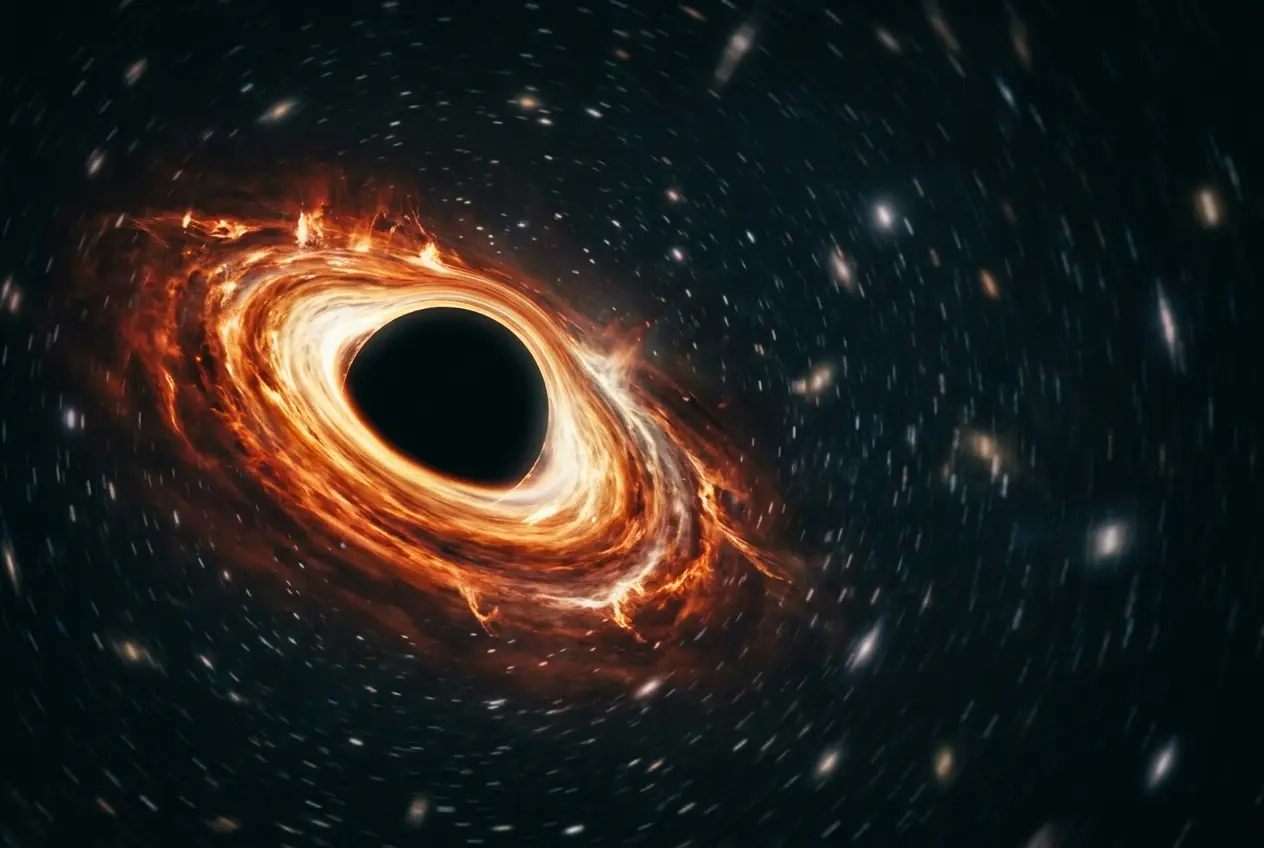
The cosmos is a tapestry woven with wonders, yet also with profound mysteries and potential dangers. I often find myself gazing at the night sky, not just in awe of the visible stars, but contemplating the invisible forces and objects that shape our galactic neighborhood. One such enigma that has increasingly captured my imagination, and the attention of astrophysicists, is the **rogue black hole**. These aren't the supermassive behemoths anchoring galaxies or the stellar-mass black holes born from dying stars in binary systems. No, these are solitary, unattached wanderers, adrift in the vast cosmic ocean. The question that keeps me up at night, and perhaps should make us all ponder, is: **Do rogue black holes pose a tangible threat to our galaxy, or even to our solar system?**
Imagine an invisible cannonball, many times the mass of our sun, hurtling through the Milky Way at thousands of kilometers per second. It emits no light, reflects no radiation, and leaves no wake visible to our most powerful telescopes. Its presence is betrayed only by its immense gravitational pull, a silent hunter in the dark. This isn't science fiction; it's the potential reality of rogue black holes, and their sheer elusiveness makes them one of the most intriguing, and perhaps terrifying, phenomena in the universe.
## The Genesis of Galactic Wanderers
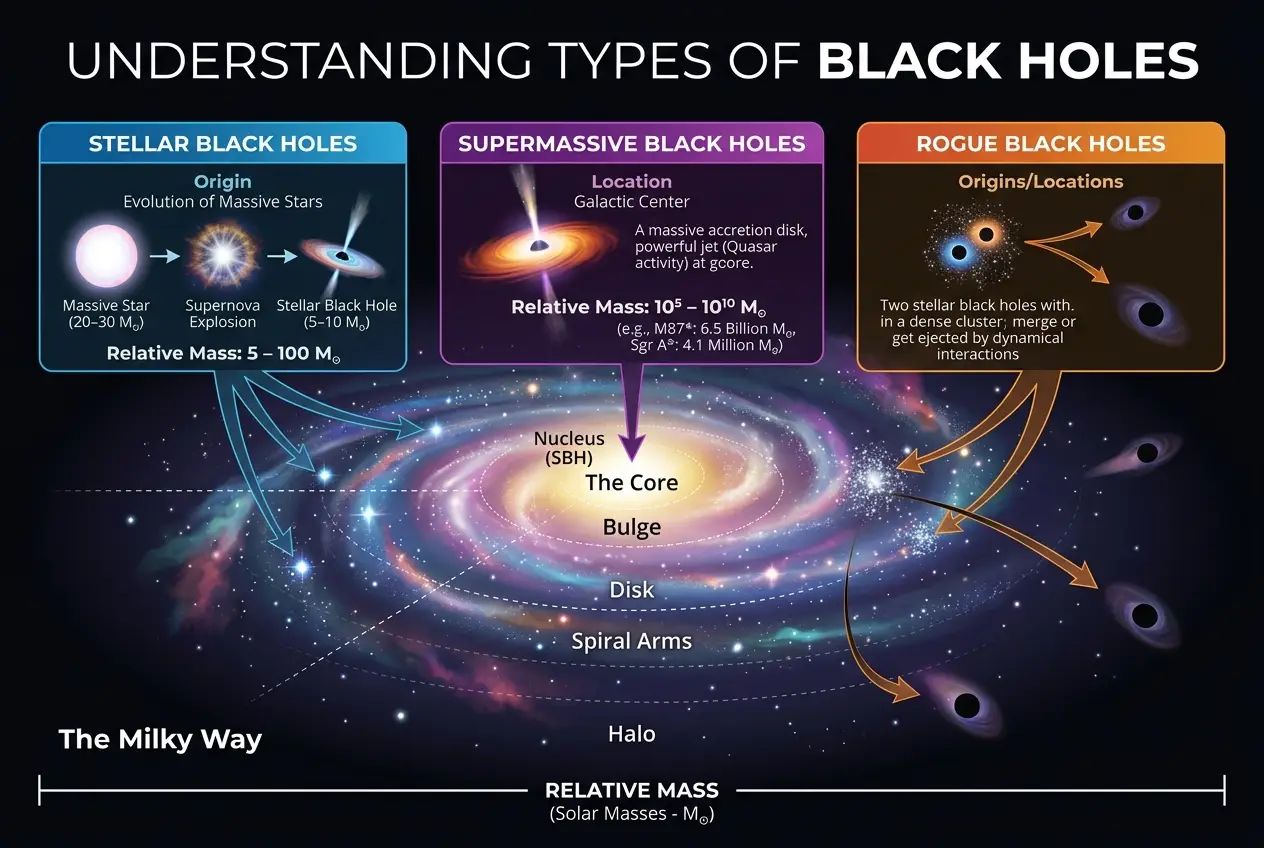
How does a black hole become a rogue? Stellar-mass black holes are born from the catastrophic collapse of massive stars, usually at the end of their lives. When a star exceeding about 20 times the mass of our Sun exhausts its nuclear fuel, its core implodes, forming a black hole, while its outer layers are violently expelled in a supernova. In a binary star system, the supernova explosion can be asymmetric, imparting a powerful "kick" to the newly formed black hole. This kick can be so forceful that it ejects the black hole from its stellar companion and sends it careening into interstellar space, transforming it into a galactic wanderer.
Another scenario involves the chaotic dance within dense star clusters. In these crowded cosmic nurseries, gravitational interactions between stars and existing black holes can be incredibly violent. A black hole might gain enough momentum from these interactions to be flung out of the cluster entirely, once again becoming a lone traveler. We even theorize about primordial black holes, remnants from the early universe, that could be drifting unnoticed. While the existence of these ancient black holes is still speculative, they would certainly qualify as rogue objects.
## Hunting the Invisible: How Do We Detect Them?
Detecting something that emits no light and is incredibly small relative to the vastness of space seems like an impossible task. It’s akin to finding a single dust particle in a hurricane by only observing its effect on the wind. Yet, scientists have developed ingenious methods to spot these cosmic ghosts. The primary technique relies on **gravitational microlensing**.
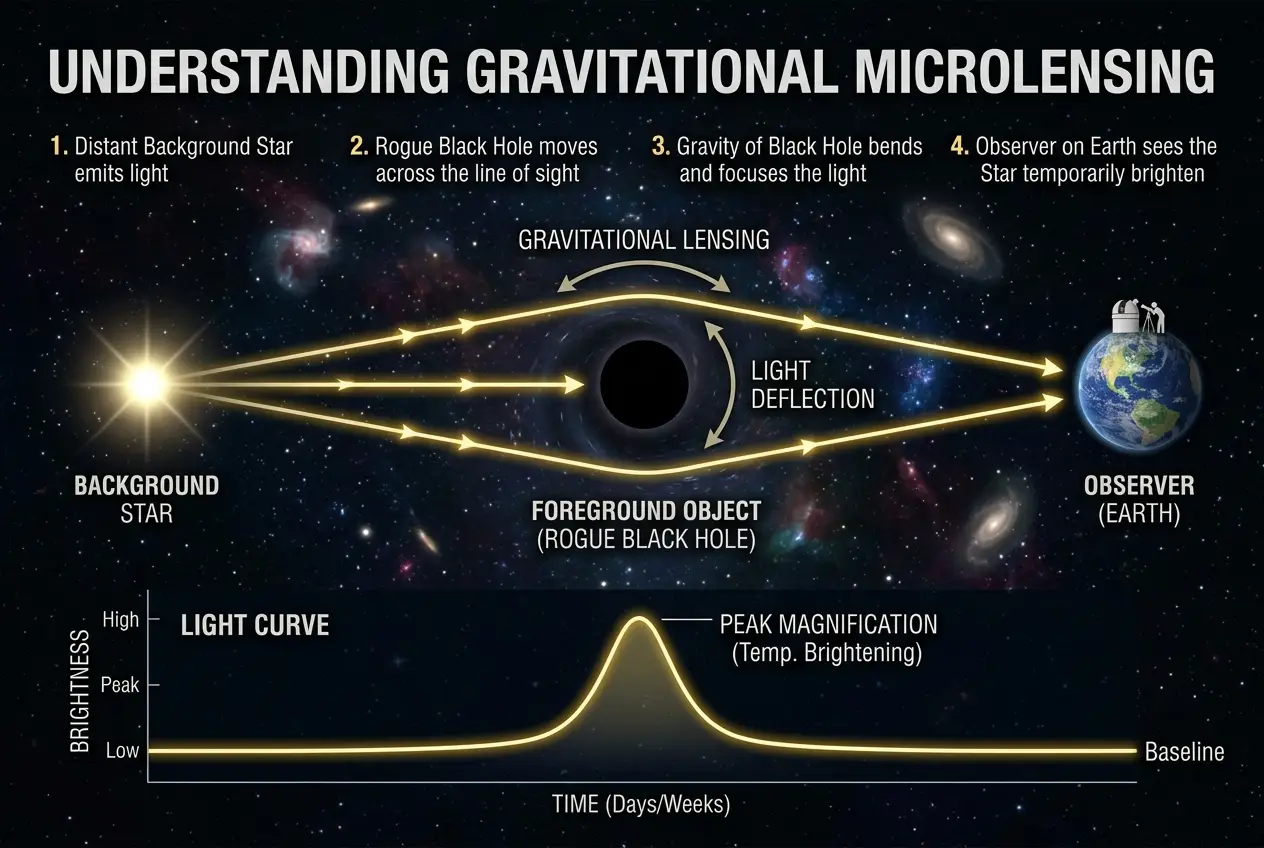
Gravitational microlensing occurs when a massive object, like a rogue black hole, passes in front of a more distant star. The black hole's immense gravity acts like a cosmic magnifying glass, bending and distorting the light from the background star. From Earth, we observe this as a temporary, characteristic brightening of the background star. The duration and intensity of this brightening event can tell astronomers about the mass and distance of the unseen lensing object.
Recently, NASA’s Hubble Space Telescope has been instrumental in identifying potential candidates for rogue black holes using this very method. One notable event, detected in 2011 and studied for years, showed a star brightening over several months, suggesting a compact, massive object passing in front of it. Researchers concluded the object was likely a black hole roughly seven times the mass of our Sun, traveling at an astonishing speed of around 45 km/s (or about 100,000 mph) through our galaxy. This was one of the first strong pieces of evidence for truly isolated, stellar-mass rogue black holes. For more detailed information on black holes and their detection, I recommend checking out the [Wikipedia page on Black Holes](https://en.wikipedia.org/wiki/Black_hole).
We also infer their presence through their impact on surrounding gas and dust, or through X-ray emissions if they are actively accreting matter. However, for truly isolated rogue black holes far from stellar nurseries or gas clouds, microlensing remains our best bet.
## The Galactic Menace: Are They a Threat?
Now to the core question: do these cosmic drifters pose a threat? The short answer is both "yes" and "no," depending on the scale and probability.
### **Threat to the Solar System?**
For our solar system, the probability of a direct collision with a rogue black hole is incredibly low. The Milky Way is vast, and even with potentially millions of these objects, the space between stars is immense. To put it in perspective, it’s like trying to hit a specific grain of sand on a beach with another specific grain of sand thrown from miles away.
However, "low probability" doesn't mean "zero probability." If a rogue black hole were to pass through the Oort Cloud, the distant shell of icy objects that surrounds our solar system, its gravitational influence could fling comets and asteroids inwards, potentially increasing the risk of impacts with Earth. A direct close encounter within the inner solar system would be catastrophic. The gravitational tides alone would rip apart planets, and our Sun would likely be ejected from the galaxy or consumed. But again, these are extremely rare, bordering on astronomically improbable events. I've often thought about other rogue objects, like those discussed in our blog, "Why Are Rogue Planets Wandering the Cosmos?", and how they compare to these far more massive and disruptive entities.
### **Threat to the Galaxy?**
On a galactic scale, rogue black holes are part of the natural, albeit chaotic, evolution of the Milky Way. They contribute to the unseen mass of the galaxy, and their gravitational nudges can influence the orbits of stars and gas clouds over immense timescales. However, they are not expected to unravel the galaxy or cause widespread devastation.
In fact, these wandering black holes might even play a role in the formation of new stars by compressing gas clouds as they pass, triggering gravitational collapse. Their influence is generally subtle and diffuse across the entire galactic disk. The Milky Way is a dynamic place, constantly evolving, and these rogue elements are just another piece of the complex cosmic puzzle, similar to the mysterious unseen forces we explored in "Does Dark Matter Hide a Universe We Can't See?".
### **The Role of Our Galaxy's Heart**
It’s important to remember that our biggest black hole threat, or rather, the largest gravitational anchor, is the supermassive black hole Sagittarius A* at the center of our Milky Way. It keeps everything bound together. Rogue black holes are mere specks compared to its gargantuan mass. Their local influence might be significant, but their overall galactic impact is limited. The [Milky Way's Wikipedia page](https://en.wikipedia.org/wiki/Milky_Way) offers a good overview of our galaxy's structure and dynamics.
## Future Research and Cosmic Census
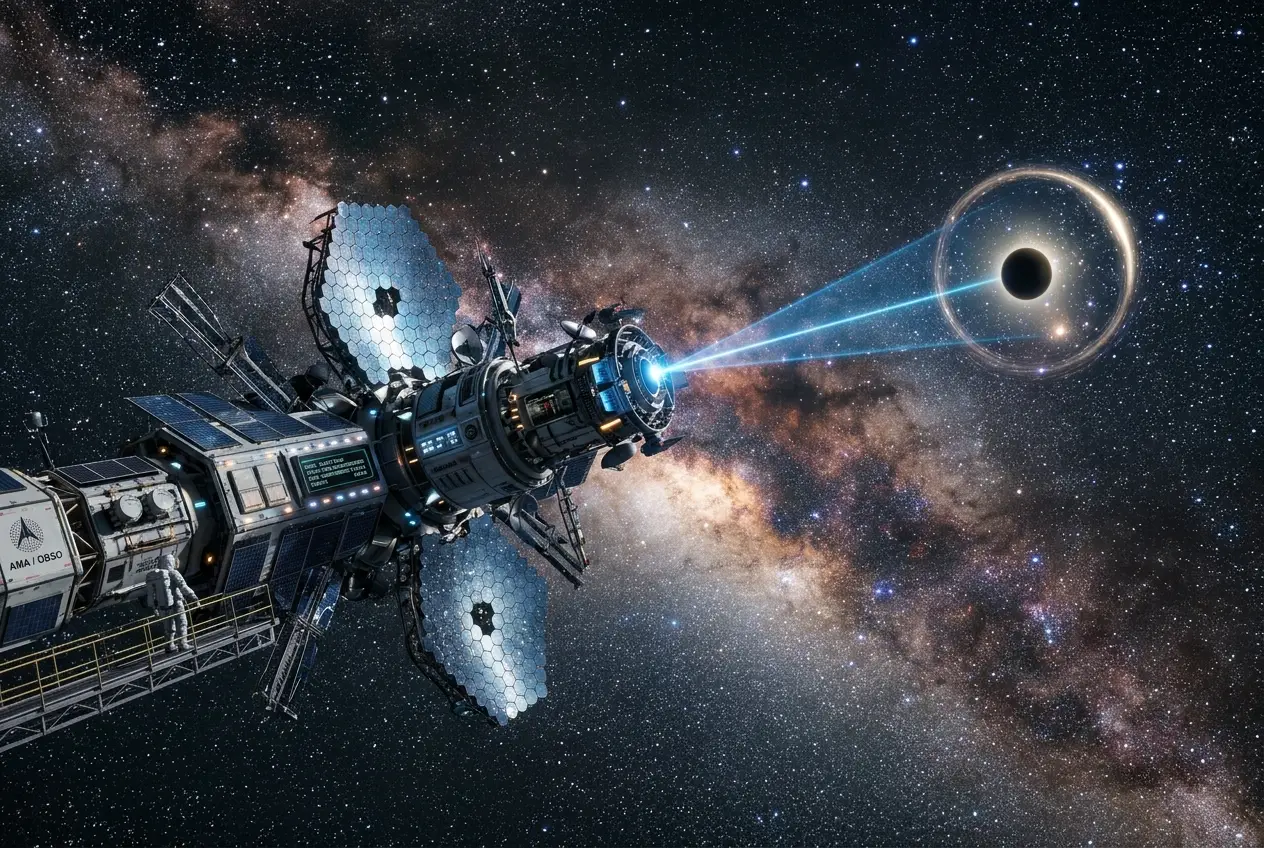
The ongoing search for rogue black holes is not just about identifying potential threats, but about understanding stellar evolution, the dynamics of galaxies, and the distribution of dark, massive objects in the universe. Missions like NASA's Nancy Grace Roman Space Telescope, set to launch later this decade, will have an even greater capability to detect microlensing events, potentially allowing us to conduct a comprehensive census of these elusive wanderers. This will help us refine our understanding of their numbers, masses, and how they interact with their surroundings.
This pursuit is not just about black holes; it’s about unraveling the invisible architecture of our universe. For instance, the quest to understand unseen cosmic phenomena extends beyond black holes, as discussed in our blog, "Do Dark Photons Hide an Invisible Universe?", highlighting the many layers of cosmic mystery that science is actively trying to peel back.
## Conclusion: A Silent, Distant Watch
Ultimately, while the concept of rogue black holes is undeniably dramatic and sparks a certain primal fear, the scientific consensus suggests that the immediate threat to Earth and our solar system is astronomically small. Their existence is a testament to the violent and unpredictable nature of cosmic events, from supernova explosions to gravitational slingshots in dense star clusters. They are silent sentinels, forever drifting, forever invisible, reminding us of the sheer scale and complexity of the universe we inhabit.
These cosmic wanderers are a significant piece of the puzzle in understanding the full spectrum of objects that populate our galaxy. Their study pushes the boundaries of observational astronomy and theoretical physics, leading to innovative detection methods and a deeper comprehension of gravity's profound influence across unimaginable distances. So, while I won't lose sleep over a rogue black hole crashing into Earth anytime soon, I'll continue to look up, knowing that the quiet darkness holds wonders and mysteries far beyond our current grasp.
Frequently Asked Questions
Current estimates suggest there could be tens of millions to a billion rogue stellar-mass black holes scattered throughout the Milky Way, though these numbers are still subject to refinement as detection methods improve.
A direct passage through the inner solar system would cause immense gravitational disruption, potentially ejecting planets, tearing them apart through tidal forces, or even consuming the Sun. A less direct pass through the Oort Cloud could send a barrage of comets and asteroids towards the inner planets, including Earth.
Yes, it is possible, though infrequent. If a rogue black hole passes very close to or through a star, it can cause significant disruption, potentially stripping away material, disrupting its orbit, or even leading to the star's destruction or absorption.
No, rogue black holes are distinct from dark matter. Dark matter is a hypothetical form of matter that doesn't interact with light or other electromagnetic forces, making up a significant portion of the universe's mass. Rogue black holes are actual concentrations of matter (collapsed stellar cores) that exert gravity but are incredibly dense and don't emit light. While both are 'dark' in the sense of being invisible to telescopes, their nature and origin are different.
The closest confirmed rogue black hole candidate, detected via gravitational microlensing, is estimated to be about 5,000 light-years away from Earth. This discovery was made using data from the Hubble Space Telescope.
Verified Expert
Alex Rivers
A professional researcher since age twelve, I delve into mysteries and ignite curiosity by presenting an array of compelling possibilities. I will heighten your curiosity, but by the end, you will possess profound knowledge.
Leave a Reply
Comments (0)
No approved comments yet. Be the first to share your thoughts!
 Join Us
 Unknown Author

















Leave a Reply
Comments (0)