


I’ve always been fascinated by the stories behind monumental scientific discoveries, especially those that illuminate the human element, the relentless pursuit of truth, and sometimes, the stark realities of recognition. Recently, I found myself delving deep into the life of a scientist whose name, for far too long, remained a mere footnote in one of the 20th century’s most profound breakthroughs. I'm talking about Rosalind Franklin, a brilliant biophysicist whose meticulous work provided the crucial evidence for the structure of DNA. This blog post is going to be a comprehensive journey through her remarkable life, her groundbreaking contributions, and the enduring legacy she left behind. It's a long read, but I promise, her story is one that deserves every word.
The Human Element: An Introduction to a Scientific Pioneer
Imagine pouring years of your life into a complex puzzle, meticulously assembling pieces with unmatched precision, only for others to take your insights and claim the final glory. This, in essence, is the poignant narrative of Rosalind Franklin. While names like Watson, Crick, and Wilkins are universally recognized for the discovery of the DNA double helix, the vital role played by Franklin, particularly her iconic "Photo 51", was largely overlooked during her lifetime.
Her journey is a testament to perseverance, intellectual rigor, and an unwavering commitment to scientific integrity. As I explored her correspondence and the accounts of her contemporaries, I realized she was more than just a brilliant mind; she was a woman navigating the male-dominated scientific landscape of the mid-20th century, often facing skepticism and dismissal, yet she pressed on. It's a story that compels me to ensure her contributions are rightly placed at the forefront of scientific history.
Early Life and the Spark of Intellectual Curiosity
Born on July 25, 1920, in London, England, Rosalind Elsie Franklin came from a prominent and intellectually active Anglo-Jewish family. Her father, Ellis Arthur Franklin, was a merchant banker, and her mother, Muriel Frances Waley, ensured a stimulating home environment. Even as a child, Rosalind displayed an exceptional intellect and a keen interest in science. Her prodigious mathematical ability was evident early on, laying the groundwork for her future in crystallography.
Her education began at St Paul's Girls' School, one of the few institutions at the time that offered advanced physics and chemistry courses to young women. It was here that her passion for science solidified. I can only imagine the kind of intellectual hunger she must have possessed, thriving in an environment that nurtured curiosity and critical thinking, which was quite rare for girls in that era.
Cambridge and the Foundations of a Scientific Career
Franklin’s academic journey continued at Newnham College, Cambridge, where she read Natural Sciences, specializing in Physical Chemistry. She excelled, graduating with Second-Class Honours in 1941, which was later converted into a PhD in 1945 – a common practice at Cambridge during that period. Her initial research focused on the physical chemistry of coal and carbons, a field she entered during World War II, contributing directly to the war effort.
Her doctoral work, supervised by Professor Ronald G.W. Norrish, involved studying the pore structure of coal, which was crucial for developing gas masks and other carbon-based technologies. This early work honed her skills in meticulous experimentation and data interpretation, which would prove invaluable in her later endeavors. For anyone interested in the foundational aspects of her scientific training, the details of her work on carbon and graphite are fascinating and often overlooked. You can read more about her early career on Wikipedia's page for Rosalind Franklin (opens in a new tab).
Paris and the Mastery of X-ray Crystallography
After the war, Franklin moved to Paris in 1947, joining the Laboratoire Central des Services Chimiques de l'État under the tutelage of Jacques Mering. This period marked a pivotal turning point in her career. It was in Mering's lab that she learned and perfected the advanced techniques of X-ray diffraction, a powerful method for studying the atomic and molecular structure of crystalline substances.
I believe this was where Rosalind truly found her scientific stride. X-ray crystallography required not just theoretical understanding but also exceptional practical skill, precision, and the ability to interpret complex diffraction patterns. She became a master of the technique, publishing several papers on the structure of carbons and graphite that are still cited today. Her years in Paris were characterized by fruitful collaborations and a supportive scientific environment, allowing her to flourish as a research scientist. It was this expertise that would soon be directed towards one of biology's greatest mysteries: the structure of DNA.
King's College London: The DNA Chapter Begins
In 1951, Rosalind Franklin accepted a research fellowship at King's College London, where she was assigned to study DNA fibers using X-ray diffraction. Her arrival at King's was, unfortunately, fraught with misunderstandings that would significantly impact her time there. She was led to believe she would be leading her own project on DNA, while another scientist, Maurice Wilkins, was already working on DNA at the college and mistakenly believed Franklin would be his assistant.
This fundamental miscommunication, combined with prevailing gender biases of the era, created a tense and often hostile working environment. Despite these challenges, Franklin, with her PhD student Raymond Gosling, set about methodically producing high-quality X-ray diffraction images of DNA. She discovered that DNA could exist in two forms: a dry "A" form and a hydrated "B" form. Her focus on the "B" form, which yielded clearer diffraction patterns, would lead to her most significant contribution.
The work at King's was critical. While Franklin was expected to collaborate, the atmosphere was competitive and lacked true intellectual camaraderie, especially between her and Wilkins. This strained relationship, often fueled by the social norms of the time where women were not fully integrated into scientific discussions in the same way men were, prevented a more collaborative and potentially faster path to discovery.
Photo 51: The Iconic Image
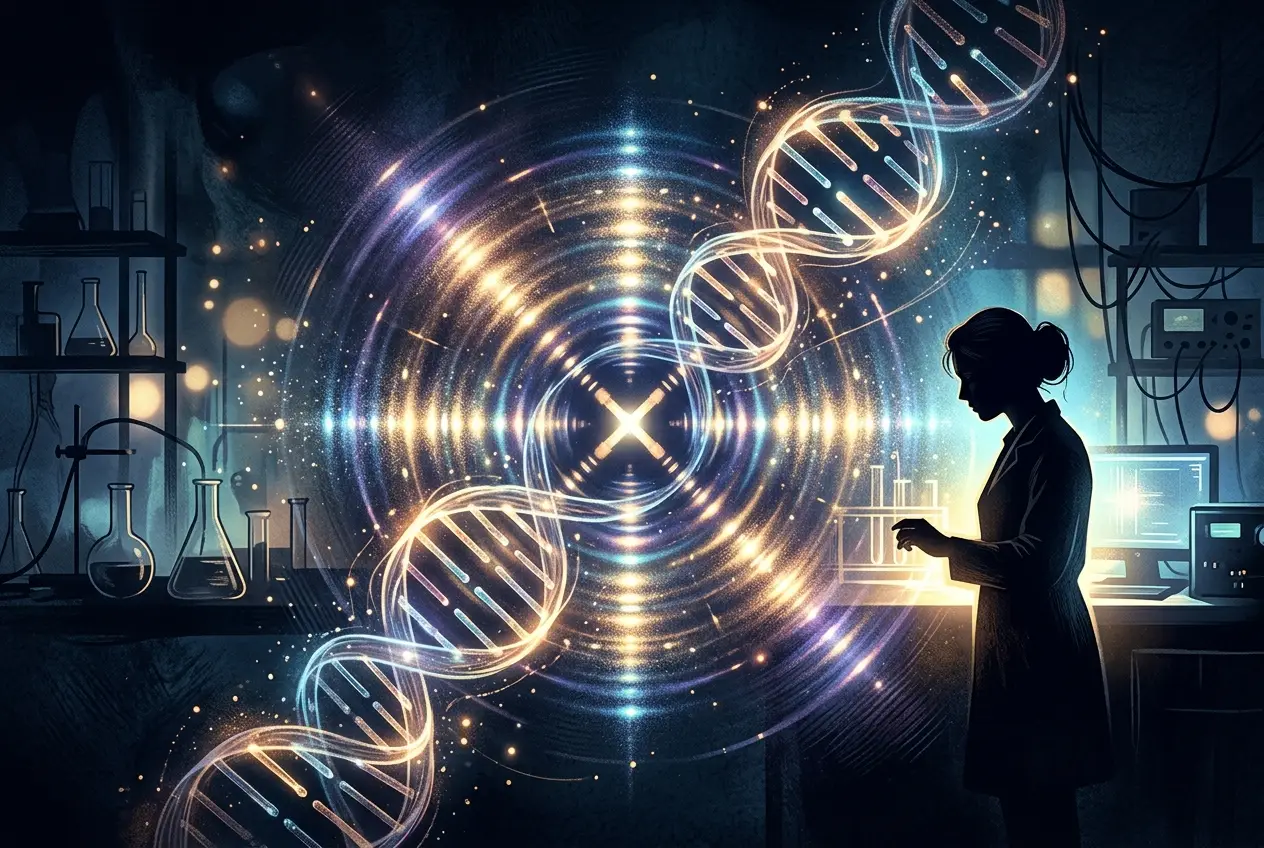
Then came Photo 51. In May 1952, working with Raymond Gosling, Rosalind Franklin captured what is arguably the most famous X-ray diffraction image in history. This image, a strikingly clear "X" pattern, provided unequivocal evidence of a helical structure in DNA. Her meticulous technique allowed her to obtain much sharper images than anyone else had achieved before.
I remember when I first saw Photo 51 in a biology textbook; its elegance is undeniable. But its scientific power lies in the subtle details only a skilled crystallographer like Franklin could truly interpret. The distinct "X" shape immediately suggested a helix. The dark reflections at the top and bottom of the "X" indicated a repeating structure along the length of the molecule. Even more critically, the absence of reflections on the meridian (the vertical axis) told her that the two strands of the helix were out of phase with each other – a crucial insight that pointed towards a double helix.
She meticulously measured the distances between the spots on the photograph, calculating the helical pitch, the number of bases per turn, and the overall diameter of the molecule. Her notebooks reveal her precise calculations and conclusions, predating Watson and Crick's model by several months.
The Double Helix: Watson & Crick's Discovery
While Franklin was methodically analyzing Photo 51 and her other data, James Watson and Francis Crick at the Cavendish Laboratory in Cambridge were building theoretical models of DNA. Their initial attempts were based on less accurate data and led to incorrect triple-helix models. The critical turning point came when Maurice Wilkins, without Franklin's explicit permission or knowledge, showed Photo 51 to Watson in January 1953.
Watson famously recalled, "The instant I saw the picture, my mouth fell open and my pulse began to race." He immediately recognized the helical pattern. Coupled with information from Franklin's unpublished research report, which outlined her structural insights (also shared without her consent), Watson and Crick had the missing pieces to construct their groundbreaking double helix model of DNA. Their model, published in Nature in April 1953, elegantly explained how DNA could carry genetic information and replicate.
The Controversy and Unacknowledged Contributions
The story of how Watson and Crick accessed and utilized Franklin’s data, particularly Photo 51 and her detailed measurements, without her direct involvement or consent, remains one of science’s most enduring controversies. Her name was not featured as a co-author on the Nature paper describing the double helix, though a separate, less prominent paper from King's College by Wilkins, Franklin, and Gosling appeared simultaneously, discussing their X-ray data.
It's a stark reminder of the ethical complexities that can arise in the race for scientific discovery. Watson's memoir, The Double Helix, published in 1968, further complicated her legacy, portraying her in a somewhat unsympathetic light and nicknaming her "Rosy" and the "dark lady of DNA." While later editions and subsequent scholarship have attempted to correct this narrative, the initial damage to her historical recognition was significant.
A New Chapter: Viruses and RNA
Following the completion of her work on DNA at King's, Franklin moved to Birkbeck College, London, in March 1953, shortly before Watson and Crick published their paper. At Birkbeck, she joined the laboratory of Professor J.D. Bernal, a pioneering crystallographer, and shifted her focus to the structure of viruses, particularly the Tobacco Mosaic Virus (TMV).
I find this period of her life particularly inspiring. Despite the disappointment and challenges at King's, she did not falter. Instead, she embarked on a new and highly successful research program. Her methodical approach and X-ray diffraction expertise proved invaluable. She soon elucidated the structure of TMV, demonstrating that its RNA genetic material was embedded within the protein coat, a crucial discovery for virology. Her team's work on TMV established foundational principles for understanding virus assembly and replication.
Scientific Achievements Beyond DNA
Franklin’s contributions extended far beyond DNA. Her work on TMV was arguably as significant in its field. She was the first to propose that the RNA in TMV was a single strand, coiled in a helix, rather than a double helix, and she later worked on the polio virus, making important progress there as well.
Her research at Birkbeck was highly collaborative and productive. She published numerous papers, including a key paper in Nature in 1955 detailing the structure of TMV. This period showcases her versatility as a scientist and her ability to apply X-ray diffraction to diverse biological systems. The work she did laid the groundwork for future studies in virology and molecular biology.
The Battle with Illness
Tragically, Rosalind Franklin's brilliant career was cut short. In 1956, she was diagnosed with ovarian cancer, likely exacerbated by her extensive work with X-ray radiation over the years. Despite her illness, she continued to work tirelessly, driven by her scientific curiosity and commitment. She received treatment, but the cancer returned.
I am deeply moved by the courage and determination she displayed during this difficult time. She continued to write papers, attend conferences, and supervise her students, often working from home. Her dedication to science was unwavering, even in the face of immense personal suffering. She passed away on April 16, 1958, at the age of 37.
Her Legacy and Posthumous Recognition
Because of her untimely death, Rosalind Franklin was ineligible for the Nobel Prize in Physiology or Medicine awarded to Watson, Crick, and Wilkins in 1962. The Nobel Prize is not awarded posthumously. However, over the decades, there has been a growing movement to recognize her pivotal role.
In recent years, I’ve seen a heartening increase in the acknowledgment of her contributions. Scholars, historians, and fellow scientists have worked to set the record straight, highlighting the essential nature of her data and insights. Many now believe that if she had lived, she would undoubtedly have shared the Nobel Prize. Her story has become a powerful symbol for the challenges faced by women in science and the importance of ethical conduct in research. Institutions worldwide have established awards and fellowships in her name, ensuring future generations understand her significance. For instance, the Rosalind Franklin University of Medicine and Science is a testament to her enduring impact, as detailed on their Wikipedia page (opens in a new tab).
The Human Behind the Science
Beyond her scientific acumen, Rosalind Franklin was a complex individual. She was known for her directness, her intense focus, and her high standards. Some described her as reserved, even formidable, but those who worked closely with her recognized her kindness, her sharp wit, and her loyalty. She enjoyed travel, hiking, and exploring different cultures. She was passionate about social justice and was a keen intellectual, engaging in debates on various topics.
It’s important to remember that scientists are not just minds; they are people with lives, personalities, and personal struggles. Franklin’s story is a powerful reminder of the human cost of scientific competition and the often-unseen biases that can impede progress and recognition. Her resilience in the face of adversity, both professional and personal, speaks volumes about her character.
The Importance of Acknowledging Pioneers
Franklin’s story serves as a critical lesson in the history and ethics of science. It underscores the importance of acknowledging all contributors, especially those whose work is foundational but might be overshadowed. Science is rarely the product of a single genius; it is built on the cumulative efforts of many, often across different institutions and disciplines.
I believe that by studying her life, we not only pay tribute to a brilliant scientist but also learn valuable lessons about scientific collaboration, integrity, and the systemic barriers that can hinder talent. Her experience reminds us to critically examine how scientific discoveries are made, attributed, and celebrated.
Why Her Story Resonates Today
In an era where diversity, equity, and inclusion in STEM fields are actively being discussed and promoted, Rosalind Franklin's story resonates more powerfully than ever. It provides a historical lens through which we can understand the past struggles of women in science and measure how far we have come – and how far we still need to go.
Her battle for recognition reflects broader societal issues, highlighting the unconscious biases that still exist. Her story encourages younger generations, especially young women, to pursue scientific careers with confidence, knowing that their contributions are vital and deserve to be seen and valued.
The Enduring Impact of Her Work
The discovery of the double helix structure of DNA revolutionized biology and medicine. It unlocked the secrets of heredity, paved the way for the field of molecular biology, and led to countless breakthroughs in genetics, biotechnology, and personalized medicine. From understanding genetic diseases to developing new therapies and forensic techniques, the impact of DNA’s structure is omnipresent.
Franklin’s precise X-ray data was the bedrock upon which this revolution was built. Without her meticulous work and the clarity of Photo 51, the path to the double helix would have been significantly longer and more arduous. Her indirect yet foundational contribution underpins virtually every aspect of modern biological science. For more on the profound impact of DNA's structure, I recommend exploring the Molecular biology entry on Wikipedia (opens in a new tab).
A Deeper Look at X-ray Diffraction
To truly appreciate Franklin’s genius, it helps to understand the method she mastered. X-ray diffraction involves shining a beam of X-rays at a crystallized substance. When the X-rays hit the atoms in the crystal, they are scattered in a specific pattern, which is then recorded on photographic film. The pattern of scattered X-rays depends on the arrangement of atoms within the crystal.
Analyzing these diffraction patterns requires sophisticated mathematical and physical understanding. Franklin was exceptionally skilled at this. She understood that the symmetry, spacing, and intensity of the spots on the film could reveal precise details about the molecule's three-dimensional shape, repeat distances, and internal symmetries. Photo 51 was not just a pretty picture; it was a complex scientific data set that only a handful of people in the world could fully interpret, and Franklin was arguably the best among them for DNA at that time.
Comparing Early DNA Models
Before the double helix was definitively established, several models of DNA structure were proposed. Rosalind Franklin's rigorous data helped to rule out many incorrect hypotheses. Here’s a simplified comparison of some of the early ideas:
| Model Proposer(s) | Key Features | Evidence/Reasoning | Status (Pre-1953) |
|---|---|---|---|
| Levene (early 20th C.) | Tetranucleotide hypothesis: DNA made of equal amounts of four nucleotides. | Biochemical analysis. | Incorrect |
| Pauling | Triple helix, bases on the outside, phosphates in the center. | Theoretical chemical reasoning. | Incorrect |
| Astbury (1930s-40s) | Stacked flat nucleotides, potentially helical. | Early X-ray diffraction, less precise. | Partially correct |
| Watson & Crick (early) | Triple helix, phosphates in the center. | Theoretical, trial-and-error model building, incomplete data. | Incorrect |
| Franklin's Data (B-DNA) | Double helix, phosphates on the outside, bases stacked inside, two strands. | Photo 51 and other X-ray diffraction images, meticulous measurements. | Highly Accurate |
| Watson & Crick (final) | Double helix, anti-parallel strands, specific base pairing (A-T, G-C). | Integrated Franklin's data, Chargaff's rules, chemical knowledge, model building. | Correct |
This table clearly illustrates how crucial Franklin’s empirical data was in guiding the correct structural interpretation, pushing aside less accurate models.
Franklin's Analytical Prowess
Her methodical approach to science was legendary. She didn't jump to conclusions but meticulously collected data, refined her experimental setup, and carefully interpreted her results. This was evident in her work on coal and viruses, but it was particularly critical in her DNA studies. She understood the importance of high-quality samples and the subtle differences in X-ray patterns produced by the A and B forms of DNA.
I think her strength lay in her ability to marry technical mastery with deep analytical insight. She wasn't just operating a machine; she was coaxing secrets from molecules, patiently deciphering the intricate language of X-ray reflections. This level of dedication and precision is a hallmark of truly exceptional scientific minds.
Beyond DNA: A Broader Scientific Mind
While her connection to DNA often overshadows her other work, it’s important to reiterate her broader contributions. Her research on the Tobacco Mosaic Virus (TMV) was pioneering. She not only determined its helical structure but also demonstrated how the protein subunits assembled around the RNA. This work was crucial for understanding how viruses are built and how they infect cells, opening doors for vaccine development and antiviral strategies.
Her ability to pivot from coal to DNA to viruses showcases a remarkable intellectual flexibility and a deep understanding of structural biology principles applicable across various scales and biological entities. She was a scientist committed to understanding fundamental structures, irrespective of the specific molecule.
Ethical Considerations in Scientific Discovery
The narrative surrounding Rosalind Franklin offers profound insights into the ethics of scientific research and communication. The unauthorized sharing of her data (Photo 51 and her analytical report) with Watson and Crick raises critical questions about intellectual property, fair credit, and the responsibilities of scientific collaboration.
It serves as a powerful case study for discussions in scientific ethics courses today. How should credit be apportioned in collaborative research? What constitutes appropriate sharing of preliminary data? These questions, highlighted by Franklin's experience, remain relevant in modern team-based science. Many scholars have reflected on this, noting how the culture of science can sometimes prioritize speed and fame over fairness. For further reading on the historical context, the article "The Dark Lady of DNA" provides a good perspective: The Dark Lady of DNA - Wikipedia (opens in a new tab).
Women in STEM: Then and Now
Rosalind Franklin’s experiences at King's College London were undoubtedly shaped by the prevailing sexism of the 1950s. She often faced dismissive attitudes, was excluded from informal male-only social gatherings where critical scientific discussions frequently took place, and was reportedly addressed by her male colleagues with less respect than they afforded each other.
Her story is a stark reminder of the historical barriers women have faced in pursuing scientific careers. While significant progress has been made since her time, issues of gender bias, underrepresentation, and the "leaky pipeline" (where women leave STEM fields at higher rates than men) still persist. Franklin's journey inspires continued efforts to create more equitable and inclusive environments in science, ensuring that talent is recognized regardless of gender.
The Future of Structural Biology
Rosalind Franklin's pioneering work in X-ray diffraction established foundational methods for structural biology. Today, techniques like X-ray crystallography, Cryo-Electron Microscopy (Cryo-EM), and Nuclear Magnetic Resonance (NMR) spectroscopy continue to be at the forefront of understanding the intricate three-dimensional structures of biological molecules.
These methods, building on the principles Franklin mastered, allow scientists to visualize everything from tiny proteins to complex viral particles with atomic resolution. This information is critical for drug discovery, understanding disease mechanisms, and even designing new biological materials. Her legacy lives on in every researcher who carefully prepares a sample, captures a diffraction pattern, or meticulously interprets molecular data.
The "Dark Lady" of DNA: Addressing the Infamous Nickname
The nickname "the dark lady of DNA" was given to Rosalind Franklin by James Watson in his book The Double Helix. This moniker, along with his characterization of her as difficult and uncooperative, contributed to a skewed perception of her personality and role in the DNA discovery. It reflected not only a personal animosity but also the sexist attitudes prevalent at the time.
Subsequent accounts and biographies, particularly Anne Sayre's Rosalind Franklin and DNA, published in 1975, have actively challenged and corrected this portrayal. These works revealed a more nuanced and accurate picture of Franklin: a dedicated, meticulous, and sometimes intense scientist who was operating in an environment that was not always welcoming or fair. I find it imperative that we move past such demeaning labels and instead focus on her monumental scientific achievements.
Her Unpublished Data
Beyond the famous Photo 51, Franklin's notebooks and research reports contained a wealth of data and insights that were crucial. She had precisely measured the dimensions of the DNA helix, understood the phosphate backbone was on the outside, and had identified the two forms of DNA. Her analytical report, which provided a summary of her work and conclusions, was seen by Watson and Crick before they finalized their model.
This unpublished data, which she had presented in a seminar and within internal reports, confirmed her sophisticated understanding of the DNA structure. Had she been given the chance to complete her analysis and publish her findings without external pressure or unauthorized sharing, the history of the DNA discovery might have been written very differently.
The Role of Mentorship
Throughout her career, Rosalind Franklin benefited from and provided mentorship. Her time in Paris with Jacques Mering was particularly formative, as he taught her the intricacies of X-ray diffraction. His support and the collaborative environment allowed her to develop her expertise fully. Later, at Birkbeck, she herself became a mentor to many students, including Aaron Klug, who would go on to win a Nobel Prize himself and was a staunch advocate for Franklin’s legacy.
Good mentorship is a cornerstone of scientific development. It provides guidance, fosters growth, and helps navigate the complexities of research. Franklin’s experiences both as a mentee and a mentor highlight its critical role in shaping scientific careers.
Collaborations and Conflicts
Franklin's career was marked by both fruitful collaborations and challenging conflicts. Her partnership with Raymond Gosling at King's College was highly productive, leading to Photo 51. Similarly, her collaborations at Birkbeck, especially with Aaron Klug, were highly successful, yielding significant breakthroughs in virology.
However, her relationship with Maurice Wilkins at King's was notoriously difficult, characterized by personality clashes, miscommunications, and professional disrespect. This conflict undoubtedly hampered progress and contributed to the circumstances surrounding the double helix discovery. It underscores how interpersonal dynamics can significantly impact scientific endeavors, sometimes for the worse. I can only imagine the personal toll such an environment must have taken.
The Power of Visual Evidence
Photo 51 stands as a powerful testament to the value of visual evidence in science. For many years, scientists relied on indirect chemical analyses and theoretical models to understand molecules. Franklin's work, particularly with B-DNA, transformed this by providing direct, empirical visual proof of DNA's helical nature.
It was the undeniable clarity of the X-ray pattern that convinced Watson of the double helical structure. In an era before advanced computing and molecular modeling, a precisely captured photographic image was an unparalleled tool for revealing molecular architecture. Photo 51 wasn't just data; it was a revelation.
Conclusion: A Legacy Illuminating the Future
Rosalind Franklin's life and scientific achievements are a powerful reminder that history is often written by the victors, but truth eventually finds its way to light. Her meticulous work, particularly Photo 51, provided the indispensable evidence for the DNA double helix, fundamentally reshaping our understanding of life itself. While the recognition she deserved came posthumously, her story now serves as an enduring inspiration for scientists worldwide, a symbol of intellectual rigor, perseverance, and the ongoing quest for equity in the scientific community.
I encourage everyone to delve deeper into her story, not just as a historical footnote, but as a vibrant testament to a brilliant mind whose contributions continue to echo through the corridors of molecular biology. She was, without a doubt, a true pioneer, and her light continues to illuminate the path for future generations of scientists.




Conversation0
No comments yet. Be the first to share a thought — the best questions often become new stories.