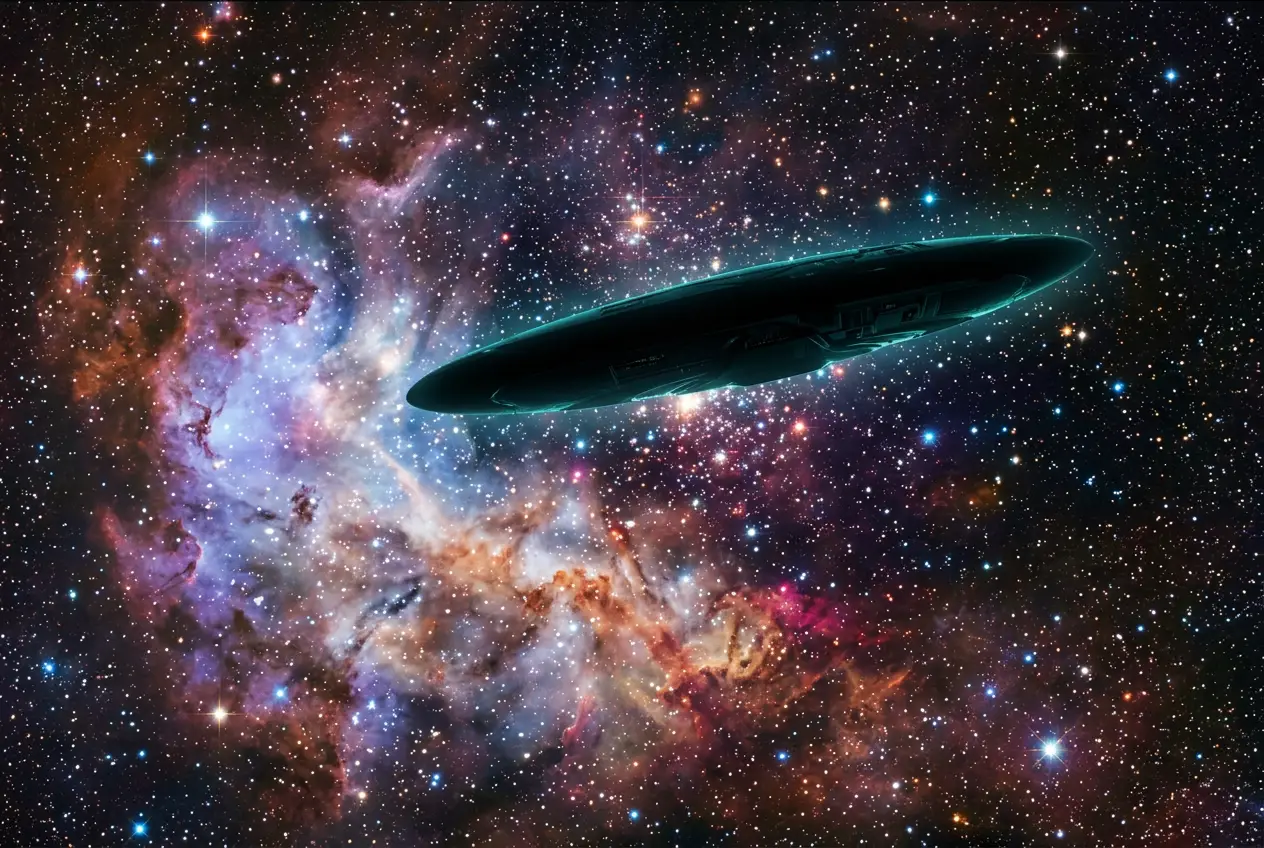
I remember the day news broke about an object unlike any we’d ever seen. It wasn’t just another asteroid or comet; it was an interstellar visitor, our first confirmed guest from another star system. Designated 1I/'Oumuamua – Hawaiian for "a messenger from afar arriving first" – this strange cosmic traveler swept through our solar system in late 2017, leaving a trail of questions that still haunt astronomers and fire the imaginations of science fiction enthusiasts. Was it merely a uniquely shaped rock, or did it carry a more profound secret, perhaps even a hint of **alien technology**?
The very idea that a piece of advanced alien engineering could have zipped past Earth, largely unnoticed until it was on its way out, is both thrilling and deeply unsettling. But how did we even get to such a bold hypothesis? It all started with Oumuamua's baffling behavior, which defied conventional astronomical explanations.
### The Arrival of an Enigma: What We Saw
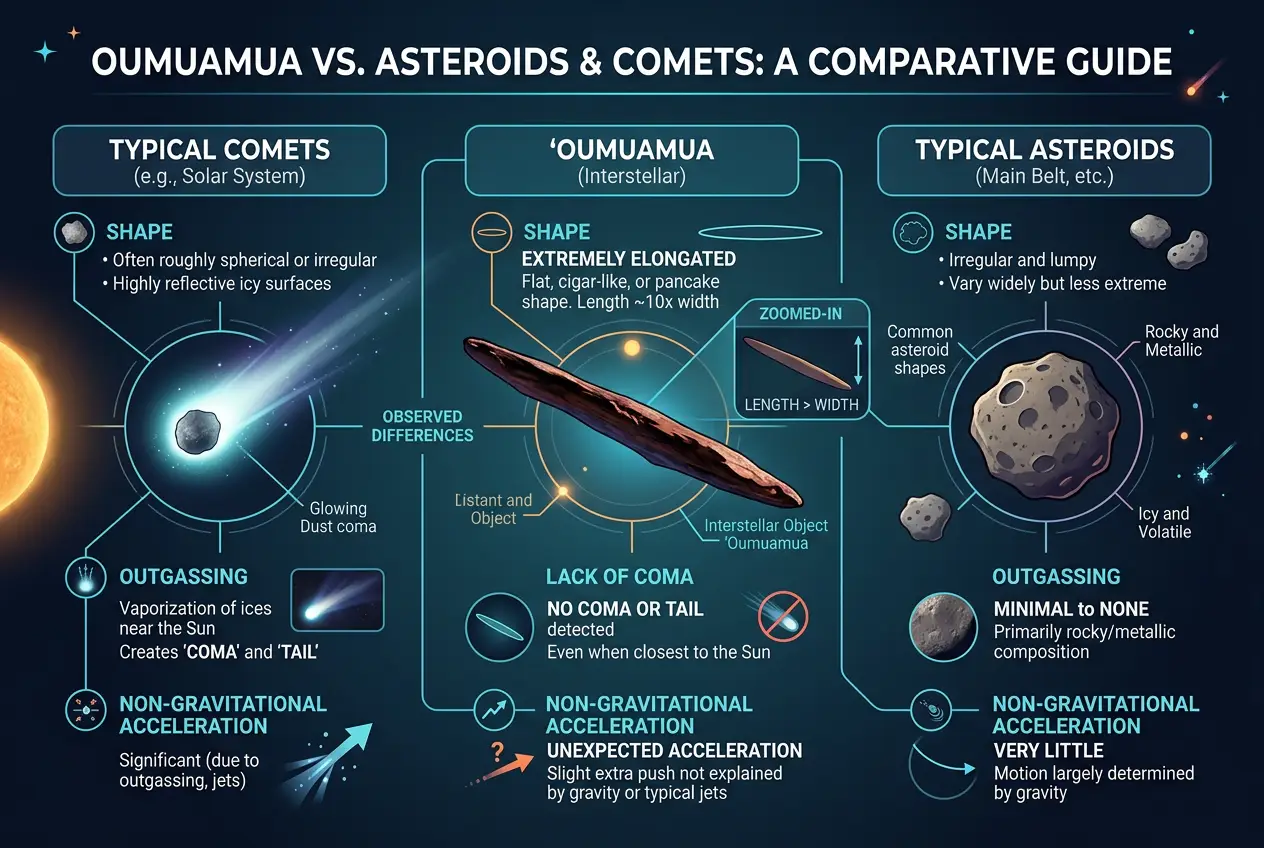
When Oumuamua was first detected by the Pan-STARRS telescope in Hawaii, it immediately stood out. Its trajectory confirmed it wasn't orbiting our Sun; it was just passing through, a rogue traveler on a hyperbolic path. But what truly set it apart were its physical characteristics and an utterly perplexing acceleration.
Initially, scientists believed it might be a comet. Comets, made of ice and dust, develop glowing tails (comas) and stream gas as they approach the Sun, due to the ice sublimating. This outgassing creates a subtle "rocket effect" that can accelerate them. However, Oumuamua showed no such cometary activity. No coma, no tail, no visible gas emissions, even as it neared our star. This was puzzling. If it wasn't a comet, it must be an asteroid – a rocky object. But then came the truly bizarre observation.
#### The Unexplained Push: Non-Gravitational Acceleration
Astronomers noticed that Oumuamua wasn't just following the gravitational pull of the Sun. It was gently but consistently accelerating away from it, slightly faster than gravity alone could explain. This "non-gravitational acceleration" is typical for comets, but without any visible outgassing, what was propelling it? This was the key anomaly that pushed some researchers, most notably Harvard Professor Avi Loeb, to consider explanations beyond natural phenomena.
"Oumuamua’s deviation from a trajectory solely governed by the Sun’s gravity suggests a force at play that we cannot easily explain with known natural processes," states an article on the phenomenon. This observation opened a Pandora's Box of theories, both conventional and radical.
### The Search for Natural Explanations
The scientific community, as it should, first sought natural explanations for Oumuamua's quirks. Several hypotheses emerged:
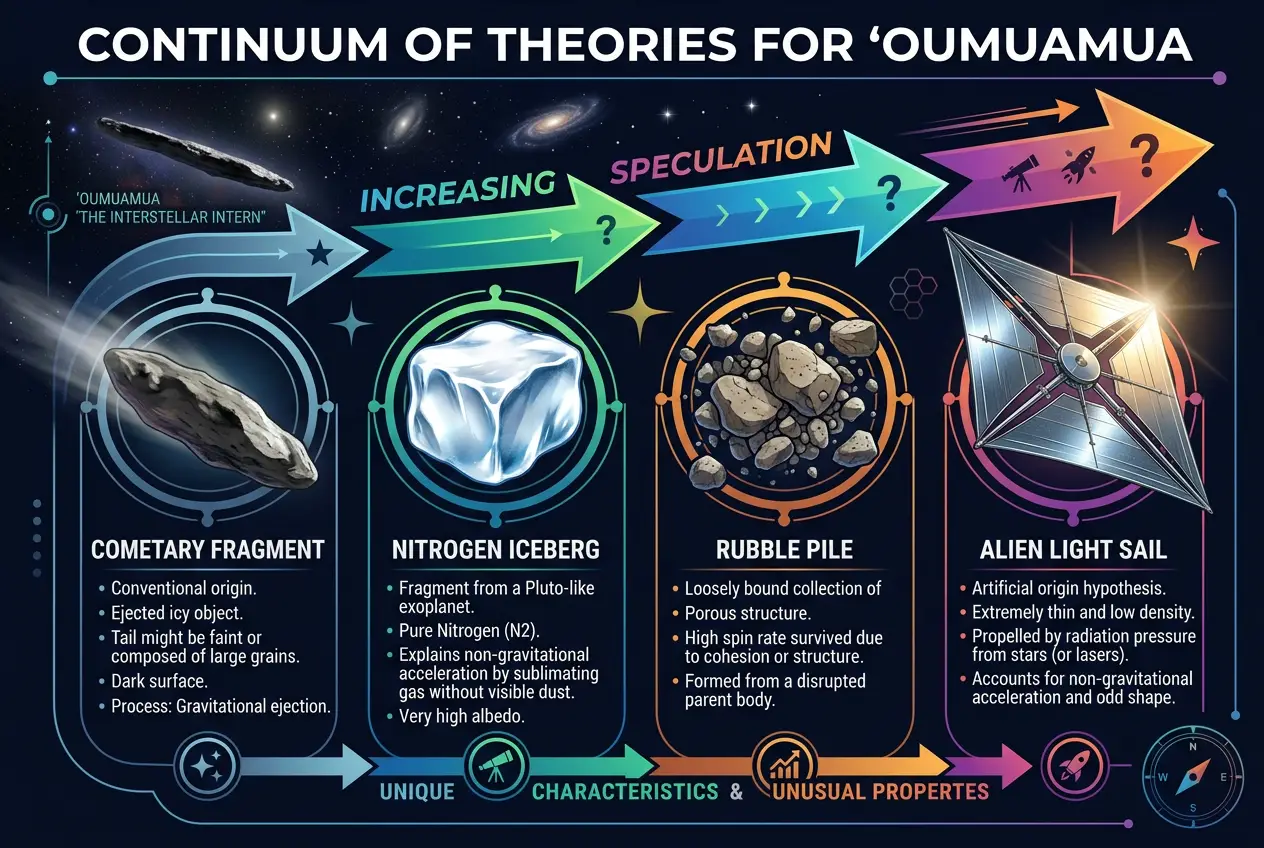
1. **Hydrogen Iceberg:** One theory suggested Oumuamua was a "hydrogen iceberg" – a chunk of frozen molecular hydrogen. As it approached the Sun, the hydrogen would sublimate, providing the necessary thrust. However, hydrogen ice is extremely volatile and would likely have evaporated long before reaching our solar system, making this theory less plausible.
2. **Nitrogen Iceberg:** Another idea proposed it was a "nitrogen iceberg," similar to the surface of Pluto. This would also sublimate and explain the acceleration. Yet, this would imply a very large mass of nitrogen, which would be difficult to form and maintain across interstellar distances. For a deeper dive into these complex celestial bodies, Wikipedia offers a comprehensive article on [comets](https://en.wikipedia.org/wiki/Comet).
3. **Rubble Pile with an Unusual Composition:** Perhaps Oumuamua was a loosely bound "rubble pile" of rocks and ice, with an unusual composition that led to undetectable outgassing. This scenario is harder to definitively rule out, but it still requires a very specific and unprecedented material makeup to explain the lack of visible activity.
While ingenious, each natural explanation struggled to fully account for all of Oumuamua's observed characteristics without introducing new, unverified assumptions about its composition or formation. This persistence of unexplained phenomena kept the door open for more unconventional ideas. For instance, the discussion around unusual celestial bodies often sparks thoughts about finding alien life on other worlds, a topic we explored in "Is Europa’s Ocean Hiding Alien Life? Decoding Icy Moons" (/blogs/is-europas-ocean-hiding-alien-life-decoding-icy-moons-2055).
### The "Alien Technology" Hypothesis
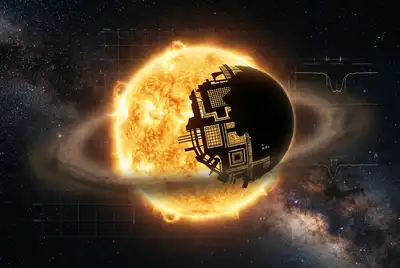
This is where Professor **Avi Loeb** enters the scene, becoming the most prominent advocate for the alien technology hypothesis. In his book "Extraterrestrial: The First Sign of Intelligent Life Beyond Earth" and numerous scientific papers, Loeb argues that the simplest explanation for Oumuamua's behavior is that it's an artificial object – a piece of technology, perhaps even a **light sail**.
#### Why a Light Sail?
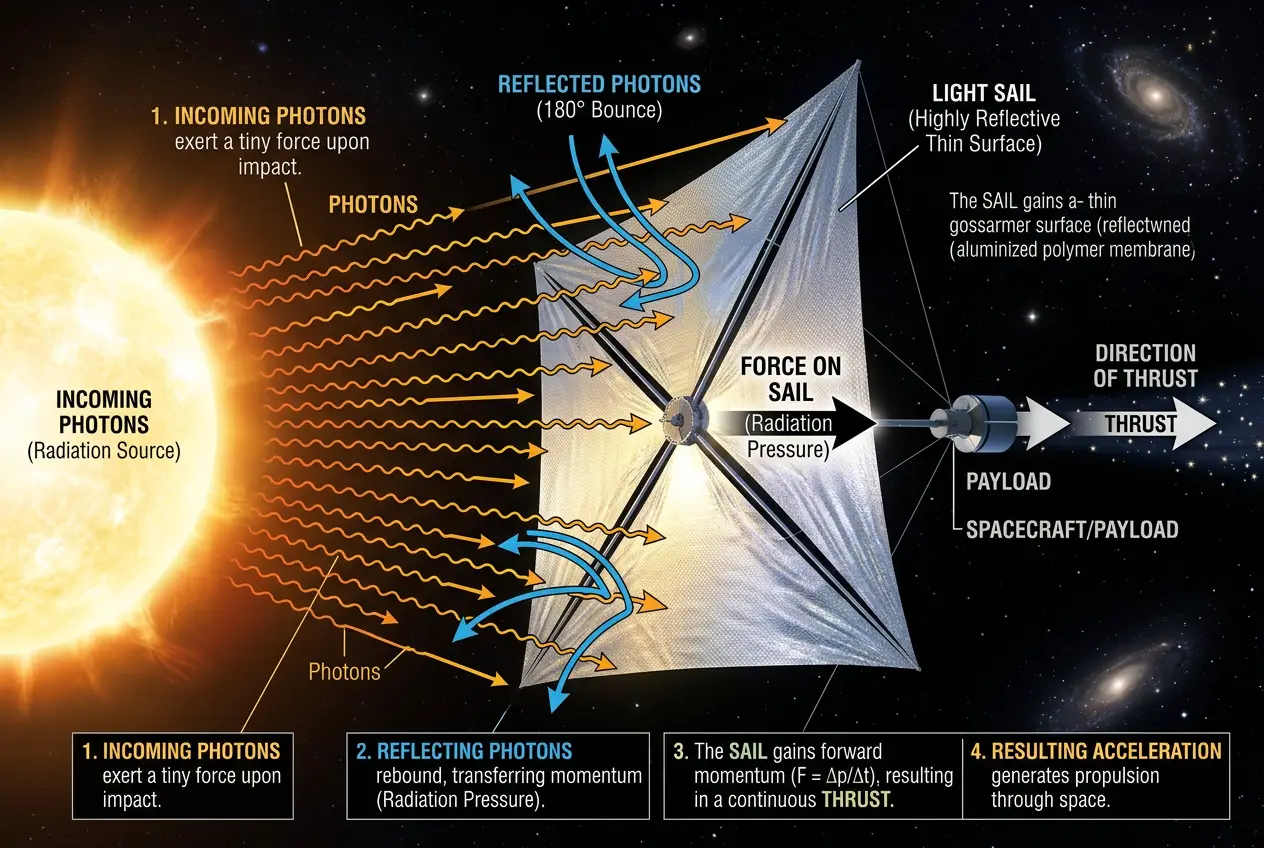
A light sail is a propulsion method that uses the pressure exerted by photons from a star (or other light source) to push a spacecraft. They are extremely thin, reflective structures designed to catch light like a ship's sail catches wind.
Loeb and his colleagues proposed that if Oumuamua were a very thin, broad object – perhaps even pancake-shaped, rather than the initially assumed cigar shape – then the pressure from the Sun's light could account for its non-gravitational acceleration without any need for outgassing. The object's observed tumbling motion could also be consistent with a thin, irregular shape.
The idea gains further traction when considering several factors:
* **No Debris:** Unlike a natural object breaking apart, Oumuamua remained intact, showing no signs of shedding material.
* **Unusual Brightness Variation:** Its brightness changed dramatically as it tumbled, suggesting an extreme aspect ratio (much longer than it is wide, or much wider than it is thick).
* **Origin:** It came from the general direction of Vega, a star known to be relatively young, which could imply a dynamic system from which an object might be deliberately launched.
Loeb’s argument isn't that Oumuamua *is* definitely alien tech, but rather that it remains a strong candidate given the lack of fully satisfactory natural explanations. He suggests that we, as scientists, should be open to extraordinary possibilities when the evidence points away from ordinary ones. For more on the concept of light sails and their potential, check out the [Wikipedia page on solar sails](https://en.wikipedia.org/wiki/Solar_sail).
### The Scientific Debate: Skepticism and the Need for Evidence
While intriguing, Loeb's hypothesis faces considerable skepticism from the broader scientific community. The prevailing view is that extraordinary claims require extraordinary evidence.
#### Counter-Arguments:
1. **Selection Bias:** We might be observing the first interstellar object, and thus, its characteristics are inherently unique to us. We don't have enough data on other interstellar objects to establish a "norm."
2. **Incomplete Data:** Oumuamua was only observed for a short period before it became too faint to detect. We missed crucial data, like its exact composition or a more precise shape.
3. **Parsimony:** Scientists often favor the simplest explanation that fits the data (Occam's Razor). While natural explanations have flaws, many argue they are less complex than invoking alien civilization.
4. **No Direct Evidence of Intelligence:** There were no radio signals, no obvious markings, nothing to unequivocally indicate artificiality.
Even those who agree Oumuamua is anomalous prefer to exhaust all natural possibilities before jumping to alien technology. The scientific process demands rigorous proof, and while the "alien tech" hypothesis is a fascinating thought experiment, it lacks the definitive proof needed for widespread acceptance. It reminds me of the broader challenges in detecting extraterrestrial intelligence, often discussed in the context of the Fermi Paradox, which we explored in "Why is the Universe So Quiet? Decoding the Fermi Paradox" (/blogs/why-is-the-universe-so-quiet-decoding-the-fermi-paradox-5418).
### The Way Forward: Project Galileo
The Oumuamua incident highlighted a critical gap in our astronomical capabilities: we were unprepared for an interstellar visitor. We need better tools and protocols to quickly identify, track, and characterize such objects in the future.
This realization led Avi Loeb to co-found **Project Galileo**. This ambitious initiative aims to:
* **Identify and study interstellar objects:** Actively search for and characterize future interstellar objects using advanced telescopes and possibly even robotic probes if an object's trajectory allows for interception.
* **Search for technosignatures:** Not just look for life, but for signs of technology. This involves looking for manufactured objects, artificial emissions, or other indicators of intelligence.
* **Retrieve and analyze materials:** If a future object is slow enough or gets close enough, perhaps even a sample return mission could be considered.
Project Galileo represents a proactive shift in the search for extraterrestrial intelligence, moving beyond passive listening to active observation and potentially even interaction. It acknowledges that the universe is vast and full of surprises, and we need to be ready for the next "messenger from afar." This drive to understand unknowns echoes our curiosity about potentially vast alien constructions, as discussed in "Alien Megastructures: Are We Missing Cosmic Architects?" (/blogs/alien-megastructures-are-we-missing-cosmic-architects-6667).
### The Profound Implications
What if, one day, we *do* confirm an interstellar object is artificial? The implications would be nothing short of revolutionary. It would fundamentally alter our understanding of our place in the universe.
* **Not Alone:** It would be concrete proof that we are not alone.
* **Technological Advancement:** It would demonstrate the existence of technology far beyond our current capabilities, potentially hinting at entirely new physics or engineering principles.
* **Existential Questions:** It would force us to confront profound philosophical and existential questions about the nature of intelligence, civilization, and our future.
For now, Oumuamua remains a captivating mystery. It was an unexpected visitor, a fleeting glimpse of something truly extraordinary from beyond our solar system. Whether it was a piece of alien technology or a truly bizarre natural phenomenon, it has certainly ignited our curiosity and pushed the boundaries of our scientific inquiry. The universe, it seems, always has new stories to tell, and we're just beginning to learn how to listen.
Frequently Asked Questions
Oumuamua stood out due to its extreme elongated shape, lack of a cometary tail or gas emissions despite its close approach to the Sun, and most importantly, its unexplained non-gravitational acceleration, which suggested it was being pushed by a force other than gravity and outgassing.
The leading proponent of the 'alien technology' hypothesis is Professor Avi Loeb, a theoretical astrophysicist at Harvard University. He suggests Oumuamua could be an artificial object, possibly a light sail, due to its anomalous behavior.
A light sail is a propulsion system that uses the pressure of sunlight (photons) to propel a spacecraft. If Oumuamua were an extremely thin, broad object, solar radiation pressure could explain its non-gravitational acceleration without needing any gas or debris emissions, which aligns with observations.
Yes, since Oumuamua, astronomers have also confirmed 2I/Borisov, which unequivocally displayed cometary activity. There are also candidates like CNEOS 20140108, a meteor that struck Earth, suspected to be interstellar, currently under study.
Project Galileo is an initiative co-founded by Avi Loeb, aiming to systematically search for and study objects from other star systems, as well as potential technosignatures (signs of alien technology), using advanced observatories and, eventually, specialized probes.
Most scientists maintain skepticism because extraordinary claims require extraordinary evidence. While Oumuamua's behavior is unusual, there is no direct, unequivocal proof of artificiality. Many prefer to exhaust all natural explanations, even highly improbable ones, before resorting to an extraterrestrial technological origin.
Verified Expert
Alex Rivers
A professional researcher since age twelve, I delve into mysteries and ignite curiosity by presenting an array of compelling possibilities. I will heighten your curiosity, but by the end, you will possess profound knowledge.
Leave a Reply
Comments (0)
No approved comments yet. Be the first to share your thoughts!
 Join Us


 Alex Rivers



















Leave a Reply
Comments (0)