


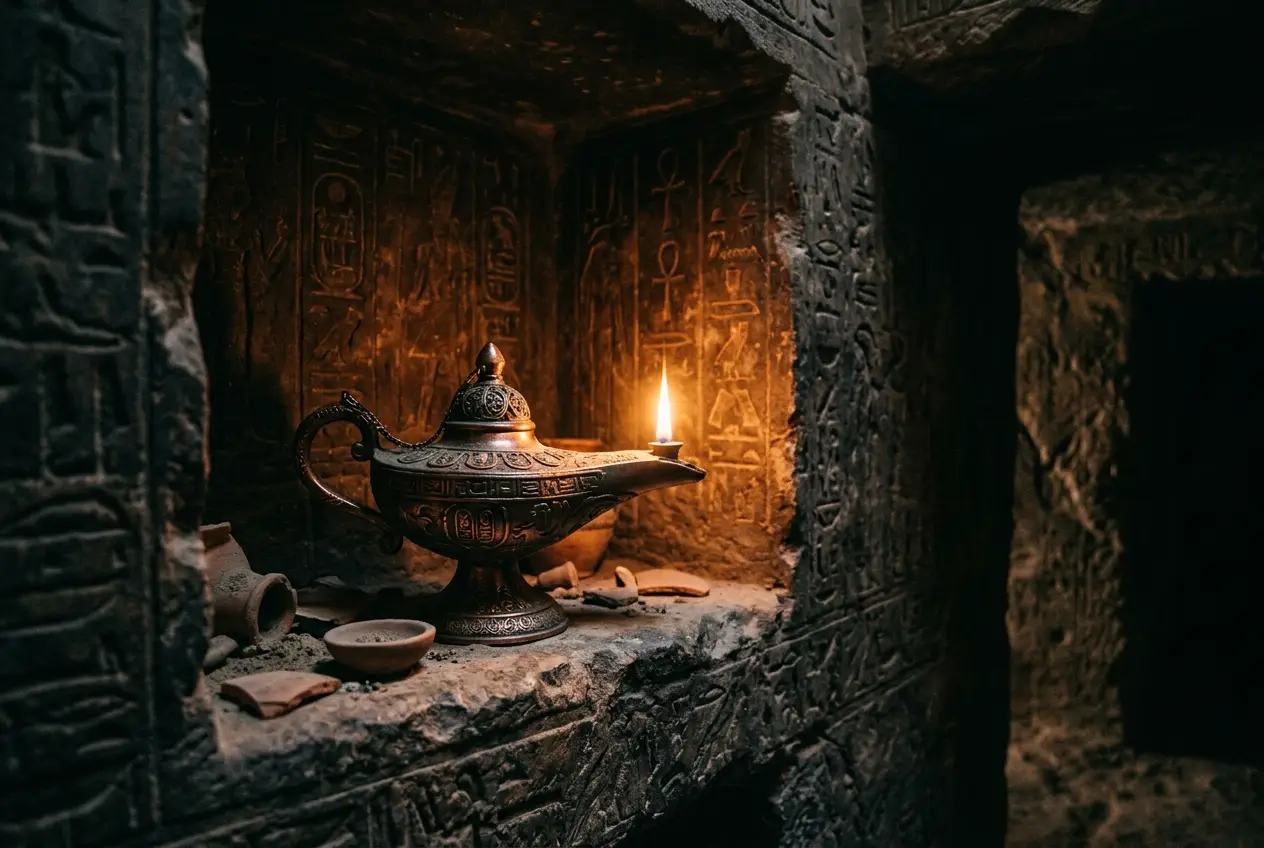
I've always been captivated by stories of lost technologies and forgotten sciences. The idea that ancient civilizations might have possessed knowledge that rivals, or even surpasses, some of our modern understanding is a notion that consistently fuels my curiosity. One such legend that often resurfaces in the annals of history is that of perpetual lamps—lights said to burn for centuries, even millennia, without fuel or maintenance. Could our ancestors have genuinely crafted immortal lights? Or are these tales merely the flickering shadows of myth and misunderstanding?
The concept of an "eternal lamp" isn't just a quaint folktale; it's a recurring motif found across diverse cultures and eras. From the tombs of ancient Egypt to the scholarly texts of Greece and Rome, and even into medieval Europe, accounts describe lamps found burning brightly in sealed chambers, tombs, or hidden crypts, sometimes after thousands of years. It feels like something out of a science fiction novel, doesn't it? Yet, the persistence of these narratives makes one pause and wonder: what if there's a kernel of truth buried within these spectacular claims?
The Whispers of History: Accounts of Undying Light
The earliest tales of lamps that defied the laws of conventional combustion hail from ancient Egypt. Imagine excavators breaking into a long-sealed tomb, perhaps a forgotten pharaoh’s resting place, only to find a lamp still alight, defying the passage of countless centuries. While no verifiable Egyptian "eternal lamp" has ever been discovered in modern archaeology, the legend was strong enough to influence later cultures. Some historians suggest these legends might have arisen from misinterpretations of ritual lamps or symbolic eternal flames that were regularly maintained but later exaggerated in folklore.
However, it was the classical world, particularly Roman and Greek writers, who provided more detailed (though still often anecdotal) accounts. Plutarch, the famous Greek historian, wrote about a lamp in a temple of Jupiter Ammon that supposedly burned for years without consuming oil, extinguished only when priests intentionally removed it. He found the idea fascinating, speculating on various natural explanations like asbestos wicks or rare, stable fuels. He famously stated, "If the lamp was one of those which are perpetually burning in the temples... the heat is not great, nor the flame bright, and the wick consumes very little oil." This indicates that even in ancient times, the concept was discussed and debated.
The Romans, ever practical, also had their share of stories. In the 1st century AD, St. Augustine recounted a tale of a lamp found burning brightly in a pagan temple dedicated to Venus, even though it had been sealed for centuries. He, too, sought a natural explanation, pondering if some unknown, durable substance fueled the flame. He noted that "the lamp... remained burning through all changes of weather, and was exposed to winds and rain, yet its flame was never extinguished." Such accounts, whether real or embellished, fueled the imagination and solidified the myth of perpetual light. You can delve into more on the historical perception of such mysteries by reading about the ancient alignments that tracked the cosmos on our site: Ancient Alignments: Did Structures Track the Cosmos?.
Moving into medieval times, alchemists and mystics were particularly obsessed with the idea of perpetual motion and eternal light, often linking it to the legendary philosopher's stone. Texts from the Middle Ages describe various concoctions and mechanisms supposedly capable of producing an undying flame. While these were largely theoretical or based on flawed alchemical principles, they demonstrate the enduring human desire to harness energy eternally.
The Science of "Eternal" Light: More Than Meets the Eye
So, if ancient lamps weren't magically burning forever, what could explain these persistent stories? I think it boils down to a fascinating interplay of natural phenomena, human observation, and perhaps a touch of intentional deception or exaggeration.
1. Phosphorescence and Luminescence: One of the most plausible scientific explanations lies in the properties of certain materials that can store light energy and release it slowly over time—a process known as phosphorescence. While not a "flame," a phosphorescent material could glow in the dark for hours, or even days, after being exposed to a light source. Imagine an ancient miner stumbling upon a cavern lined with phosphorescent minerals. In the absence of direct light, these glowing rocks could easily be mistaken for a miraculously burning lamp, particularly in societies without a deep understanding of photoluminescence. Many natural phosphorescent minerals exist, some known to glow for considerable periods. You can read more about naturally occurring anomalies like "living rocks" and their potential as data storage: Are Living Rocks Earth's Oldest Data Storage?.
2. Slow Chemical Reactions: Another intriguing possibility involves very slow-burning chemical reactions or substances that generate light without significant heat. Certain chemical compounds, under specific environmental conditions (like being sealed away from oxygen), could theoretically undergo extremely slow oxidation or other chemiluminescent reactions that produce a faint, enduring light. While such a mechanism wouldn't produce a typical "flame," it could create a persistent glow mistaken for one. Think of the modern "glow stick," which uses a chemiluminescent reaction to produce light without heat. Could ancient alchemists or skilled artisans have stumbled upon a similar, long-lasting formulation?
3. Natural Gas Seepage: In some geological locations, natural gas can seep from the earth. If such gas found its way into a confined space with a perpetual ignition source (like a slow smoldering ember or even static electricity under specific conditions, though less likely for millennia), it could create a continuously burning flame. However, this is more akin to a "natural eternal flame" than a crafted lamp. The "Gates of Hell" in Turkmenistan, a natural gas crater that has been burning for decades, is a modern example of this phenomenon, albeit on a much larger scale.
4. Misinterpretation and Legend Amplification: I believe a significant portion of the "eternal lamp" phenomenon is rooted in simple human error, misinterpretation, and the natural human tendency to embellish a good story.
- Maintenance: Many temple lamps were indeed maintained by priests as a sacred duty, ensuring they never went out. When outsiders heard of an "eternal flame," they might not have understood the constant human effort involved.
- Resurrection of Light: A lamp extinguished by time could appear to "relight" if ambient light (sunlight through a crack, torchlight of explorers) reflected off shiny surfaces, creating an illusion of glow.
- Symbolism: The "eternal flame" often held deep symbolic meaning—representing deities, ancestry, or everlasting life. This symbolism could easily morph into literal claims of perpetual burning over generations.
Beyond the Myths: What Could Ancient Ingenuity Achieve?
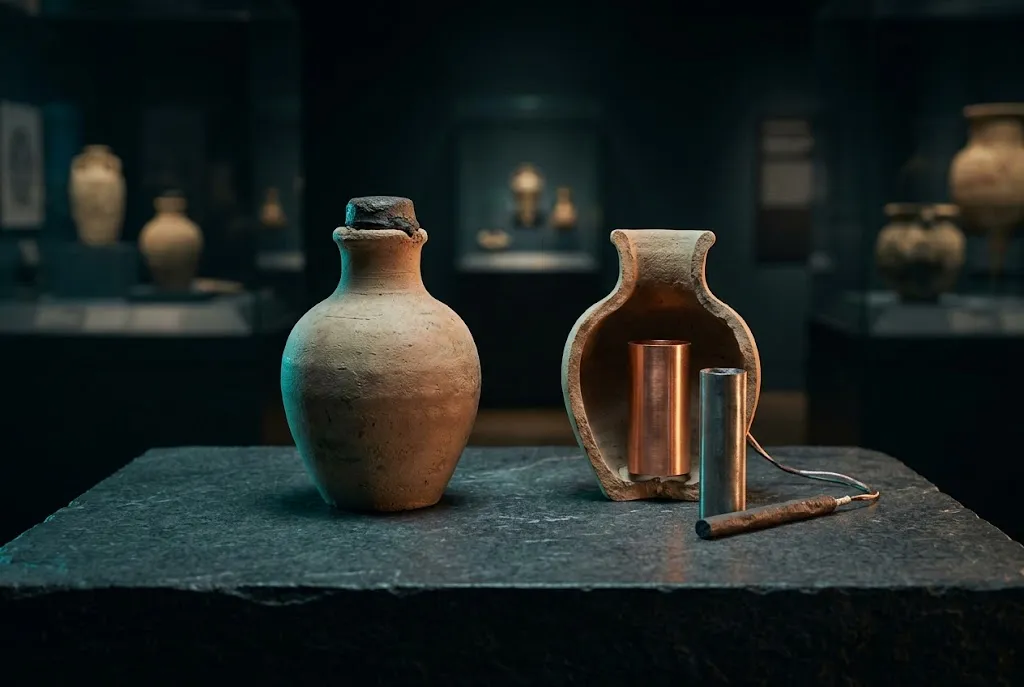
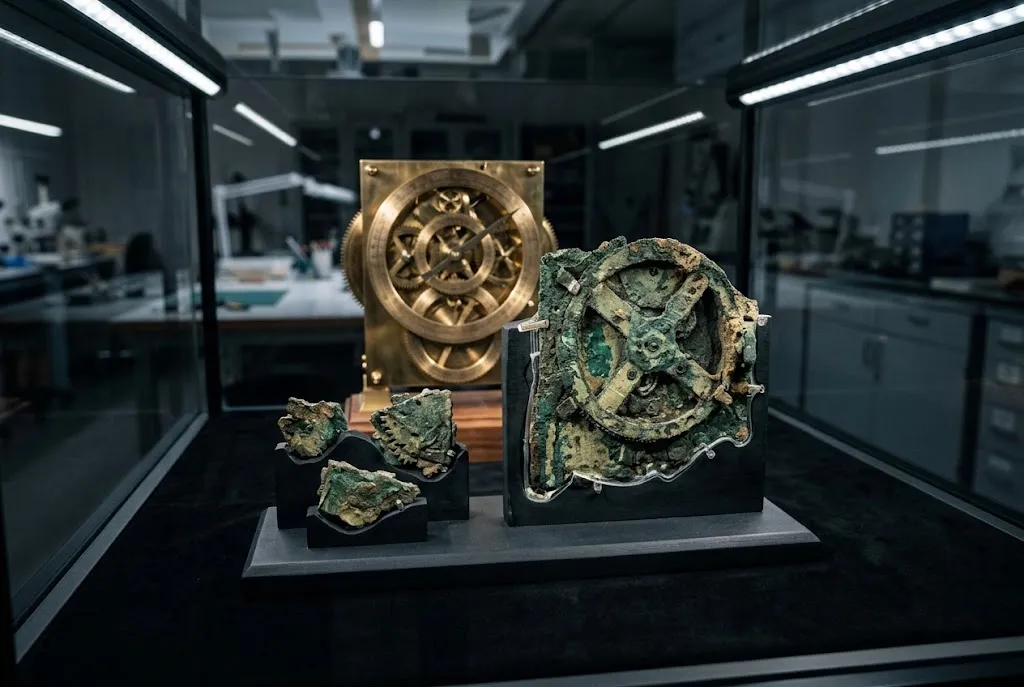
While true perpetual motion or eternal energy sources remain firmly in the realm of fiction, it's crucial not to underestimate ancient ingenuity. Civilizations like the Egyptians, Greeks, and Romans were master engineers, chemists, and metallurgists. We’ve seen evidence of their incredible capabilities in areas like the Antikythera Mechanism, the Baghdad Battery (The Baghdad Battery: Did Ancient Iraqis Power a Lost Civilization?), and their remarkable understanding of acoustics (Lost Acoustic Tech: Did Ancients Control Sound Waves?).
Could they have developed extremely long-lasting, highly efficient fuels or wicks? Absolutely. Ancient Egyptians used specific oils and fats for their lamps, and Roman concrete had properties that baffle us today, suggesting advanced material science. It's plausible they could formulate a lamp oil that burned exceptionally slowly, or a wick made from a substance like asbestos (known even then for its heat resistance) that would slowly consume minimal fuel over extended periods. A sealed environment, limiting oxygen access, would further prolong a flame's life, even if not truly "eternal."
Consider the materials available. Alchemists experimented tirelessly with various substances, seeking to unlock their hidden potentials. Some of these experiments might have led to unexpected discoveries, creating compounds that glowed for an unusually long time. While they wouldn't have understood the atomic or quantum mechanics behind luminescence, they might have empirically observed and utilized its effects.
The Enduring Fascination
The allure of the "eternal lamp" persists because it taps into a fundamental human desire: to overcome limitations, particularly those of decay and impermanence. It suggests a mastery over nature, a secret knowledge that once existed but is now lost to us. In a world increasingly reliant on fleeting power sources and rapidly evolving technology, the idea of something that simply is, without needing constant replenishment, is deeply appealing.
Ultimately, while the romantic notion of a truly immortal lamp is almost certainly a myth, the stories themselves are a testament to ancient curiosity, observation, and technological aspirations. They highlight the boundaries of scientific understanding in their time and the ways in which natural phenomena could be interpreted through the lens of wonder and mystery. And for me, that's just as fascinating as any lost piece of tech. It reminds us that our ancestors, much like us, were constantly trying to understand and harness the world around them, often leading to discoveries that spark our imaginations millennia later.



Conversation0
No comments yet. Be the first to share a thought — the best questions often become new stories.