I remember watching a documentary once about inexplicable phenomena, and one segment vividly described **earthquake lights (EQLs)**. I was captivated. The idea that the very ground beneath our feet, when undergoing immense stress, could spontaneously ignite the night sky with an eerie glow felt like something out of a science fiction novel, yet it's a phenomenon documented for centuries. For many, the sight of light shimmering from the ground or arcing across the sky during or just before an earthquake is a terrifying, wondrous spectacle. But what exactly are these mysterious illuminations, and can science truly explain them?
### The Enigma of Earthquake Lights: A Glimpse into Earth's Hidden Energy
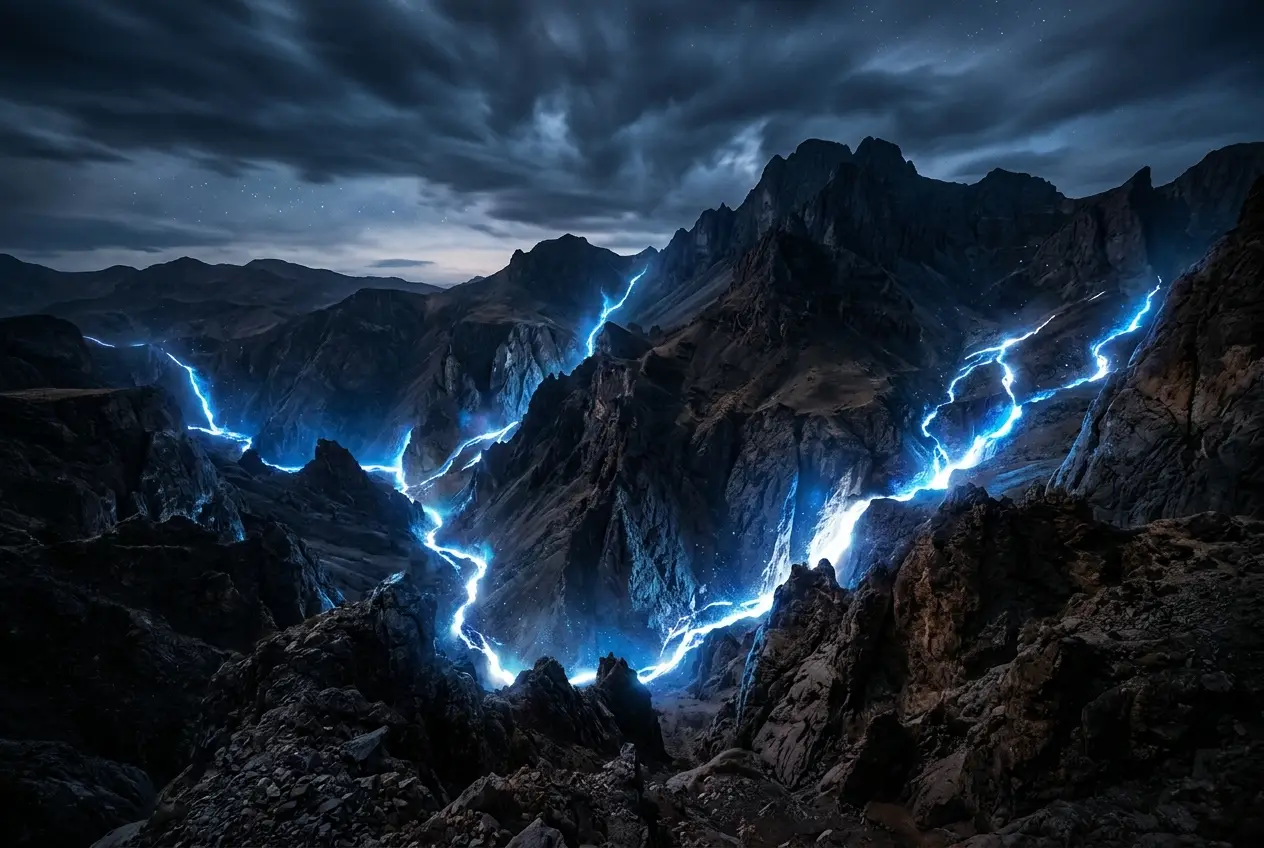
Earthquake lights are exactly what they sound like: luminous atmospheric phenomena observed near seismic activity. They can take various forms – from a steady glow near the ground, resembling a faint fog, to fleeting bright flashes, or even luminous spheres that seem to hover in the air before vanishing. These displays are relatively rare and typically short-lived, making them incredibly challenging for scientists to study systematically. Despite their elusive nature, accounts of EQLs date back to ancient times, often interpreted as omens or supernatural occurrences. Today, thanks to modern observational techniques and an increasing number of eyewitness testimonies, we're slowly piecing together the scientific puzzle behind these dazzling geological anomalies.
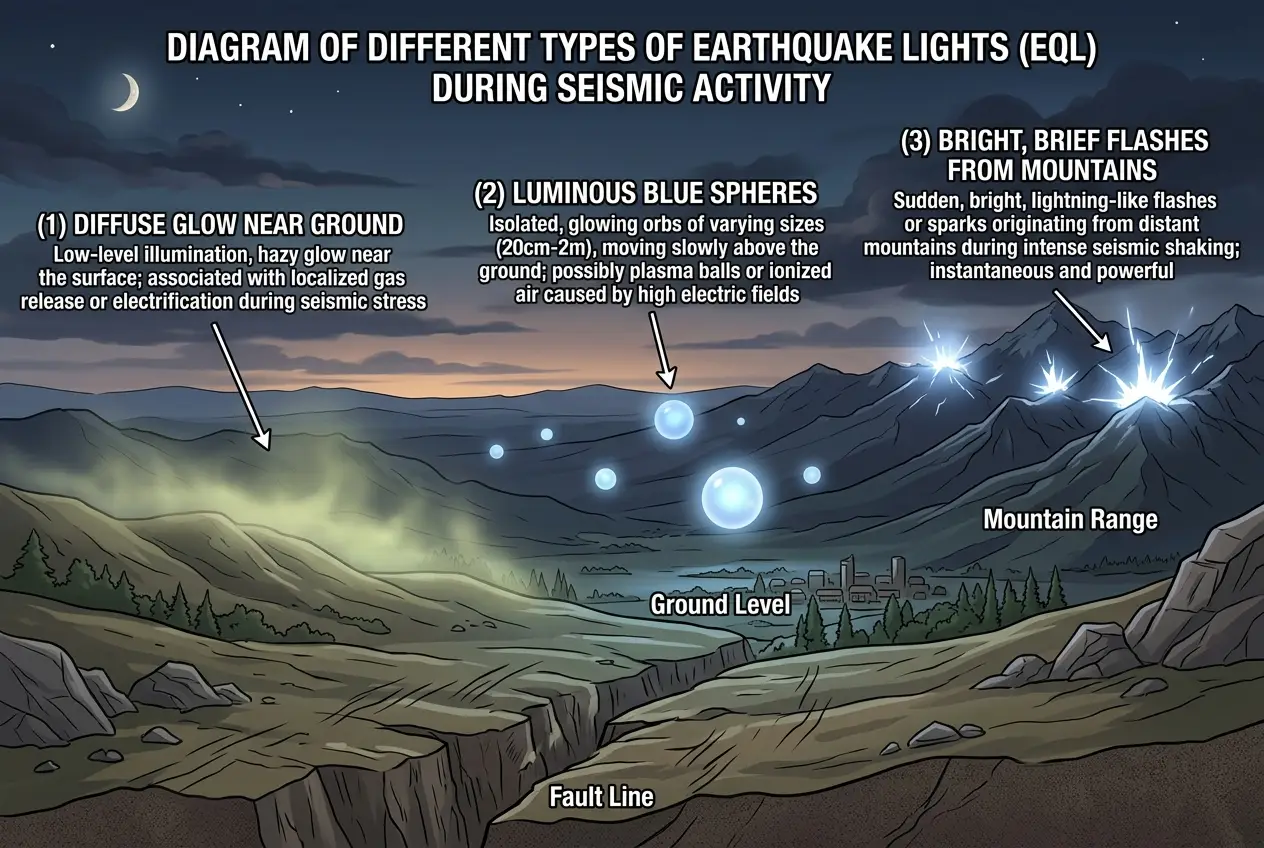
The scientific community has, for a long time, been cautious about EQLs, primarily due to their infrequency and the lack of consistent, repeatable observations. However, with photographic evidence, video recordings, and increasingly sophisticated seismic monitoring, the existence of EQLs is now widely accepted, though their precise mechanisms remain a subject of active research and debate. This isn't just a fleeting oddity; it represents a profound interaction between geological forces and atmospheric physics, potentially hinting at hidden energies within our planet.
### Witness Accounts and Modern Observations
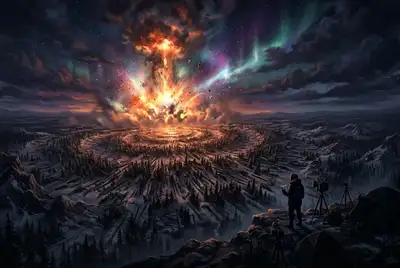
Eyewitness accounts of EQLs often describe scenes of profound wonder and terror. People in areas prone to seismic activity—such as Japan, China, Italy, and parts of the Americas—have reported seeing these lights during significant quakes. For instance, during the devastating 1960 Valdivia earthquake in Chile, one of the most powerful ever recorded, observers reported large, luminous streaks in the sky. More recently, the 2008 Sichuan earthquake in China, the 2009 L'Aquila earthquake in Italy, and the 2016 Kaikōura earthquake in New Zealand all produced documented EQLs, often captured on camera by chance.
One of the most striking instances comes from the 1988 Saguenay earthquake in Quebec, Canada. This moderate-sized quake (magnitude 5.9) was well-documented, and numerous residents reported seeing unusual light displays, from bright white to blue-green glows, preceding or accompanying the tremors. A particularly famous video captured during the 2017 Puebla earthquake in Mexico City showed a brilliant display of flashes and glows lighting up the night sky as buildings swayed – a truly mesmerizing yet frightening sight. These modern observations, corroborated by multiple witnesses and recordings, have shifted EQLs from folklore to a legitimate scientific phenomenon.
### Hypotheses and the Science Behind the Glow
So, if EQLs are real, what causes them? Scientists have proposed several intriguing hypotheses, each attempting to explain how the immense mechanical stress of an earthquake can manifest as light. The prevailing theories often involve the generation of electrical charges or excited plasma by the movement and fracturing of rocks.
#### 1. Piezoelectricity and the Crystal Effect
One of the oldest and most well-known hypotheses involves **piezoelectricity**. This phenomenon occurs when certain materials, like quartz crystals (common in many rocks), generate an electric charge when subjected to mechanical stress. In simple terms, squeezing a quartz crystal can make it produce a tiny electrical current. The Earth's crust is rich in quartz-bearing rocks. As tectonic plates grind against each other, building up immense stress along fault lines, these quartz crystals could theoretically generate significant voltages.
Imagine miles of rock under unimaginable pressure. If enough charge builds up along a fault, it could ionize the air above, creating a luminous glow or even electrical discharges similar to lightning. This theory is particularly appealing because it directly links the mechanical stress of an earthquake to electrical phenomena. However, not all fault zones are rich in quartz, and EQLs have been observed in diverse geological settings, suggesting piezoelectricity might not be the sole explanation.
#### 2. Fracto-emission: Breaking Bonds, Releasing Energy
Another theory, **fracto-emission**, suggests that the breaking of chemical bonds within rocks during fracturing can release energy in the form of light, heat, or even radio waves. As rocks crack and rupture under stress, atomic bonds are broken, releasing electrons and other charged particles. These excited particles can then interact with the atmosphere, leading to luminescence. This process is similar to what happens when you break a sugar cube in the dark and see tiny sparks – known as triboluminescence. While compelling, the energy released through fracto-emission might be too localized and insufficient to explain the large-scale, atmospheric light displays often reported during EQLs.
#### 3. The Lithosphere-Atmosphere-Ionosphere Coupling (LAIC) Hypothesis
More complex and comprehensive theories, such as the **Lithosphere-Atmosphere-Ionosphere Coupling (LAIC)** hypothesis, propose a cascade of events. This theory suggests that seismic stress generates not only electric charges but also disturbances that propagate from the Earth's crust (lithosphere) upwards through the atmosphere and into the ionosphere. The breaking of rocks along faults can generate positive holes, or "p-holes" – defects in the crystal lattice that act as charge carriers. These p-holes can travel rapidly to the surface, ionizing the air and creating plasma.
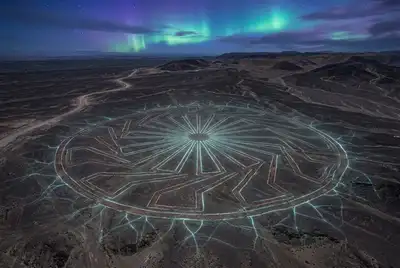
This upward flow of charge can then influence the local electric field in the atmosphere, potentially leading to aurora-like displays or even affecting the lower ionosphere. This theory also considers the role of radon gas release during seismic activity, which can ionize the air and contribute to the luminous phenomena. Understanding the broader effects of these electromagnetic changes is crucial for grasping the full scope of EQLs, as discussed in the broader context of Earth's magnetic phenomena, which you can read more about in our article on how ancient civilizations might have sensed Earth's magnetic reversals: [Did Ancients Sense Earth's Magnetic Reversals?](https://curiositydiaries.com/blogs/did-ancients-sense-earths-magnetic-reversals-4674).
#### 4. The Rock Faulting Theory
A more refined version of the charge generation theory, the **"rock faulting theory"** proposed by Friedemann Freund, a former researcher at NASA, suggests that highly stressed rocks within the Earth's crust can activate mobile electronic charge carriers. These carriers, dubbed "positive holes," can then flow out of the stressed rock volumes, travel rapidly through less stressed rocks, and reach the Earth's surface. Once at the surface, these positive holes can ionize air molecules, leading to plasma formation and the emission of light. This theory posits that EQLs are not merely a byproduct but a direct manifestation of these charge carriers reaching the surface and interacting with the atmosphere. More details on the phenomenon can be found on Wikipedia's page for Earthquake Light: [https://en.wikipedia.org/wiki/Earthquake_light](https://en.wikipedia.org/wiki/Earthquake_light).
### The Challenge of Prediction and Verification
Despite these promising hypotheses, the study of EQLs remains incredibly challenging. Their unpredictable nature means scientists can't set up controlled experiments. They have to rely on chance observations, often from non-scientists, and seismic data collected after the fact. This makes verification and detailed analysis difficult. Furthermore, EQLs are not observed with every earthquake, nor are they consistently linked to specific magnitudes or geological conditions. This variability hints that multiple factors, possibly environmental conditions like atmospheric humidity or specific rock compositions, might play a role in their manifestation.
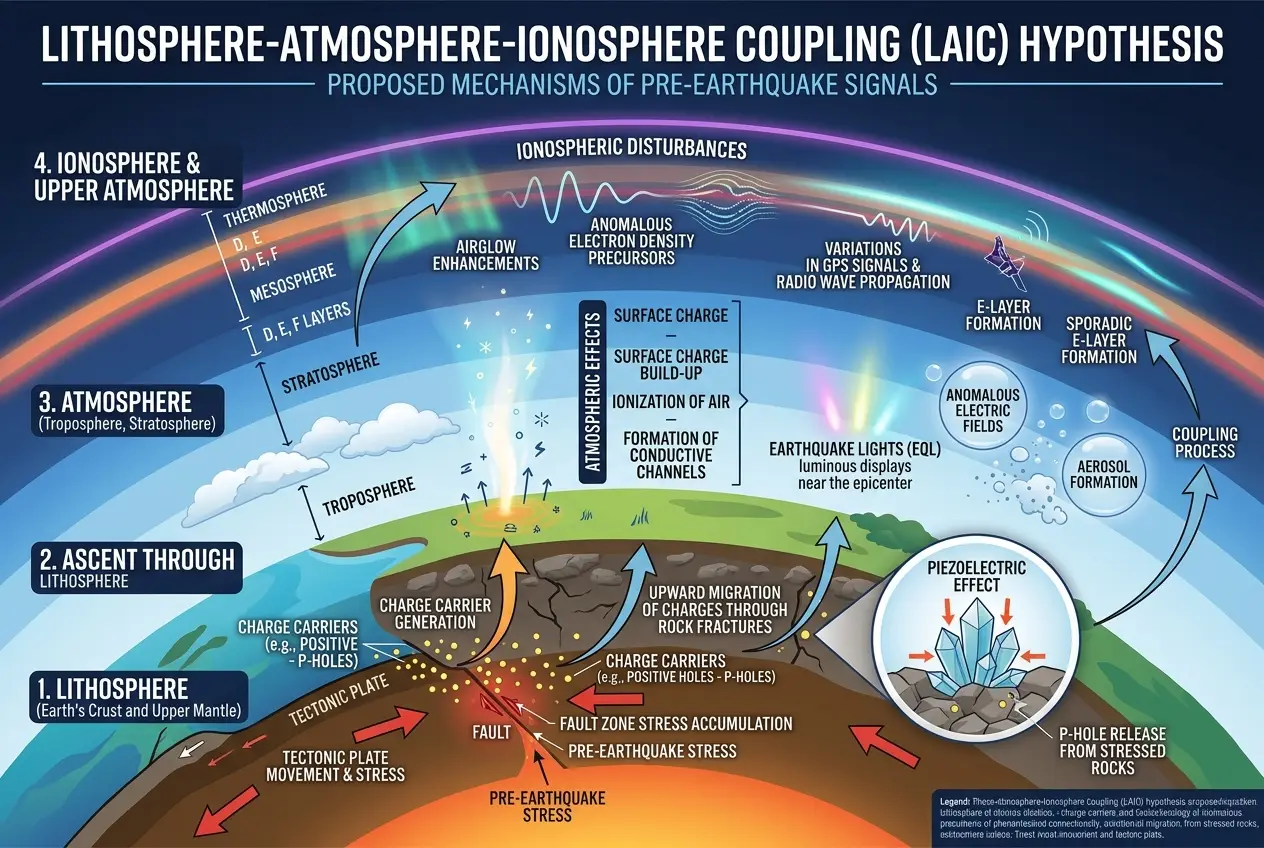
Some researchers are now employing innovative methods, such as using satellite observations to detect electromagnetic disturbances or thermal anomalies preceding earthquakes, which might be correlated with EQL occurrences. The goal is not just to understand the lights themselves, but to explore if these electromagnetic precursors could offer a new avenue for earthquake prediction – a "holy grail" for seismologists worldwide. The concept of harnessing such raw, mysterious energy from Earth is a fascinating one, akin to exploring whether other natural energy sources could be tapped, as we discussed in our blog about whether ancient structures could harvest Earth's hidden power: [Could Pyramids Harvest Earth's Hidden Power?](https://curiositydiaries.com/blogs/could-pyramids-harvest-earths-hidden-power-7256).
### Potential Applications and Future Research
The potential implications of fully understanding EQLs extend far beyond mere scientific curiosity. If these lights are indeed reliable precursors to seismic events, even by a short duration, they could revolutionize earthquake early warning systems. Imagine a network of sensors designed to detect the subtle electromagnetic shifts or atmospheric ionization that precede EQLs. Such a system could provide precious seconds or minutes of warning, allowing people to take cover and potentially save countless lives.
Further research involves laboratory experiments simulating rock fracturing under high stress to observe light emission, as well as more sophisticated atmospheric and electromagnetic sensing around active fault lines. Combining seismology with atmospheric physics, electrical engineering, and even plasma physics is crucial to unraveling this complex phenomenon. The future of EQL research lies in interdisciplinary collaboration, leveraging advanced technology to observe, measure, and finally explain these captivating natural light shows. Just as we ponder the cosmic energy unleashed by thunderstorms, the Earth itself seems to possess its own dramatic energy release mechanisms, a topic explored further in our article: [Can Thunderstorms Unleash Cosmic Energy?](https://curiositydiaries.com/blogs/can-thunderstorms-unleash-cosmic-energy-1307).
### Conclusion
The eerie glow of earthquake lights remains one of nature’s most spectacular and perplexing anomalies. From ancient folklore to modern scientific inquiry, these luminous phenomena challenge our understanding of Earth’s dynamic processes. While no single theory definitively explains all observed EQLs, the ongoing research into piezoelectricity, fracto-emission, and lithosphere-atmosphere-ionosphere coupling is slowly illuminating this geological mystery. As technology advances, I believe we stand on the brink of not only fully understanding how Earth conjures these lights but perhaps even leveraging this knowledge to better protect ourselves from its most destructive forces. The next time the ground shakes, look to the sky – you might just witness one of Earth's most profound and beautiful secrets.
Frequently Asked Questions
Yes, despite their elusive nature and the challenges in systematic study, earthquake lights (EQLs) are now widely accepted by the scientific community. Numerous eyewitness accounts, photographic evidence, and video recordings corroborate their existence during seismic events.
Earthquake lights can vary significantly in appearance. They are often described as a diffuse, steady glow near the ground, bright flashes or streaks in the sky, or even luminous spheres that seem to hover before disappearing. Colors reported include white, blue, green, and purple.
No, there isn't one single, universally accepted theory. Scientists have proposed several hypotheses, including piezoelectricity (electrical charge from stressed quartz rocks), fracto-emission (energy release from breaking chemical bonds), and the lithosphere-atmosphere-ionosphere coupling (LAIC) hypothesis (a cascade of electrical disturbances from the ground to the atmosphere). It's possible that different mechanisms might be at play in different geological settings.
Currently, no. While EQLs often occur during or shortly before earthquakes, their unpredictable nature, infrequency, and lack of consistent appearance with every quake mean they are not reliable for prediction. However, ongoing research is exploring if the underlying electromagnetic precursors that cause EQLs could potentially contribute to future early warning systems.
EQLs are difficult to study because they are rare, unpredictable, and often short-lived. Scientists cannot induce them in controlled laboratory settings, so they must rely on chance observations, which are often reported by non-scientists and can lack precise data for analysis. This makes systematic research and verification challenging.
While both involve light in the atmosphere, earthquake lights and aurora borealis are distinct. Aurorae are caused by charged particles from the sun interacting with Earth's magnetic field in the upper atmosphere. EQLs, however, are hypothesized to originate from geological processes within the Earth's crust during seismic activity, generating charges that interact with the lower atmosphere. There might be some overlap in the physical processes of light emission (ionization of gases), but their origins are different.
Verified Expert
Alex Rivers
A professional researcher since age twelve, I delve into mysteries and ignite curiosity by presenting an array of compelling possibilities. I will heighten your curiosity, but by the end, you will possess profound knowledge.
Leave a Reply
Comments (0)
No approved comments yet. Be the first to share your thoughts!
 Join Us
 Unknown Author












Leave a Reply
Comments (0)