


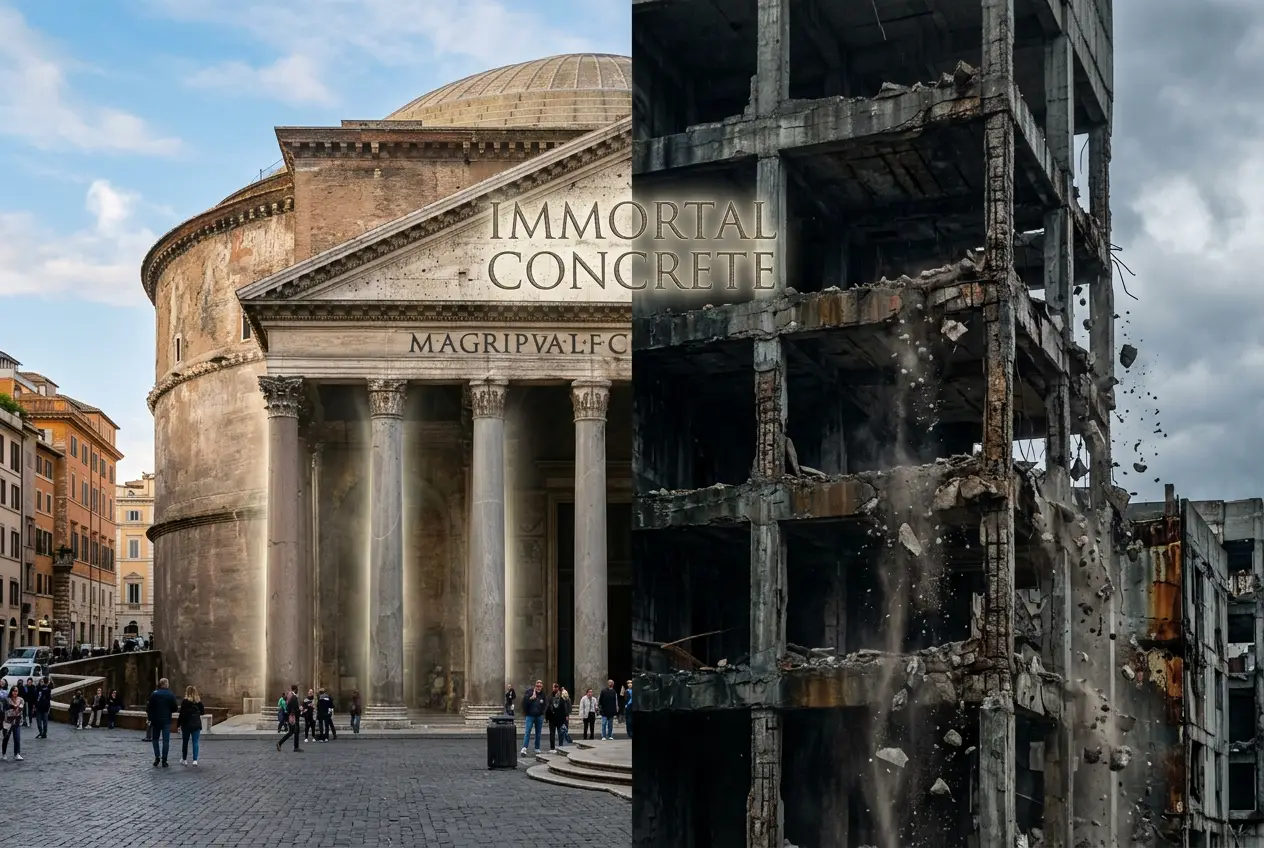
I stood beneath the impossibly vast dome of the Pantheon in Rome, my neck craning, a sense of awe washing over me. Completed nearly two millennia ago, this architectural marvel, with its unreinforced concrete dome—still the largest of its kind—is a testament to engineering brilliance. Yet, just a few blocks away, I’d seen modern concrete structures showing signs of decay after only a few decades. It makes you wonder, doesn't it? Did the Romans possess a secret, a lost technology for concrete that allowed their magnificent edifices to defy the ravages of time and even the corrosive power of seawater?
For centuries, the incredible durability of Roman concrete has puzzled scientists and engineers. While our modern concrete, primarily Portland cement-based, struggles against sulfate attack and alkali-silica reactions, ancient Roman structures like the Pantheon, the Colosseum, and countless aqueducts and harbor walls stand defiant, often in harsher conditions. This isn't just about good craftsmanship; it's about a fundamental difference in the material itself. It's a true historical anomaly that blends material science with ancient ingenuity, urging us to question if we’ve truly progressed in every aspect of building technology.
The Foundation of Immortality: What Was Roman Concrete?
Modern concrete relies heavily on Portland cement, a material that revolutionized construction but has its limitations. Roman concrete, or opus caementicium, however, followed a different recipe, one that has only recently begun to yield its secrets. Its key ingredients were volcanic ash (pozzolana), lime, seawater, and volcanic rock aggregates. This combination created a material far more resilient than we ever imagined.
Key Ingredients and Their Roles:
- Pozzolana: This fine, sandy volcanic ash, found abundantly around the Bay of Naples, was the game-changer. It’s what gave Roman concrete its "hydraulic" properties—meaning it could set and harden even underwater. The name "pozzolana" itself comes from Pozzuoli, a region near Vesuvius. This material contains silica and alumina, which react with calcium hydroxide (from the lime) in the presence of water to form incredibly strong, durable binding compounds. For more on this fascinating material, you can delve into its properties on Wikipedia's Pozzolana page (opens in a new tab).
- Lime: Burnt limestone, hydrated to form calcium hydroxide, was the binding agent that reacted with the pozzolana.
- Seawater: This was no mere mixing agent. Seawater, particularly when combined with volcanic ash, created specific chemical reactions that enhanced the concrete’s strength and even its capacity for self-repair.
- Volcanic Rock Aggregates: While modern concrete uses crushed stone or sand, Roman concrete incorporated volcanic rocks, often tufas or pumice, which added to the material's overall stability and reduced density, especially in applications like the Pantheon's dome.
The Chemistry of Endurance: A Self-Healing Superpower
One of the most astonishing discoveries about Roman concrete is its self-healing capability. This isn't some ancient magic; it's sophisticated chemistry. When micro-cracks form in modern concrete, they tend to propagate, leading to structural failure. Roman concrete, however, has a trick up its sleeve.
Researchers at MIT and Harvard have shown that the combination of lime and volcanic ash creates a material that, upon cracking, can react with incoming water. This reaction triggers the formation of new calcium-aluminium-silicate-hydrate (C-A-S-H) phases, effectively filling and sealing the cracks. This continuous self-repair mechanism is particularly evident in structures exposed to harsh environments, such as seawater. Imagine a building material that actively repairs itself when damaged! This concept resonates with the intricate engineering seen in other ancient structures, as discussed in our piece on whether unseen forces did sound energy build ancient megaliths.
"The Romans were incredibly pragmatic engineers," notes Professor Marie Jackson, a research engineer at the University of Utah and a leading expert on Roman concrete. "They understood how to select and process the materials available to them to create structures that endured for millennia." This understanding went beyond simple mixing; it involved a deep, empirical grasp of material science.
Another crucial factor is the formation of specific mineral phases over time. The reaction of volcanic ash with lime and seawater leads to the growth of stable mineral crystals, such as strätlingite and tobermorite, within the concrete matrix. These crystals interlock, reinforcing the material from within, making it denser and less permeable, particularly to aggressive ions like chlorides found in seawater. This process actually strengthens the concrete over centuries, rather than weakening it. This long-term strengthening is something our modern construction materials struggle to emulate. More details on the chemistry of these phases can be found on Wikipedia's Calcium Silicate Hydrate page (opens in a new tab).
The Aqua-Architects: Harbors That Lasted Millennia
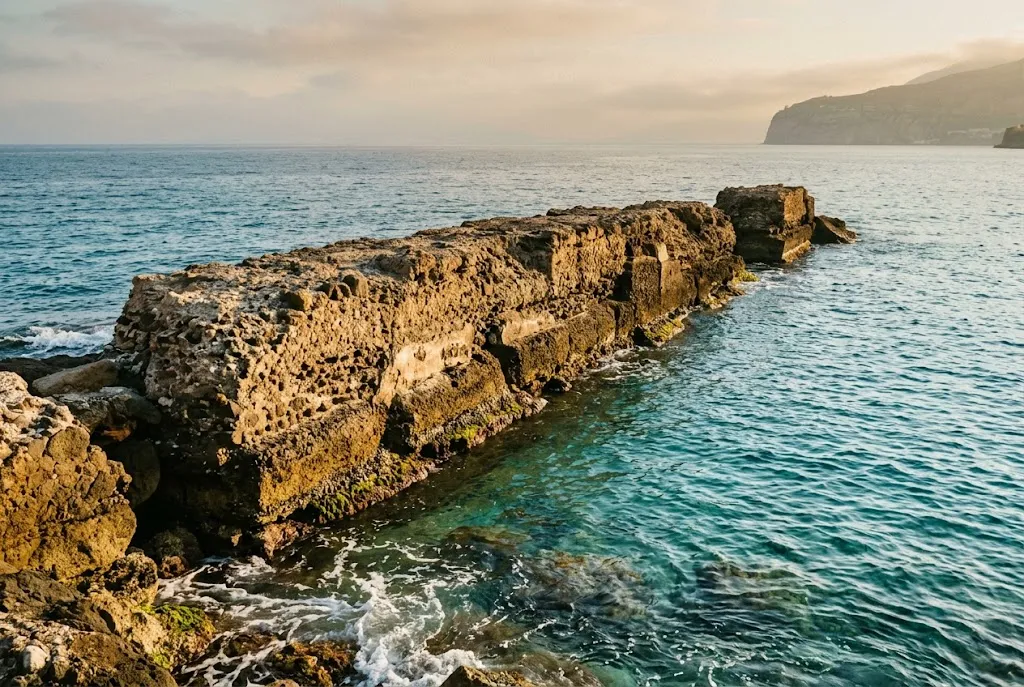
Perhaps the most impressive demonstration of Roman concrete's superiority is found in their maritime structures. Roman breakwaters and piers, some still visible today, have withstood two millennia of relentless wave action and corrosive seawater, a feat almost impossible with modern concrete.
Our current understanding of concrete dictates that exposure to seawater is a death sentence. Chlorides and sulfates in seawater attack Portland cement, causing it to expand, crack, and ultimately disintegrate. Yet, Roman harbors like Caesarea Maritima in Israel or Portus near Ostia are testaments to a different reality. The very elements that destroy modern concrete—saltwater and volcanic ash—were the ingredients for Roman concrete’s remarkable longevity. The chemical reactions stimulated by seawater facilitated the growth of those stable, interlocking minerals, making the concrete denser and stronger over time.
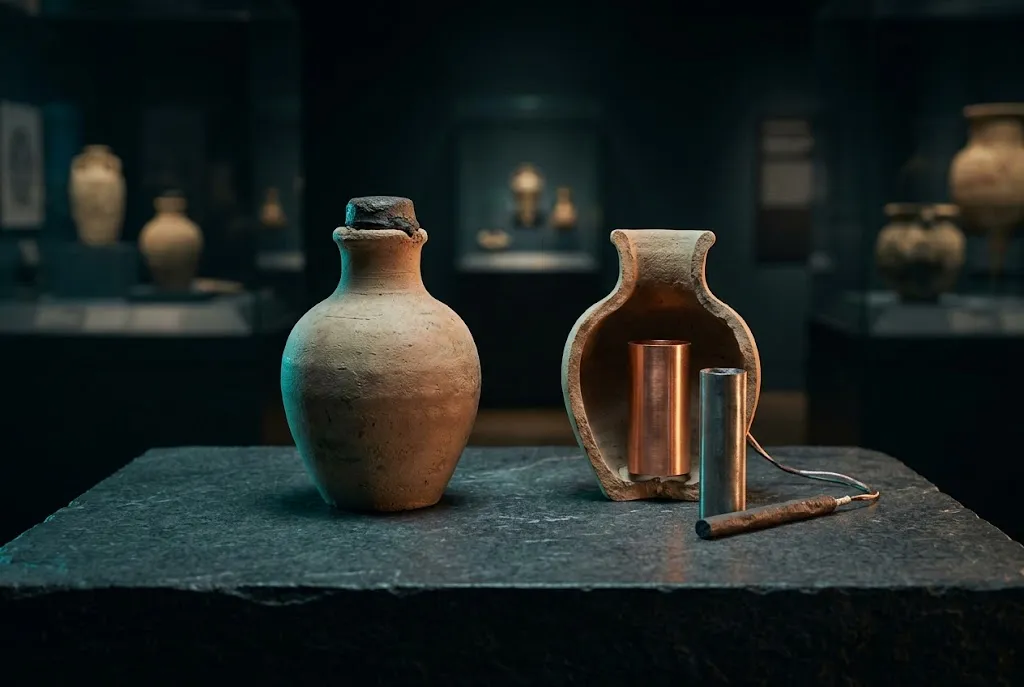
This ancient maritime engineering wasn't just about building strong; it was about building smart, demonstrating an almost intuitive understanding of environmental interaction with materials. It makes one ponder other instances of advanced, seemingly lost ancient technologies, such as the enigmatic Baghdad Battery and its potential to power a lost civilization.
Why Did We Lose This Knowledge?
The decline of the Roman Empire brought with it a gradual loss of many advanced technologies and construction methods. The sophisticated understanding of pozzolana and its unique interactions likely became a forgotten art, replaced by simpler, less durable methods. When cement-based concretes were rediscovered and commercialized in the 19th century with Portland cement, the focus was on rapid setting times and high early strength, optimized for industrial-scale production. The long-term, self-healing properties of Roman concrete were overlooked or simply not understood at the time.
The economic drivers of the industrial revolution favored speed and cost-efficiency over the deep, empirical material science that characterized Roman engineering. It’s a classic example of how progress, while offering new solutions, can sometimes lead to the abandonment of superior, albeit more complex, older methods.
Can We Replicate It? The Modern Quest
Today, with growing concerns about climate change (cement production is a major contributor to CO2 emissions) and the short lifespan of our infrastructure, there's a renewed interest in Roman concrete. Scientists are actively researching the precise formulations and curing processes to replicate its longevity and self-healing properties.
One of the biggest challenges is not just replicating the ingredients but understanding the process. The Romans likely used hotter mixing temperatures due to the exothermic reactions of quicklime and volcanic ash, which could have contributed to the unique microstructures formed. Modern efforts involve meticulously analyzing ancient samples using advanced techniques like X-ray diffraction, scanning electron microscopy, and Raman spectroscopy to unlock these precise mechanisms.
Imagine a future where our bridges, dams, and coastal defenses don't just last a few decades but centuries, even millennia, with minimal maintenance. Such "immortal" infrastructure would be a game-changer, drastically reducing resource consumption and environmental impact. This pursuit of ancient wisdom for modern solutions isn't unique to concrete; similar quests are underway in metallurgy, as explored in our article on Ulfberht swords and impossible Viking steel.
A Glimpse into the Future, Rooted in the Past
The story of Roman concrete is more than just a historical curiosity; it's a profound lesson in material science and sustainable engineering. It challenges our assumptions about what constitutes "advanced" technology and reminds us that sometimes, the greatest innovations lie hidden in plain sight, waiting to be rediscovered from the dust of forgotten empires.
As I left the Pantheon, the vast dome still silently proclaiming its triumph over time, I couldn't help but feel a surge of optimism. If we can truly unlock the secrets of this immortal concrete, we might not just be building better structures; we could be laying the foundation for a more sustainable and resilient future. The ancients didn't just build; they built to last, and perhaps, we are finally learning how to follow in their monumental footsteps.


Conversation0
No comments yet. Be the first to share a thought — the best questions often become new stories.