


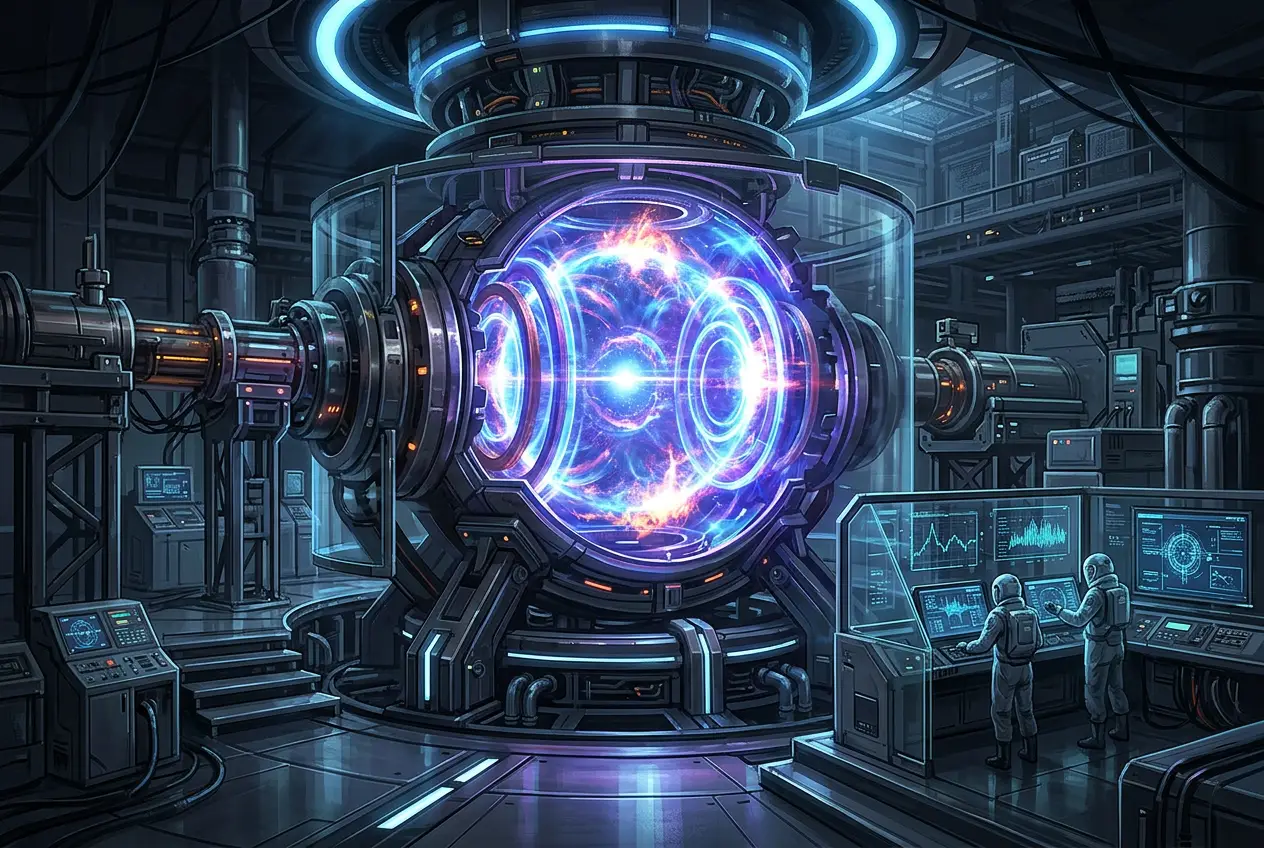
I remember the first time I truly grappled with the concept of antimatter. It was during a late-night documentary on the universe, and the speaker described it as matter's identical twin, but with an opposite electrical charge. What truly blew my mind, however, was the revelation that when matter and antimatter meet, they don't just neutralize each other—they vanish in a spectacular burst of pure energy. This isn't just a quirky scientific fact; it’s a profound truth that could fundamentally reshape our world. Could this elusive substance, the cosmic mirror image of everything we know, actually become humanity's ultimate power source?
Our planet faces an ever-growing demand for energy, pushing us towards a critical juncture. We're constantly searching for cleaner, more efficient, and more abundant power. From the promise of nuclear fusion to the vast potential of solar and wind, the quest is relentless. But what if the answer lies in something far more exotic, a fuel so potent that just a speck could power a city for days? This is the tantalizing vision offered by antimatter.
Understanding Antimatter: Matter's Mirror Image
At its core, antimatter is essentially ordinary matter’s doppelgänger. Every fundamental particle in the universe has an antiparticle with the same mass but opposite charge and other quantum properties. For example, the electron, with its negative charge, has an antiparticle called a positron, which carries a positive charge. Similarly, a proton has an antiproton, and a neutron has an antineutron (though electrically neutral, it has an opposite magnetic moment).
The concept of antimatter isn't science fiction; it was first theoretically predicted by physicist Paul Dirac in 1928, who mathematically showed that for every solution describing an electron, there had to be another describing a particle with identical mass but opposite charge. Just four years later, Carl Anderson discovered the positron, confirming Dirac’s groundbreaking theory. Today, we routinely observe antimatter. For instance, Positron Emission Tomography (PET) scans, a common medical diagnostic tool, utilize positrons to create images of the body's metabolic activity. You can read more about its discovery and properties on Wikipedia's Antimatter page (opens in a new tab).
The real magic, and the immense energy potential, comes from what happens when matter and antimatter collide. This event is known as annihilation. When a particle meets its antiparticle, they don't simply repel or combine; they completely cease to exist, converting their entire mass into energy in accordance with Einstein's famous equation, E=mc².
The Unfathomable Power of Annihilation
To grasp the magnitude of energy released during matter-antimatter annihilation, consider this: nuclear fission, the process that powers conventional nuclear reactors, converts less than 0.1% of a mass into energy. Nuclear fusion, the process powering the sun and the future of clean energy, converts around 0.7% of its mass into energy. Antimatter annihilation, however, converts a staggering 100% of the mass into energy.
This means that even a minuscule amount of antimatter could release an incredible amount of energy. A mere gram of antimatter, if fully annihilated with a gram of matter, would release roughly 1.8 x 10^17 joules of energy. To put that into perspective, that's equivalent to about 43 kilotons of TNT – significantly more powerful than the atomic bomb dropped on Hiroshima. If we could harness this power safely, the implications would be revolutionary. A single kilogram of antimatter could theoretically provide enough energy to power the entire United States for several days, or launch a spacecraft to Mars in a matter of weeks.
The Herculean Challenges of Harnessing Antimatter
While the energy potential is mind-boggling, the practicalities of producing, storing, and utilizing antimatter are, to put it mildly, monumental.
Production: An Energy Sink
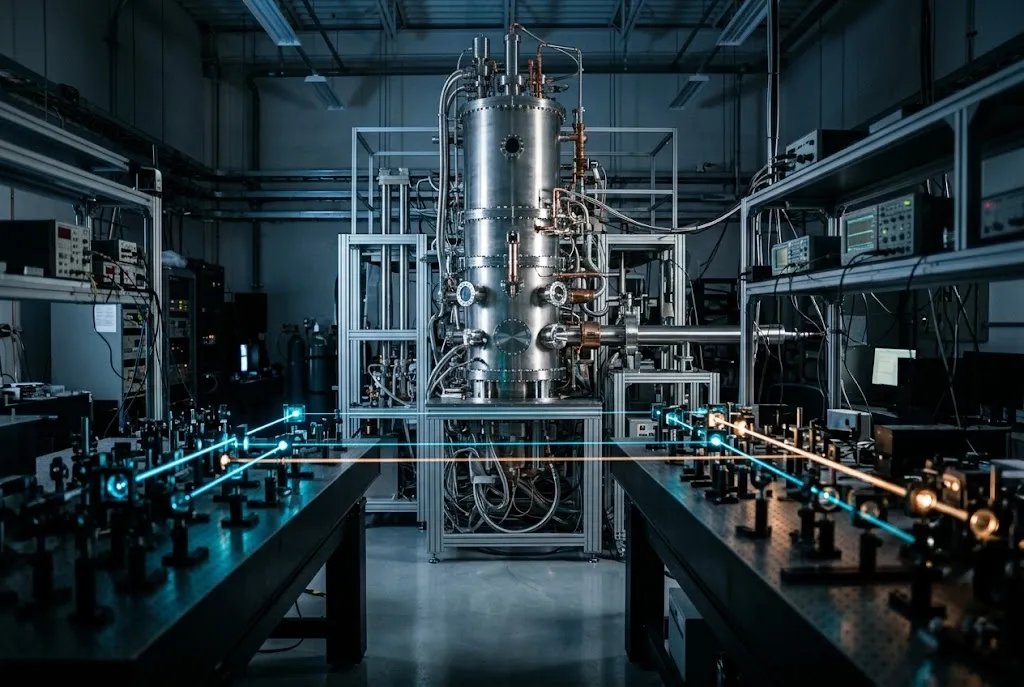
Currently, antimatter can only be produced in incredibly small quantities, typically at advanced particle accelerators like those at CERN. These accelerators smash particles together at near light speeds, creating particle-antiparticle pairs. The problem? This process is extraordinarily inefficient. It takes far more energy to create antimatter than the energy we could ever hope to extract from it.
For instance, CERN's Antiproton Decelerator (AD) is a facility dedicated to creating low-energy antiprotons. Even with cutting-edge technology, the amount of antimatter produced is measured in nanograms or picograms, far from anything usable for power generation. The energy cost for this production is astronomical. Estimates suggest that producing just one gram of antimatter using current technology would cost quadrillions of dollars and require an energy input equivalent to what an entire modern city consumes in a year. For a deeper dive into how antimatter is produced, you can explore CERN's dedicated page on the Antimatter Factory (opens in a new tab).
Storage: The Ultimate Containment Problem
Antimatter cannot touch ordinary matter. If it does, boom—annihilation. This means it must be stored in a perfect vacuum, suspended by powerful magnetic fields. This is known as a Penning trap or magnetic bottle. While scientists at CERN have successfully trapped antimatter for extended periods (the ALPHA experiment, for example, trapped antihydrogen atoms for 16 minutes), scaling this up for industrial quantities is an entirely different beast.
Maintaining these ultra-precise magnetic fields and vacuums requires constant energy input and incredibly sophisticated engineering. Any tiny flaw, any minor contact with the container walls, and the precious antimatter would be gone in a flash of gamma rays.
Cost and Safety: Two Major Hurdles
Given the energy input for production and the complexity of storage, the cost of antimatter is currently the most expensive substance known to humanity. Estimates range from tens of trillions to quadrillions of dollars per gram. It’s not just a matter of price; it’s a reflection of the immense technological and energy investment required.
Safety is another paramount concern. An uncontrolled antimatter annihilation event would be catastrophic. The high-energy gamma rays released are extremely penetrating and lethal. Developing fail-safe containment systems that could withstand any potential breach is a fundamental requirement before antimatter could ever be considered a viable power source.
Beyond Power: Other Potential Antimatter Applications
Despite the challenges, the allure of antimatter isn't limited to just power generation. Its unique properties could revolutionize other fields:
- Advanced Propulsion: Imagine spacecraft propelled by antimatter. A small amount of fuel could provide immense thrust, potentially making interstellar travel a realistic prospect. Theoretical designs suggest antimatter rockets could reach speeds previously thought impossible, drastically cutting travel times to other star systems. This is an area of active theoretical research, similar to the discussions around advanced propulsion techniques like those for
/blogs/could-micro-black-holes-power-future-tech-4157. - Medical Advancements: As mentioned with PET scans, positrons are already used in medicine. Further research could lead to even more precise diagnostic tools or targeted cancer therapies, leveraging the high-energy annihilation event to destroy cancerous cells with minimal collateral damage.
- Fundamental Physics Research: Antimatter is a crucial tool for understanding the universe's fundamental symmetries. The observed asymmetry between matter and antimatter in the universe (why there's so much matter and so little antimatter) is one of the greatest mysteries in physics. Experiments with antimatter help us probe this cosmic imbalance.
Current Research and the Path Forward
Organizations like CERN continue to push the boundaries of antimatter research. Experiments such as ALPHA (Antihydrogen Laser PHysics Apparatus) are designed to study antihydrogen atoms in detail, comparing them to regular hydrogen to see if there are any subtle differences that could explain the matter-antimatter asymmetry. These experiments are not focused on power generation but on fundamental understanding, which is a prerequisite for any future practical applications. The study of exotic energy sources, whether it's antimatter or the more speculative /blogs/zero-point-energy-is-space-a-hidden-powerhouse-3639, all contributes to our understanding of the universe's energy potential.
The path to harnessing antimatter as a power source is undoubtedly long and fraught with technological hurdles. It requires breakthroughs in energy efficiency for production, new methods for long-term, large-scale storage, and innovative engineering for safe energy extraction. Some scientists believe that an entirely new approach to antimatter production, perhaps leveraging exotic physics or astrophysical phenomena, might be necessary.
For now, antimatter remains a tantalizing "what if" – a cosmic dream for power generation, held back by the sheer scale of the scientific and engineering challenges. It's a testament to the fact that while the universe offers incredible potential, unlocking it often requires pushing the very limits of our ingenuity. The mysteries surrounding its potential and even its presence in the universe continue to captivate, much like the ongoing quest to understand /blogs/does-dark-matter-hide-a-universe-we-cant-see-2793.
Is It Truly the "Ultimate" Source?
If we were to overcome all these obstacles, would antimatter truly be the "ultimate" power source? In terms of energy density, it's unparalleled. No other known reaction comes close to converting 100% of mass into usable energy. However, its "ultimate" status must be tempered by its incredible scarcity and the immense energy cost of its creation. For it to be truly ultimate, we would need to find a way to produce it naturally, or at least with vastly greater efficiency, perhaps through an undiscovered principle of physics. Until then, antimatter remains humanity's most potent, yet most elusive, energy dream.
Conclusion
The dream of antimatter as a boundless power source speaks to our deepest aspirations for technological advancement and a sustainable future. While the scientific and engineering challenges are colossal, the mere existence of such a powerful energy principle reminds us of the incredible potential hidden within the laws of physics. As researchers continue to unravel its mysteries, antimatter remains a beacon of what might one day be possible, pushing us to innovate and rethink the very fabric of our energy future. Whether it powers our cities or propels us to the stars, antimatter represents a frontier of science that promises to inspire generations to come.



Conversation0
No comments yet. Be the first to share a thought — the best questions often become new stories.