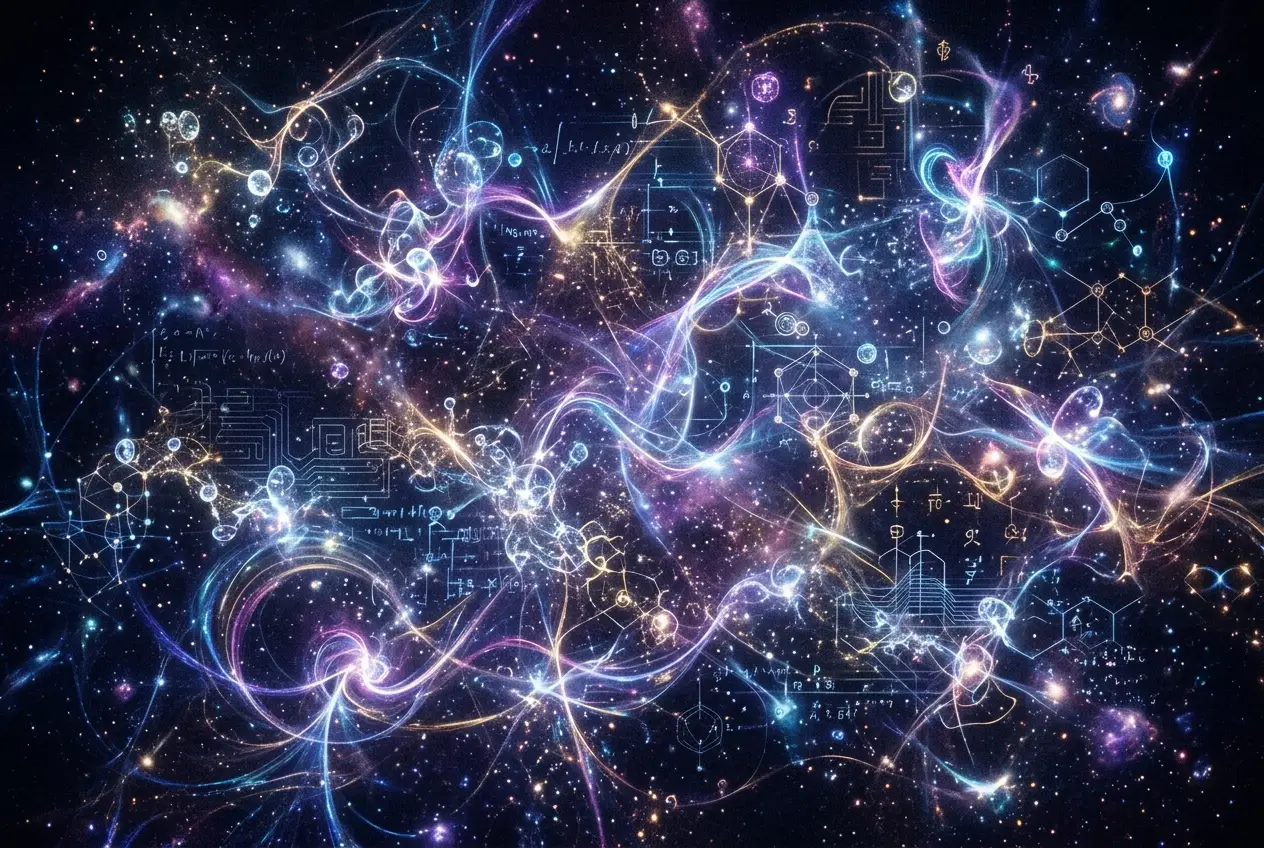
I remember staring up at the night sky as a child, utterly convinced that the universe held secrets far beyond our comprehension. That sense of wonder, that insatiable curiosity, has never truly left me. It’s what drives me to ask questions like: what if the universe isn’t just a vast, inert expanse, but an incredibly sophisticated computational system? And what if its fundamental "code" isn't written in grand cosmic structures, but in the chaotic, ephemeral dance of **quantum fluctuations**?
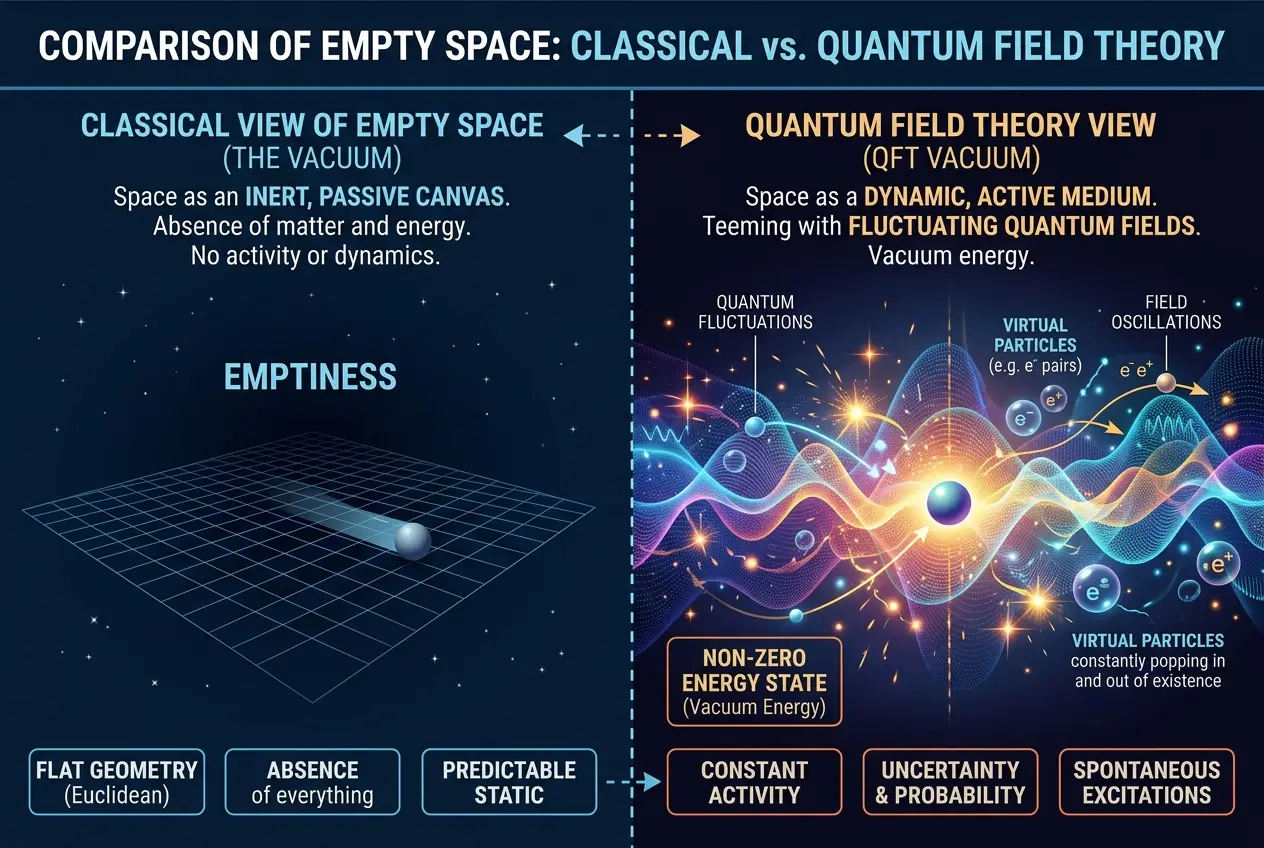
For centuries, our understanding of "empty space" was precisely that—empty. A void. A passive stage upon which the drama of particles and forces played out. But modern physics, particularly quantum field theory, has shattered this serene picture. What we perceive as nothingness is, in fact, a seething cauldron of activity, a realm where particles and antiparticles spontaneously pop into existence, only to vanish moments later. These are quantum fluctuations, and I’m increasingly convinced they hold a profound clue to the very nature of reality itself.
## The Universe's Secret Language: Bits of Nothingness
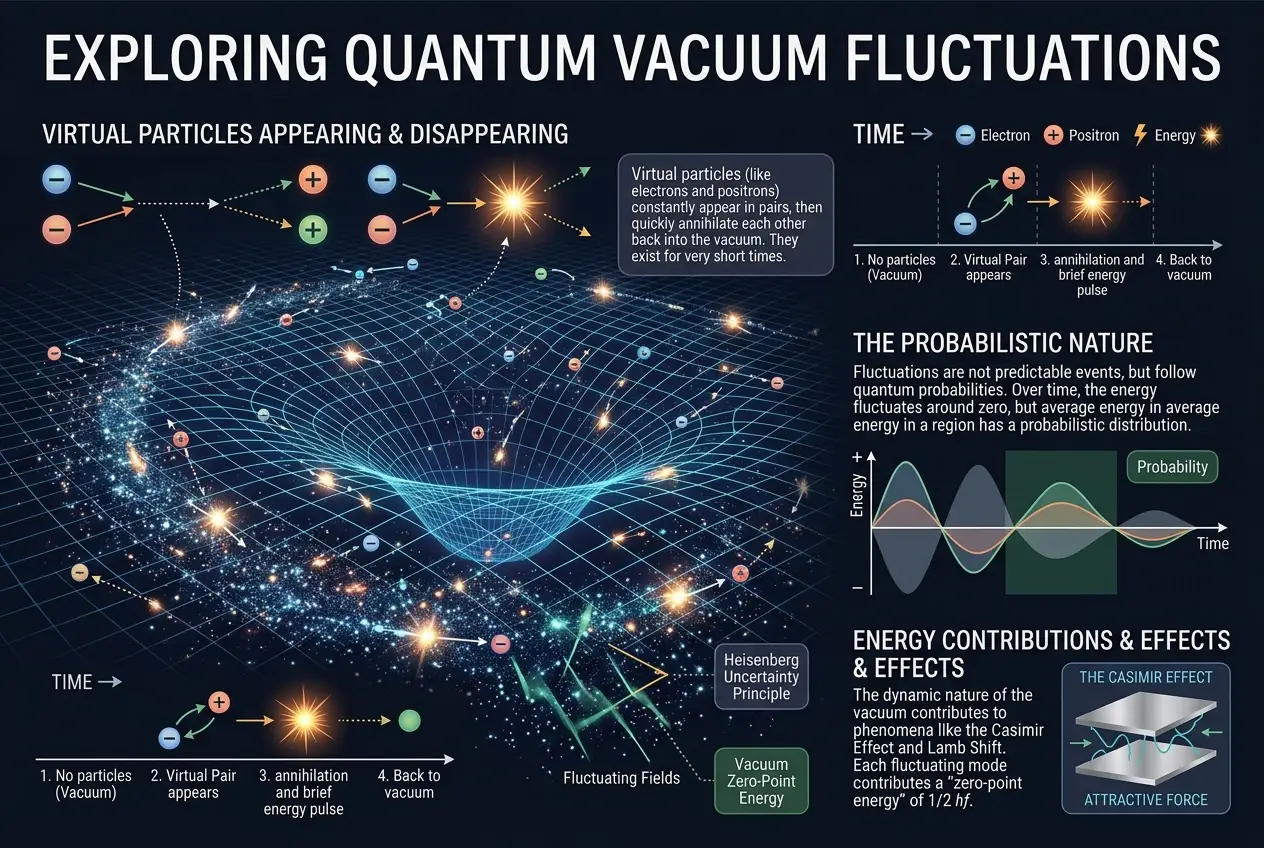
Imagine a digital screen. When it’s off, it looks black, empty. But zoom in closer, and you’ll see individual pixels, each capable of displaying a tiny piece of information. Now, apply this analogy to the vacuum of space. Instead of static pixels, imagine points in space that are constantly flickering with potential energy, giving rise to "virtual" particles that exist for such fleeting moments they defy direct observation. These are not just theoretical curiosities; their effects are measurable, influencing everything from atomic energy levels (the Lamb shift) to the force between uncharged conductive plates (the Casimir effect).
The idea that information is fundamental to reality isn't new. Philosophers have pondered it for millennia, and physicists like John Archibald Wheeler even proposed the "it from bit" concept, suggesting that information, not matter or energy, is at the core of existence. He famously stated, "No information without a substrate; no substrate without information." When I think about quantum fluctuations, I can't help but see them as the most fundamental "bits" of this cosmic substrate.
### What are Quantum Fluctuations?
At its heart, quantum mechanics teaches us that at the smallest scales, energy and matter are not continuous but granular, existing in discrete packets called quanta. Heisenberg's Uncertainty Principle is key here: it states that we cannot simultaneously know with perfect precision certain pairs of properties, like a particle's position and momentum, or its energy and the time it possesses that energy. This latter pair, the energy-time uncertainty, is what gives rise to quantum fluctuations.
It means that, for extremely short durations, the vacuum itself can "borrow" energy to create pairs of virtual particles and antiparticles. These pairs exist for such a minuscule fraction of a second that they don't violate the law of conservation of energy over longer periods. They're like tiny, ephemeral bubbles in the fabric of spacetime, appearing and disappearing in a perpetual, energetic dance. For a deeper dive into the quantum realm, you might find our blog on whether /blogs/do-quantum-effects-influence-our-consciousness-1186 is fascinating.
## From Fluctuations to Code: Decoding Reality's Algorithm
If quantum fluctuations are indeed the most fundamental activity in the universe, could they be carrying information? Could they be the *code* that manifests our reality? This isn't just science fiction; it touches upon some of the most profound ideas in theoretical physics, including the holographic principle and the concept of a computational universe.
The **holographic principle**, for example, suggests that all the information contained in a volume of space can be encoded on its two-dimensional boundary, much like a hologram. If this is true, then the information isn’t stored in the bulk, but on its surface, as if our 3D reality is a projection from a 2D dataset. What better candidates for encoding this information than the ceaseless, probabilistic interactions of quantum fluctuations at the most fundamental scales? They are the "noise" that might actually be the "signal."
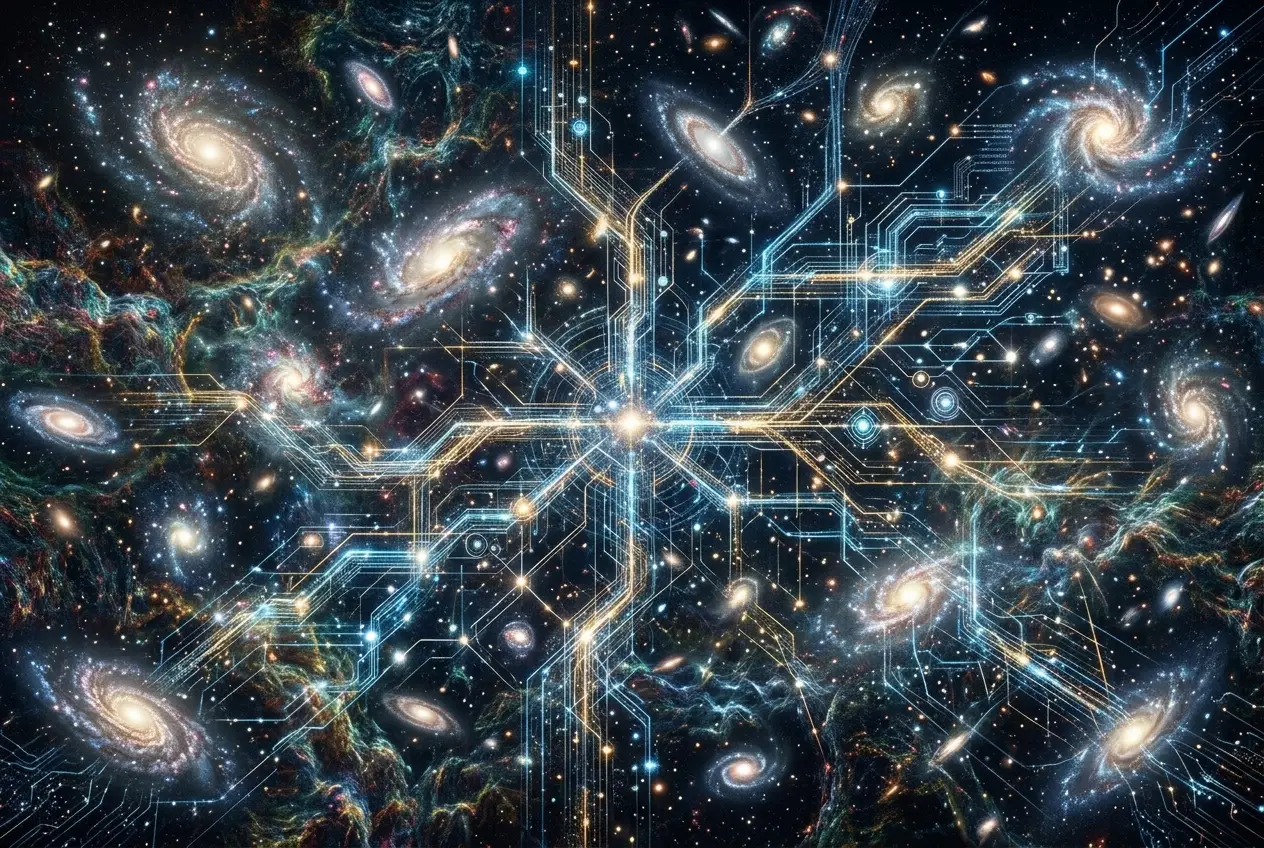
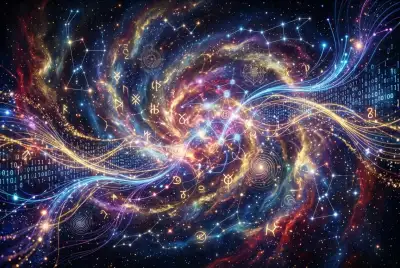
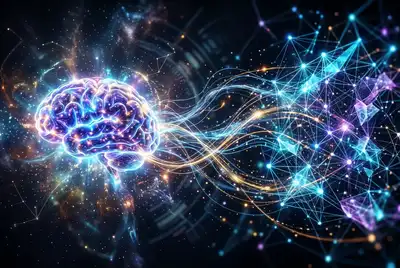
I often wonder if the physical laws themselves emerge from these fluctuations, much like complex algorithms emerge from basic computational instructions. Every interaction, every particle, every force we observe could be the macro-level manifestation of this underlying quantum code. Consider a complex computer program: it's built from millions of simple binary decisions (0s and 1s). Could the universe be doing something similar, but with quantum probabilities instead of strict binary? You might find interesting connections in our discussion on /blogs/is-the-universe-a-giant-neural-network-2907, exploring how cosmic structures mimic neural networks.
### The Universe as a Quantum Computer
If quantum fluctuations are the code, then the universe itself could be the ultimate **quantum computer**. Unlike classical computers that process bits (0 or 1), quantum computers use qubits, which can be 0, 1, or both simultaneously (superposition), allowing for exponentially more complex calculations. The probabilistic nature of virtual particles, their entangled states, and their fleeting existence could represent an unbelievably vast and dynamic computational substrate.
The universe, in this view, wouldn't just *contain* a quantum computer, it *would be* one, constantly running simulations, evolving states, and manifesting phenomena based on its intrinsic quantum rules. This resonates with the idea that /blogs/is-empty-space-a-quantum-computer-9021, a concept that continues to provoke fascinating discussions in the physics community. Could the constant ebb and flow of virtual particles be the elementary operations, the universal gate set, that drives the cosmos?
## Implications for Our Understanding of Reality
If reality is, at its core, coded by quantum fluctuations, the implications are profound.
1. **Fundamental Uncertainty:** The inherent uncertainty of quantum mechanics wouldn't just be a limitation of our measurement, but a fundamental feature of the universe's code. Probability would not be a bug, but a core architectural design.
2. **Emergent Properties:** All the stable particles, forces, and structures we observe—from atoms to galaxies—would be emergent properties, arising from the complex interplay of these fundamental, probabilistic "bits." This could even explain why physics seems to have "missed" a /blogs/what-if-physics-missed-a-fifth-universal-force-2601 – perhaps it's an emergent property of this cosmic code we haven't fully deciphered.
3. **The Nature of Consciousness:** Some theories propose that consciousness itself might be a quantum phenomenon. If the universe's code is quantum, then our minds might be inherently linked to this cosmic computation, rather than being separate observers.
4. **Beyond Our Dimensions:** If information can be encoded on a boundary (holographic principle), then our perceived three spatial dimensions could be a manifestation of more fundamental, perhaps higher-dimensional, information encoded by these fluctuations. This ties into theories exploring whether /blogs/decoding-reality-does-the-universe-hide-extra-dimensions-5269.
As Nobel laureate Frank Wilczek put it, "The more we learn about the universe, the more we realize that it's made of information, and the vacuum of space is not truly empty, but a sea of fluctuating quantum fields." This statement encapsulates the shift in perspective: from an empty void to a dynamic, information-rich medium.
The idea that the quantum vacuum—the "nothingness" between everything—is alive with activity, capable of encoding and processing information, is a compelling one. It challenges our intuitive understanding of reality and opens doors to new ways of thinking about the universe as an active participant in its own unfolding story, rather than a mere backdrop. The next time you gaze at the seemingly empty space around you, remember: it might just be running the most complex program imaginable.
## Conclusion
The journey into understanding quantum fluctuations and their potential role in coding reality is far from over. It's a frontier where physics, information theory, and even philosophy converge. While we don't have definitive answers, the questions themselves push the boundaries of human knowledge. Could the ephemeral dance of virtual particles be the universe's very own operating system, constantly calculating and manifesting the reality we experience? The thought is enough to reignite that childhood wonder, reminding me that the biggest secrets often hide in plain sight, in the "empty" spaces that are anything but.
Frequently Asked Questions
While virtual particles themselves exist for too short a time to be directly observed, their indirect effects are measurable. The Casimir effect, where two uncharged parallel plates in a vacuum experience an attractive force due to the suppression of vacuum fluctuations between them, is one prominent example. The Lamb shift in atomic energy levels also provides evidence of their existence.
The simulation hypothesis proposes that our entire universe is a computer simulation created by an advanced civilization. The 'quantum fluctuations coding reality' concept, however, suggests that reality *is* inherently computational at its most fundamental level, arising naturally from the laws of physics themselves, rather than being an artificial construct. It's about the universe being a self-computing system.
Currently, the idea is largely theoretical and conceptual, drawing on principles from quantum mechanics, information theory, and cosmology (like the holographic principle). There's no direct empirical evidence that the universe is literally a quantum computer, but many physicists find the framework useful for understanding fundamental processes and the flow of information at cosmic scales.
If reality is coded by quantum fluctuations, it would likely be fundamentally probabilistic. Quantum mechanics itself is built on probabilities, meaning that outcomes are not always predetermined but arise from a range of possibilities. This doesn't mean chaos, but rather that the 'code' incorporates inherent uncertainty and chance at its deepest level, leading to a universe of emergent possibilities.
Decoding the universe's fundamental quantum code would be an immense challenge, potentially requiring a complete 'Theory of Everything' that unifies quantum mechanics and general relativity. It would involve understanding how macroscopic laws and structures emerge from these microscopic fluctuations. While we can observe their effects, truly reading or manipulating the 'code' remains far beyond current technological and theoretical capabilities.
Verified Expert
Alex Rivers
A professional researcher since age twelve, I delve into mysteries and ignite curiosity by presenting an array of compelling possibilities. I will heighten your curiosity, but by the end, you will possess profound knowledge.
Leave a Reply
Comments (0)
No approved comments yet. Be the first to share your thoughts!
 Join Us
 Unknown Author













Leave a Reply
Comments (0)