I’ve always been captivated by stories of individuals who defied the odds, not just to achieve greatness, but to fundamentally alter our understanding of the universe. And when I think about such figures, one name immediately springs to mind: Marie Skłodowska Curie. Her life wasn't just a testament to intellectual brilliance; it was a saga of relentless perseverance, personal sacrifice, and revolutionary scientific discovery. I remember first reading about her in school, and even then, I sensed there was more to her story than what a textbook could convey. Today, I want to dive deep into that story, peeling back the layers of a life that was as illuminating as the elements she discovered. Be warned, this is going to be a very long blog, meticulously detailing the journey of a woman who shaped modern science against formidable challenges.
Her journey began in a partitioned Poland, a place where the light of knowledge was often dimmed by foreign oppression, and for women, the path to higher education was virtually non-existent. Yet, from these humble, restrictive beginnings emerged a scientist whose legacy continues to glow brightly, much like the radium she painstakingly isolated. I often wonder what fueled such an indomitable spirit. Was it just intellect, or something more profound—a burning curiosity that transcended societal norms and personal hardships? I believe it was a potent mix of both, coupled with an unwavering commitment to unraveling nature's secrets.
### **Early Life in Warsaw: Seeds of Genius**
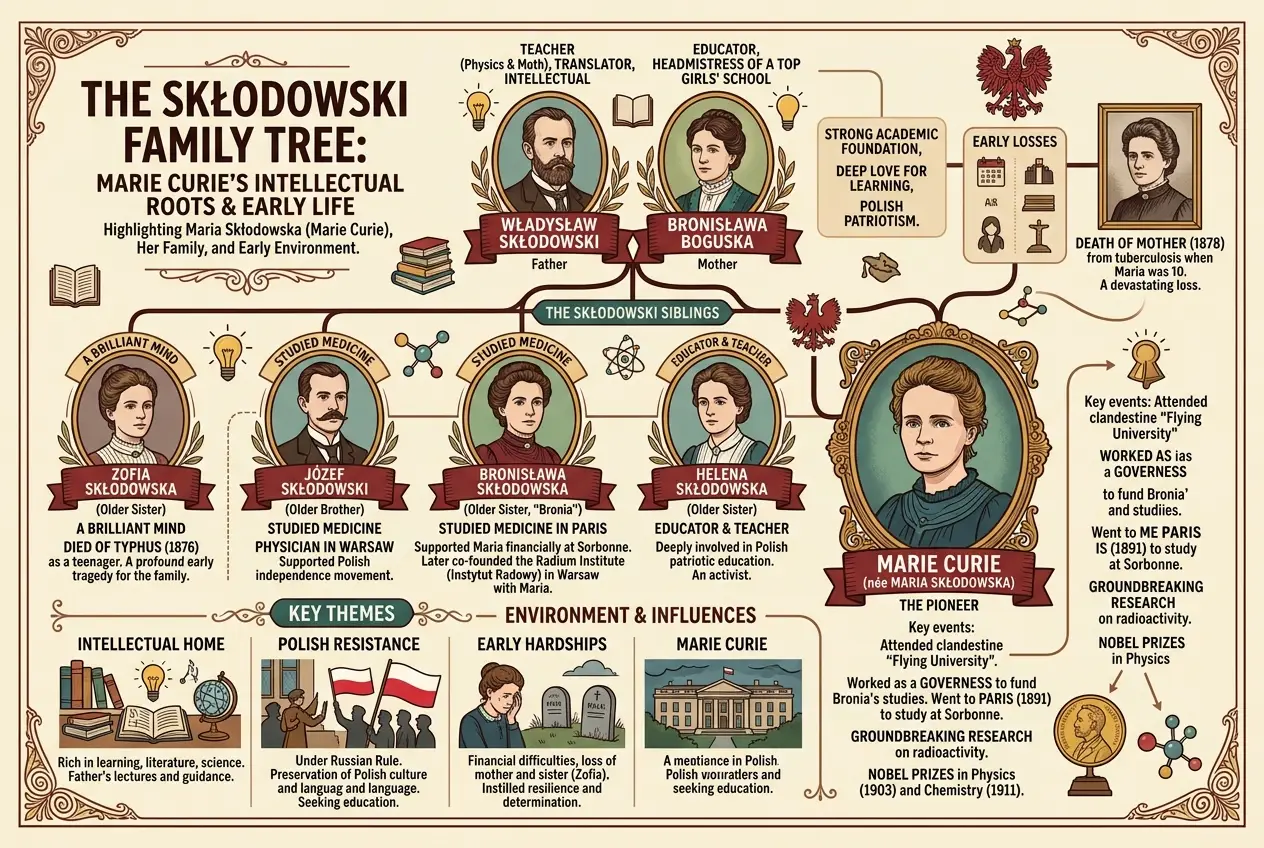
Born Maria Skłodowska on November 7, 1867, in Warsaw, Poland (then part of the Russian Empire), she was the youngest of five children to Bronisława and Władysław Skłodowski. Her family belonged to the impoverished Polish gentry, but her parents instilled in her a deep respect for education and Polish culture, which was forbidden under Russian rule. Her father was a mathematics and physics instructor, and her mother ran a prestigious boarding school for girls. It was in this intellectual, though politically oppressed, environment that young Maria’s brilliant mind began to blossom.
I can only imagine the intellectual atmosphere of their home, despite the constant shadow of foreign occupation. The Skłodowskis were patriots, and their children were raised with a fierce love for Poland. Maria’s early childhood was marked by both academic stimulation and profound personal loss. Her oldest sister, Zofia, died of typhus in 1876, and two years later, her mother succumbed to tuberculosis. These tragedies undoubtedly left an indelible mark on Maria, fueling a quiet determination that would define her later years. Her early education was a mix of attending clandestine "floating universities" – secret, informal classes that circumvented Russian prohibitions – and formal schooling, where she excelled, particularly in natural sciences and mathematics. I often ponder how these early experiences, balancing formal learning with defiant, underground education, must have shaped her resilience and independent thinking.
### **The Struggle for Education: Dreams Across Borders**
The path to higher education for women in partitioned Poland was blocked. Maria, along with her elder sister Bronisława (Bronia), dreamed of studying abroad, specifically at the prestigious Sorbonne in Paris. However, their family’s financial situation made this impossible for both simultaneously. They struck a pact: Maria would work as a governess to support Bronia’s medical studies in Paris, and once Bronia was established, she would, in turn, help Maria fund her education. This agreement speaks volumes about their sisterly bond and shared ambition.
For six years, Maria worked tirelessly, first for the wealthy Żorawski family, experiencing both the tedium of her duties and the sting of unrequited love with their son, Kazimierz. Her commitment to their pact never wavered, even as her heart was tested. I find this period of her life incredibly poignant. Here was a young woman with a formidable intellect, forced into domestic servitude, yet she used every spare moment to educate herself, reading extensively, and even conducting rudimentary chemistry experiments in makeshift labs. She yearned for formal scientific training, and this yearning only intensified during these years of waiting. Her time as a governess was not merely a pause in her intellectual pursuits; it was a period of intense self-study and quiet rebellion against the limitations placed upon her. For more details on her early struggles and education, one can refer to her early life on [Wikipedia](https://en.wikipedia.org/wiki/Marie_Curie#Education_in_Poland).
### **Paris Beckons: Student Life at the Sorbonne**
In late 1891, the time finally came. Maria, now 24, boarded a train for Paris, carrying little more than her dreams and a small amount of money saved from her governess work. She enrolled at the Sorbonne (the University of Paris) as Marie Skłodowska, eager to immerse herself in a world of science that had been denied to her for so long. The initial years were harsh. She lived in a small, unheated attic room, often surviving on meager rations, sometimes fainting from hunger. The financial strain was immense, and the cultural shift challenging, yet her academic hunger was insatiable.
I can almost feel the chill of that Parisian attic room and the gnawing hunger in her stomach, contrasted with the intellectual feast she was devouring in lecture halls. Despite the hardships, Marie thrived academically. She was a brilliant student, excelling in physics and mathematics. Her dedication was absolute; she often studied late into the night, pushing herself to master complex subjects. In 1893, she passed her physics degree, ranking first. A year later, she earned her second degree, in mathematical sciences, ranking second. These achievements, particularly for a foreign woman, were extraordinary and quickly caught the attention of her professors. Her brilliance wasn't just about absorbing information; it was about a profound capacity for analytical thought and problem-solving, skills that would soon change the face of science.
### **A Meeting of Minds: Pierre Curie and a Shared Passion**
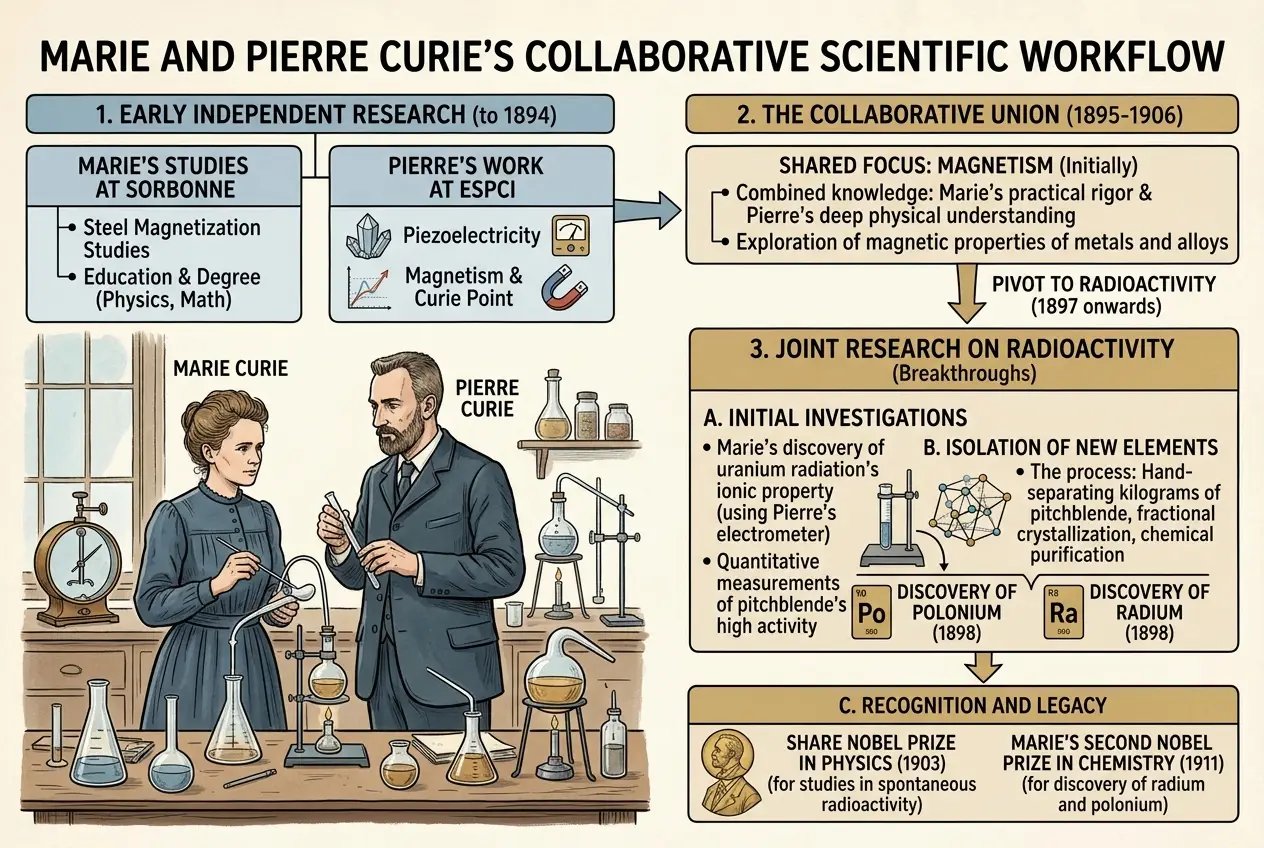
It was in 1894 that Marie's life took a momentous turn. Seeking a larger laboratory space for her research on the magnetic properties of various steels, she was introduced to Pierre Curie, a brilliant French physicist who was then laboratory chief at the Municipal School of Industrial Physics and Chemistry (ESPCI). Their initial connection was purely professional, revolving around their shared passion for science. Pierre, already a respected researcher known for his work on crystallography and magnetism, was instantly captivated by Marie's intelligence, quiet determination, and profound love for science.
I often think about the serendipity of their meeting. Two extraordinary minds, both driven by an insatiable curiosity about the natural world, finding each other in the vibrant intellectual hub of Paris. Their professional collaboration quickly blossomed into a deep personal connection. Pierre proposed marriage, but Marie, still feeling a strong pull towards her homeland, initially hesitated. However, Pierre's dedication to her and to their shared scientific pursuits ultimately won her over. They married in July 1895 in a simple civil ceremony, opting for bicycles over formal attire as a symbol of their practical, unpretentious approach to life. Their union wasn't just a partnership; it was a powerful scientific alliance that would shake the foundations of physics and chemistry. This dynamic duo would soon embark on a journey that would redefine our understanding of matter and energy, paving the way for the atomic age. For details on their early relationship, see [Pierre Curie's Wikipedia page](https://en.wikipedia.org/wiki/Pierre_Curie).
### **The Dawn of a New Era: Radioactivity Unveiled**
In 1896, Henri Becquerel made a groundbreaking, almost accidental, discovery: uranium salts spontaneously emitted a new type of ray, capable of penetrating opaque materials and exposing photographic plates. This phenomenon, which he called "uranic rays," was baffling to the scientific community. It was a perfect mystery, and Marie, looking for a topic for her doctoral dissertation, seized upon it. She began her systematic investigation of these mysterious rays, using a sensitive electrometer that Pierre and his brother Jacques had developed. This device allowed her to precisely measure the faint electrical currents generated by the air ionized by the rays.
I often marvel at Marie's scientific intuition. While other scientists were curious, Marie was meticulous. She wasn't just observing; she was measuring, quantifying, and systematically testing. Her initial findings were astonishing: the intensity of the "uranic rays" was directly proportional to the amount of uranium present in the sample, regardless of its chemical or physical state. This indicated that the emission was an atomic property of uranium itself, not a result of a chemical reaction. This was a radical idea, challenging the prevailing belief that the atom was indivisible and unchangeable. She then went further, testing other known elements for this property. To her surprise, she found that thorium also emitted similar rays. It was Marie who coined the term **"radioactivity"** to describe this entirely new phenomenon. This was a pivotal moment, marking the true beginning of a new scientific field.
### **The Hunt for New Elements: Polonium and Radium**
Marie's research quickly revealed something even more extraordinary. While examining various uranium-containing minerals, particularly pitchblende and torbernite, she found that some samples were significantly more radioactive than pure uranium or thorium. This observation led her to a bold hypothesis: these minerals must contain tiny quantities of an unknown, highly radioactive element, far more potent than uranium. Pierre, recognizing the immense potential of her work, set aside his own research on crystals to join her in this ambitious quest.
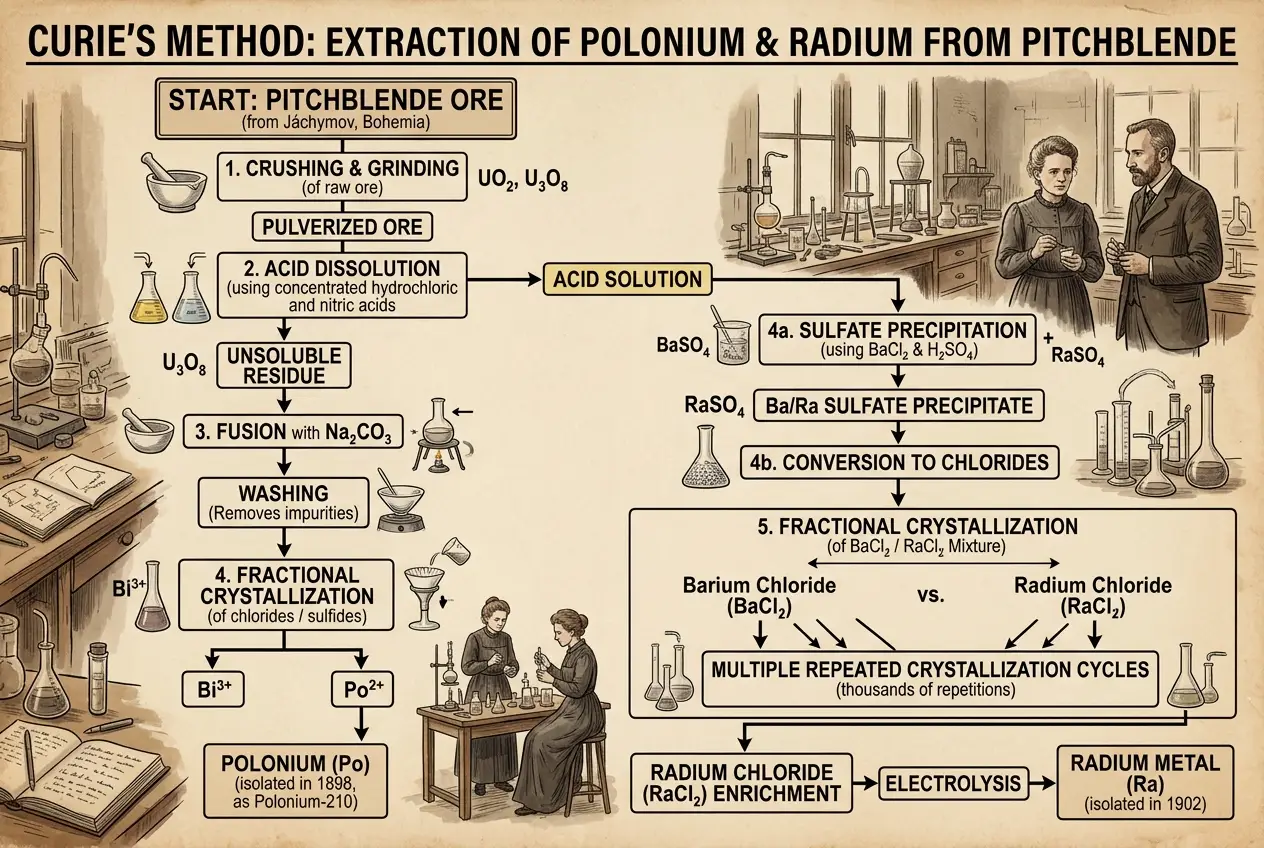
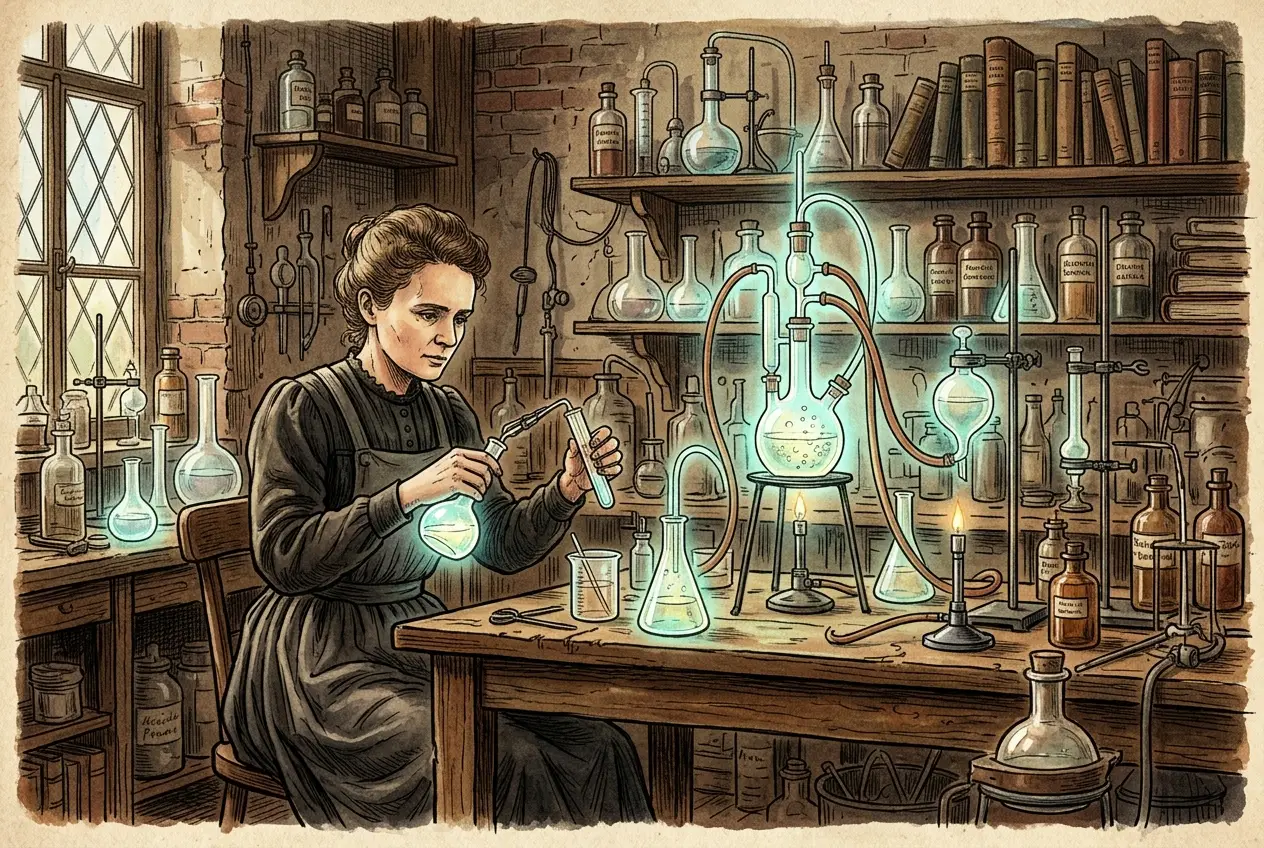
Their laboratory became a shed adjacent to the Municipal School, a damp, poorly ventilated space that was freezing in winter and stifling in summer. Here, they embarked on one of the most heroic and painstaking separations in scientific history. I envision them in that rudimentary shed, performing industrial-scale chemical separations, processing tons of pitchblende residue provided by an Austrian factory. It was grueling physical labor combined with meticulous chemical analysis. They had to dissolve, filter, precipitate, and crystallize substances over and over again, isolating fractions that became progressively more radioactive. In July 1898, after months of intense work, they announced the discovery of a new element, which Marie named **polonium** after her native Poland. Just five months later, in December 1898, they announced the discovery of a second, even more intensely radioactive element: **radium**, named for its radiating power. The discovery of these two elements, fundamentally altering the periodic table and our understanding of matter, was an unparalleled achievement. For further reading on the discovery of these elements, consider this [Wikipedia article on Radium](https://en.wikipedia.org/wiki/Radium).
### **Nobel Prize in Physics (1903): Shared Glory and Scientific Recognition**
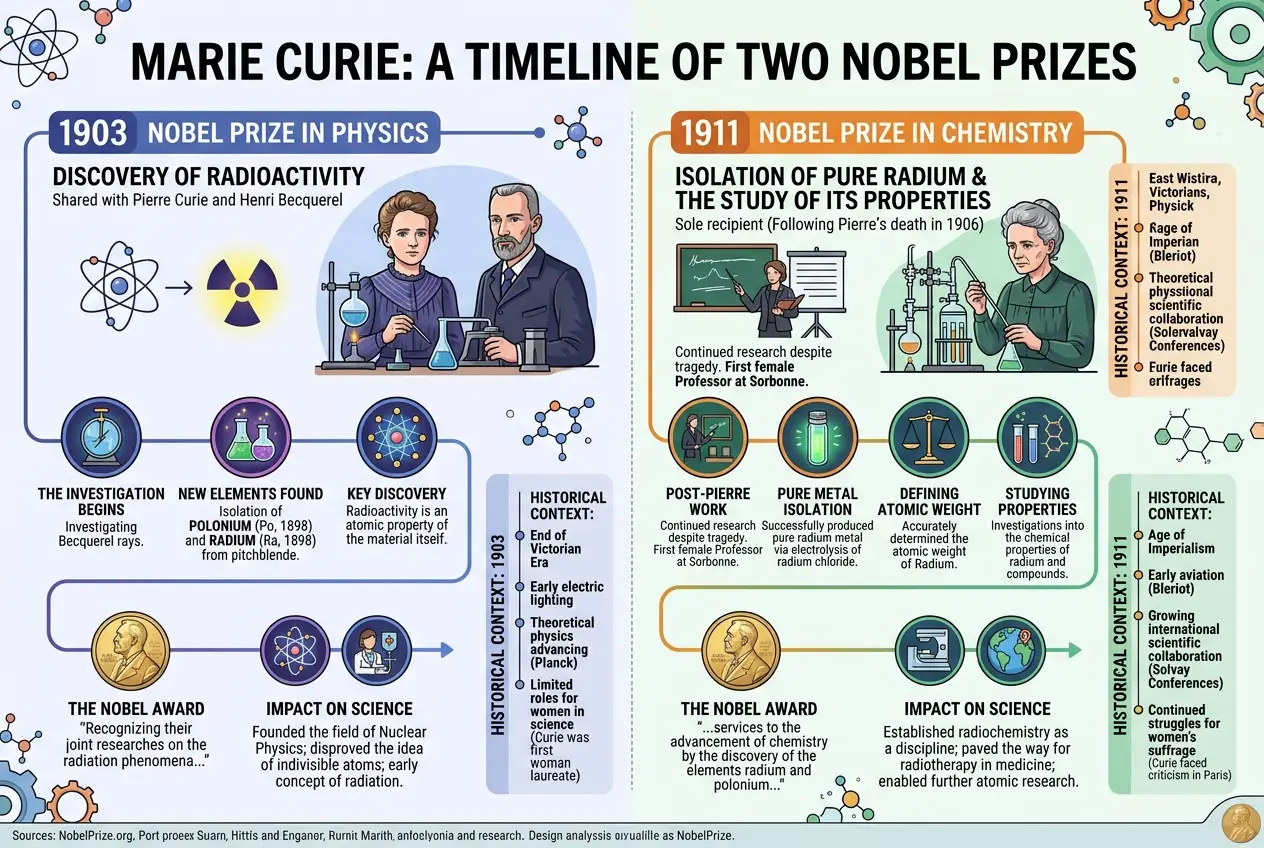
The Curies’ groundbreaking work on radioactivity quickly garnered international attention. In 1903, the Royal Swedish Academy of Sciences awarded the Nobel Prize in Physics for "their joint research on the radiation phenomena discovered by Professor Henri Becquerel." However, initially, the nomination only included Henri Becquerel and Pierre Curie. A Swedish mathematician, Magnus Gösta Mittag-Leffler, a member of the nominating committee and an advocate for women scientists, intervened, alerting Pierre to the oversight. Pierre, always a champion of Marie's contributions, insisted that she be recognized for her fundamental work.
I often reflect on this moment and how easily Marie's contribution could have been marginalized, a stark reminder of the biases prevalent in science at the time. Thankfully, justice prevailed. Marie Skłodowska Curie became the first woman ever to be awarded a Nobel Prize. The Curies shared the prize with Becquerel, but their refusal to patent their discoveries—believing that scientific knowledge should be freely available for the benefit of humanity—meant they did not profit financially from their incredible work. This decision further cemented their legacy as scientists driven purely by discovery, not by personal gain. The prize brought them global recognition, though also an unwelcome intrusion into their intensely private lives. It solidified their status as pioneers and opened the door for radioactivity to become a new, vital field of research across the globe, impacting everything from medicine to fundamental physics.
### **Personal Tragedy: The Loss of Pierre**
Life after the Nobel Prize was a whirlwind of public attention, scientific demands, and the constant, debilitating effects of radiation exposure. Both Marie and Pierre suffered from various ailments, including chronic fatigue and burns, though the full extent of radiation's dangers was not yet understood. Their intellectual partnership continued to thrive, but their personal happiness was tragically cut short on April 19, 1906. Pierre Curie was struck by a horse-drawn cart while crossing a street in Paris during a heavy rainstorm. He died instantly.
I can only imagine the utter devastation Marie must have felt. The loss of her beloved husband, intellectual partner, and the father of her two daughters, Irène and Ève, was an unimaginable blow. Her grief was profound, almost paralyzing, but beneath the sorrow lay an unyielding resolve. In her private journal, she wrote: “My Pierre is no more. He passed away, leaving me alone with my children, with the burden of research work, with the heavy responsibility of our future. My whole life is broken.” Yet, she chose not to break. Instead, she channeled her grief into an even fiercer dedication to their shared work, ensuring that Pierre’s legacy, and their combined scientific quest, would continue. This period truly shows the steel behind her quiet demeanor, her raw willpower to carry on. For a moving account of her grief and resilience, one might refer to the historical details on [Wikipedia](https://en.wikipedia.org/wiki/Marie_Curie#Death_of_Pierre_Curie_and_second_Nobel_Prize).
### **Taking the Helm: First Female Professor at the Sorbonne**
In the wake of Pierre's death, the Sorbonne faced a dilemma. Who could possibly fill the shoes of the brilliant Pierre Curie? The logical choice was Marie, who had been his closest collaborator and intellectual equal. On May 13, 1906, just weeks after Pierre’s death, the Sorbonne's faculty board voted to offer her the vacant professorship. She accepted, determined to continue the work they had started together. On November 5, 1906, Marie Curie delivered her inaugural lecture, becoming the first woman ever to hold a professorship at the Sorbonne.
I picture her standing before that packed lecture hall, a solitary figure in black, her voice quiet but firm, picking up exactly where Pierre had left off. It was a momentous occasion, not just for science, but for women’s emancipation in academia. She broke a barrier that had stood for centuries, proving that intellect knew no gender. Her lectures were meticulous and rigorous, reflecting her deep understanding of the subject. She not only taught but also continued her research, pushing forward the understanding of radioactivity, developing new methods for isolating radioactive elements, and advocating for the establishment of proper research facilities. This period marked her transition from a brilliant researcher to a leading figure in the scientific establishment, commanding respect and authority.
### **Nobel Prize in Chemistry (1911): A Solitary Triumph**
The years following Pierre’s death were marked by relentless work, further discoveries, and an increasingly intense spotlight. In 1911, Marie Curie was awarded the Nobel Prize in Chemistry "in recognition of her services to the advancement of chemistry by the discovery of the elements radium and polonium, by the isolation of radium and the study of the nature and compounds of this remarkable element." This made her the first person, and still one of only two people (along with Linus Pauling), to win Nobel Prizes in two different scientific fields, and the only person to win Nobel Prizes in two different sciences.
However, this second Nobel was not without controversy. Just before the announcement, the French press launched a vicious xenophobic and misogynistic campaign against her, fueled by rumors of an affair with a married former student of Pierre’s, Paul Langevin. The scandal was brutal, and even some members of the Nobel Committee urged her not to come to Stockholm to accept the award. I can only imagine the pain and indignation she must have felt, a stark reminder that even monumental scientific achievements couldn't fully protect her from societal prejudices. Yet, Marie, with her characteristic defiance, traveled to Stockholm, accepted her prize, and delivered an address that made no mention of the personal attacks but focused solely on the science. Her speech highlighted the importance of pure research and the profound implications of her discoveries. It was a powerful statement, cementing her legacy as a scientist who valued truth above all else, even in the face of personal vilification.
### **The Radium Institute: A Beacon of Research**
Long before her second Nobel, Marie had been advocating for a dedicated research facility to study radioactivity. Thanks to her efforts and the backing of the French government and the Pasteur Institute, the Radium Institute (Institut du Radium) was established in Paris in 1914. It comprised two main divisions: the Curie Laboratory, directed by Marie, which focused on research in physics and chemistry, and the Pasteur Laboratory, directed by Dr. Claudius Regaud, dedicated to medical research into cancer treatment.
I see this institute as the culmination of her dreams, a place where the full potential of radioactivity could be explored, both for fundamental understanding and for practical applications. Marie dedicated herself to making the Radium Institute a world-leading center for the study of radioactivity. She oversaw its construction, equipped its laboratories, and recruited talented young scientists. The institute quickly became a hub for pioneering research, attracting scientists from around the world. Its work not only advanced the understanding of atomic structure but also laid the foundation for entirely new fields like nuclear medicine. It was here that her daughter, Irène Joliot-Curie, would eventually continue the family legacy of groundbreaking research.
### **World War I: Les Petites Curies**
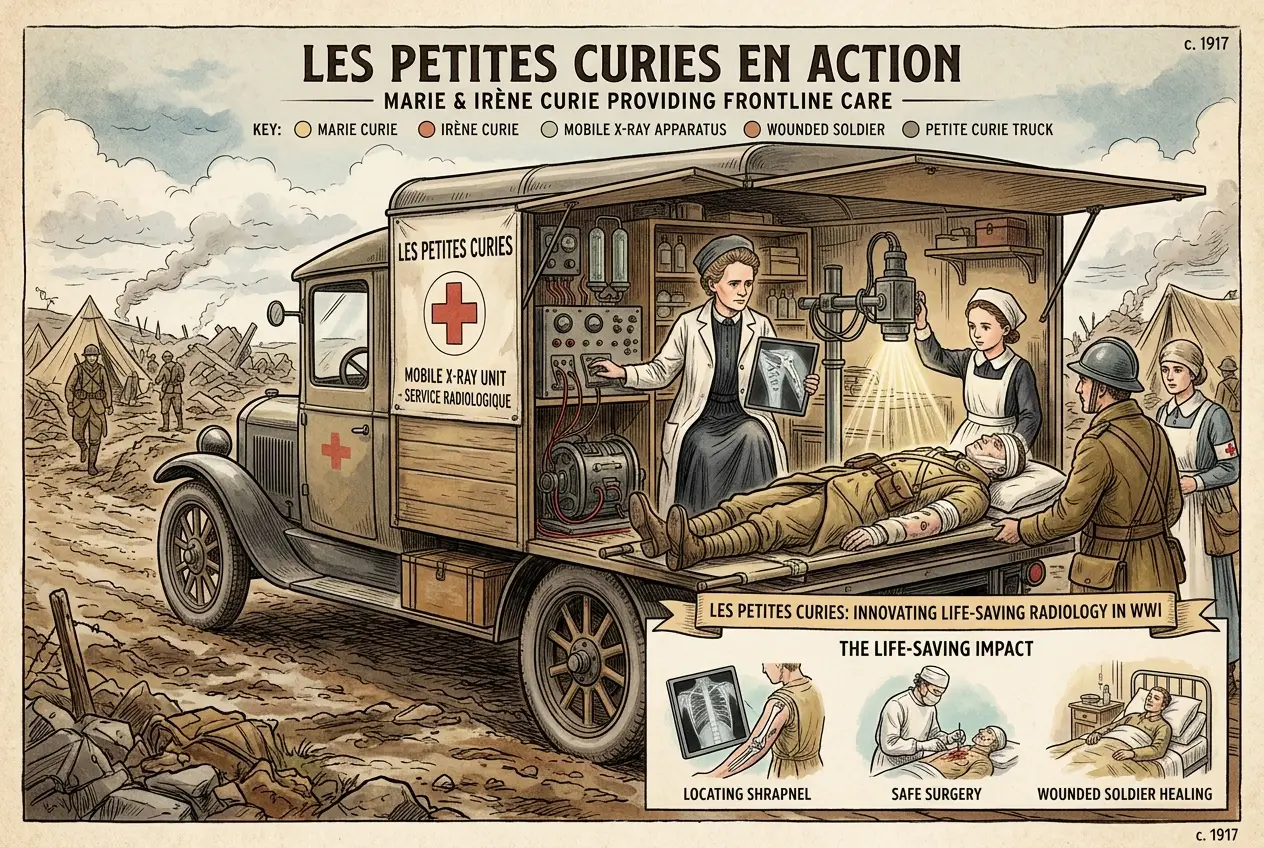
When World War I erupted in 1914, Marie Curie did not retreat into her laboratory. Instead, she mobilized her scientific knowledge and resources for the war effort. She recognized the urgent need for mobile X-ray units on the battlefield to help surgeons locate shrapnel and broken bones in wounded soldiers, saving countless lives and limbs. With the assistance of her daughter Irène, then 17 years old, she designed and equipped "petites Curies" – small vehicles fitted with X-ray equipment and darkroom facilities.
I find this chapter of her life incredibly inspiring, showcasing her humanitarian spirit alongside her scientific genius. She trained herself in anatomy and automotive mechanics, learning to drive the vehicles, operate the X-ray machines, and even perform minor repairs. She personally drove these units to the front lines, often under dangerous conditions, and taught others, including her daughter, how to use them. It’s estimated that over one million wounded soldiers benefited from her X-ray units. Her contributions were not just scientific; they were deeply practical and deeply compassionate, illustrating the profound impact science can have when applied to real-world crises. This period cemented her reputation not just as a brilliant physicist and chemist, but as a dedicated humanitarian.
### **Battles for Funding: Tours of America**
Despite her two Nobel Prizes and her invaluable contributions during the war, the Radium Institute often struggled for adequate funding. Radioactive elements, particularly radium, were incredibly expensive and scarce. To secure the necessary resources for her research and the institute, Marie embarked on two highly publicized tours of the United States. The first, in 1921, was arranged by American journalist Marie Mattingly Meloney, who initiated the "Marie Curie Radium Fund."
I can only imagine the discomfort this public role must have caused the intensely private Marie, but her dedication to science transcended her personal preferences. During her 1921 tour, she was presented with a gram of radium by President Warren G. Harding, collected through donations from American women. The second tour in 1929 provided funds for another gram of radium for a sister institute in Warsaw, recognizing her deep connection to her Polish roots. These tours were triumphant, bringing her widespread acclaim and much-needed financial support. However, they were also physically exhausting for Marie, whose health was already compromised by years of radiation exposure. These trips weren't just about fundraising; they were about raising awareness, inspiring women in science, and establishing a global network of scientific collaboration.
### **Family and Legacy: The Next Generation**
Marie Curie's scientific legacy extended beyond her own astonishing discoveries to the next generation. Her eldest daughter, Irène Joliot-Curie, followed directly in her footsteps, becoming a brilliant physicist and chemist in her own right. Irène, like her mother, worked at the Radium Institute and collaborated closely with her husband, Frédéric Joliot. Together, they conducted groundbreaking research on artificial radioactivity. In 1935, they were jointly awarded the Nobel Prize in Chemistry for their synthesis of new radioactive elements.
I often think about the incredible scientific lineage of the Curies, a family that boasts more Nobel Prizes than any other. Marie's younger daughter, Ève Curie, pursued a career in journalism and wrote a highly acclaimed biography of her mother, *Madame Curie*, which beautifully captured the human and scientific dimensions of Marie’s life. Marie's influence on her daughters, nurturing their intellectual curiosity and encouraging their pursuits, is a testament to her profound impact as a mother and mentor. The Curie family's continued contributions underscored the profound and lasting impact of Marie's pioneering work, not just on scientific understanding but on inspiring future generations of researchers, particularly women in STEM.
### **Pioneer and Martyr: The Health Costs of Discovery**
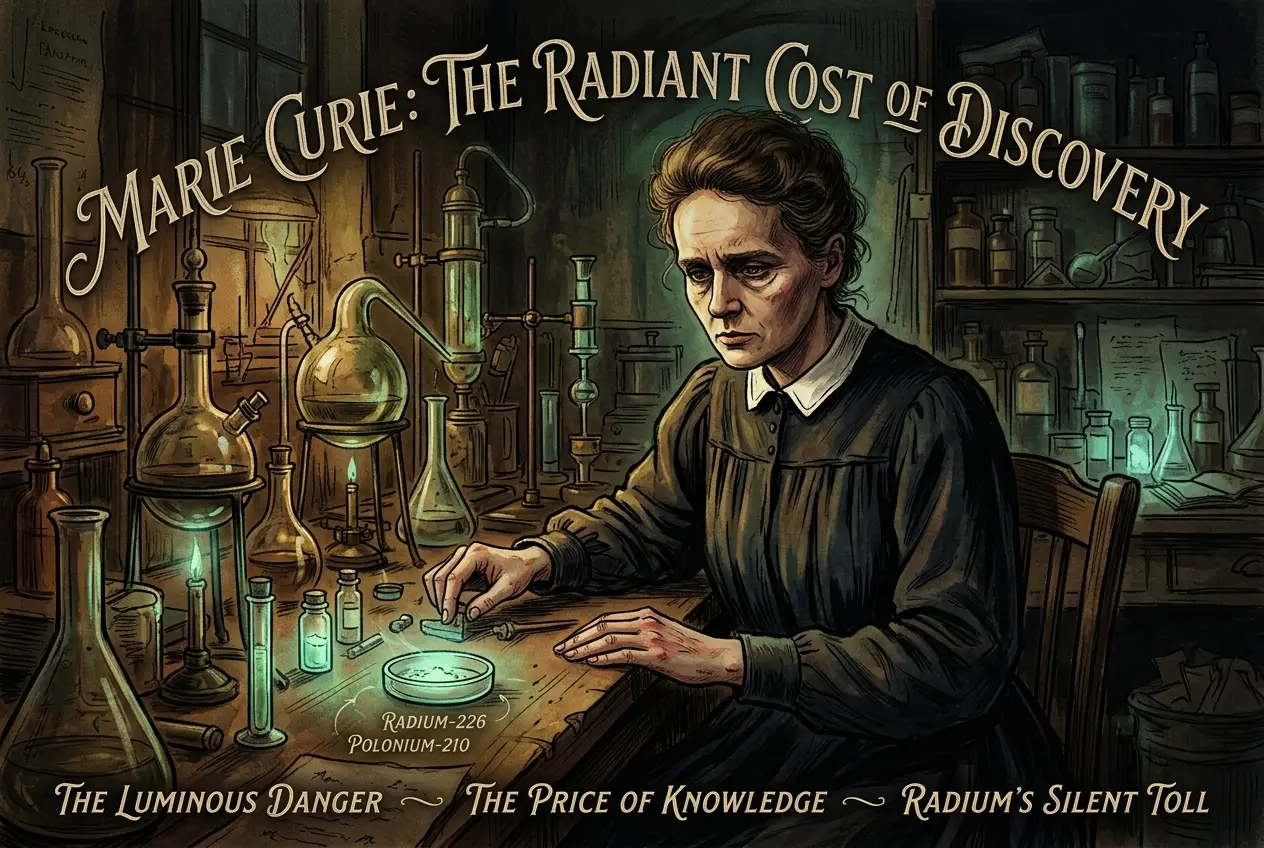
Marie Curie dedicated her life to unlocking the secrets of radioactivity, but these secrets came at an immense personal cost. For decades, she worked with highly radioactive materials, often carrying test tubes of radium in her pockets or storing them in her desk drawer, unaware of the profound dangers they posed. The scientific community at the time had little understanding of radiation's harmful effects. Early symptoms like chronic fatigue, skin lesions, and cataracts were dismissed as minor ailments or attributed to overwork.
I find it deeply moving and heartbreaking to consider the sacrifices she made. Her scientific notebooks from the 1890s are still too radioactive to handle without protective gear. Towards the end of her life, Marie suffered from severe anemia and chronic kidney problems. On July 4, 1934, at the age of 66, Marie Curie died at the Sancellemoz sanatorium in France. The cause of death was aplastic anemia, almost certainly contracted from her long-term exposure to radiation. She was, in essence, a martyr to her own discoveries, her body ravaged by the very elements she had brought to light. Her dedication was absolute, even unto death, and serves as a somber reminder of the unforeseen consequences that can accompany groundbreaking scientific exploration. It is a profound irony that the force she unveiled, which brought so much benefit to humanity, also claimed her life.
### **A Scientific Immortal: Marie Curie's Enduring Impact**
Marie Curie's legacy is immense and multifaceted, far surpassing the boundaries of physics and chemistry. Her discovery of polonium and radium, along with her elucidation of radioactivity, revolutionized scientific thought, proving that atoms were not immutable but contained immense hidden energies. This paved the way for the development of nuclear physics, atomic energy, and a deeper understanding of the universe's fundamental forces.
Her work also had immediate practical applications, particularly in medicine. Radium became crucial in the treatment of cancer, leading to the field of radiation therapy. Her pioneering use of X-rays during World War I transformed battlefield medicine. Beyond her scientific achievements, Marie Curie shattered gender barriers, becoming a global icon for women in science and a symbol of intellectual freedom and perseverance. She proved that a woman could not only participate in but lead scientific inquiry at the highest levels. I believe her story continues to inspire generations, demonstrating that passion, rigorous inquiry, and unwavering dedication can overcome any obstacle, whether scientific or societal. Her influence can be felt in areas as diverse as [can AI uncover hidden cosmic anomalies?](blogs/can-ai-uncover-hidden-cosmic-anomalies-3679) through to the [search for new energy sources](blogs/can-diamond-batteries-power-our-future-3308), showing her impact on pushing scientific frontiers.
### **Conclusion: The Light She Cast**
Marie Curie’s life was a testament to the extraordinary power of the human intellect and spirit. From a childhood of political oppression and personal loss, she rose to become one of the most celebrated scientists in history, a double Nobel laureate who opened up an entirely new realm of physics and chemistry. She didn't just discover new elements; she revealed a new force of nature, radioactivity, which profoundly reshaped our understanding of matter and energy. Her relentless pursuit of knowledge, her stoic endurance of hardship, and her ultimate sacrifice to science paint the portrait of a truly exceptional individual.
I often find myself returning to her story, seeking inspiration in her unwavering commitment to truth and her refusal to be defined by the limitations of her time or her gender. Marie Curie's light continues to radiate, illuminating not only the intricate wonders of the atomic world but also the boundless potential of the human mind. Her legacy urges us to question, to explore, and to push the boundaries of what is known, reminding us that true discovery often lies just beyond the visible, waiting for a persistent and curious mind to bring it into the light.
Frequently Asked Questions
Marie Curie's most significant contributions include coining the term 'radioactivity,' and discovering and isolating two new elements: polonium and radium. Her work fundamentally altered the understanding of atomic structure and paved the way for nuclear physics and radiation therapy.
Marie Curie won two Nobel Prizes. The first was the Nobel Prize in Physics in 1903 (shared with her husband Pierre Curie and Henri Becquerel) for their joint research on radioactivity. The second was the Nobel Prize in Chemistry in 1911, awarded solely to her for the discovery of polonium and radium and the isolation of radium.
Marie Curie faced significant challenges as a female scientist, including limited educational opportunities for women in her native Poland, financial hardship during her studies in Paris, and prevalent sexism in the scientific community, notably during the scandal preceding her second Nobel Prize. Despite this, she became the first woman professor at the Sorbonne and a global icon for women in STEM.
During World War I, Marie Curie spearheaded the development and deployment of mobile X-ray units, known as 'petites Curies.' She personally operated these units on the front lines, training others to use them, which saved countless lives by allowing surgeons to quickly locate shrapnel and broken bones in wounded soldiers.
Marie Curie died from aplastic anemia in 1934. Her condition was almost certainly caused by long-term exposure to radiation from her research with radioactive materials, the dangers of which were not fully understood during her lifetime.
The Curie family holds an unparalleled scientific legacy, with Marie Curie winning two Nobel Prizes, and her daughter Irène Joliot-Curie and son-in-law Frédéric Joliot also jointly winning a Nobel Prize in Chemistry in 1935 for their work on artificial radioactivity. Their combined achievements represent a profound and lasting impact on physics, chemistry, and medicine, establishing a multi-generational tradition of groundbreaking scientific discovery.
Verified Expert
Alex Rivers
A professional researcher since age twelve, I delve into mysteries and ignite curiosity by presenting an array of compelling possibilities. I will heighten your curiosity, but by the end, you will possess profound knowledge.
Leave a Reply
Comments (0)
No approved comments yet. Be the first to share your thoughts!
 Join Us


 Unknown Author




















Leave a Reply
Comments (0)