


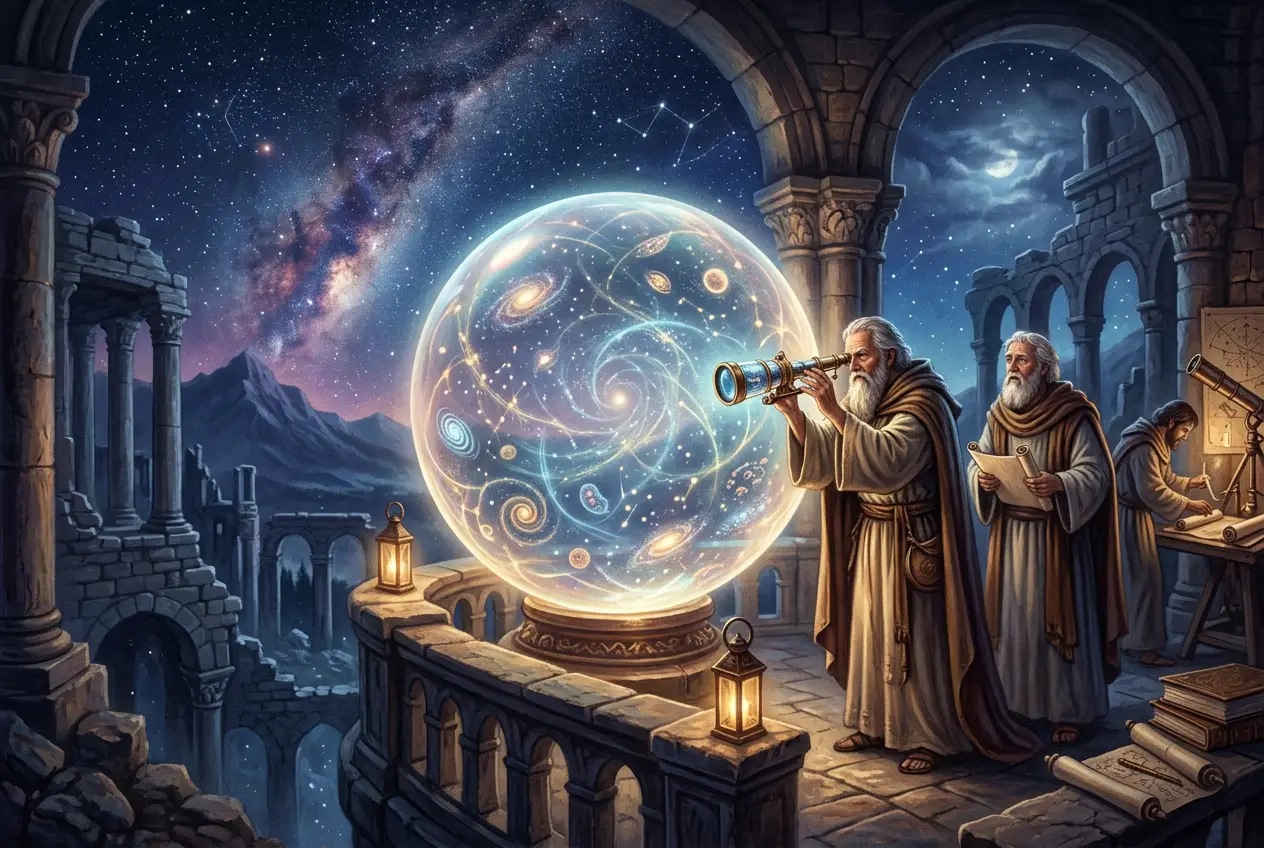
I often find myself reflecting on the ingenuity of ancient civilizations, marveling at how they perceived and interacted with a world vastly different from our own. We tend to think of advanced optics – microscopes, telescopes, even simple magnifying glasses – as relatively modern inventions. But what if I told you that evidence suggests our ancestors might have possessed a sophisticated understanding of lenses, peering into "hidden worlds" long before the likes of Galileo or Hooke? It’s a thought that sparks an immediate rush of curiosity, pushing us to re-examine the historical record with fresh eyes.
For centuries, historians and archaeologists largely dismissed anomalous glass or crystal artifacts found at ancient sites as mere decorative trinkets or accidental curiosities. Yet, a closer look at some of these objects, coupled with a deeper appreciation for the scientific prowess of early cultures, suggests a far more intriguing possibility. Could these seemingly simple pieces of polished rock or glass have been the keys to unlocking secrets of the universe, both microscopic and macroscopic, for our distant predecessors?
The Nimrud Lens: A Window to Antiquity's Vision
Perhaps the most famous, and certainly the most debated, artifact in this discussion is the Nimrud lens. Discovered in 1850 by Sir John Layard at the Assyrian palace of Nimrud (modern-day Iraq), this oval-shaped piece of rock crystal dates back approximately 3,000 years, to around 750-710 BC. When held up, it certainly behaves like a magnifying glass, capable of focusing sunlight and slightly enlarging objects. Its convex shape, ground to an almost perfect optical surface, has led many to speculate about its true purpose.
Could this be the earliest known optical lens? The scientific community remains divided. Some argue it was merely an ornamental piece, perhaps an inlay for furniture, or even a ritualistic object. Others, however, led by figures like the Italian professor Giovanni Pettinato, propose it was used as a magnifying glass by Assyrian artisans to engrave intricate details, or even as a component in a primitive telescope. Pettinato famously suggested it could explain why the ancient Assyrians were able to discover constellations invisible to the naked eye. While the latter claim is highly speculative given the lens’s modest magnification, the idea of ancient artisans using such a tool for precision work is far more plausible. You can delve deeper into the historical context of the Nimrud lens on its Wikipedia page (opens in a new tab).
Beyond Nimrud: Scattered Clues of Ancient Optics
The Nimrud lens isn't an isolated case, though it is one of the most prominent. Archaeological digs across various ancient civilizations have unearthed similar polished crystals and glass objects.
- Ancient Egypt: Several crystal lenses, some dating back over 4,500 years, have been found in Egyptian tombs, including a highly polished one found in the tomb of Prince Khnum-hotep, known for its superb optical quality. The eyes of statues, such as those of the Seated Scribe in the Louvre, often feature rock crystal inlays that are remarkably lifelike and appear to function as lenses, focusing light in a way that gives the statues an uncanny gaze.
- Minoan Civilization: Excavations on Crete have yielded rock crystal objects from the Minoan period (c. 2700–1450 BC) that exhibit clear lens-like properties.
- Classical Greece and Rome: While not as prolific as the Assyrian or Egyptian examples, there are literary references and occasional finds that suggest a familiarity with magnification. The Roman philosopher Seneca the Younger, for instance, described using a "glass globe filled with water" to magnify small letters, a clear demonstration of basic lens principles. Pliny the Elder also mentions the use of spherical glass for cauterization, indicating an understanding of how curved surfaces could concentrate light.
These disparate findings, when viewed collectively, suggest a broader, albeit perhaps less widespread, knowledge of optics than traditionally assumed. For a comprehensive look at the general history of optics, the Wikipedia article on the History of Optics (opens in a new tab) offers a fascinating journey through time.
The Science Behind the Mystery: How Lenses Work
To understand if these ancient artifacts could truly be lenses, we need a basic grasp of optics. A lens works by refracting, or bending, light as it passes through a curved transparent material.
- Convex lenses (thicker in the middle) converge light rays, making objects appear larger (magnification).
- Concave lenses (thinner in the middle) diverge light rays, making objects appear smaller.
The effectiveness of a lens depends on several factors:
- Material: Clarity, purity, and refractive index (how much it bends light). Rock crystal (quartz), obsidian, and glass were primary materials in antiquity.
- Curvature: The precise grinding and polishing of the surfaces.
- Manufacturing Quality: Freedom from imperfections, bubbles, and scratches.
Ancient artisans, without modern tools, achieved remarkable precision. It hints at a level of practical scientific knowledge that often gets overlooked. Their ability to cut and polish hard materials like rock crystal to such specific curvatures suggests a deliberate intention, not just accidental shaping. This kind of intricate craftsmanship reminds me of the debate around other ancient technologies, like the supposed "immortal lamps" which some believe ancient cultures crafted, discussed in our blog, Did Ancient Cultures Craft Immortal Lamps?.
What "Hidden Worlds" Could They Have Revealed?
The term "hidden worlds" is evocative and can encompass several possibilities:
1. The Microscopic World
Could ancient lenses have offered glimpses of microorganisms or the intricate structures of insects and plants? While unlikely to reveal bacteria with the power of modern microscopes, even modest magnification (2x-5x) can dramatically enhance visual perception. Imagine an artisan examining the weave of a fabric, the delicate veins of a leaf, or the tiny facets of a jewel with such a tool. This would have been revolutionary for craftsmanship, metallurgy, and even early natural philosophy. Understanding intricate details could lead to advancements in toolmaking, art, and medicine.
2. The Macroscopic and Astronomical World
While powerful telescopes were certainly beyond their grasp, a simple convex lens could aid in tasks like:
- Enhanced Vision: For individuals with poor eyesight, acting as early reading aids.
- Ignition: Focusing sunlight to start fires or for cauterization in medicine, as Pliny suggested.
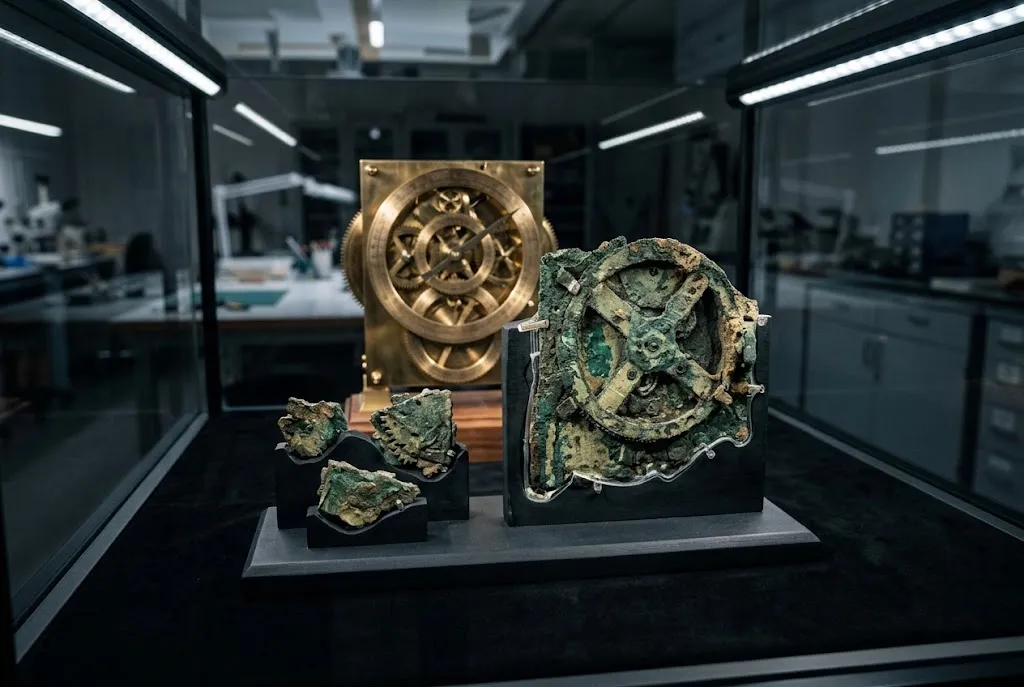
- Astronomical Observation (Limited): Even a low-power lens could make faint stars appear slightly brighter, or resolve components of celestial bodies not easily visible to the naked eye. This might support Pettinato’s theories about Assyrian astronomical observations. However, significant astronomical observation requires compound lenses and precision mounting, which we have no evidence of from this era. This is a point of divergence from the more complex "ancient cosmic computer" idea, which we explored in a previous post, Did Ancient Greeks Build a Cosmic Computer?.
3. Ritualistic or Symbolic Significance
It's also possible that some of these lenses held a deeper, non-practical meaning. The ability to distort or magnify reality could have been imbued with spiritual significance, seen as a tool for divination or connection to the divine. The way light played through these crystals might have been considered magical.
The Enduring Debate: Proof vs. Possibility
The biggest hurdle in confirming the widespread use of ancient lenses as optical instruments is the lack of explicit written records or detailed instructions for their use. We have the objects themselves, and we can infer their optical properties, but proving intent is challenging.
One compelling argument for their deliberate optical purpose comes from the sheer difficulty of crafting such precise forms. As physicist and author Jay M. Pasachoff notes, "The grinding of such lenses would have required significant skill, and it's hard to imagine that skill was only for making decorative objects." The level of precision required to create a functional lens, especially from hard materials like rock crystal, suggests a methodical understanding of optical principles rather than mere chance. This echoes the sophisticated, sometimes unexplained, engineering observed in other ancient structures, as we discussed in Ancient Alignments: Did Structures Track the Cosmos?.
It’s a situation where absence of evidence isn't necessarily evidence of absence. Perhaps the knowledge was passed down orally, or the tools and techniques were proprietary secrets of guilds or religious orders. The preciousness of the materials and the difficulty of manufacture might have made these "lenses" rare and exclusive tools, rather than commonplace items.
Conclusion: A Legacy of Unseen Discoveries
The idea that ancient civilizations, from the Assyrians to the Egyptians, possessed the technology to create and utilize optical lenses profoundly reshapes our understanding of their scientific and technological capabilities. While the definitive proof of widespread use as microscopes or telescopes remains elusive, the existence of artifacts like the Nimrud lens and numerous other crystal objects with genuine optical properties cannot be ignored.
These ancient lenses, whether used for intricate craftsmanship, rudimentary vision correction, or even limited astronomical observation, open a fascinating portal into how our ancestors perceived their world – and perhaps even glimpsed worlds hidden from the naked eye. They stand as silent testaments to an enduring human curiosity, a relentless drive to understand, and perhaps even manipulate, the very fabric of reality, much like we continue to do today with our modern innovations.
The next time you pick up a magnifying glass, or look through a telescope, take a moment to consider the possibility that you are participating in a tradition that stretches back not just hundreds, but thousands of years, to an era where the boundary between magic and science was far less defined, and the hidden worlds were just beginning to be revealed.




Conversation0
No comments yet. Be the first to share a thought — the best questions often become new stories.