


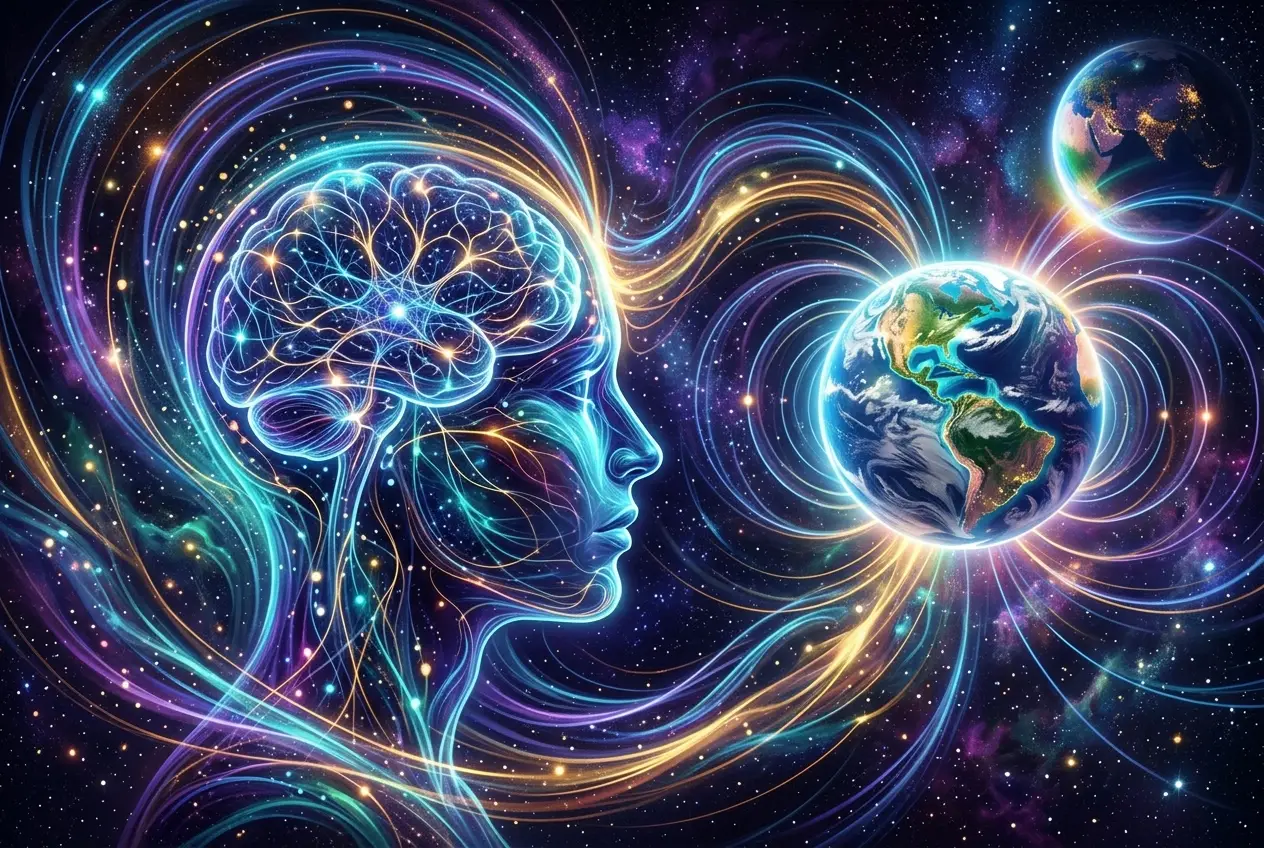
I remember a time when I thought of Earth’s magnetic field as little more than a shield, a silent guardian deflecting harmful solar radiation and guiding compasses. It was a purely geophysical phenomenon, a grand, invisible force field around our planet. But lately, I’ve found myself pondering a more profound question: could this ubiquitous, unseen force also be subtly influencing our very thoughts, moods, and even our biology?
It sounds like science fiction, doesn't it? The idea that the invisible lines of magnetic force constantly washing over us might be doing more than just protecting our atmosphere. Yet, a growing body of scientific inquiry, though still in its nascent stages, suggests that the geomagnetic field could be playing a role in human experience far beyond what we typically imagine. Welcome to the intriguing world where neuroscience meets geomagnetism, a realm where our planet's pulse might be echoing within our own.
The Invisible Shield: Earth's Magnetic Field Basics
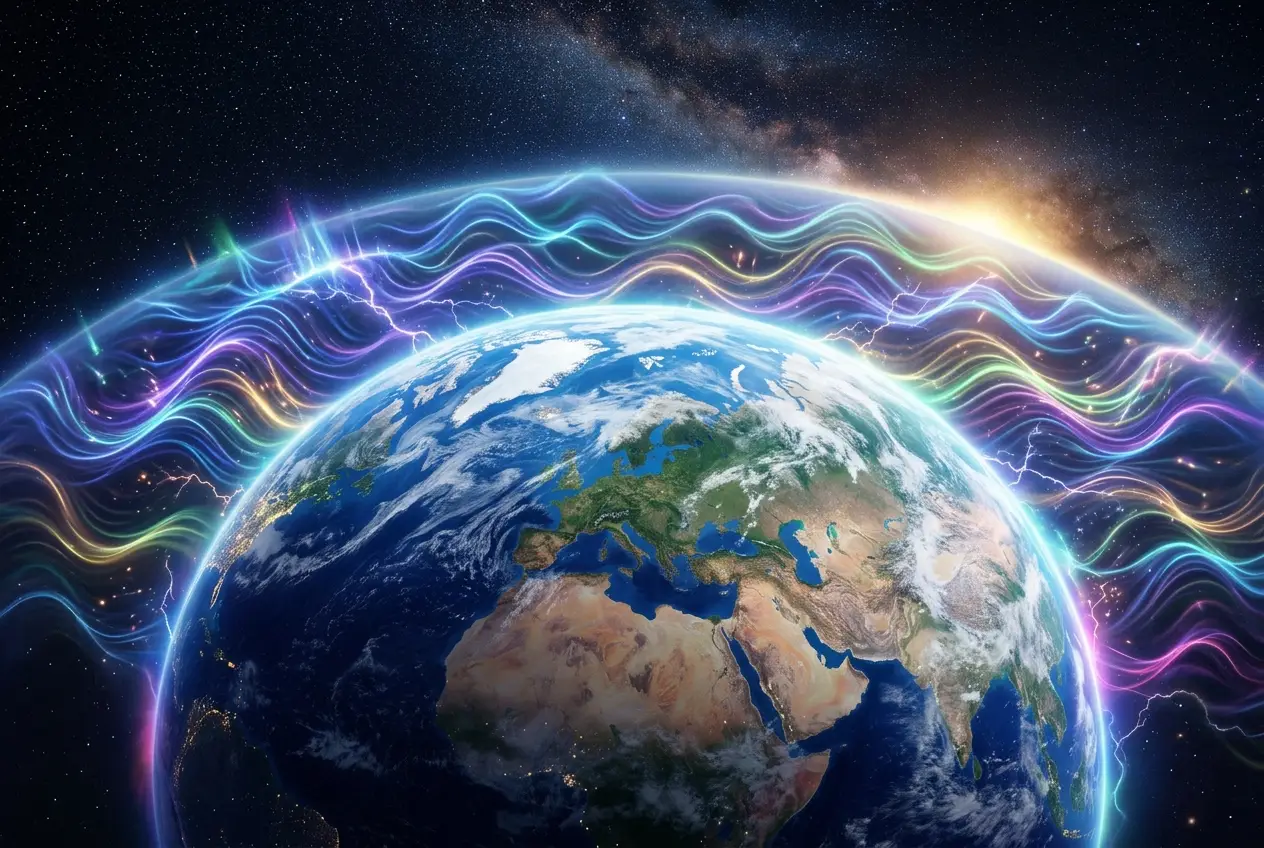
Before we dive into the speculative and the fascinating, let's briefly touch on what Earth’s magnetic field actually is. Generated primarily by the convection currents of molten iron in our planet's outer core, it acts as a colossal magnet, extending thousands of kilometers into space. This magnetosphere is vital for life, protecting us from solar winds and cosmic rays that would otherwise strip away our atmosphere and irradiate the surface. Think of it as our planet’s natural force field, constantly in flux, but largely stable over human timescales. You can learn more about its formation and properties on Wikipedia's page on Earth's magnetic field (opens in a new tab).
But here’s where it gets interesting: the intensity and direction of this field aren't perfectly uniform or static. It shifts, pulsates, and experiences disturbances, particularly during geomagnetic storms triggered by solar activity. And it's these subtle variations that some researchers believe might be interacting with our incredibly complex biological systems, especially the brain.
Magnetoreception: Our Hidden Sixth Sense?
For decades, we’ve known that many animals possess a "sixth sense" – magnetoreception. Birds use it for long-distance migration, sea turtles navigate oceans, and even insects like monarch butterflies rely on it to find their way. They essentially "see" the Earth's magnetic field, perceiving its inclination, intensity, or polarity to orient themselves. The mechanisms are still debated, but theories include magnetosensitive proteins (like cryptochromes in the eye) or tiny magnetite crystals within cells acting as biological compasses.
The obvious question then arises: if so many species can do it, can humans? Early human ancestors navigated vast distances, often without advanced tools. Could there have been an innate, primal connection to Earth's magnetic grid? While we don't consciously perceive magnetic fields like we see light or hear sound, some intriguing studies suggest that a rudimentary form of magnetoreception might still exist within us, perhaps as a vestigial sense.
One of the leading theories involves cryptochrome proteins, which are light-sensitive molecules found in the retina of the eye. These proteins are known to be involved in circadian rhythms and are present in humans. In animals, cryptochromes are linked to magnetoreception through a quantum mechanical process known as the radical pair mechanism, where magnetic fields can influence the spin states of electron pairs within the protein, thereby altering chemical reactions. If human cryptochromes retain similar magnetic sensitivity, it could provide a pathway for our bodies to detect geomagnetic shifts.
The Brain-Magnetic Field Connection: Early Evidence
The direct evidence of magnetic fields affecting human brains is scarce and often controversial, but some studies have yielded fascinating results. Researchers have explored whether changes in the geomagnetic field correlate with changes in human behavior, mental states, and even physiological responses.
1. Mood and Cognition: Some studies, particularly older ones, have attempted to link geomagnetic disturbances (like those caused by solar flares) with increased rates of psychiatric hospital admissions, suicides, or even heart attacks. While many of these studies faced criticism for methodological flaws or small sample sizes, the idea persists that extreme changes in the Earth's field could act as a stressor on sensitive biological systems.
More recently, controlled laboratory experiments have tried to bypass environmental variability. In one groundbreaking study by researchers at Caltech and the University of Tokyo, participants were placed in a shielded room designed to control ambient magnetic fields. When the researchers manipulated a magnetic field mimicking Earth's, they observed significant changes in the brainwaves (alpha waves) of the participants. Specifically, when the magnetic field rotated counter-clockwise, subjects' alpha wave activity decreased, suggesting a neural response to the shifting field. This response was involuntary and unconscious, hinting at a sensory system we don’t actively perceive. You can read more about this specific experiment on Wikipedia's article about Human Magnetoreception (opens in a new tab).
2. Sleep Patterns and Circadian Rhythms: Our internal biological clock, the circadian rhythm, is heavily influenced by light and dark cycles. However, some researchers propose that weak magnetic fields might also play a subtle role. Experiments involving controlled magnetic environments have shown changes in melatonin production – a hormone crucial for sleep – in response to altered magnetic fields. While not conclusive, it opens the door to the possibility that our sleep quality and alertness could be indirectly influenced by geomagnetic fluctuations.
3. Geomagnetic Storms and Health: During intense solar flares, Earth's magnetic field can be significantly disturbed, leading to what are known as geomagnetic storms. These events can disrupt power grids and satellite communications. Anecdotal evidence and some preliminary research have explored potential links between these storms and increases in conditions like migraines, heart arrhythmias, and even stroke. However, establishing a definitive causal link is challenging due to the multitude of other environmental and physiological factors at play. It's a complex puzzle, similar to the mysterious global hum that baffles scientists, where an environmental anomaly might have subtle biological effects.
The Search for the "Magnetoreceptor" Organ
If humans do possess magnetoreception, where is the "sensor" located? Unlike birds with their specialized eye proteins or bacteria with magnetite chains, a clear human magnetoreceptor organ has yet to be definitively identified.
Current research often focuses on:
- Retinal cryptochromes: As mentioned, these light-sensitive proteins in the eye are strong candidates, given their role in animal magnetoreception.
- Magnetite crystals: Though highly controversial, some researchers have claimed to find biogenic magnetite crystals in human brain tissue, particularly in the hippocampus and cerebellum. These tiny, naturally occurring magnets could theoretically interact with external magnetic fields, triggering neural signals. However, their functional role in magnetoreception remains unproven and debated.
The challenge lies in the subtlety of the signal. Earth's magnetic field is incredibly weak compared to the electrical signals within our brains or the magnetic fields generated by everyday electronics. Any human magnetoreceptive system would need to be exquisitely sensitive to detect and interpret these faint signals.
Why Would Humans Need Magnetoreception?
From an evolutionary perspective, why would humans retain a sense of magnetoreception if we don't consciously use it for navigation today?
- Ancient Navigation: In an era before maps and GPS, even a subtle directional sense could have offered a survival advantage for early hominids migrating across continents or returning to specific foraging grounds.
- Environmental Awareness: Perhaps it provided a subconscious cue about large-scale environmental changes, influencing migration patterns or responses to natural phenomena. For instance, the ability to sense subtle shifts in Earth's field might have been a precursor to sensing other environmental cues, much like how animals can sense earthquakes.
- Circadian Synchronization: It might serve as an additional input for synchronizing our internal biological clocks with the natural world, even in the absence of strong light cues. This could be particularly relevant in deep caves or cloudy conditions.
The more we explore the intricate connections between Earth and its inhabitants, the more we realize how deeply intertwined we are with our planetary home. From the complex geological processes that shape our world, like those possibly hiding a secret ocean at Earth's center, to the subtle energies that wash over us, the planet is a dynamic system whose influence we are only beginning to fully understand.
The Future of Geomagnetism and the Human Mind
Research into human magnetoreception is still in its infancy, fraught with experimental difficulties and requiring sophisticated setups to isolate and control magnetic fields. Yet, the tantalizing hints from both animal studies and human experiments suggest that we might be on the cusp of discovering a new sensory modality, or at least a powerful environmental influence, that has been silently shaping our lives for millennia.
Imagine a future where we could consciously tap into this sense, perhaps enhancing our navigational abilities or even understanding subtle environmental shifts that impact our well-being. Or, conversely, understanding how to shield ourselves from potential negative impacts of geomagnetic disturbances in an increasingly technologically reliant world.
The journey to uncover the full extent of Earth's magnetic field's influence on the human mind is a testament to our enduring curiosity about ourselves and our planet. It’s a reminder that even in an age of advanced technology, some of the most profound mysteries lie in the fundamental interactions between life and the natural world, right beneath our very noses (or perhaps, within our very cells).



Conversation0
No comments yet. Be the first to share a thought — the best questions often become new stories.