


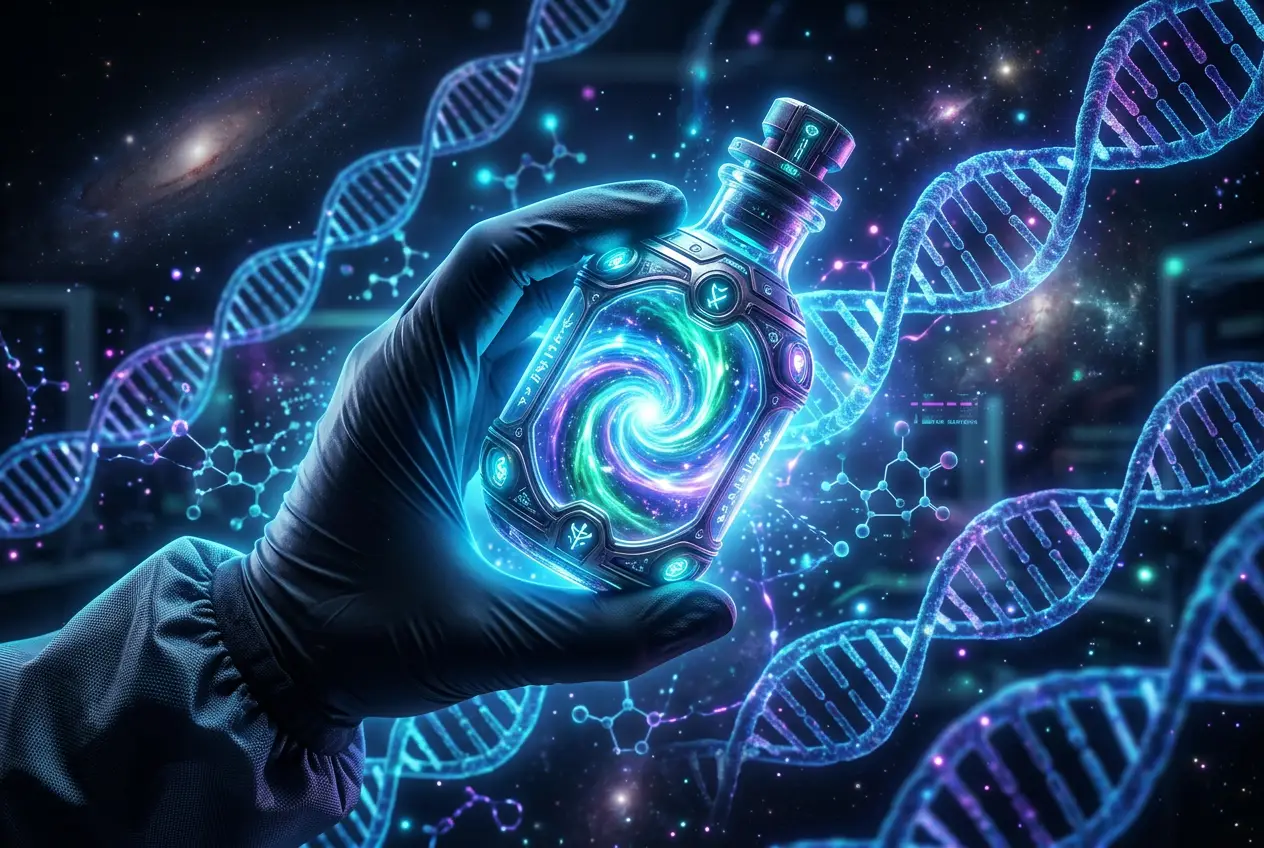
I’ve always been fascinated by the human quest for eternal life. From ancient myths to modern scientific labs, the dream of defying death, of an elixir that grants immortality, has captivated humanity for millennia. I remember reading stories of alchemists tirelessly searching for the Philosopher's Stone, believing it held the key to everlasting youth. Today, the cloaked figures and bubbling cauldrons have been replaced by scientists in sterile labs, equipped with advanced gene-editing tools and supercomputers, but the fundamental drive remains the same: to understand, and perhaps conquer, our finite existence.
Is immortality just a fantastical myth, or are we on the cusp of a scientific breakthrough that could fundamentally redefine what it means to be human? Let’s dive into the fascinating world where ancient dreams meet cutting-edge science.
The Echoes of Immortality in History and Myth
Before we delve into the scientific realm, it's crucial to acknowledge the deep historical roots of this pursuit. Nearly every ancient civilization, in some form, grappled with the concept of eternal life. The Sumerians had the Epic of Gilgamesh, a king’s heartbreaking journey to find the secret of immortality after losing his friend. Ancient Egyptians meticulously preserved their dead, believing in an afterlife that required a prepared body. In ancient China, emperors funded alchemists to concoct elixirs, often with disastrous, lead-poisoning results. The legendary “Fountain of Youth” spurred explorers like Ponce de León to sail across oceans.
These narratives weren't just whimsical tales; they reflected humanity’s profound fear of death and an innate desire for permanence. They laid the philosophical groundwork for what we now explore through scientific lenses. The common thread is a belief that life isn't necessarily meant to end, or at least, that its end can be postponed indefinitely.
The Biological Reality: Why Do We Age?
To unlock immortality, we first need to understand mortality. Aging, or senescence, is a complex biological process, not just a simple wearing out of parts. It’s driven by a combination of factors at the cellular and molecular levels.
Key Hallmarks of Aging:
- Telomere Shortening: Telomeres are protective caps at the ends of our chromosomes. With each cell division, they get shorter. Once they become too short, cells can no longer divide and enter a state called senescence, or programmed cell death. This process is like the fuse on a bomb; it shortens with every tick. You can learn more about chromosomes and genetic material on Wikipedia's page on Telomeres (opens in a new tab).
- Cellular Senescence: These "zombie cells" stop dividing but don't die. Instead, they secrete inflammatory molecules that damage surrounding healthy tissue, contributing to age-related diseases.
- Mitochondrial Dysfunction: Mitochondria are the powerhouses of our cells. Over time, they become less efficient and produce more damaging free radicals, leading to energy deficits and cellular damage.
- Accumulation of Damaged Proteins: Our bodies are constantly building and breaking down proteins. With age, the quality control system falters, leading to a build-up of misfolded or aggregated proteins, often seen in neurodegenerative diseases like Alzheimer's.
- Epigenetic Alterations: Beyond the DNA sequence itself, epigenetics controls gene expression. As we age, these epigenetic marks can become disorganized, leading to abnormal gene activity.
- Loss of Proteostasis: The ability of cells to maintain a healthy and functional set of proteins declines with age.
- Deregulated Nutrient Sensing: Pathways that sense nutrient availability (like mTOR, AMPK, sirtuins) become dysregulated, affecting metabolism and cellular repair.
- Stem Cell Exhaustion: The pool of regenerative stem cells dwindles and becomes less functional, impairing the body's ability to repair and replace damaged tissues.
Understanding these mechanisms is the first critical step toward developing interventions. If we can target these "hallmarks," perhaps we can slow, halt, or even reverse aging.
Modern Science's Arsenal: From Genes to Nanobots
Today, the quest for extended healthy lifespan, often termed "radical life extension" or "negligible senescence," employs a diverse array of scientific approaches.
1. Genetic Engineering and Gene Editing: CRISPR-Cas9 and other gene-editing tools offer unprecedented precision in altering our DNA. Scientists are exploring ways to:
- Activate Telomerase: An enzyme that can rebuild telomeres. While promising, unchecked telomerase activity can also contribute to cancer, so careful regulation is key.
- Target Senescent Cells: Genetically modifying cells to self-destruct when they become senescent, or developing drugs (senolytics) to achieve the same, has shown remarkable results in animal studies, reversing age-related conditions.
- Boost DNA Repair Mechanisms: Enhancing the body's natural ability to repair DNA damage. The promise of gene editing is immense, opening pathways to correct age-related decline at its source. For more on how advanced computing could aid such biological breakthroughs, check out our piece on Why is Quantum Computer 1 Million Times Faster Than SuperComputers?.
2. Pharmaceutical Interventions: Researchers are testing various compounds for their anti-aging properties:
- Rapamycin: An immunosuppressant that inhibits the mTOR pathway, extending lifespan in several organisms.
- Metformin: A common diabetes drug, showing promise in reducing age-related diseases.
- Resveratrol: Found in red wine, known for activating sirtuins, which are linked to longevity.
- Senolytics: Drugs designed to selectively kill senescent cells, such as fisetin and quercetin.
3. Regenerative Medicine and Stem Cells: The idea is to replace or repair damaged tissues and organs using stem cells.
- Induced Pluripotent Stem Cells (iPSCs): Adult cells reprogrammed into an embryonic-like state, capable of differentiating into any cell type, offering a potential source for "grow-your-own" organs or rejuvenating tissues.
- Organ Regeneration: Imagine regrowing a failing heart or kidney, rather than relying on transplantation.
4. Advanced Computing and AI: AI is becoming an indispensable tool in longevity research. It can:
- Accelerate Drug Discovery: By sifting through vast chemical libraries to identify potential anti-aging compounds.
- Model Biological Aging: Create complex simulations of cellular and organismal aging to predict interventions.
- Personalized Medicine: Analyze individual genetic and lifestyle data to recommend tailored longevity strategies. The ability of AI to parse complex biological data is transformative, much like its potential to decipher intricate communication patterns as discussed in Can AI Unlock Animal Tongues? The Future of Interspecies Talk.
5. Nanotechnology and Bionics: Looking further into the future, nanobots could patrol our bodies, repairing cellular damage, clearing waste, and even enhancing biological functions. Bionic organs and advanced prosthetics could blur the lines between human and machine, maintaining function beyond biological limits. The concept of "living crystals" and their potential in future computing or biological interfaces, as explored in Living Crystals: Computings Next Frontier, hints at technologies that could merge biology and advanced materials for radical life extension.
The Philosophical and Ethical Minefield
The pursuit of practical immortality, however, isn't without its profound challenges and ethical dilemmas.
- Overpopulation: Would an immortal humanity strain Earth's resources beyond breaking point?
- Social Inequality: If life extension is expensive, would it only be accessible to the wealthy, creating a stark divide between "mortals" and "immortals"?
- Meaning of Life: If death is removed from the equation, what would motivate us? Would life lose its preciousness and urgency?
- Identity and Change: If we live for thousands of years, how would our sense of self evolve? Would an individual from 500 years ago still be "me"?
- Existential Boredom: Would an infinitely long life eventually lead to an overwhelming sense of ennui?
These are not trivial questions. They delve into the very fabric of our society and individual existence. It forces us to confront not just if we can achieve immortality, but should we. The thought-provoking idea of whether our reality itself is a construct, as explored in Could Our Reality Be a Simulation? Decoding the Matrix Hypothesis, adds another layer to this discussion, questioning the fundamental nature of our existence if we achieve indefinite lifespans.
Current Status and Future Outlook
While true biological immortality (like that of a hydra or certain jellyfish, which can seemingly reverse their aging process indefinitely) remains elusive for humans, significant progress is being made in extending "healthspan" – the period of life spent in good health. We are already seeing therapies that can slow down or even partially reverse some aspects of aging in animal models.
The future of anti-aging research isn't necessarily about living forever, but about living longer, healthier, and more vibrant lives, free from the ravages of age-related diseases. The Elixir of Life might not come in a single, magic potion, but rather as a cocktail of genetic therapies, personalized pharmaceuticals, regenerative treatments, and lifestyle modifications, all guided by advanced AI.
The journey towards unlocking indefinite lifespans is long and complex, but the pace of scientific discovery is accelerating. While I don't expect to wake up tomorrow and find an immortality pill, I am incredibly optimistic about the potential for future generations to experience significantly extended healthspans, pushing the boundaries of what it means to be alive. The ancient dream is slowly but surely transforming into a modern scientific pursuit, redefining our relationship with time and mortality itself.



Conversation0
No comments yet. Be the first to share a thought — the best questions often become new stories.