


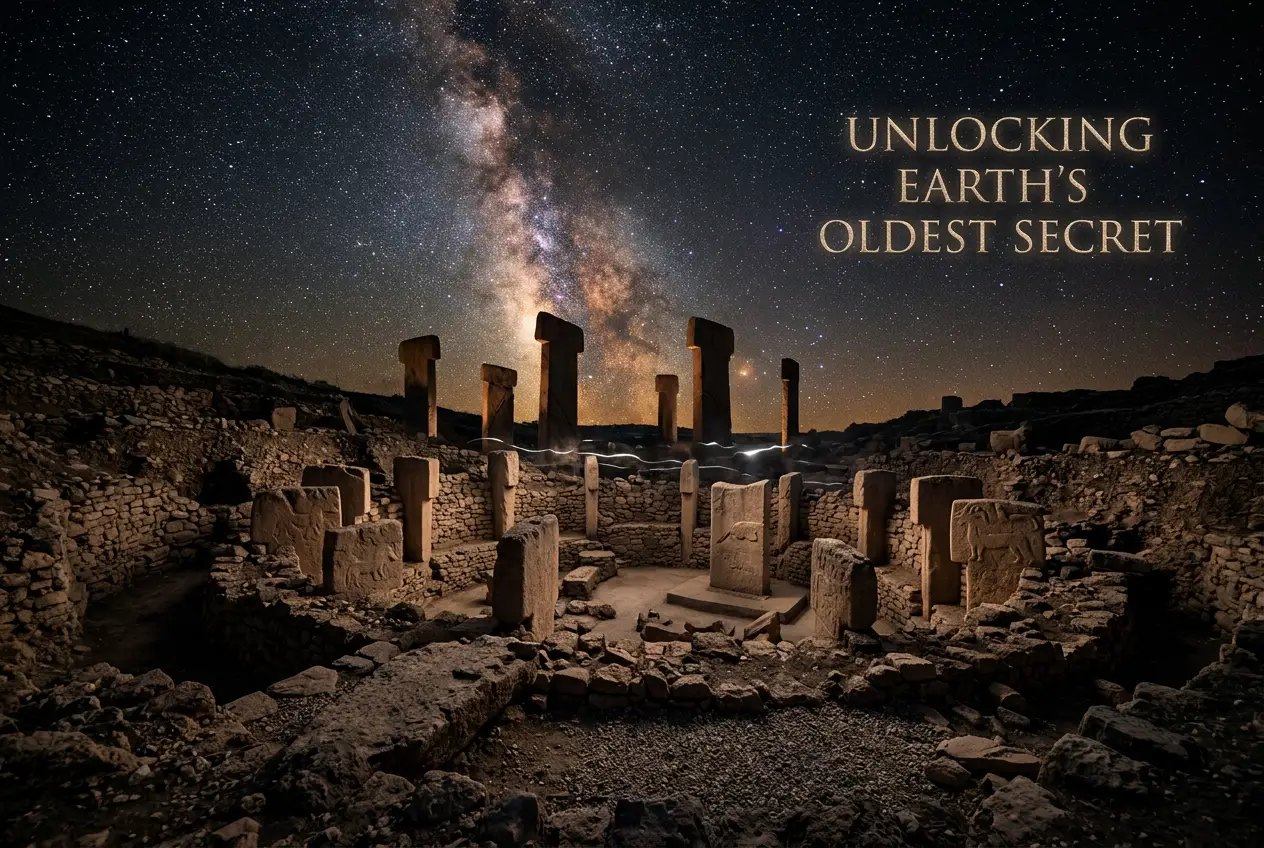
I remember the first time I stumbled upon Göbekli Tepe in an archaeological documentary. My jaw quite literally dropped. Here was a site, unearthed in southeastern Turkey, that completely rewrote the timeline of human civilization as we knew it. Forget pyramids, forget Stonehenge, forget even the earliest cities – Göbekli Tepe predates them all by thousands of years, pushing the origins of complex monumental architecture back to a staggering 9600 BCE. It wasn't just old; it was impossibly old for its sophistication, built by hunter-gatherers long before the dawn of agriculture. This wasn't supposed to happen.
For centuries, our understanding of human progress followed a neat trajectory: nomadic hunter-gatherers, then the development of agriculture leading to settled communities, which in turn fostered the rise of specialized labor, complex societies, and eventually, monumental structures. Göbekli Tepe flips this script entirely. Its discovery didn't just add a new chapter to history; it demanded a rewrite of the entire book. But what exactly was this mysterious complex, and could it have served a purpose far more advanced than a mere ritual site – perhaps even as Earth's very first observatory or, dare I say, a primitive cosmic computer?
A Megalithic Marvel From the Stone Age
Imagine massive, T-shaped stone pillars, some weighing up to 20 tons and standing over 16 feet tall, intricately carved with reliefs of predatory animals – boars, foxes, snakes, scorpions, vultures – arranged in monumental circular enclosures. This is Göbekli Tepe, a site that emerged from the earth like a forgotten titan, challenging every assumption about our ancestors.
Before its excavation, archaeologists believed that building such large, organized structures required a settled, agricultural society capable of producing surplus food to sustain a large workforce. Göbekli Tepe proves otherwise. Its builders were still largely hunter-gatherers, yet they possessed an astonishing level of organization, engineering skill, and a shared cosmic vision that allowed them to conceive and construct this breathtaking complex. The sheer scale of the effort involved is mind-boggling, suggesting a highly developed social structure and possibly a complex belief system. You can read more about its historical context on Wikipedia (opens in a new tab).
The Enigma of Purpose: Ritual, Sanctuary, or Something More?
Initially, archaeologists interpreted Göbekli Tepe as a purely ritualistic or religious site – a temple complex dedicated to ancient deities or ancestral spirits. And indeed, its symbolism, with its powerful animal imagery and often headless human figures, strongly suggests a profound spiritual significance. However, its sophisticated design, recurring patterns, and precise construction have led many researchers to ponder if there was a deeper, more pragmatic purpose intertwined with its spiritual one.
Could these ancient hunter-gatherers, living under vast, unpolluted skies, have been avid sky-watchers? The argument for Göbekli Tepe as an astronomical observatory has gained considerable traction. If so, its "technology" wouldn't be gears and levers, but rather the precise alignment of its stones, the orientation of its enclosures, and the symbolic language carved into its very fabric.
Decoding Celestial Alignments: Earth's First Observatory?
One of the most compelling pieces of evidence for Göbekli Tepe’s astronomical function comes from the analysis of its various enclosures and carved pillars. Researchers have suggested that specific pillars and their alignments correspond to significant celestial events. For example, some argue that the site was oriented to track the rising of Sirius, a star of immense importance in many ancient cultures, or possibly other key constellations during the Pre-Pottery Neolithic period.
The famous Pillar 43, often dubbed the "Vulture Stone" in Enclosure D, is particularly intriguing. It depicts a series of animals, including a vulture, a scorpion, and what some interpret as astronomical symbols. Some researchers, such as Martin Sweatman and Dimitrios Tsikritsis, have proposed that the carvings represent constellations and astronomical events, possibly even commemorating a catastrophic cometary impact around 10,950 BCE – an event linked to the Younger Dryas climate shift. This theory, though debated, suggests a sophisticated level of observation and record-keeping that borders on proto-scientific endeavor. You can learn more about archaeoastronomy, the study of how ancient people understood the heavens, on Wikipedia (opens in a new tab).
Think about it: before written language, before complex mathematics as we know it, how would a society record and transmit vital information about the cosmos? Through monumental art, through stories, and perhaps, through the very architecture of their sacred spaces. Just as the builders of the Roman Dodecahedra might have charted the stars, or ancient alignments tracked the cosmos, Göbekli Tepe could represent an earlier, more primal form of this cosmic charting. For more on ancient star charts, check out our blog on the /blogs/roman-dodecahedra-did-ancients-chart-stars-7244 and on /blogs/ancient-alignments-did-structures-track-the-cosmos-1119.
Was it a Proto-Computer? Encoding Cosmic Cycles
The idea of Göbekli Tepe as a "cosmic computer" might sound like a stretch, but let's consider the concept. A computer, at its core, is a device for processing and storing information, often related to patterns and calculations. What if the complex arrangement of pillars, their repetitive motifs, and the precise geometric layout of the enclosures were designed to encode complex astronomical cycles, predict solstices and equinoxes, or even track longer celestial periods?
"The builders of Göbekli Tepe were clearly sophisticated observers of the sky," notes Dr. Andrew Collins, an author and researcher specializing in ancient sites. "The precision of their stonework and the recurrent symbolism points to a deep understanding of natural cycles, which they monumentalized in stone. To call it a 'computer' in a modern sense is anachronistic, but it functioned as a repository of complex knowledge, a kind of pre-literate database for cosmic information."
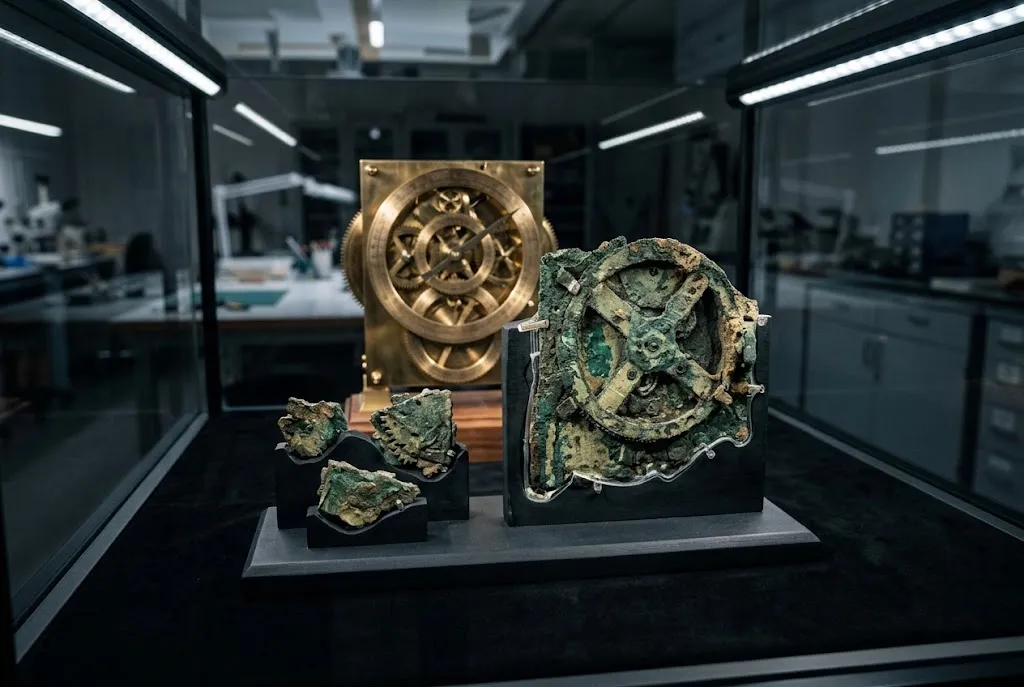
This wouldn't be a mechanical device like the Antikythera Mechanism, but rather a monumental, static "information processing system." The recurring patterns of T-pillars, the seemingly ritualistic dismantling and re-burial of older structures to build new ones on top – could these actions represent a continuous process of observation, recalibration, and updating of cosmic knowledge? Each layer of construction could be seen as an iteration of a sophisticated long-term astronomical project, making it a "living" computation over millennia. This is a far cry from modern electronics, but a form of information processing nonetheless.
The possibility that these hunter-gatherers, often romanticized as primitive, were engaged in such abstract and long-term scientific endeavors is astounding. It forces us to re-evaluate what "technology" meant to early humans. For them, understanding the movement of the stars and the rhythms of the cosmos was not just academic; it was fundamental to survival, to predicting seasonal changes, and to maintaining their worldview.
Challenging Our Understanding of "Early Technology"
Göbekli Tepe forces us to expand our definition of "technology." It wasn't about wheels or metallurgy yet, but about the technology of organization, of symbolic representation, and of monumental engineering for knowledge preservation. It was a technology of thought and collective action on an unprecedented scale.
The site’s deliberate burial centuries after its construction is another layer of mystery. Was it simply abandoned, or was it intentionally preserved – perhaps to protect its secrets or mark the end of an era? Whatever the reason, this act of burial ironically protected it for millennia, allowing us today to marvel at its complexity.
The Ongoing Enigma
While the "cosmic computer" hypothesis remains a subject of ongoing debate and research, it undeniably adds another layer of fascination to Göbekli Tepe. Whether it was primarily a ritual center, an astronomical observatory, or a combination of both with an underlying system for encoding complex information, one thing is clear: it stands as a testament to the profound intellectual capabilities of early human societies.
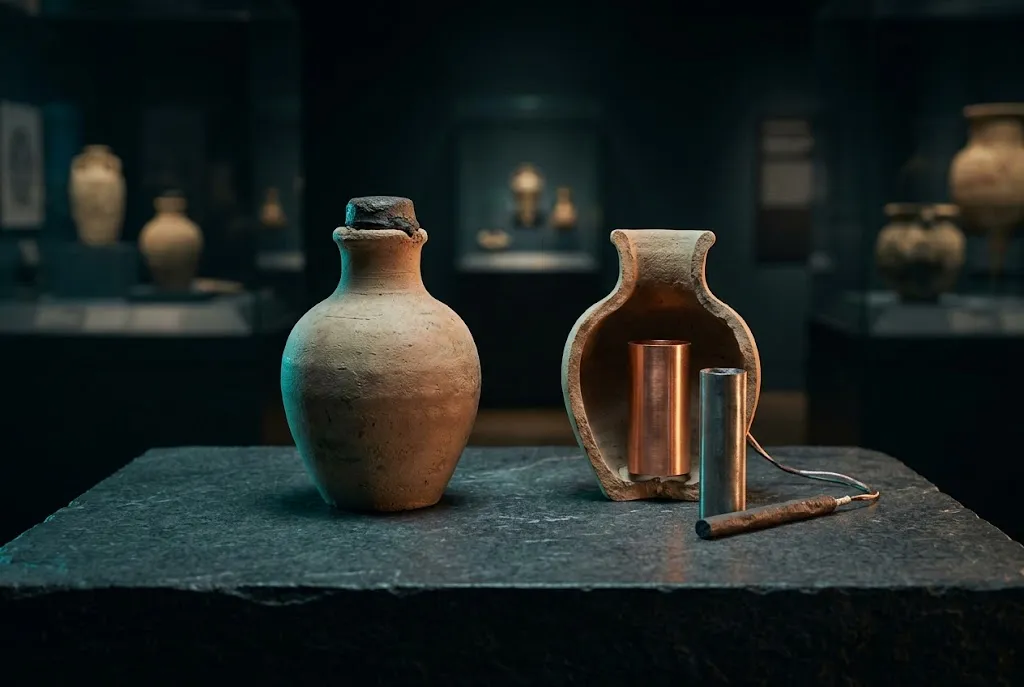
The mysteries of Göbekli Tepe continue to unfold as excavations progress. Each new discovery further challenges our preconceptions and encourages us to look at ancient history not as a linear progression of inevitable discoveries, but as a rich tapestry of ingenuity, innovation, and perhaps, lost knowledge. It reminds me that some of the greatest "tech mysteries" aren't about advanced gadgets, but about how our ancestors used the fundamental laws of the universe, their keen observations, and incredible collective effort to build wonders that still baffle us today. It’s a bit like wondering if the ancient Iraqis truly powered a lost civilization with the Baghdad Battery, another fascinating historical tech mystery we explored in /blogs/the-baghdad-battery-did-ancient-iraqis-power-a-lost-civilization-9975.
What other secrets are buried beneath our feet, waiting to rewrite history once more? Göbekli Tepe is a powerful reminder that our past is far more complex and technologically diverse than we often imagine.



Conversation0
No comments yet. Be the first to share a thought — the best questions often become new stories.