



I remember staring at an old map, not of roads or rivers, but of ancient sites—Stonehenge, the Pyramids of Giza, countless megalithic structures scattered across continents. What struck me wasn’t just their age or monumental scale, but the uncanny precision of their placement. It made me wonder: Did ancient civilizations possess a hidden sixth sense, or perhaps an overlooked technology, that allowed them to detect subtle cosmic and telluric energies?
The very idea seems almost fantastical, conjuring images of forgotten wise men attuned to the hum of the universe. Yet, as I’ve delved deeper into the mysteries of history and archaeoastronomy, I’ve found compelling patterns and scientific whispers that suggest our ancestors might have been far more sophisticated in their understanding of the natural world than we often give them credit for. They lived in an era free from the constant noise of our digital age, perhaps making them more sensitive to the Earth's subtle symphony.
The Earth's Hidden Pulse: Telluric Currents and Geomagnetism
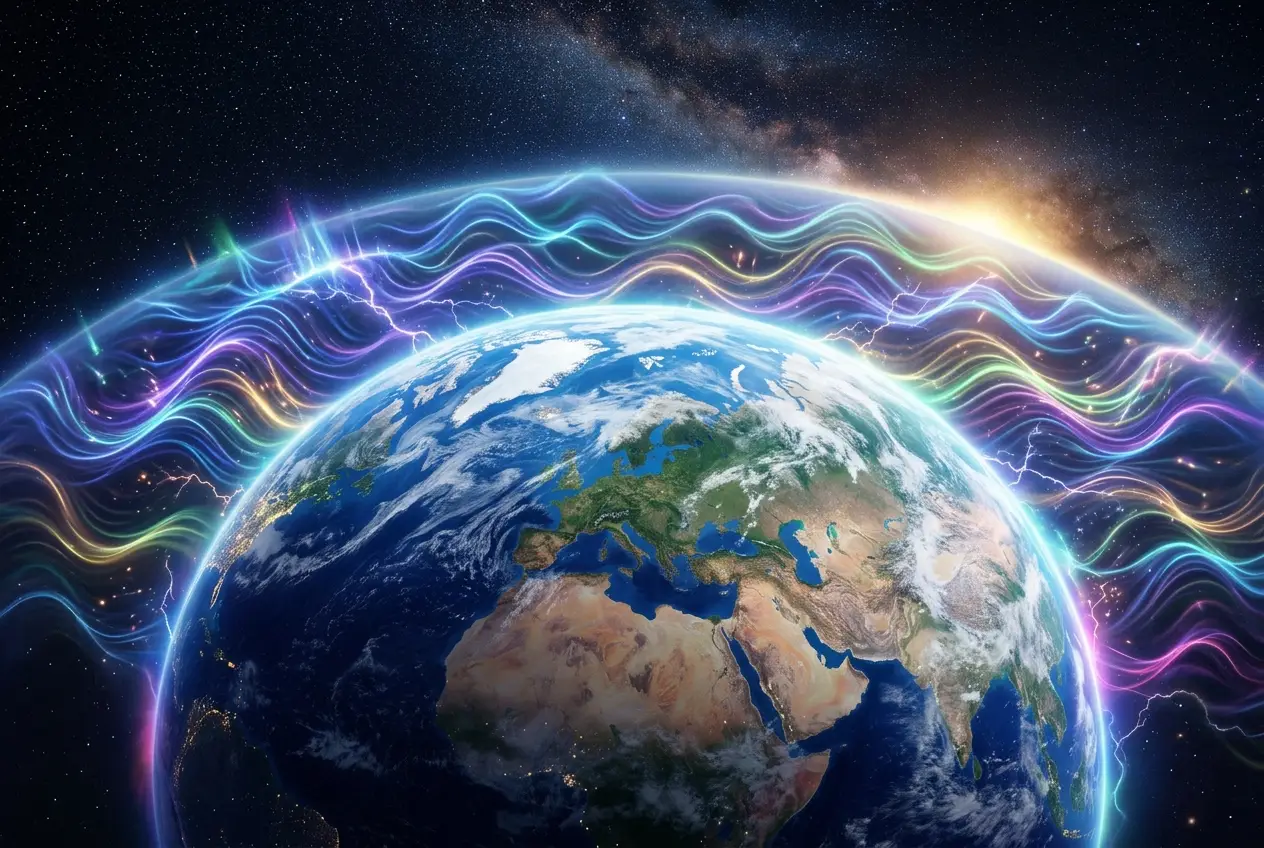
One of the most intriguing possibilities revolves around Earth's own energetic heartbeat. Our planet is not just a passive sphere; it’s a dynamic, electromagnetically charged body. At its core, a churning ocean of molten iron generates a powerful geomagnetic field, vital for protecting us from solar radiation. But beyond this grand shield, there are more subtle, localized currents at play.
Telluric currents are natural electric currents flowing underground and through the Earth's oceans. These currents are primarily induced by changes in the outer portion of the Earth's magnetic field, which are in turn caused by interactions between the solar wind and the magnetosphere, and by variations in the ionosphere. Think of them as faint, ever-present electrical streams coursing beneath our feet. While often weak, certain geological formations can concentrate these currents, creating anomalies that might have been detectable by sensitive individuals or rudimentary instruments. You can read more about them on Wikipedia's article on Telluric Currents (opens in a new tab).
Could ancient civilizations have been aware of these subtle electrical flows? Imagine a time when the only light came from the sun, moon, and stars, and the deepest sounds were the wind and the rustle of leaves. In such an environment, human senses might have been honed to perceive phenomena we now overlook. Some theories propose that dowsing, an ancient practice of seeking water or minerals with rods or pendulums, might have its roots in a genuine, albeit poorly understood, sensitivity to these geological energies. While modern science largely dismisses dowsing as pseudoscience, the historical prevalence across diverse cultures is a curious anomaly worth noting. The historical practice of dowsing itself is a fascinating journey, which you can explore further on Wikipedia (opens in a new tab).
Megalithic Sites: Energy Magnets?
When we look at monumental structures like Stonehenge or the vast network of menhirs in Carnac, Brittany, it's not just their astronomical alignments that pique curiosity. Many of these sites are situated on geological fault lines or atop mineral deposits known to generate subtle electromagnetic fields. This has led some researchers to ponder if these ancient engineers were deliberately tapping into, or amplifying, these natural energy points.
Consider the notion that these sites weren't just observatories for the stars, but also "sensors" for the Earth itself. The very stones, often quartz-rich, are known for their piezoelectric properties—the ability to generate an electric charge under mechanical stress. Could the weight of massive stones, combined with natural geological pressures and telluric currents, create a localized energy phenomenon that was understood and harnessed? We've explored similar ideas about megaliths tapping into Earth's geomagnetism in our previous blog: Did Megaliths Tap Earth's Geomagnetic Grid?.
Cosmic Influences: Beyond Starlight
Beyond Earth’s internal energies, ancient people were undoubtedly keen observers of the cosmos. Their lives were intimately tied to celestial cycles. But did their "sensing" extend beyond the visible spectrum of stars and planets?
The Geomagnetic Field and Human Perception: Our planet's magnetic field isn't static. It constantly fluctuates, influenced by solar activity, lunar cycles, and even seismic events. Some intriguing studies have suggested that humans, like many animals, might possess a rudimentary sense of magnetoreception—the ability to detect magnetic fields. Birds, turtles, and even some insects navigate using the Earth's magnetic field. While concrete evidence for strong human magnetoreception is elusive, the possibility of a subtle, unconscious sensitivity, perhaps more pronounced in ancient times, cannot be entirely dismissed. This sense could have been key to understanding ancient prophecies or even predicting natural disasters, as discussed in Ancient Quake Predictors: Did They Use Unseen Signals?.
Historically, many cultures spoke of an animating force or "life energy" often linked to celestial bodies or the Earth itself. The Chinese concept of Qi, the Indian Prana, or the Polynesian Mana all describe subtle energies that influence well-being and the environment. While these are often seen as philosophical or spiritual concepts, could they be ancient interpretations of very real, yet subtle, physical phenomena?
Astronomical Alignments: More Than Just Calendars?
Ancient observatories and temples are often meticulously aligned with solstices, equinoxes, and specific stellar events. While these alignments served practical purposes like calendar-keeping for agriculture and religious rituals, some scholars argue there was a deeper purpose.
Perhaps these alignments allowed them to pinpoint moments when cosmic energies were most potent or when specific celestial configurations might affect Earth's telluric currents. In this view, structures like the Giza pyramids or Mayan observatories weren't merely measuring devices; they were colossal antennas, focusing or resonating with incoming cosmic energies or subtle shifts in Earth's own electromagnetic environment. They were, in essence, trying to "map invisible skies" and understand the energies flowing through them, a topic we've covered in Did Ancient Cultures Map Invisible Skies?.
A fascinating quote from Nikola Tesla, a pioneer in electromagnetism, might offer a modern echo to these ancient ideas:
"The progressive development of man is vitally dependent on invention. It is the most important product of his creative brain. Its ultimate purpose is the complete mastery of mind over the material world, the harnessing of the forces of nature to human needs."
— Nikola Tesla
While Tesla spoke of future technologies, his emphasis on "harnessing the forces of nature" resonates with the potential for ancient civilizations to have understood and utilized forces we are only now beginning to quantify.
Lost Knowledge or Reinterpreted Perception?
The debate over ancient "cosmic computers" or advanced sensing capabilities often falls into two camps: those who believe in lost, highly advanced technology, and those who attribute such feats to keen observation and sophisticated, non-technological understanding. I lean towards a synthesis of both.
It's unlikely our ancestors possessed silicon chips or quantum sensors in the modern sense. However, they had thousands of years to observe, experiment, and pass down knowledge through generations. Their "technology" might have been their intimate knowledge of materials, their understanding of resonance, and a profound connection to their environment. Their "sensing" could have been a collective, accumulated wisdom about how the Earth and cosmos influenced life.
Consider these possibilities:
- Acoustic Resonance: Certain frequencies of sound can affect matter. Could specific chants, drumming, or architectural designs create resonant fields that interacted with telluric currents or even subtle cosmic vibrations?
- Mineral-based Sensors: Early forms of "technology" might have involved specific minerals or metals carefully placed or shaped to react to electromagnetic fields. The use of lodestone for compasses, for example, shows an early understanding of magnetism.
- Biological Sensitivity: Some researchers propose that specific diets, meditation practices, or lifestyle choices in ancient cultures might have enhanced natural biological sensitivities to environmental stimuli, including subtle energy fields.
Ultimately, while definitive proof remains elusive, the circumstantial evidence is compelling enough to spark our curiosity. The precise placement of ancient structures, their alignments with celestial bodies, and the persistent cultural narratives of unseen energies all point to a deeper understanding that we might have lost. Perhaps the "cosmic computer" wasn't a mechanical device, but an intricate system of knowledge, observation, and architectural design that allowed our ancestors to intuitively "read" the universe around them.
As we continue to explore our world with advanced scientific tools, I believe we might uncover more about these ancient mysteries, bridging the gap between historical anecdotes and verifiable scientific phenomena. The past often holds keys to unlock the future, and in the quiet wisdom of ancient civilizations, we might find insights into the energies that bind our universe.




Conversation0
No comments yet. Be the first to share a thought — the best questions often become new stories.