I was recently engrossed in a documentary about the Large Hadron Collider (LHC), and it struck me: what if the universe, in its boundless complexity, holds secrets that only the most extreme conditions can reveal? I found myself pondering the very fabric of reality, and then, a truly mind-bending thought emerged – **could scientists actually be creating tiny black holes in laboratories?** The idea sounds like something ripped from a science fiction novel, a recipe for cosmic disaster. Yet, within the realm of theoretical physics and high-energy experiments, it's a concept that has been seriously explored, holding the potential to unlock some of the deepest mysteries of our universe.
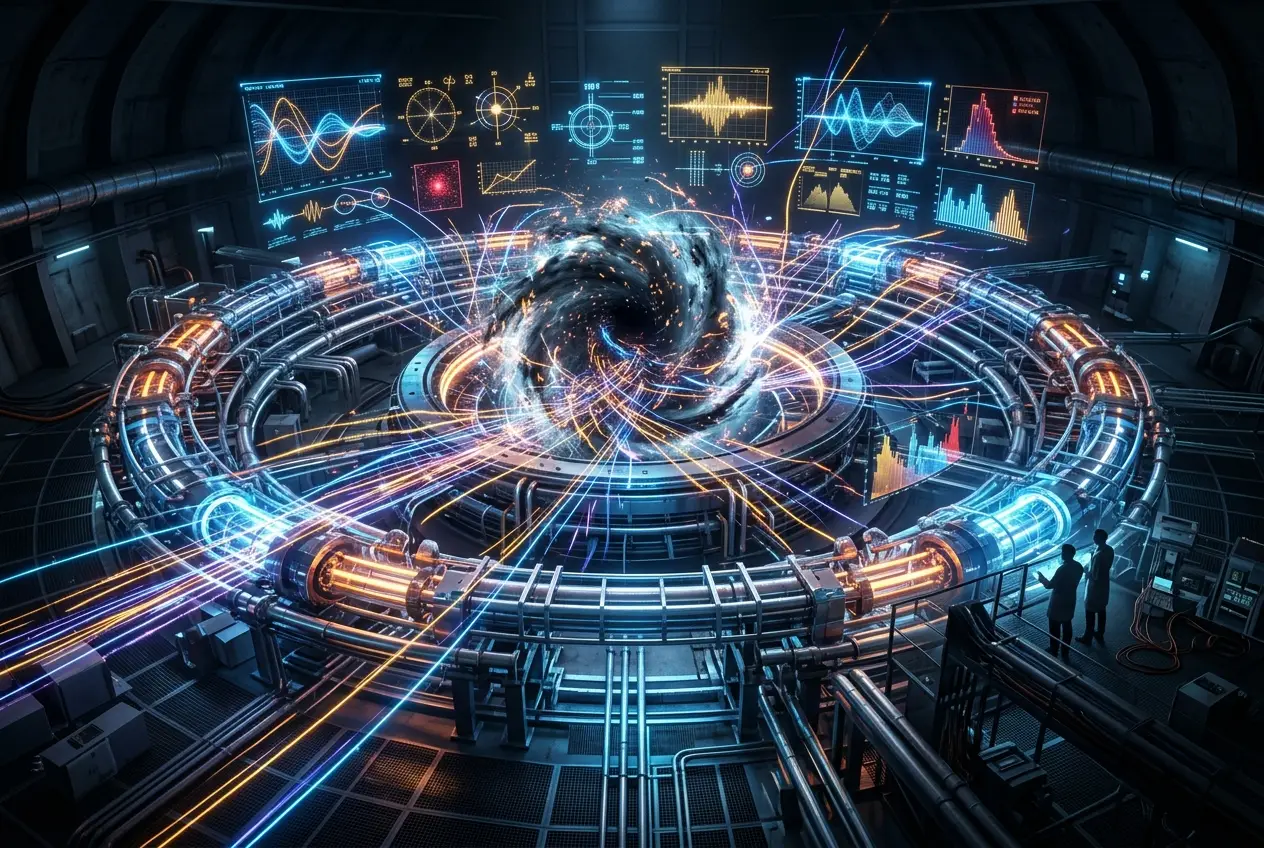
The notion of "lab-grown black holes" isn't about conjuring a city-devouring singularity. Instead, we're talking about *microscopic* black holes, theoretical entities that, if they exist, would be far smaller than an atom and incredibly short-lived. The possibility first gained public attention with the advent of powerful particle accelerators like the LHC at CERN. These colossal machines accelerate particles to nearly the speed of light, then smash them together with immense force, recreating conditions akin to the Big Bang.
### **The Grand Colliders: Forging Extreme Conditions**
When I think about the LHC, I imagine a scientific colossus, a 27-kilometer ring buried deep beneath the Franco-Swiss border. It’s a place where humanity pushes the boundaries of knowledge, meticulously scrutinizing the fundamental particles that make up everything we know. The primary goal of experiments like those at the LHC is to discover new particles and understand the forces that govern the universe, such as verifying the existence of the Higgs boson, which gives other particles mass.
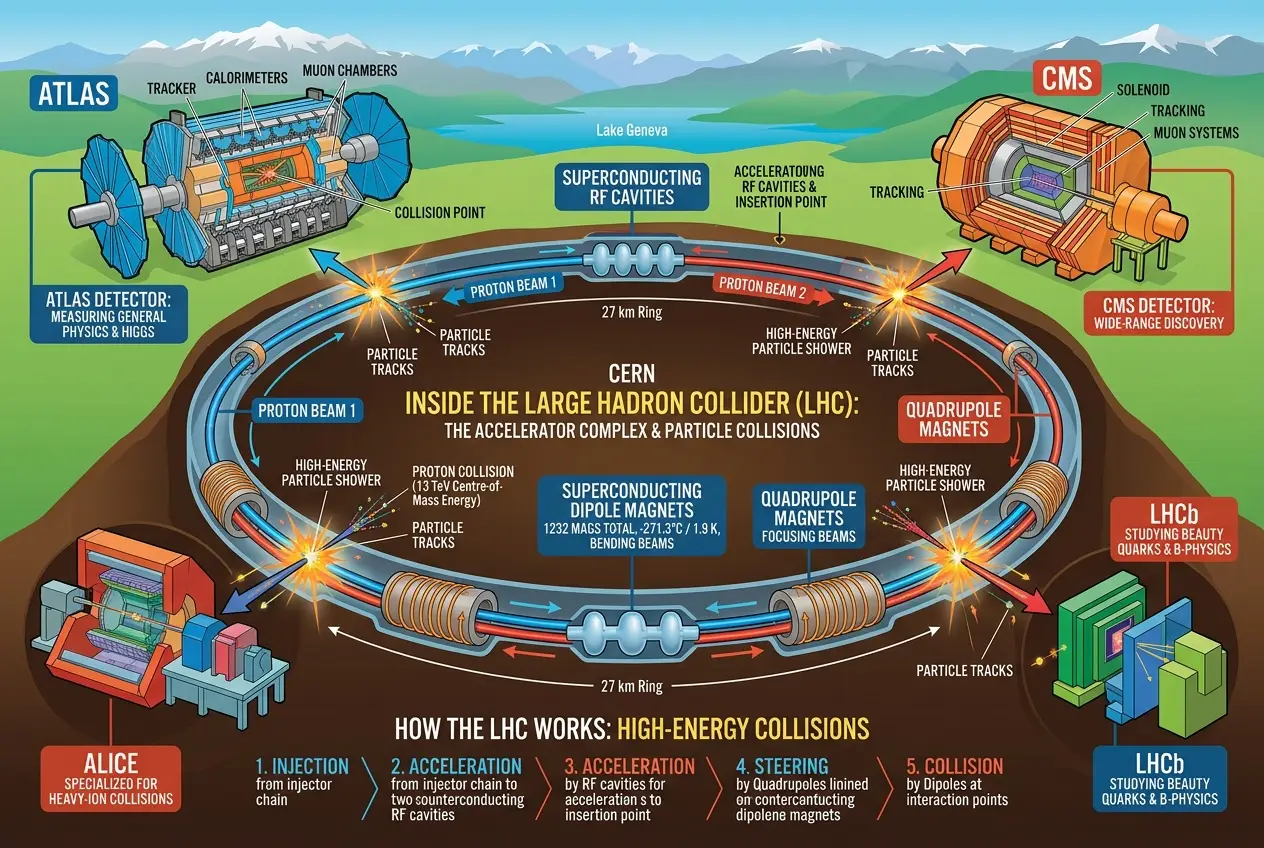
The energy scales involved are astronomical. Protons collide at energies up to 13 teraelectronvolts (TeV). To put that into perspective, a single TeV is roughly the kinetic energy of a flying mosquito, but concentrated into a particle unimaginably smaller than a mosquito. When two such minuscule particles collide, the energy density at the point of impact is phenomenal. This is where the theoretical possibility of microscopic black holes arises.
### **Mini Black Holes: A Glimpse into Extra Dimensions?**
The theoretical framework for these mini black holes often stems from models involving **extra spatial dimensions**. Our standard understanding of physics describes four dimensions: three spatial (up/down, left/right, forward/backward) and one temporal (time). However, some theories, like string theory, propose the existence of additional, "compactified" dimensions that are so tiny they're imperceptible to us in everyday life.
In these models, gravity is not confined to our four dimensions but can 'leak' into these extra dimensions. This means that gravity, at extremely short distances and high energies, could be much stronger than we perceive it. If gravity becomes strong enough at these microscopic scales, it's theoretically possible that the collision of two particles with sufficient energy could create a tiny, temporary distortion of spacetime – a black hole.
I recall reading a fascinating explanation of this concept: "If extra dimensions exist, then our universe might be like a membrane (a 'brane') floating in a higher-dimensional space. Gravity, unlike other forces, might be able to extend into these extra dimensions, becoming significantly stronger at very short distances." [Source: Wikipedia on Extra Dimensions](https://en.wikipedia.org/wiki/Extra_dimension)
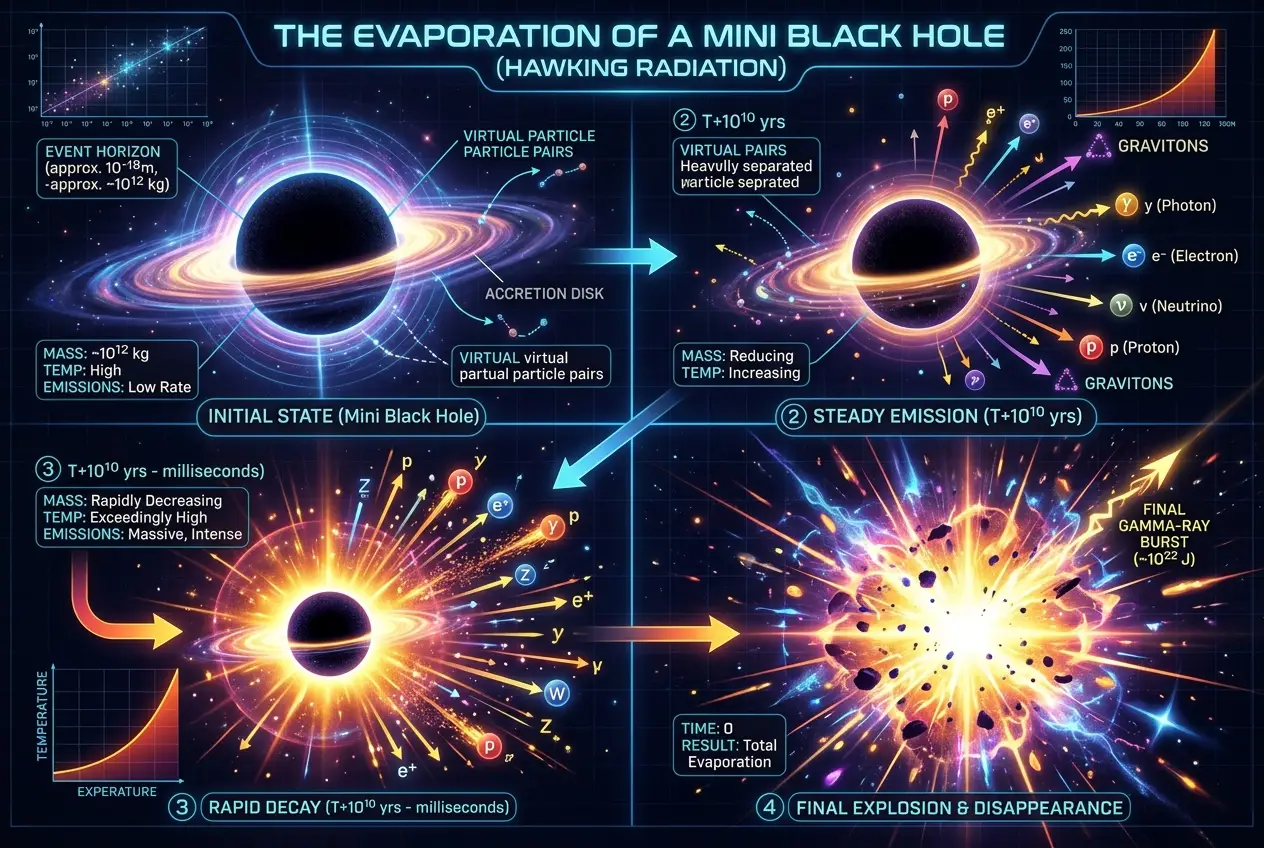
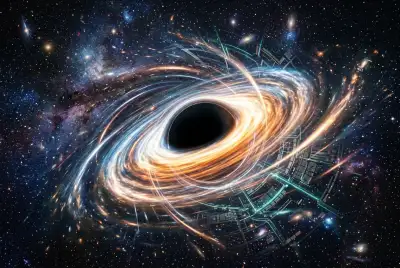
These mini black holes, also known as **quantum black holes** or **Planck-scale black holes**, would be fundamentally different from the stellar-mass or supermassive black holes astronomers observe in space. They wouldn't consume matter on a cosmic scale. Instead, according to Stephen Hawking's theory of **Hawking radiation**, these minuscule black holes would evaporate almost instantaneously.
**Table: Stellar Black Holes vs. Mini Black Holes**
| Feature | Stellar/Supermassive Black Holes | Mini (Quantum) Black Holes (Hypothetical) |
| :------------------- | :---------------------------------------------- | :---------------------------------------- |
| **Size** | Kilometers to billions of kilometers in diameter | Far smaller than an atomic nucleus |
| **Mass** | Several to billions of times the Sun's mass | Planck mass (~22 micrograms) or less |
| **Formation** | Gravitational collapse of massive stars | High-energy particle collisions (theorized) |
| **Lifetime** | Billions of years (stable) | Microseconds or less (evaporates instantly) |
| **Primary Process** | Gravitational pull, accretion disk | Hawking radiation, evaporation |
| **Observability** | Directly and indirectly observed | Not yet observed, purely theoretical |
### **Hawking Radiation: The Black Hole's Whimper, Not a Bang**
The idea that black holes aren't entirely black but slowly 'evaporate' by emitting particles and radiation was proposed by Stephen Hawking in the 1970s. For a truly massive black hole, this evaporation process is incredibly slow – much longer than the current age of the universe. However, for something as small as a quantum black hole, the evaporation would be almost instantaneous, releasing a burst of particles that could be detected by the LHC's sophisticated detectors.
I imagine the sheer ingenuity required to design instruments capable of detecting such a fleeting event. It's like trying to catch a whisper in a thunderstorm, but scientists are armed with unparalleled technology and an unwavering drive to uncover the universe's secrets.
### **Safety Concerns and Public Perception**
When the LHC first fired up, the idea of creating black holes, even microscopic ones, understandably sparked public concern. Sensational headlines warned of the Earth being swallowed by a laboratory-made black hole. I remember discussions about the potential for a catastrophic chain reaction.
However, the scientific community rigorously addressed these fears. Extensive safety reviews concluded that even if mini black holes were produced, they would pose no danger. The universe has been conducting its own high-energy experiments for billions of years – **cosmic rays**, which are naturally occurring high-energy particles from space, constantly bombard Earth's atmosphere at energies far exceeding anything the LHC can produce. If these cosmic ray collisions haven't created stable, destructive black holes, then the LHC wouldn't either. You can learn more about the fascinating world of cosmic rays and their potential impact on our tech in a previous post: [Do Cosmic Rays Secretly Glitch Our Tech?](https://curiositydiaries.com/blogs/do-cosmic-rays-secretly-glitch-our-tech-3330).
As a scientist at CERN once eloquently stated, "Nature has already run many trillions of times the equivalent of an LHC experiment. So if there were any danger, we wouldn't be here." [Source: Wikipedia on LHC Safety Concerns](https://en.wikipedia.org/wiki/Safety_of_the_Large_Hadron_Collider)
### **What Could We Learn from Lab-Grown Black Holes?**
If we were to detect these elusive mini black holes, the scientific implications would be profound. It would offer direct evidence for theories of **quantum gravity**, which aims to reconcile general relativity (describing gravity on large scales) with quantum mechanics (describing the universe on subatomic scales). Quantum gravity is one of the holy grails of modern physics, and a breakthrough here could reshape our understanding of spacetime, matter, and energy.
Furthermore, detecting mini black holes could:
* **Verify the existence of extra dimensions:** This would be a monumental discovery, revolutionizing our perception of cosmic reality and potentially paving the way for new technologies or insights into universal structure. You might also find our discussion on similar concepts intriguing: [Decoding Reality: Does the Universe Hide Extra Dimensions?](https://curiositydiaries.com/blogs/decoding-reality-does-the-universe-hide-extra-dimensions-5269).
* **Provide insights into the nature of gravity at extremely high energies:** Understanding how gravity behaves at the Planck scale could unlock secrets about the early universe and the very nature of spacetime itself.
* **Test Hawking radiation:** Directly observing the evaporation of a mini black hole would be a direct confirmation of Hawking's groundbreaking theory, deepening our understanding of black hole thermodynamics.
The search for these phenomena continues. While the LHC has not yet found definitive evidence of mini black holes, the experiments continue to push the boundaries of energy and precision. Each collision is a window into extreme conditions, a chance to find unexpected physics that could rewrite our textbooks. I find it incredibly exciting to live in an era where such fundamental questions about the universe are being directly explored with such powerful tools.
### **The Future of High-Energy Physics and the Unseen**
The journey to understand the universe is an ongoing saga, filled with theoretical leaps, experimental challenges, and the occasional unexpected discovery. The potential creation and detection of lab-grown black holes exemplify this spirit of inquiry, bridging the gap between the infinitely small and the astronomically vast. While the direct confirmation remains elusive, the theoretical work and experimental searches continue to refine our understanding of physics at its most extreme. It reminds me that even in what seems like "empty" space, there might be profound secrets waiting to be unearthed, similar to the intriguing question explored in our article: [Does Vacuum Space Hide Infinite Energy?](https://curiositydiaries.com/blogs/does-vacuum-space-hide-infinite-energy-7866).
As technology advances and new generations of particle accelerators are designed, I believe we'll continue to probe these extreme frontiers. Whether we eventually confirm the existence of lab-grown black holes or discover an entirely different phenomenon, the quest itself enriches our knowledge and expands the boundaries of human comprehension.
The universe is full of wonders, and it's our insatiable curiosity that drives us to peel back its layers, one high-energy collision at a time.
Frequently Asked Questions
No, comprehensive safety reviews by the scientific community, including CERN, have concluded that if microscopic black holes were produced, they would be incredibly unstable and evaporate almost instantaneously via Hawking radiation, posing no threat whatsoever. Nature itself produces far higher energy collisions with cosmic rays, and we see no such danger from them.
Hawking radiation is a theoretical phenomenon where black holes are predicted to emit particles and radiation, causing them to slowly lose mass and eventually evaporate. For hypothetical mini black holes, this evaporation process would be extremely rapid, making them nearly impossible to detect before they vanish.
Extra dimensions are theoretical spatial dimensions beyond the three we perceive, often proposed by theories like string theory. In some models, gravity might be stronger in these hidden dimensions. If this is true, high-energy particle collisions could briefly create microscopic black holes due to localized gravitational intensity.
As of now, there is no conclusive experimental evidence that the LHC or any other particle accelerator has created black holes. Scientists continue to analyze data from high-energy collisions, but none of the detected particles have been identified as products of black hole evaporation.
Detecting mini black holes would be a monumental discovery. It could provide direct evidence for theories of quantum gravity, confirm the existence of extra spatial dimensions, and offer the first experimental verification of Hawking radiation, thereby advancing our understanding of fundamental physics and the early universe.
Verified Expert
Alex Rivers
A professional researcher since age twelve, I delve into mysteries and ignite curiosity by presenting an array of compelling possibilities. I will heighten your curiosity, but by the end, you will possess profound knowledge.
Leave a Reply
Comments (0)
No approved comments yet. Be the first to share your thoughts!
 Join Us

 Unknown Author














Leave a Reply
Comments (0)