



The air feels thick, unnaturally still. Birds fall silent, dogs bark incessantly at nothing visible, and even fish in a pond seem to leap erratically. Days later, the ground shakes violently. This isn't a scene from a disaster movie; it's a pattern of anecdotal observations that has persisted for centuries, sparking a profound question: Can animals truly predict earthquakes?
For as long as humanity has lived on this planet, we've shared our world with creatures whose senses often far outstrip our own. From the keen eyesight of an eagle to the acute hearing of a bat, animals perceive aspects of reality invisible to us. It's only natural, then, that people have wondered if these "sixth senses" extend to detecting the subtle tremors or atmospheric shifts that might precede a catastrophic seismic event. I’ve heard countless stories from people who swear their pets became agitated or tried to flee just hours or even days before a major quake. These aren't just quaint folktales; they are compelling enough to spur serious scientific inquiry.
The Whispers of History: A Legacy of Animal Warnings
The idea of animals as living seismographs isn't new. Ancient Greek historians noted that animals, including rats, snakes, and weasels, abandoned the city of Helike days before a devastating earthquake in 373 BC. Similar accounts surface throughout history, from China to Japan to Europe. I recall reading about the 1975 Haicheng earthquake in China, where authorities reportedly ordered an evacuation just hours before a 7.3 magnitude quake, partly based on widespread reports of erratic animal behavior – snakes freezing in winter, dogs howling, and horses panicking. This historical success story, though debated, cemented the notion that animals might hold a key to unlocking early warnings.
While compelling, these historical records and anecdotal reports face a significant scientific hurdle: retrospective bias. It’s easy to connect unusual animal behavior with an earthquake after it has happened. The challenge lies in predicting an earthquake before it occurs, reliably and consistently, based solely on animal cues.
Unpacking the "How": What Are Animals Really Sensing?
If animals can sense impending seismic activity, what exactly are they detecting? Modern science is exploring several fascinating hypotheses, delving into physical phenomena that precede earthquakes, which might be imperceptible to humans.
1. Subtle Seismic Precursors: The Earth's Gentle Rumblings
Before a major earthquake, the Earth isn't entirely silent. Micro-tremors, often too faint for humans to feel, can occur. Some scientists propose that animals, with their heightened sensitivity to ground vibrations, might pick up on these pre-shocks. Think of an animal’s paw pads or specialized organs acting like finely tuned accelerometers. We know, for instance, that many animals, like elephants, use infrasound (sounds below the range of human hearing) for communication over long distances. Could they also be detecting infrasonic waves generated by rock fracturing deep underground?
2. Electromagnetic Field Anomalies: The Earth's Electric Aura
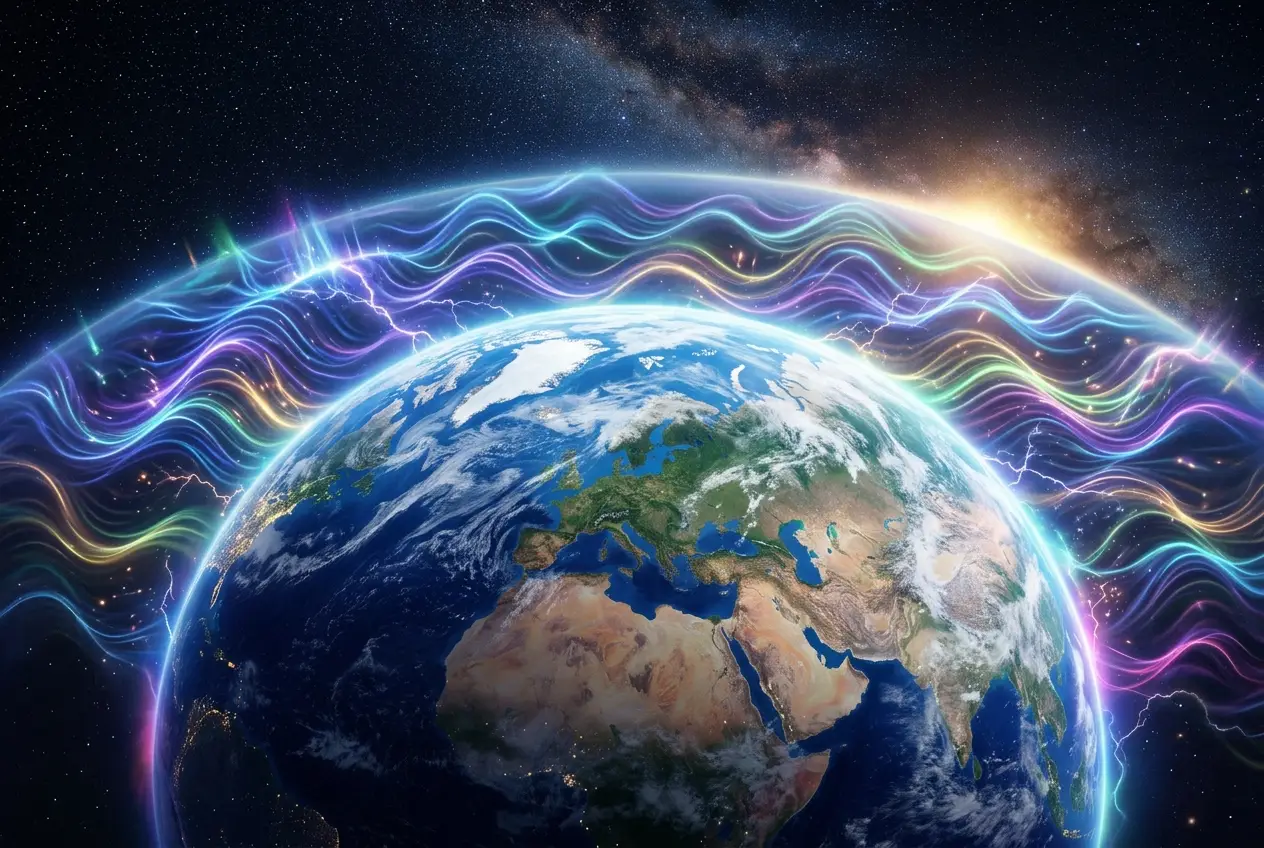
This is perhaps one of the most intriguing and debated hypotheses. Rocks under immense stress, like those preceding an earthquake, can generate electrical currents due to a phenomenon called piezoelectricity or by releasing charged particles. These subtle changes could alter the local electromagnetic field. If you’re like me, you’ve probably seen static electricity before a storm; imagine that on a geological scale. Animals with magnetoreception, such as migratory birds, sharks, and even some insects, use the Earth’s magnetic field for navigation. It's plausible that sudden fluctuations in this field could disorient or distress them. Research into this area is challenging because these electromagnetic anomalies are often faint and localized, making them difficult to measure consistently. For more depth on this, you might explore the science of telluric currents on Wikipedia (opens in a new tab).
3. Gas Emissions: The Earth's Breath
As tectonic plates grind and shift, gases trapped deep within the Earth can be released through cracks and fissures. Radon, hydrogen, and other gases have been observed to show increased concentrations in the atmosphere and groundwater prior to earthquakes. Some animals possess an incredibly acute sense of smell. Dogs, for example, are known for their ability to detect minuscule traces of scents. It’s not far-fetched to consider that they, or other creatures, might be reacting to these subtle shifts in atmospheric composition, perceiving them as a threat or an unusual environmental change. This is a topic that continues to spark debate, as discussed in various scientific forums on seismic gas emissions (opens in a new tab).
4. Changes in Water Chemistry and Level: Aquatic Alarms
For aquatic animals, the signs might come from their immediate environment. Changes in underground water pressure can alter the pH, mineral content, or oxygen levels of natural springs and bodies of water. Fish, amphibians, and other aquatic life are exquisitely sensitive to changes in their aquatic habitats. A sudden shift could prompt them to behave erratically or seek different environments. Imagine a sudden acidification or deoxygenation of their water; it would undoubtedly cause distress.
The Scientific Pursuit: From Anecdote to Algorithm
Moving beyond folklore, modern science is actively investigating these claims. Researchers are deploying sophisticated technologies to monitor both animal behavior and geophysical changes simultaneously.
One fascinating approach involves biomonitoring. For example, a study conducted in Italy, published in Ethology, attached sensors to cows, sheep, and dogs on a farm located in an earthquake-prone area. Researchers observed that these animals exhibited unusual activity patterns up to 20 hours before an earthquake. The data showed that the animals moved almost continuously before a quake, rather than resting as usual. Advanced algorithms were then used to analyze these continuous movement patterns, filtering out normal daily activities from truly anomalous behavior. This kind of systematic data collection is crucial for understanding whether animal signals are merely random noise or genuine early warnings.
Other projects use GPS trackers on wild animals to map their movements and correlate them with seismic events. Imagine deer or wild boars, their natural behaviors disrupted by an impending quake, moving away from a specific area or becoming restless. By combining this data with real-time seismic monitoring, scientists hope to identify consistent patterns. This field of study often overlaps with the broader research into phenomena that precede quakes, much like how some have explored whether "Earth's hidden pulse" could be linked to geological activity, which you can read more about at /blogs/earths-hidden-pulse-does-our-planet-hum-a-secret-song-3124.
However, the biggest challenge remains reproducibility and specificity. Animals often exhibit unusual behavior for many reasons—weather changes, predators, hunger, or even just a bad day. Distinguishing between general agitation and a genuine earthquake warning is incredibly difficult. This leads to a high rate of false positives, making it hard to implement animal-based early warning systems effectively.
Technology vs. Biology: A Race Against Time
Currently, our best earthquake prediction tools are technological. Seismographs detect ground motion, GPS satellites monitor crustal deformation, and advanced models attempt to forecast seismic activity. However, even with all our tech, precise, short-term earthquake prediction remains largely elusive. We can estimate long-term probabilities, but knowing when and where a major quake will strike in the coming hours or days is a scientific holy grail yet to be attained.
Could animals hold a piece of this puzzle that our technology misses? Their finely tuned biological sensors might be capable of detecting subtle environmental shifts that our most advanced instruments either can't measure or haven't been programmed to look for. This isn't about animals being "magical"; it's about the incredible evolutionary advantage of specialized senses honed over millions of years. This quest for understanding how subtle cues can predict massive events reminds me of other attempts to decode unseen signals, such as the search for meaning in "strange radio bursts" and their potential as alien tech, which is a fascinating read at /blogs/do-strange-radio-bursts-signal-alien-tech-8002.
Indeed, understanding how animals might predict quakes could lead to the development of new, biomimetic technologies. If we can identify the specific environmental cues they react to—be it changes in electric fields, gas concentrations, or infrasound—we could build sensors that replicate those capabilities. This convergence of biology and technology could revolutionize disaster preparedness. The idea of using natural phenomena for prediction is also mirrored in historical attempts at "ancient quake predictors," where early civilizations might have used unseen signals, a topic explored in /blogs/ancient-quake-predictors-did-they-use-unseen-signals-7470.
The Verdict: A Mystery Still Shaking
The question of whether animals can predict earthquakes remains "possibly, but not reliably enough yet." While the anecdotal evidence is compelling and the scientific hypotheses are intriguing, consistent, verifiable proof remains elusive. The complexity of seismic events, combined with the multitude of factors influencing animal behavior, makes isolating a clear cause-and-effect relationship incredibly challenging.
Nevertheless, the pursuit continues. The potential to harness nature's own early warning system—or at least to understand the subtle environmental shifts that trigger animal responses—is too significant to ignore. As I look ahead, I’m optimistic that future research, combining advanced sensor technology with biological observation and powerful AI analysis, might one day unveil the secrets behind these natural alarms. Until then, our animal companions continue to offer us a glimpse into a world of senses far richer and more complex than our own, reminding us how much there is still to learn about the planet we call home.




Conversation0
No comments yet. Be the first to share a thought — the best questions often become new stories.