



I've always been captivated by the echoes of lost civilizations, by the whispers of technologies far beyond what we imagine our ancestors capable of. Recently, my curiosity led me down a rabbit hole into the legend of Atlantis, a civilization synonymous with advanced knowledge, and specifically, to a metal described by Plato himself: Orichalcum. It wasn't just gold or silver; it was said to glow with a fiery light, possessing properties unlike any known alloy. Could this mythical metal have been more than just a decorative element? Could it have been the very core of Atlantis's technological marvels, perhaps even a mysterious power source? The idea feels almost like science fiction, yet the persistence of the legend begs a deeper look.
The Metal of the Gods: Plato's Account of Orichalcum
Our primary, and arguably only, original source for Orichalcum comes from the Greek philosopher Plato, specifically in his dialogues Critias and Timaeus. These texts paint a vivid picture of Atlantis as a powerful naval empire, boasting immense wealth and sophisticated engineering. Within this grandeur, Orichalcum held a place of paramount importance.
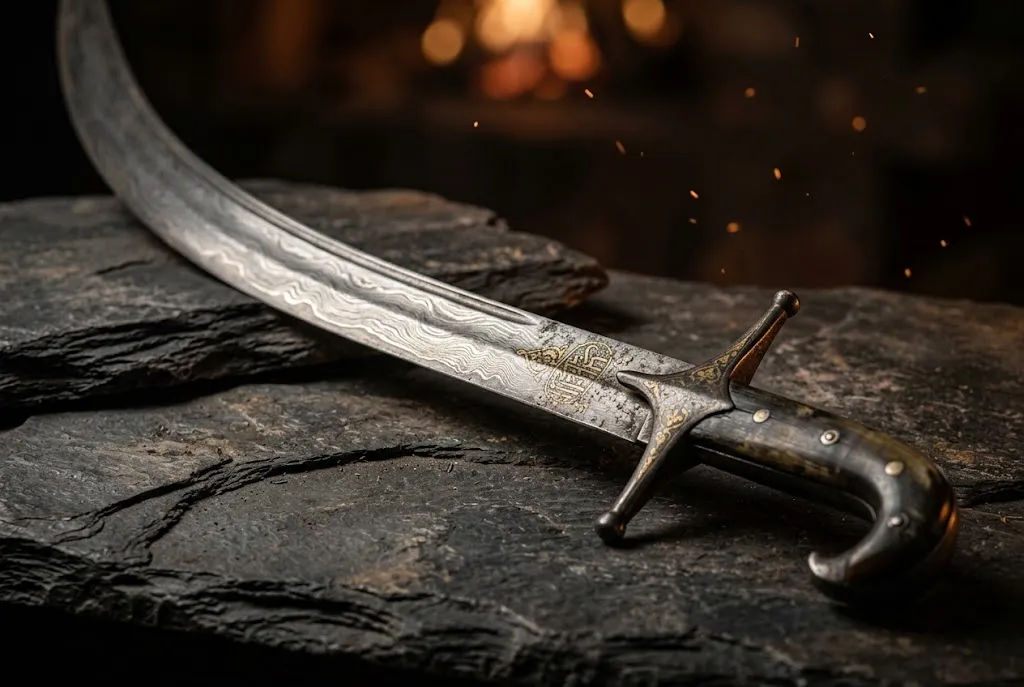
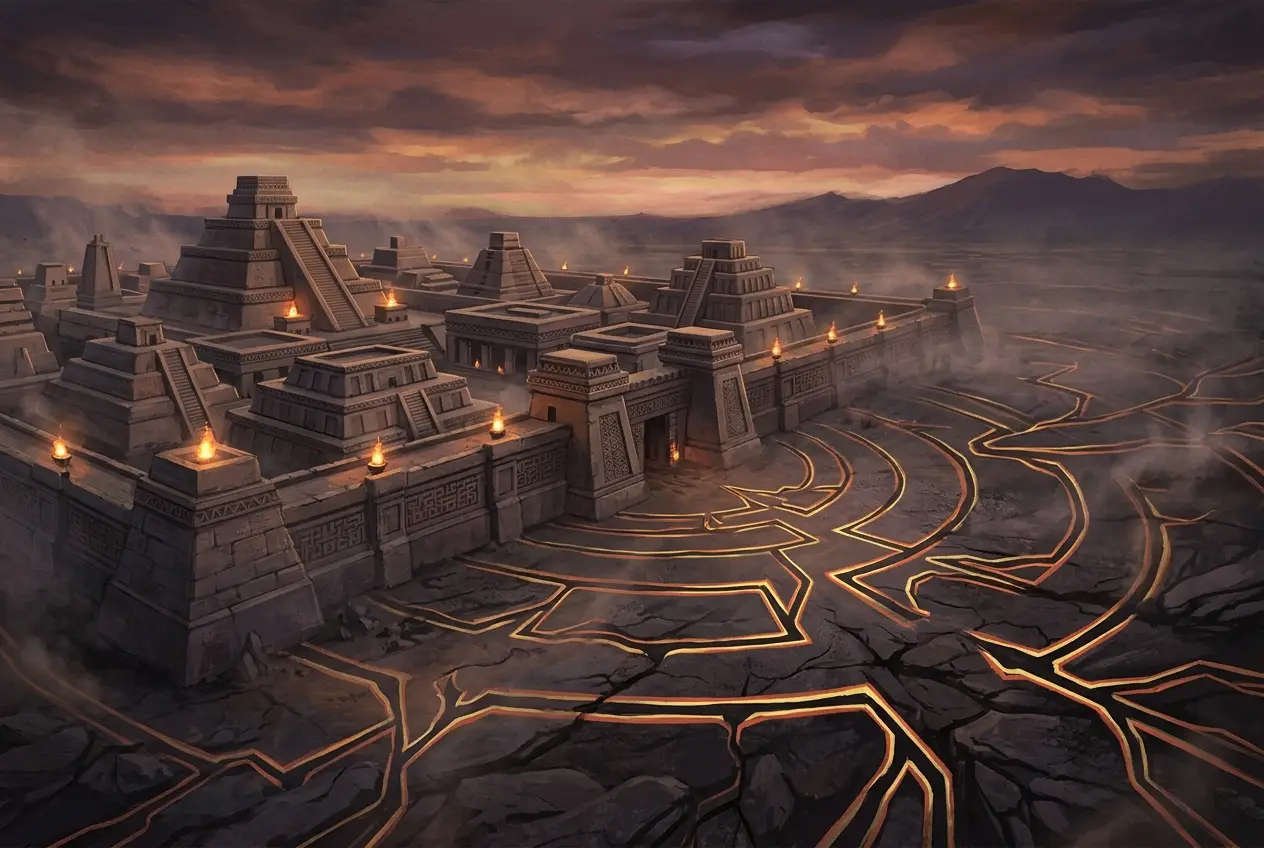
Plato describes Orichalcum as a metal that was "more precious in those days than anything except gold." He tells us it was mined from the island of Atlantis itself, shining "with a ruddy gleam." The Atlanteans apparently used it extensively: it adorned the walls of their temples, gleamed in their pillars, and was fashioned into sacred objects. The very outer wall of Poseidon's temple in the capital city was said to be covered in this mysterious metal, reflecting a "flashing light." Imagine a city where the very buildings shimmered with an inner fire, not merely from polished surfaces, but from the material itself. It evokes a sense of wonder, suggesting a metal with truly extraordinary optical or energetic properties. For more on Plato's description of Atlantis and its resources, the Wikipedia page on Atlantis provides a comprehensive overview: Atlantis on Wikipedia (opens in a new tab).
What Was Orichalcum, Really? Unpacking the Mystery
For centuries, scholars, archaeologists, and enthusiasts have debated the true nature of Orichalcum. Was it a real metal, a mythical invention, or a highly advanced alloy lost to time? The theories are as diverse as they are intriguing:
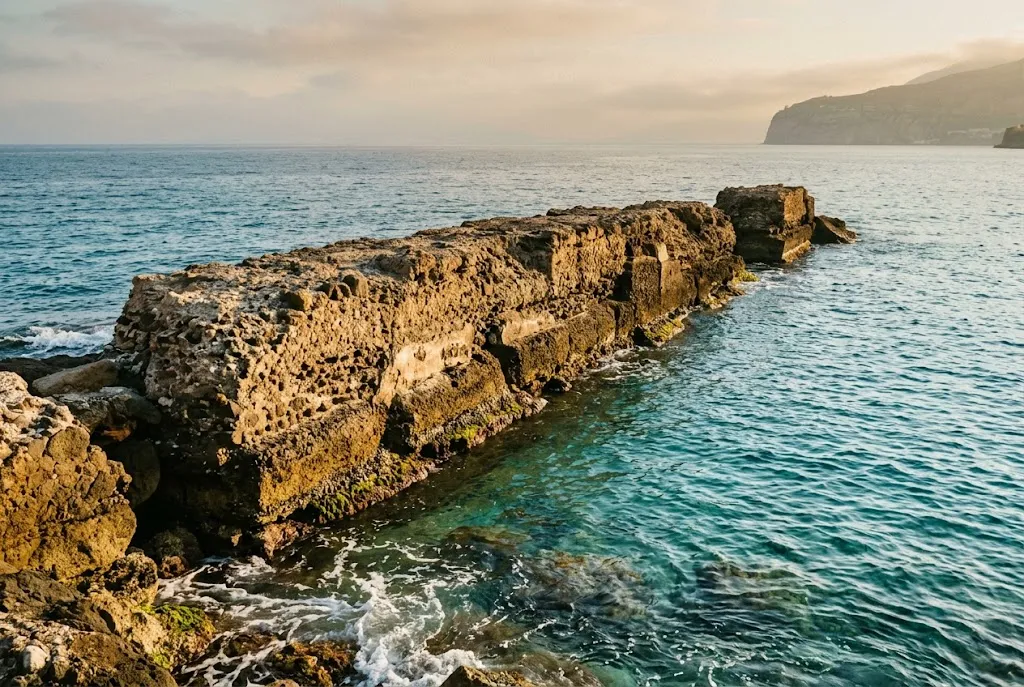
- Brass or Bronze: The most common modern interpretation is that Orichalcum was a form of brass, an alloy of copper and zinc. The Greek word "oreikhalkos" literally translates to "mountain copper" or "bronze-copper," which aligns with the appearance of brass, which can indeed have a ruddy or golden sheen. Zinc, especially in ancient times, was not easily isolated, making high-quality brass a rare and valuable commodity. Some archaeological finds, like the 39 ingots recovered from a 2,600-year-old shipwreck off the coast of Sicily in 2015, have been identified as an Orichalcum-like alloy of copper, zinc, nickel, lead, and iron. However, while valuable, brass doesn't typically "glow with a fiery light" on its own.
- Copper-Nickel Alloys: Some theories suggest it might have been a copper-nickel alloy, known for its corrosion resistance and silvery-reddish hue.
- Electrum: A natural alloy of gold and silver, electrum was highly valued in antiquity and used for coinage and decorative arts. It has a pale-gold to white color, which doesn't quite match Plato's "ruddy gleam," but its preciousness aligns.
- Amber or Tumbaga: Less likely, but some fanciful theories have suggested amber (known for electrostatic properties) or Tumbaga, a gold-copper alloy used in pre-Columbian Mesoamerica, prized for its workability and distinct color.
- A Lost Element or Unknown Alloy: This is where the true mystery lies. If Atlantis possessed technology far beyond its time, could they have developed a metallurgical process to create an alloy with properties we can barely conceive? Perhaps a form of transmutated metal or a specific crystal structure that gave it unique characteristics. The very word "Orichalcum" and its properties are extensively discussed on its dedicated Wikipedia page: Orichalcum on Wikipedia (opens in a new tab).
Could Orichalcum Have Been a Mysterious Power Source?
This is where the speculation truly ignites. If Orichalcum wasn't just a decorative metal, what "technology" could it have enabled? Plato's description of it "flashing" or "gleaming ruddy" certainly implies more than just aesthetics.
-
Unique Electrical Conductivity or Superconductivity: What if Orichalcum possessed extraordinary electrical properties? Imagine a metal with extremely high conductivity, far superior to anything known in antiquity. This could have been crucial for transmitting energy efficiently across a vast city or even powering intricate devices. The idea of ancient civilizations harnessing unusual electrical properties isn't entirely new; discussions about the possibility of natural superconductors in the Earth's crust (as explored in our blog: Did Earth's Crust Hold Natural Superconductors? (opens in a new tab)) show our fascination with such possibilities.
-
Luminescence or Radiance: Plato’s description of a "fiery light" could imply bioluminescence, phosphorescence, or even a form of cold light generation. If Orichalcum could emit light without significant heat, it would be a revolutionary "power source" for illumination. We've previously delved into similar ideas regarding ancient lighting techniques in "Did Ancients Create Light Without Heat?" (Did Ancients Create Light Without Heat? (opens in a new tab)). Such a material could have provided ambient light for Atlantean cities or temples, possibly even acting as a signal or beacon.
-
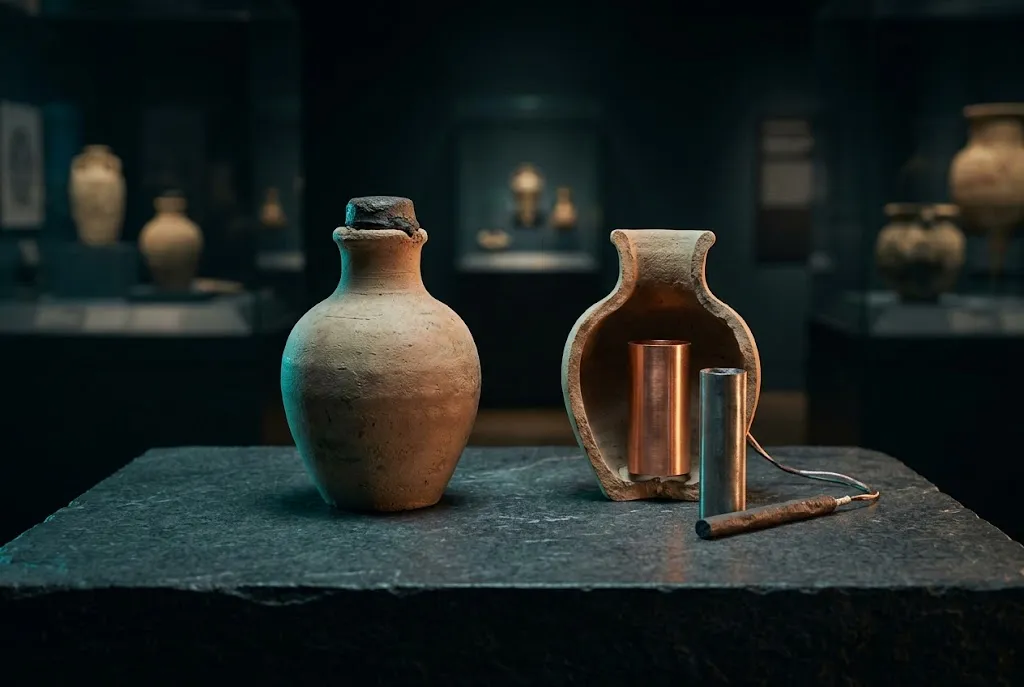
Energy Storage Capabilities: Could Orichalcum have acted as a massive capacitor or battery? Perhaps its unique atomic structure allowed it to store and release electrical energy on demand. The notion of ancient batteries isn't unheard of, as seen in discussions around artifacts like the Baghdad Battery (The Baghdad Battery: Could Ancient Iraqis Power a Lost Civilization? (opens in a new tab)). If Orichalcum had superior energy storage density, it could have powered Atlantean mechanisms, transport, or even defensive systems.
-
Thermoelectric Properties: Some metals exhibit thermoelectric effects, converting temperature differences into electrical voltage. If Orichalcum possessed highly efficient thermoelectric properties, natural geothermal vents common on volcanic islands (like Atlantis is often envisioned) could have been harnessed to generate continuous power, transforming heat directly into electricity.
-
Resonance and Vibrational Energy: The possibility that Orichalcum could resonate at specific frequencies, perhaps to manipulate sound or other forms of vibrational energy, is another compelling idea. If the Atlanteans had an advanced understanding of acoustic physics, as explored in discussions about lost acoustic technologies (Lost Acoustic Tech: Did Ancients Control Sound Waves? (opens in a new tab)), Orichalcum could have been a key component in devices that generated, focused, or amplified these unseen energies for various purposes.
The Allure of Lost Civilizations and Impossible Tech
Our enduring fascination with Orichalcum and Atlantis speaks to a fundamental human desire: to believe that our ancestors were capable of greater feats than conventional history suggests. These legends often bridge the gap between myth and our own scientific aspirations. They challenge us to consider what might be possible, even if the evidence remains elusive.
The story of Orichalcum is a powerful reminder that history is not a closed book. There are countless mysteries buried beneath the sands of time, in the depths of the oceans, or hidden in plain sight within ancient texts. Whether Orichalcum was a mundane metal exaggerated by legend, or a truly revolutionary material embodying advanced ancient technology, its tale continues to fuel our imagination.
A Modern Lens on an Ancient Legend
Today, with advancements in material science, we can create alloys with properties that would have seemed magical to ancient civilizations. Superalloys, shape-memory alloys, and even advanced composites push the boundaries of what materials can do. This modern capability makes the idea of Orichalcum, a metal with "impossible" properties, feel less like pure fantasy and more like a historical "what if."
Perhaps the true lesson of Orichalcum isn't just about finding a lost metal, but about cultivating the same spirit of innovation and curiosity that we attribute to the Atlanteans. The quest for Orichalcum mirrors our own search for new energy sources, revolutionary materials, and a deeper understanding of our world.
Conclusion:
The legend of Orichalcum, gleaming with a ruddy light in the heart of Atlantis, remains one of antiquity's most captivating tech mysteries. While concrete evidence for its mythical properties eludes us, the idea that a lost civilization might have harnessed such a material as a power source ignites a spark of wonder. It reminds us that the past might hold secrets yet to be uncovered, and that our understanding of ancient capabilities may still be incomplete. As we continue to push the boundaries of science and technology, perhaps one day we will stumble upon a material that glows with its own fiery light, echoing the legendary Orichalcum and hinting at a power source from a world long lost.

Conversation0
No comments yet. Be the first to share a thought — the best questions often become new stories.