


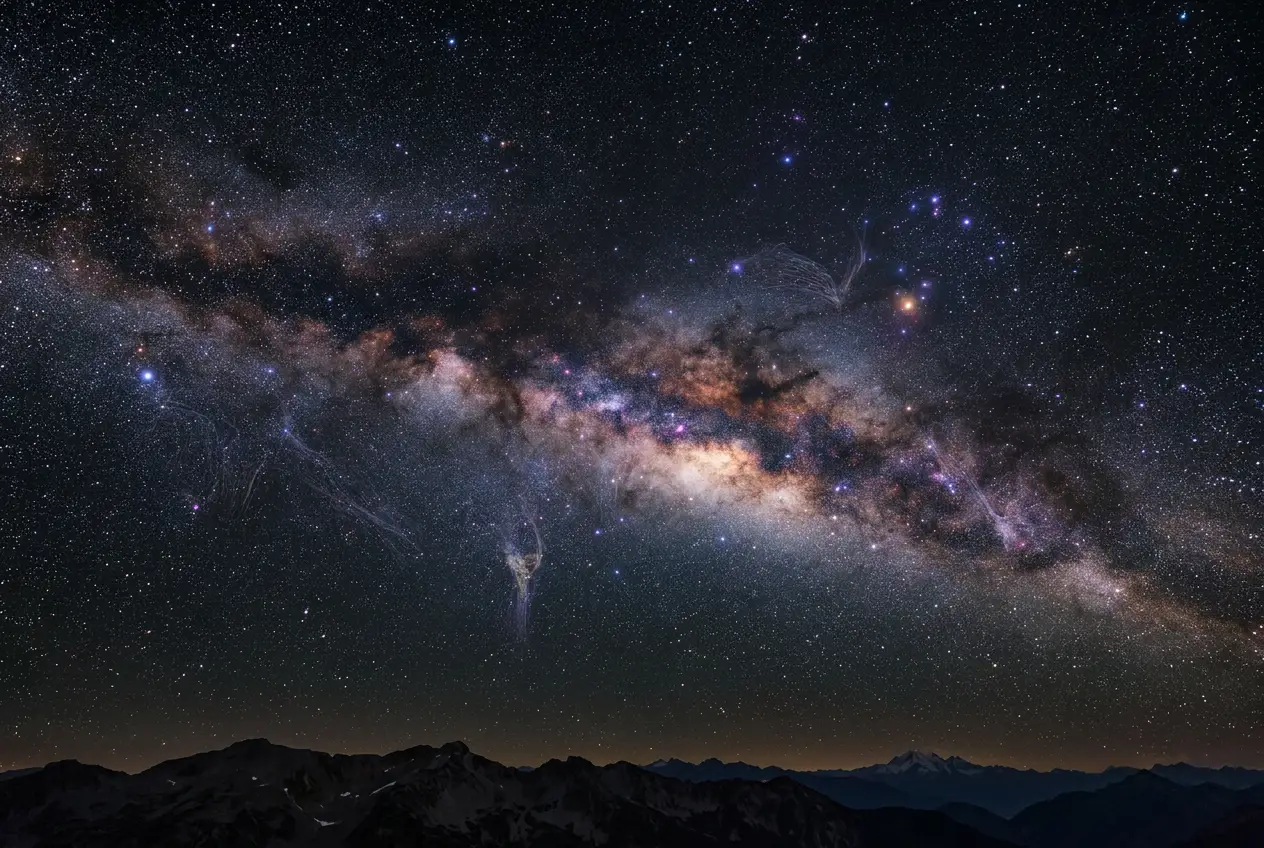
I’ve always been fascinated by the sheer volume of the universe, not just its size, but the noise it makes. Imagine tuning an old radio in a forgotten attic. You spin the dial, hoping for a clear signal, but mostly you get static, crackles, and the faint whispers of distant, unknown transmissions. That, to me, is a fitting analogy for our journey to understand deep space. It’s not a silent void; it’s humming, buzzing, and occasionally erupting with powerful, enigmatic signals. The question that often crosses my mind, and perhaps yours, is this: Could deep space itself be a giant, cosmic antenna, broadcasting the universe's story?
It's a bold idea, certainly. But when you delve into the bizarre and powerful phenomena detected by our telescopes, the analogy starts to make a surprising amount of sense. We're not just observing; we're listening to a grand, ongoing cosmic symphony, trying to decipher its countless movements.
The Universe's Ancient Hum: Cosmic Microwave Background
To truly appreciate the universe as a broadcasting medium, we must start with its oldest "signal": the Cosmic Microwave Background (CMB). Discovered accidentally in 1964 by Arno Penzias and Robert Wilson, this faint glow permeates the entire cosmos, a constant, low-level static. I remember reading about their initial frustration, thinking their antenna was faulty with pigeon droppings, only to realize they had stumbled upon the afterglow of the Big Bang itself.
The CMB is, quite literally, the earliest light we can detect, emitted when the universe was only about 380,000 years old. Before that, the universe was a dense, opaque plasma, too hot for light to travel freely. As it expanded and cooled, electrons and protons combined to form neutral hydrogen atoms, making the universe transparent. The photons from this "recombination era" have been traveling ever since, stretched by the universe's expansion into microwaves.
The CMB isn't perfectly uniform; it has tiny temperature fluctuations – ripples in the cosmic fabric – that provide a blueprint for the large-scale structures we see today, like galaxies and galaxy clusters. It’s like listening to the very first broadcast, encoded with fundamental information about our universe's origin and evolution. Understanding the CMB has been pivotal in solidifying the Big Bang theory and guiding our cosmological models. For more on this fundamental cosmic signal, you can explore the detailed insights on Wikipedia's Cosmic Microwave Background article (opens in a new tab).
Enigmatic Blips: The Mystery of Fast Radio Bursts (FRBs)
If the CMB is the universe's gentle hum, then Fast Radio Bursts (FRBs) are its sudden, startling exclamations. These are incredibly powerful, millisecond-long flashes of radio waves originating from distant galaxies. Their origins remain one of the most compelling mysteries in astrophysics, and when I first heard about them, I couldn't help but wonder if we were truly picking up on something entirely new.
The first FRB was detected in 2007, and since then, hundreds more have been observed. Most are "one-offs," never repeating, while a select few have shown recurrent patterns, some even exhibiting periodicity. The sheer energy involved is mind-boggling: a single FRB can unleash more energy in a thousandth of a second than our sun does in a full day!
The theories behind FRBs are as varied as they are fascinating. Some point to magnetars, highly magnetized neutron stars, experiencing "starquakes" or superflares. Others suggest collisions of neutron stars or even white dwarfs. And, of course, the idea of an extraterrestrial origin often surfaces due to their peculiar, highly energetic, and sometimes repeating nature. While scientists largely lean towards natural astrophysical phenomena, the "alien technology" hypothesis is a natural fit for our curious minds, especially given that we've delved into similar ideas before, for instance, when asking if /blogs/do-strange-radio-bursts-signal-alien-tech-8002. Regardless of their source, FRBs are potent evidence of deep space actively broadcasting signals, challenging our understanding of extreme astrophysical events. You can delve deeper into the current understanding and ongoing research about them on Wikipedia's Fast Radio Burst page (opens in a new tab).
Tuning In: SETI and the Quest for Technosignatures
Beyond the natural phenomena, there’s another layer to our cosmic listening: the deliberate search for intelligent life. The Search for Extraterrestrial Intelligence (SETI) program has, for decades, pointed powerful radio telescopes at the skies, hoping to pick up a technosignature – any sign of technology from an advanced civilization.
This is where the "cosmic antenna" truly comes into play in a hopeful, almost romantic sense. If deep space is an antenna, we're trying to find a specific channel broadcasting a deliberate message. We're looking for patterns that can't be explained by natural astrophysics: narrow-band radio signals, pulsed emissions, or anything that screams "intelligent design."
The most famous intriguing anomaly in this quest is undoubtedly the "Wow! Signal." In 1977, a powerful, 72-second-long narrowband radio signal was detected by Ohio State University’s Big Ear radio telescope. It was so strong and distinctive that the astronomer Jerry Ehman circled the printout and wrote "Wow!" next to it. It matched the expected profile of a signal from an alien civilization, yet it never repeated, leaving us forever wondering. This famous event, often discussed in circles pondering cosmic messages, was similar in its elusive nature to topics we've explored before, like /blogs/the-wow-signal-was-it-an-alien-radio-beacon-8541. While we haven't found definitive proof of alien broadcasts, the search continues, refined by new technologies and advanced algorithms, turning the entire cosmos into a potential message board. Learn more about the global efforts in this field through Wikipedia's SETI article (opens in a new tab).
Beyond Light: Gravitational Waves
Our cosmic antenna isn't limited to electromagnetic waves. In 2015, humanity achieved a monumental feat: the first direct detection of gravitational waves. These ripples in the fabric of spacetime, predicted by Albert Einstein a century ago, are generated by the most cataclysmic events in the universe, like the collision of black holes or neutron stars.
Detectors like LIGO (Laser Interferometer Gravitational-Wave Observatory) and Virgo are essentially listening to the universe's loudest roars and thuds. When two black holes merge, they create a spacetime "chirp" that travels across billions of light-years to reach us. These monumental events reshape spacetime and offer clues to phenomena like those discussed in /blogs/black-holes-natures-ultimate-quantum-computers-4410. Gravitational wave astronomy has opened up an entirely new window into the universe, allowing us to "hear" events that are completely silent in the electromagnetic spectrum. It’s a testament to the universe's complexity as an information conduit, broadcasting not just light and radio, but the very distortions of its own geometry.
The Cosmic Medium: Dark Matter and Dark Energy's Role
While we focus on explicit "signals," it’s crucial to remember that the vast expanse of deep space is not empty. It's filled with mysterious components like dark matter and dark energy, which together constitute about 95% of the universe's mass-energy content. Although they don't directly "broadcast" in a detectable way, their presence profoundly influences how all other signals travel and how the universe is structured.
Dark matter, an invisible substance that interacts gravitationally but not electromagnetically, forms the scaffolding upon which galaxies are built. Dark energy, an even more enigmatic force, is responsible for the accelerating expansion of the universe. The cosmic medium, with its mysterious components like dark matter, plays a crucial role in how these signals propagate. We've previously explored the intriguing question of whether /blogs/dark-matter-is-it-a-cosmic-communication-network-2229. These unseen forces dictate the path, speed, and even the eventual fate of every cosmic message we receive, making them integral, if passive, parts of our cosmic antenna system.
The Future of Cosmic Listening
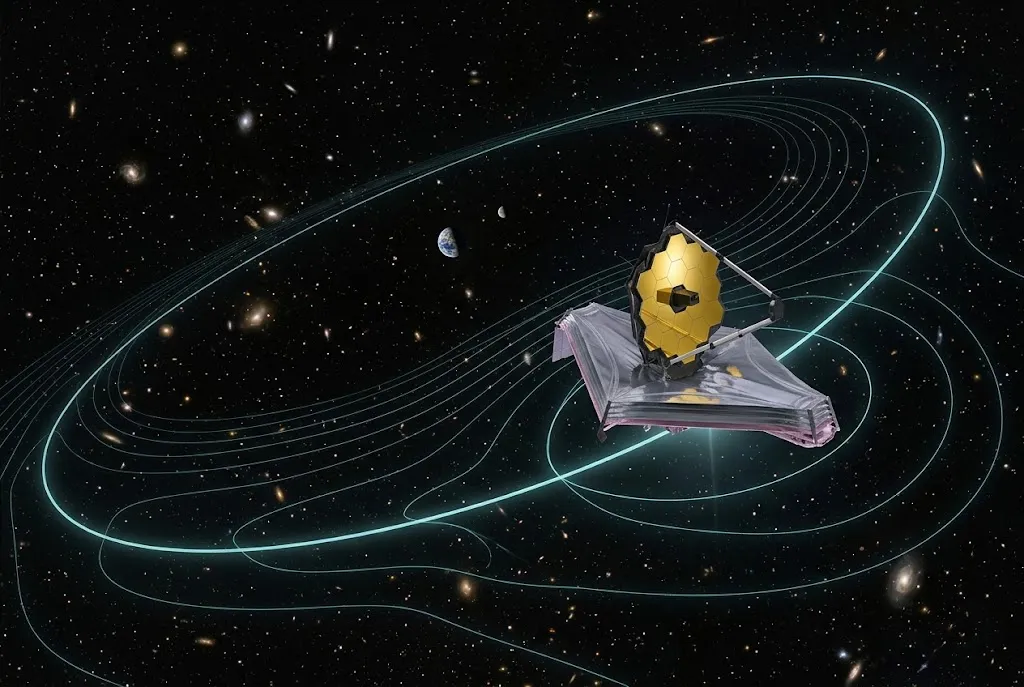
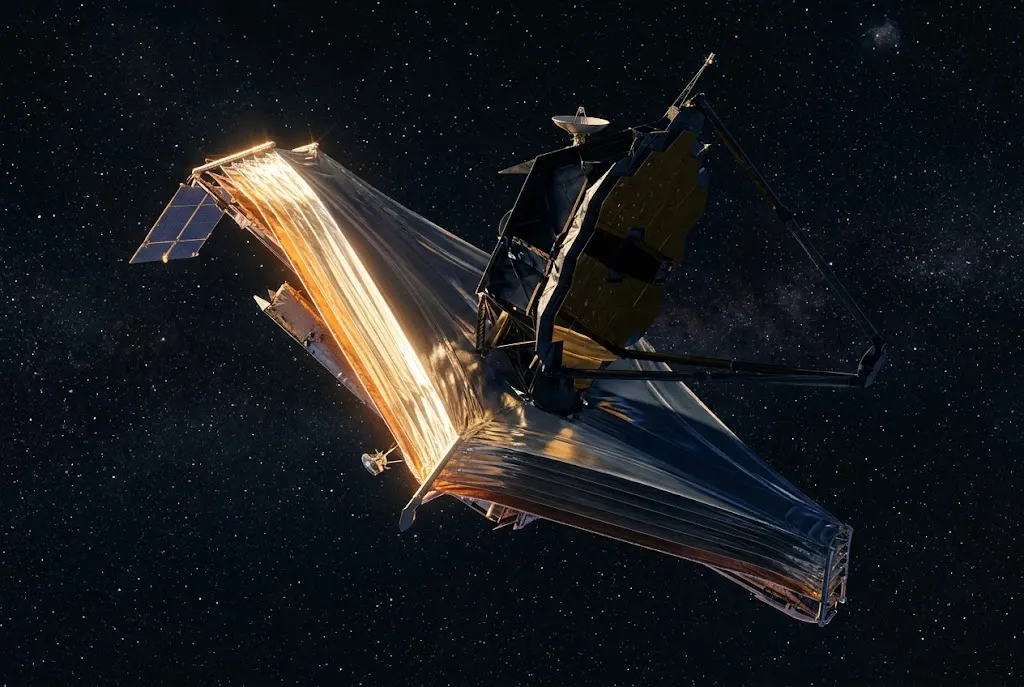
Our ability to listen to deep space is rapidly advancing. New generations of telescopes, like the James Webb Space Telescope (JWST), peer deeper into the infrared universe, revealing early galaxies and planetary atmospheres. Radio observatories such as the Square Kilometre Array (SKA), currently under construction, will be orders of magnitude more sensitive than any existing facility, capable of detecting fainter signals from further away.
Artificial intelligence and machine learning are also becoming indispensable tools, sifting through mountains of data to identify subtle patterns that human eyes might miss. This technological leap means we're constantly upgrading our "receiver" to better tune into the cosmic broadcast.
The idea of deep space as a giant antenna isn't just a metaphor; it's a reflection of how we perceive our universe: an active, dynamic entity constantly transmitting information. We are, in essence, cosmic listeners, trying to piece together the grand narrative broadcast across billions of light-years. Every faint hum, every sudden burst, every ripple in spacetime adds a new chapter to the story of everything. The universe is speaking, and the more we refine our instruments and understanding, the clearer its incredible, wondrous message becomes. So, keep listening, keep wondering, and who knows what cosmic echo we might pick up next.
Conversation0
No comments yet. Be the first to share a thought — the best questions often become new stories.