I vividly remember a recent late-night documentary on exoplanets, where the narrator mused about the sheer, unfathomable strangeness of the cosmos. Just when I thought I had grasped the vastness, a new thought struck me: **what if some of the most bizarre places in the universe weren't orbiting stars, but something far more enigmatic?** Imagine worlds bathed not in starlight, but in the eerie, silent embrace of a black hole, drifting alone through interstellar space. It sounds like science fiction, a backdrop for a cosmic horror story, but the truth, as always, is far more compelling and rooted in the fascinating realities of astrophysics.
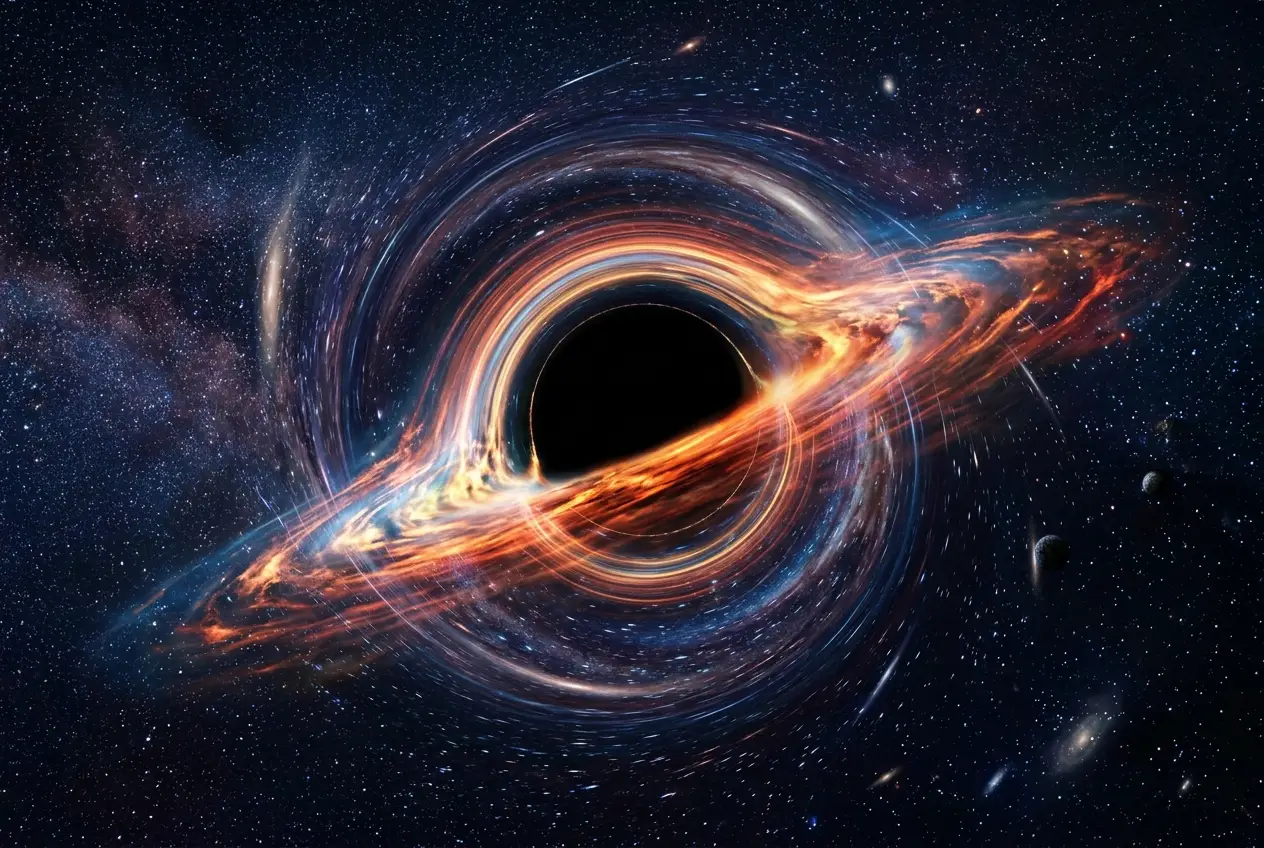
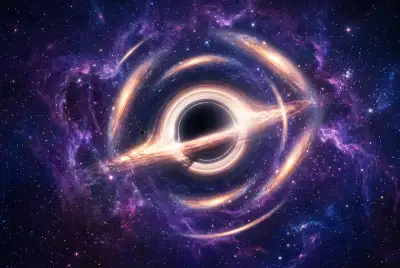
For centuries, our understanding of planetary systems was confined to worlds orbiting stars – our own Solar System being the prime example. Then, the discovery of **exoplanets** shattered that neat picture, revealing a dizzying array of planetary architectures we never imagined. Now, astronomers are pushing the boundaries even further, asking a truly mind-bending question: *could there be planets orbiting not a star, but a rogue black hole?* These aren't the supermassive black holes at galactic centers, but rather stellar-mass black holes, the collapsed remnants of massive stars, that have been ejected from their birth systems, now sailing silently through the interstellar void.
### The Invisible Wanderers: Understanding Rogue Black Holes
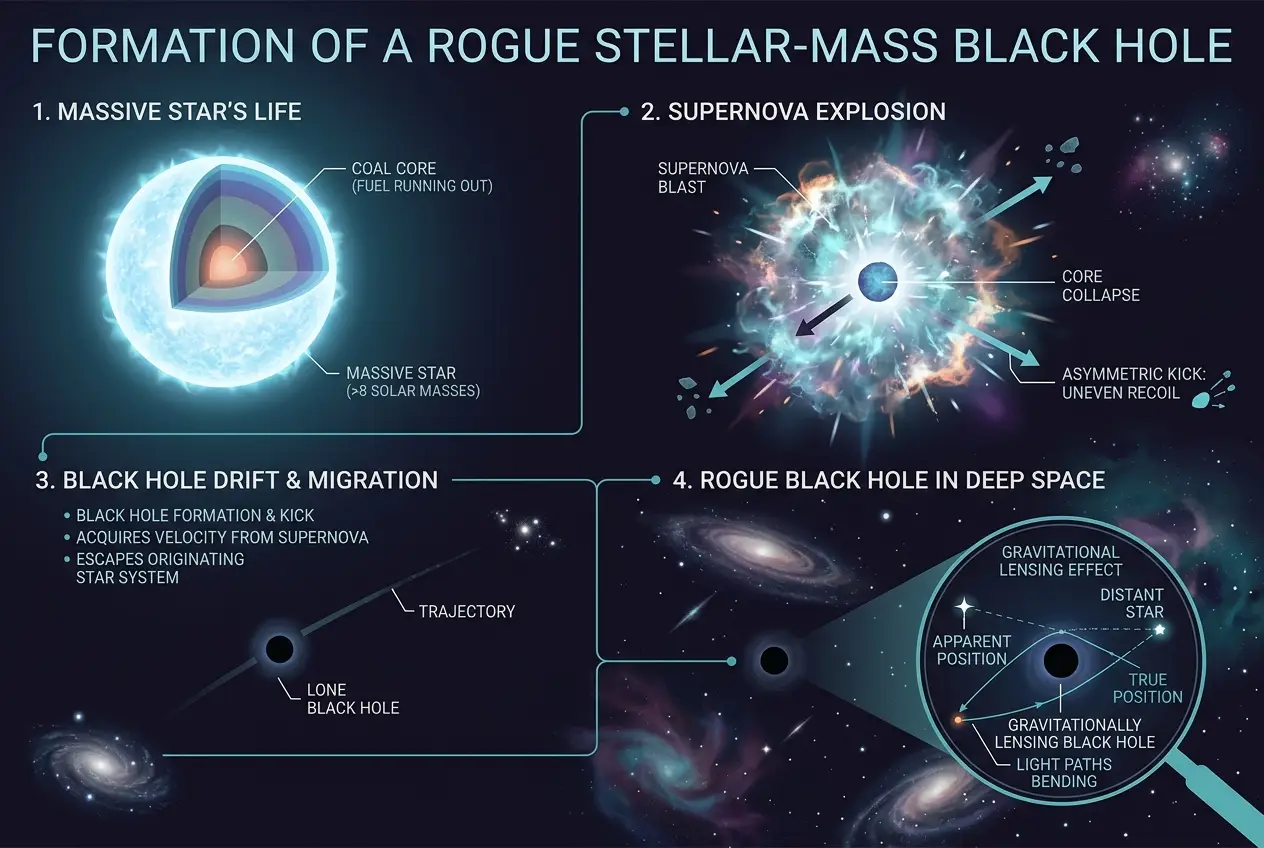
Before we delve into the potential for orbiting planets, let’s unpack what we mean by "rogue black holes." These are typically **stellar-mass black holes**, formed from the gravitational collapse of stars much larger than our Sun – usually at least 20 times more massive. When these massive stars exhaust their nuclear fuel, they undergo a spectacular supernova explosion, leaving behind a super-dense core. If this core is massive enough, it collapses further, forming a black hole.
What makes them "rogue"? Often, the supernova explosion itself can be asymmetric, imparting a powerful "natal kick" to the newly formed black hole. This kick can be so strong that it flings the black hole out of its original stellar system and even out of its host galaxy, sending it hurtling through the emptiness of interstellar space. These cosmic nomads are exceptionally difficult to detect, as they emit no light and are tiny compared to the vast distances of space. Their presence is primarily inferred through their gravitational effects on other objects or through rare phenomena like **gravitational microlensing**, where their immense gravity temporarily magnifies the light from a background star as they pass in front of it. Researchers using NASA's Hubble Space Telescope and ground-based observatories have identified what appears to be a solitary stellar-mass black hole drifting through our Milky Way galaxy, offering a tantalizing glimpse into these elusive entities. You can learn more about these fascinating objects on Wikipedia's page about [stellar black holes](https://en.wikipedia.org/wiki/Stellar_black_hole).
### The Gravitational Tug: How Planets Could Form or Be Captured
The idea of planets orbiting a rogue black hole isn't as far-fetched as it first seems. There are two primary scenarios through which such "hidden worlds" could come into existence:
1. **Planetary Formation within the Original System:** If the star that eventually collapsed into a black hole already had planets orbiting it, these planets might, under specific conditions, remain gravitationally bound to the newly formed black hole. The supernova event itself is incredibly violent, and many planets would likely be ejected or destroyed. However, planets orbiting further out, beyond the immediate blast zone, could theoretically survive. Their orbits would dramatically change, becoming more elliptical or distant, but they might still be locked into a gravitational dance with their new, dark host. This scenario hinges on the original star being massive enough to form a black hole, yet stable enough to allow planet formation in the first place, and the supernova kick not being too disruptive.
2. **Capture from Interstellar Space:** Black holes, even rogue ones, possess immense gravitational pull. As they traverse the galaxy, they might encounter other celestial bodies – including free-floating planets (also known as "rogue planets") that have been ejected from their own star systems. If a rogue planet passes close enough to a rogue black hole at the right velocity, it could be gravitationally captured into orbit. This is a rarer event, but given the sheer number of both rogue black holes and rogue planets estimated to exist, it's not entirely impossible. The universe is a vast playground of gravitational interactions, and sometimes, the most improbable unions occur. For a deeper dive into the concept of planets existing without a star, check out this article on [Rogue Planets](https://en.wikipedia.org/wiki/Rogue_planet).
While we often focus on the more dramatic aspects, the dynamics of such a system would be a physicist's dream. The lack of stellar radiation would create an incredibly cold environment, but this doesn't automatically preclude the possibility of life.
### The Challenges of Detection: Finding the Unseen
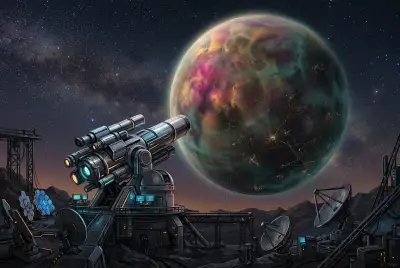
Detecting these black hole-orbiting planets, sometimes dubbed "Blanets" by some theorists, presents an enormous challenge. Without a star to illuminate them, they are effectively invisible to traditional telescopic methods. However, science thrives on overcoming such hurdles, and astronomers are exploring several ingenious approaches:
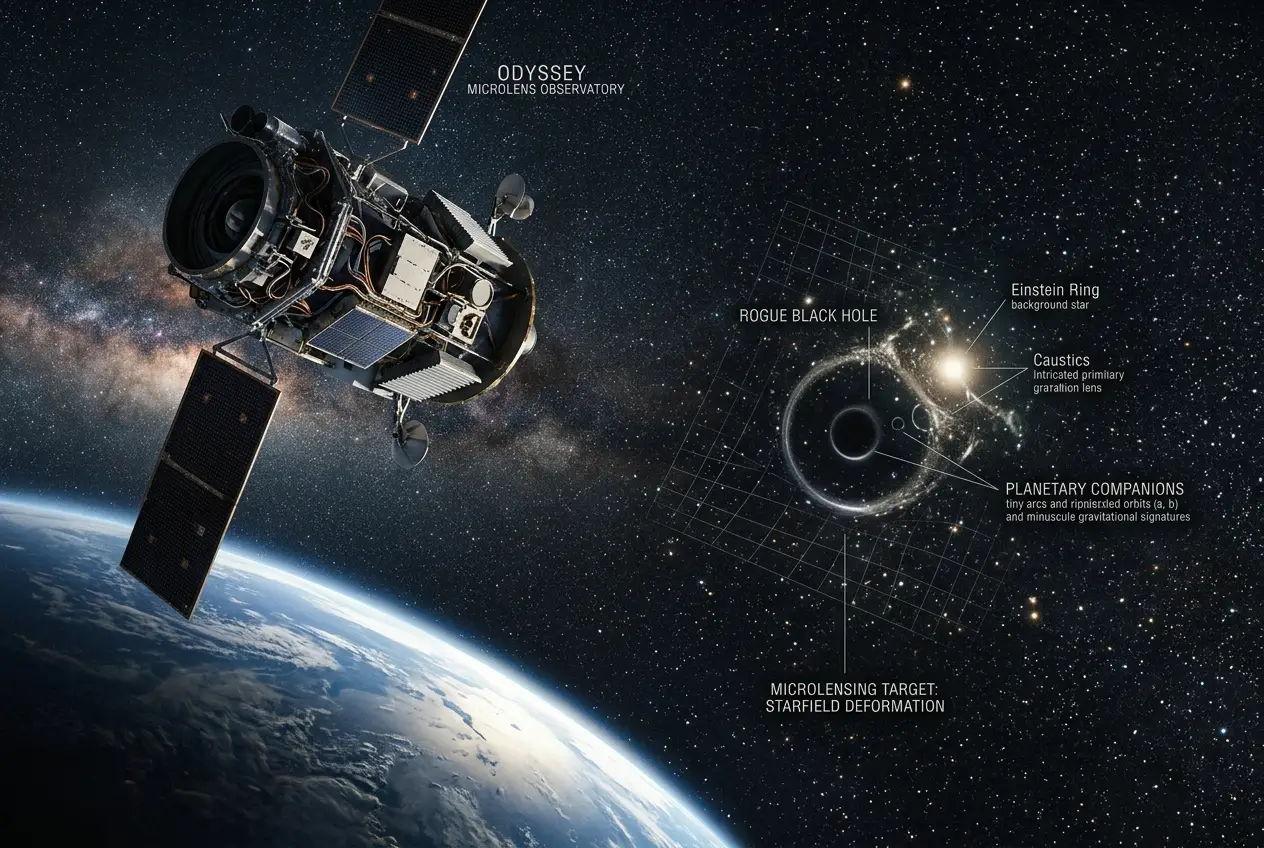
* **Gravitational Microlensing:** This is perhaps the most promising technique. When a rogue black hole passes in front of a distant star, its gravity bends the starlight, causing the star to brighten temporarily. If the black hole has planets orbiting it, these planets would also contribute their tiny gravitational perturbations to the event, creating secondary, shorter brightening events or slight distortions in the primary microlensing curve. These subtle signatures could be the cosmic breadcrumbs we need to find them. Projects like the **Nancy Grace Roman Space Telescope** (formerly WFIRST) are designed with the sensitivity to detect such faint signals.
* **Accretion Disks (in Binary Systems):** While focusing on rogue black holes, it's worth noting that if a stellar-mass black hole is part of a binary system with a companion star, it can pull material from that star, forming an **accretion disk** around itself. This disk heats up to extreme temperatures and emits X-rays, making the black hole detectable. Any planets within such a system would still be incredibly challenging to find, but the black hole's presence would be known, allowing for more targeted searches using methods like transit or radial velocity if conditions were somehow favorable. This is unlikely for habitability, but for detection, it's a known phenomenon.
* **Gravitational Wave Signatures:** Extremely massive black holes merging create gravitational waves that instruments like LIGO and Virgo can detect. While stellar-mass black holes and planets wouldn't generate detectable gravitational waves individually, the precise orbital dynamics of a planet around a black hole could, in theory, leave subtle gravitational wave imprints that future, more sensitive detectors might be able to pick up, although this is far in the future.
### Life in the Dark: The Habitability Question
If planets *do* orbit rogue black holes, could they host life? This is where the speculative nature truly begins, but it's not entirely without scientific basis. The immediate assumption is that without a star, there's no energy source, meaning no liquid water or photosynthesis, which are fundamental to Earth-like life. However, we might be too anthropocentric in our definition of habitability.
Consider alternative energy sources:
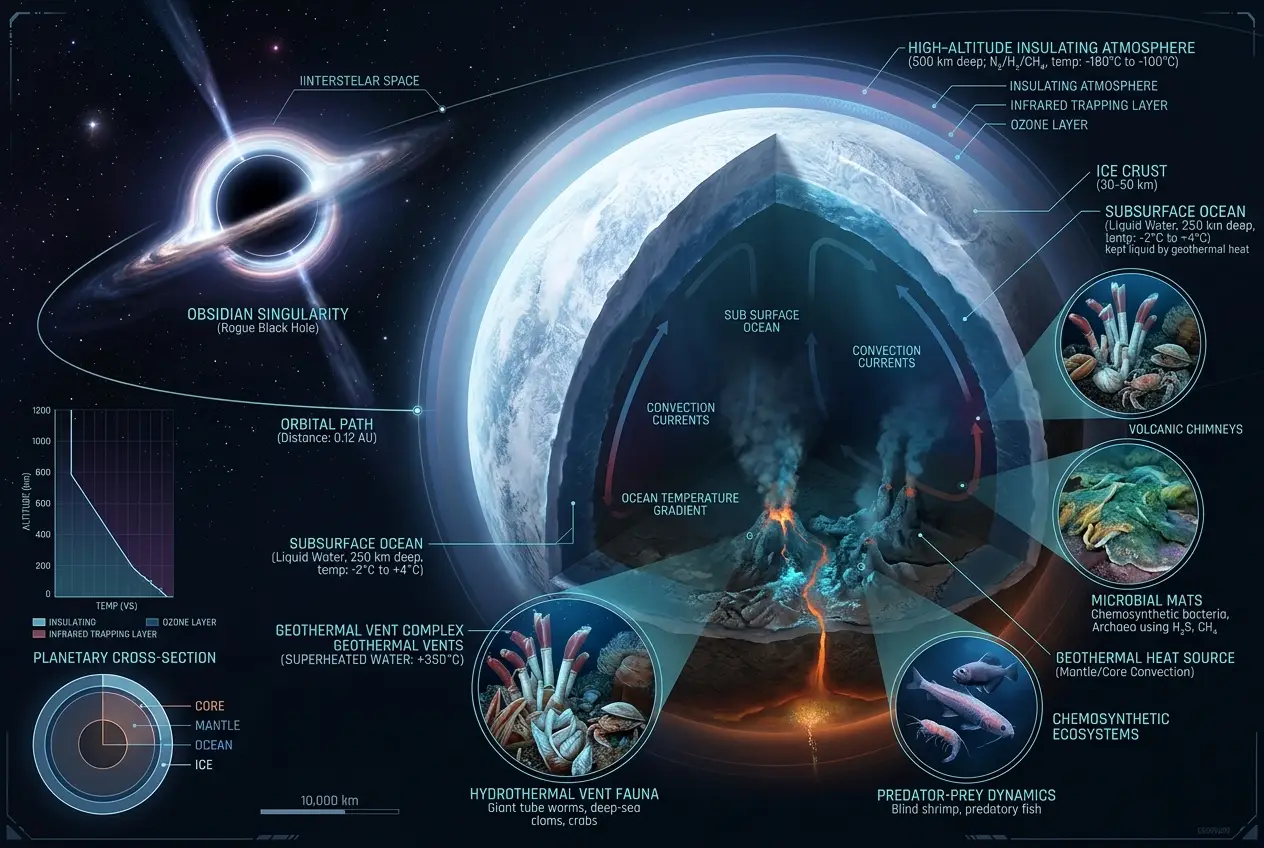
* **Geothermal Heat:** Planets, especially larger ones, can generate internal heat through radioactive decay and residual heat from their formation. This geothermal energy can sustain subsurface oceans of liquid water, much like what we suspect might exist on moons like Europa or Enceladus, which are far from the Sun but kept warm by tidal forces and internal geology.
* **Tidal Heating:** If a black hole-orbiting planet has a moon, or if it has a highly elliptical orbit, the immense tidal forces exerted by the black hole could generate significant internal heating, melting ice and maintaining liquid water below the surface. This is a common mechanism for warming icy moons in our own Solar System.
* **Atmospheric Insulation:** A planet with a very thick atmosphere rich in greenhouse gases could trap enough primordial heat or internal geothermal heat to maintain liquid water on its surface, even in the absence of a star. This would be a delicate balance, but not an impossible one.
The energy for life doesn't always have to come from light. **Chemosynthesis**, for example, powers thriving ecosystems around hydrothermal vents in Earth's deep oceans, entirely independent of sunlight. Life forms in a black hole system might harness chemical energy from the planet's interior or exploit temperature gradients. Such organisms would likely be extremophiles by our standards, but the universe is likely teeming with forms of life we can barely conceive. The European Space Agency (ESA) has been actively involved in research and missions related to exoplanets and habitability, including exploring potential for life in extreme environments.
### The Cosmic Paradox: Silence and Abundance
The potential existence of rogue black holes and their hidden planetary systems highlights a fascinating cosmic paradox. These are perhaps the most silent, most invisible objects in the universe, yet their sheer numbers could make them surprisingly common. While our galaxy contains hundreds of billions of stars, current estimates suggest that there could be tens to hundreds of millions of stellar-mass black holes, many of them rogue. The number of free-floating planets is also believed to be enormous, possibly outnumbering stars themselves.
If even a tiny fraction of these rogue black holes manage to capture or retain planets, the number of "hidden worlds" could be staggering. These are not merely curiosities; they represent entirely new classes of astronomical objects, forcing us to expand our definitions of what constitutes a "planetary system" and where life might arise.
This frontier of astronomical discovery reminds me of earlier breakthroughs, like the realization that planets could exist outside our solar system, which felt like a revelation just a few decades ago. Just as the discovery of exoplanets redefined our understanding of planetary formation, the hunt for "Blanets" around rogue black holes could reshape our cosmic perspective once more. For a good overview of planetary systems in general, you can consult the [Planetary System Wikipedia article](https://en.wikipedia.org/wiki/Planetary_system).
Consider the implications: If life *can* thrive in such extreme, sunless environments, it dramatically broadens the scope of potential habitable zones in the universe. It suggests that even the cold, dark voids between galaxies might not be entirely sterile, offering new possibilities for understanding the distribution and resilience of life. It’s an exciting time to be curious about the cosmos!
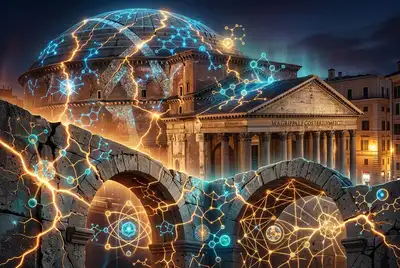
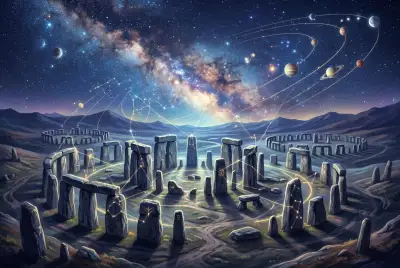
The universe continually surprises us, pushing the boundaries of what we deem possible. From the Antikythera Mechanism, an ancient analog computer that charted celestial movements, to today's search for planets around unseen cosmic behemoths, humanity's quest to understand the universe is a journey of constant redefinition. Dive deeper into our blog on similar cosmic enigmas, like how [Do Rogue Black Holes Threaten Our Galaxy?]( /blogs/do-rogue-black-holes-threaten-our-galaxy-6767) or exploring if [Is Planet Nine a Primordial Black Hole?]( /blogs/is-planet-nine-a-primordial-black-hole-8612). The cosmos, it seems, always has another secret to reveal, another hidden world to uncover.
### Conclusion: A Dark Horizon Beckons
The concept of planets orbiting rogue black holes pushes the very limits of our imagination and our current observational capabilities. While direct evidence remains elusive, the theoretical frameworks are solid, and the potential detection methods are improving. These invisible, wandering systems represent one of the most intriguing frontiers in modern astrophysics – a dark horizon beckoning us to expand our understanding of what constitutes a "world" and where life might surprisingly take root. The universe is far stranger and more wonderful than we can possibly imagine, and the search for these hidden worlds is a testament to our insatiable curiosity.
Frequently Asked Questions
A rogue black hole is a stellar-mass black hole, formed from the collapse of a massive star, that has been ejected from its original star system and now drifts alone through interstellar space, unattached to any star.
Planets could either be remnants of the original star system that survived the supernova event and remained gravitationally bound to the newly formed black hole, or they could be rogue planets captured by the black hole's gravity as it travels through space.
The most promising method is gravitational microlensing, where the black hole and its planets temporarily magnify and distort the light from a background star. Astronomers look for subtle deviations in the brightening curve caused by the orbiting planets.
While challenging due to the lack of starlight, it's theoretically possible. Energy for life could come from geothermal heat, tidal heating, or thick atmospheres trapping internal heat. Life might rely on chemosynthesis rather than photosynthesis, similar to deep-sea ecosystems on Earth.
Current estimates suggest that there could be tens to hundreds of millions of stellar-mass black holes in the Milky Way, many of which are likely rogue. Their numbers are substantial, making the possibility of orbiting planets a significant area of study.
"Blanets" is a theoretical term used by some scientists to refer to planets that orbit black holes, particularly rogue ones, highlighting their unique nature compared to planets orbiting stars.
Verified Expert
Alex Rivers
A professional researcher since age twelve, I delve into mysteries and ignite curiosity by presenting an array of compelling possibilities. I will heighten your curiosity, but by the end, you will possess profound knowledge.
Leave a Reply
Comments (0)
No approved comments yet. Be the first to share your thoughts!
 Join Us
 Unknown Author












Leave a Reply
Comments (0)