I remember the first time I saw a photograph of the Nazca Lines. It was in a thick, dusty book on ancient mysteries, and my mind was utterly captivated. How could such monumental and precise artwork be etched into the desert floor by a civilization that seemingly lacked the technology for aerial views? Were these colossal figures, visible only from high above, merely religious offerings, or did they hold a deeper, more profound purpose – perhaps even ancient blueprints or encoded cosmic messages? This question has haunted archaeologists, scientists, and enthusiasts for decades, transforming a stretch of Peruvian desert into one of the world's most enduring enigmas.
For me, the allure of the Nazca Lines isn't just in their scale or mystery, but in the sheer ingenuity they represent, regardless of their true function. It forces us to reconsider the capabilities of ancient civilizations and challenges our assumptions about technological advancement. Let's embark on a journey to unravel the captivating theories behind these desert behemoths.
The Enigmatic Canvas: Unveiling the Nazca Lines
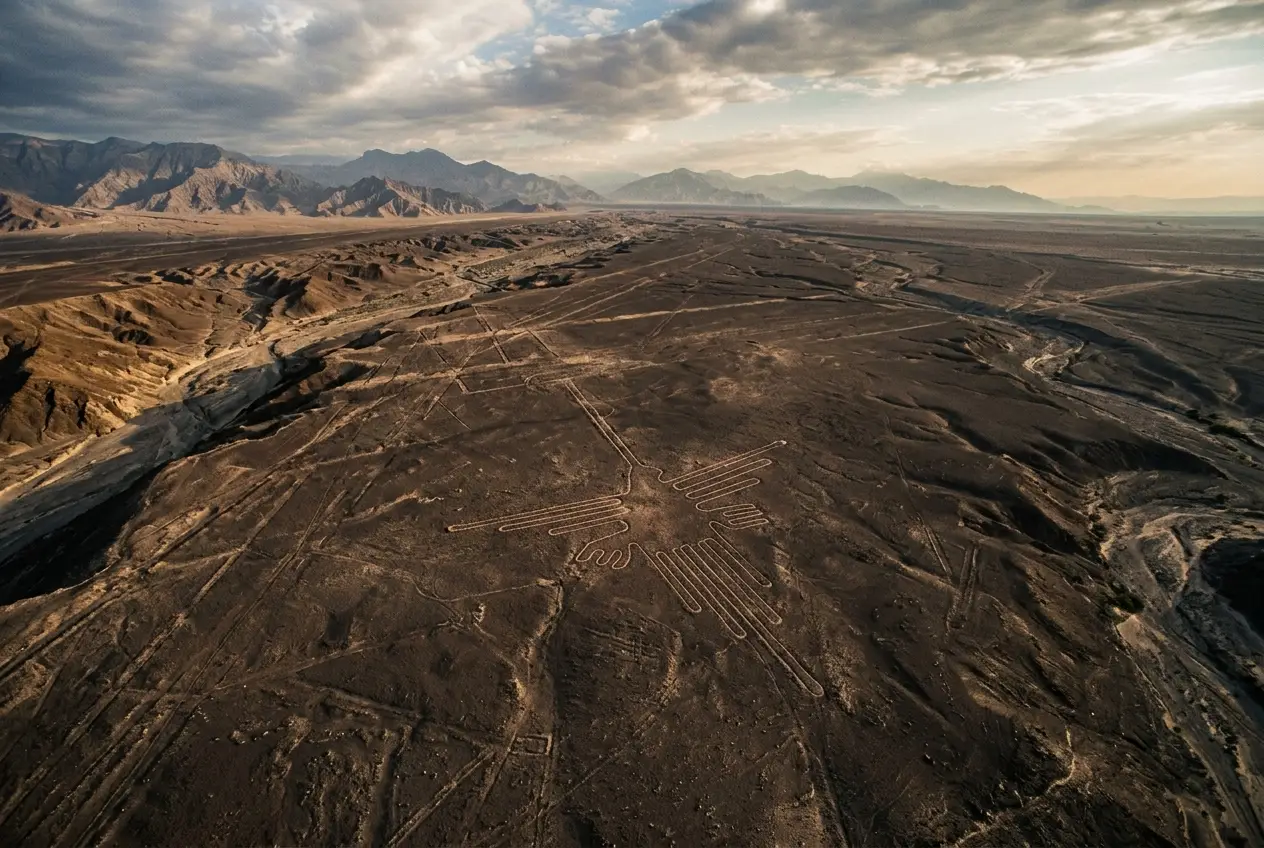
Stretching across 450 square kilometers of the arid Nazca Desert in Peru, the Nazca Lines are a series of massive geoglyphs created by the Nazca culture between 500 BCE and 500 CE. These striking designs include over 10,000 lines, 300 geometric figures, and 70 animal and plant figures, ranging from a colossal hummingbird and a spider to a monkey, a pelican, and various human-like forms. The sheer scale is staggering; some figures span hundreds of meters, with the largest measuring nearly 370 meters (1,200 feet) long.
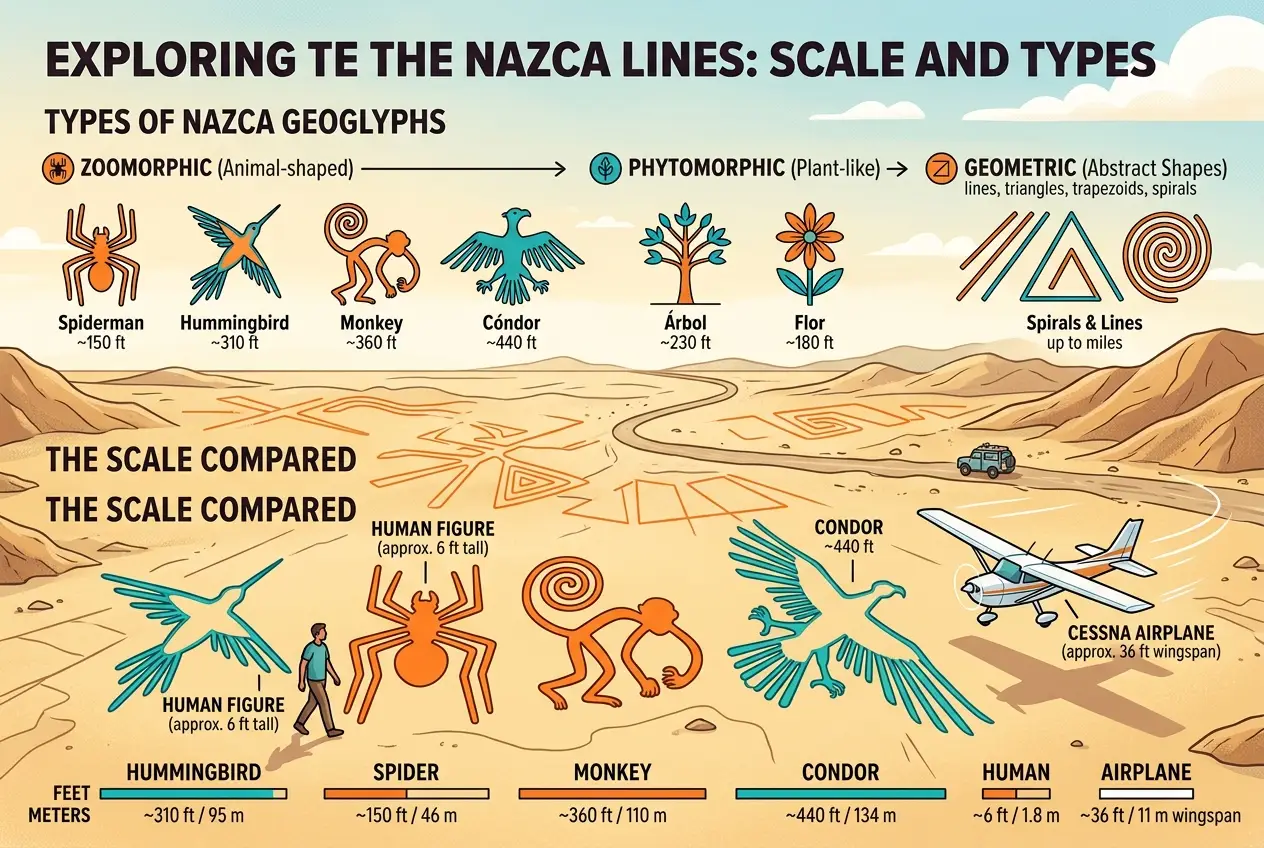
What makes these lines particularly astonishing is their method of creation and preservation. The Nazca people simply removed the reddish-brown iron-oxide-coated pebbles from the desert surface, exposing the lighter-colored subsoil beneath. The arid, windless climate of the Nazca plateau, coupled with the unique composition of the surface materials (dark rocks absorbing heat and creating a cushion of hot air that protects the lines from winds), has preserved these geoglyphs for nearly two millennia. It's a testament to both clever engineering and fortunate environmental conditions. For more detailed information on their creation and preservation, you can refer to the
Nazca Lines Wikipedia page.
Who Created These Masterpieces? The Nazca Culture
The Nazca culture, an ancient pre-Inca civilization, thrived in the Nazca region of southern Peru. They were skilled farmers, artisans, and engineers, known for their elaborate ceramics, textiles, and underground aqueducts called *puquios*. These *puquios* are an impressive feat of hydrological engineering, designed to capture and channel subterranean water, allowing agriculture to flourish in an extremely arid environment. Understanding their engineering prowess in water management gives us a glimpse into the sophisticated minds behind the geoglyphs. The
Nazca culture Wikipedia page provides deeper insights into their society.
The true purpose of the Nazca Lines, however, remains shrouded in mystery, defying easy explanation. This enduring question has led to a multitude of theories, some grounded in archaeological evidence, others soaring into the realm of the speculative.
Unpacking the Theories: From Rituals to Extraterrestrials
Over the years, various theories have emerged attempting to decipher the meaning and function of the Nazca Lines. I find it fascinating how each perspective peels back a different layer of what these ancient people might have been thinking or doing.
1. Astronomical Observatories or Calendars
One of the most compelling and widely accepted theories, championed by scholars like Dr. Maria Reiche, suggests that many of the lines and figures had astronomical significance. Reiche, a German mathematician and archaeologist who dedicated her life to studying and preserving the Nazca Lines, proposed that certain lines aligned with celestial bodies, marking solstices, equinoxes, or the rising of specific constellations. In this view, the Nazca Lines could have functioned as a vast astronomical calendar, aiding agricultural cycles and religious ceremonies.
For instance, some researchers argue that the Spider figure, with its elongated leg, points towards the Pleiades star cluster, a significant celestial marker for many ancient agricultural societies. The precision required for such alignments suggests an advanced understanding of astronomy and geometry. This theory offers a scientific explanation for the meticulous planning and execution of the geoglyphs, tying them directly to the practical needs and spiritual beliefs of the Nazca people. Discover more about her invaluable work on the
Maria Reiche Wikipedia page.
2. Ritualistic Pathways and Shamanic Journeys
Another prevalent theory posits that the lines were ritualistic pathways used for religious processions. Many of the trapezoids and straight lines are so broad and long that they could have accommodated large groups of people walking in ceremony. The animal figures might have represented deities or spirit animals invoked during these rituals. From this perspective, the act of walking these lines could have been a spiritual journey, perhaps enhanced by psychoactive substances, leading participants into trance states or communion with the divine. The geoglyphs would then be a sacred landscape, designed for communal worship and individual spiritual transformation.
3. Water-Finding Systems and Agricultural Indicators
Given the extreme aridity of the Nazca region, some researchers, like Dr. David Johnson, have proposed that the lines might be related to water sources. They suggest the lines pointed to underground water flows, wells, or served as pathways to important water sources. The animal figures, such as the spider, might even have been associated with water or fertility. While direct evidence is scarce, the Nazca's mastery of the *puquios* demonstrates their deep concern with water, making this an intriguing, albeit debated, possibility.
4. Ancient Survey Markers or Textile Looms
Lesser-known, but equally fascinating, are theories that delve into the practical engineering of the Nazca. Some hypothesize that the geometric shapes, particularly the enormous trapezoids, might have been used as part of a complex survey system for land division or perhaps even as massive looms for creating textiles, with the lines marking warp and weft threads. This hints at a highly organized society with a robust understanding of geometry and measurement. The concept of ancient civilizations possessing advanced survey or mapping techniques echoes similar discussions around other ancient sites, such as the mysterious
ancient star maps.
5. Extraterrestrial Runways or Messages
Perhaps the most sensational theory, popularized by authors like Erich von Däniken, suggests that the Nazca Lines were created as landing strips or navigational aids for extraterrestrial visitors. The fact that many designs are best viewed from the air fuels this idea, leading some to conclude that only beings with flight capabilities would have needed such markers. While highly speculative and lacking scientific evidence, this theory taps into the universal fascination with alien life and unexplained phenomena, captivating many who wonder if humanity received assistance from beyond the stars. I find this one a dramatic stretch, yet it undeniably adds to the mystique, challenging us to imagine what capabilities ancient humans truly possessed without external help.
The Engineering Marvel: How Were They Made Without Flight?
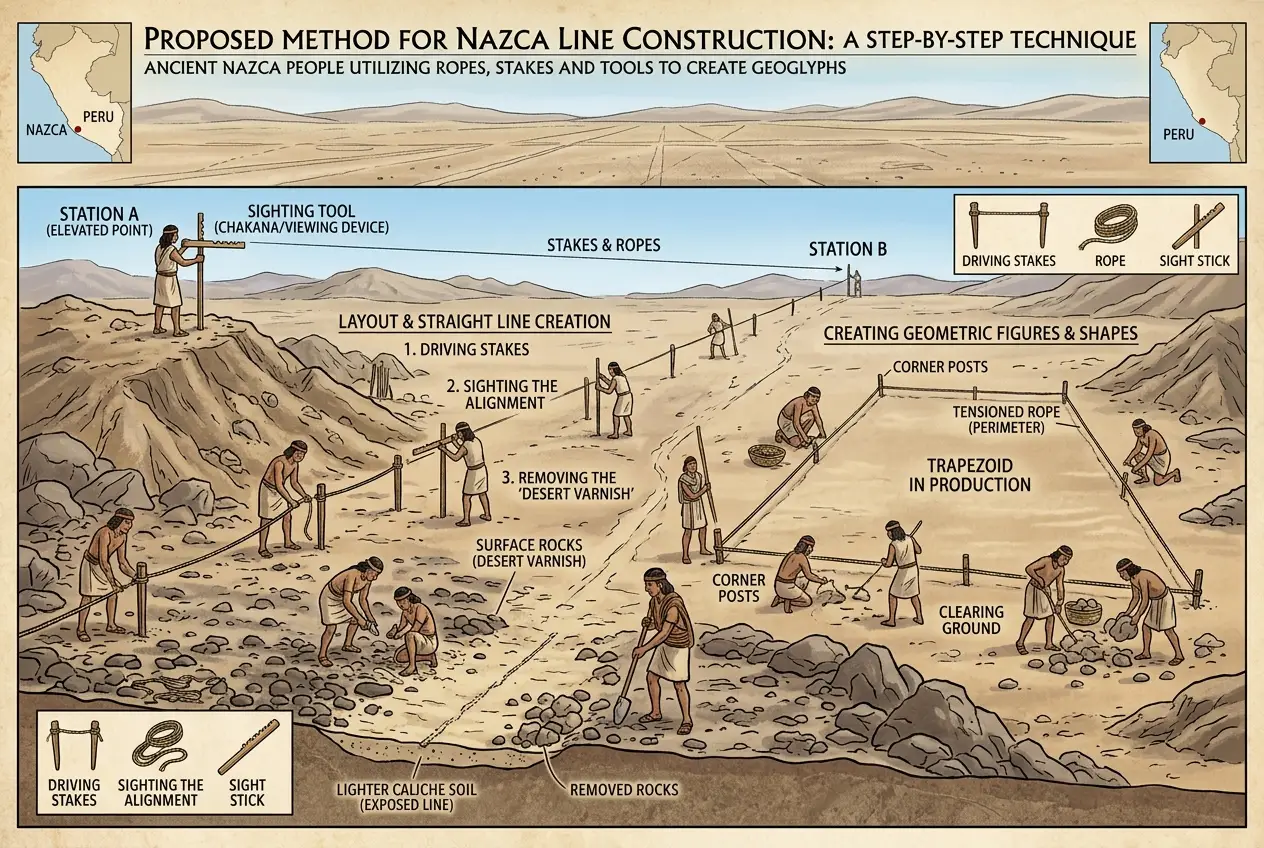
Regardless of their purpose, the most mind-boggling aspect for me is *how* the Nazca people created these enormous, perfectly straight lines and intricate figures without the benefit of aerial observation. Modern experiments and archaeological analyses offer some plausible explanations for their ingenious methods.
One common hypothesis involves the use of simple surveying techniques:
* **Stakes and Ropes:** For straight lines, researchers suggest the Nazca people used stakes placed at intervals and stretched ropes between them.
* **Grid Systems:** For complex figures, a scale model might have been drawn first, then scaled up onto the desert floor using a grid system, similar to how large murals are painted from smaller sketches.
* **Sighting Posts:** To maintain straightness over long distances and varied terrain, they could have used sighting posts on elevated areas or hillsides, aligning them with distant landmarks.
* **Geometric Principles:** The Nazca likely possessed a strong grasp of basic geometry. Circles could be drawn with a central stake and a rope of fixed length, while triangles and trapezoids could be constructed using similar methods, possibly referencing specific angles.
"The Nazca Lines demonstrate sophisticated knowledge of surveying, geometry, and communal organization. While the exact methods are debated, the sheer scale and precision imply a well-coordinated effort," notes Dr. Sarah Parcak, an archaeologist specializing in satellite imagery. This level of organization and technical understanding is consistent with other impressive ancient engineering feats across the globe, as seen in the discussion about
megalithic structures and ancient networks.
Modern Discoveries and The Future of Research
Even today, new Nazca Lines are being discovered, often with the aid of drone technology and advanced imaging. Recently, the "Nazca Cat" geoglyph, an ancient feline figure about 37 meters long, was rediscovered and restored on a hillside, having been obscured by erosion for centuries. These ongoing discoveries reinforce the incredible breadth of the Nazca's artistic and engineering output.
The challenge now lies in protecting these delicate historical marvels from the increasing threats of erosion, human encroachment, and climate change. Organizations like UNESCO are working to preserve the site, recognizing its immense cultural and scientific value as a
World Heritage Site.
Conclusion: An Enduring Legacy of Wonder
Whether the Nazca Lines were astronomical calendars, sacred pathways, sophisticated irrigation maps, or something else entirely, their existence remains a powerful testament to the ingenuity and artistic expression of the ancient Nazca people. I believe they compel us to look beyond conventional narratives of history and consider the multifaceted ways in which ancient cultures interacted with their environment, their beliefs, and perhaps even the cosmos itself.
As we continue to explore the digital age and develop technologies like AI and advanced mapping, I find myself wondering what other secrets the Nazca Lines might yield. Perhaps future generations, armed with even more sophisticated tools, will finally decode the ultimate message etched into Peru's desert, revealing whether they were indeed ancient blueprints for survival or an intricate, silent communication to the stars.
 Join Us



 Unknown Author


























Leave a Reply
Comments (0)