I just had one of those moments that makes you stop and stare at your screen in disbelief. My laptop, usually a fortress of digital logic, suddenly flashed a sequence of garbled symbols – a cascade of non-existent characters that made absolutely no sense. Then, as quickly as it appeared, it vanished, leaving me to wonder if I’d even seen it at all. Was it just a bug, a fleeting software hiccup? Or, as I sometimes ponder with these unexplainable tech oddities, was it something more... an echo from another reality, a momentary tear in the fabric of our digital world, suggesting that perhaps, just perhaps, our devices are picking up signals from parallel universes?
It sounds like science fiction, doesn't it? The idea that a simple computer glitch, a skipped frame on a video call, or a strange artifact in a digital photo could be a window, however fleeting, into a reality beyond our own. Yet, as I delve deeper into the nature of these digital anomalies and the mind-bending theories of modern physics, I can't help but feel a compelling pull towards such a radical notion. What if our computational errors aren't just errors, but rather whispers from a universe running slightly out of sync with ours?
The Ubiquity of the Digital Glitch: More Than Just Bugs?
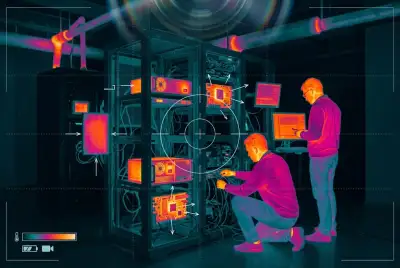
Every single one of us has experienced a digital glitch. From the infamous "blue screen of death" to a video game character T-posing through the floor, these moments are often frustrating, sometimes amusing, and almost always attributed to mundane causes: a faulty line of code, an overheating component, a bad driver, or simply user error. We troubleshoot, we restart, we update, and usually, the problem resolves itself. But what if the sheer randomness and unpredictability of some glitches point to something beyond the conventional explanations?
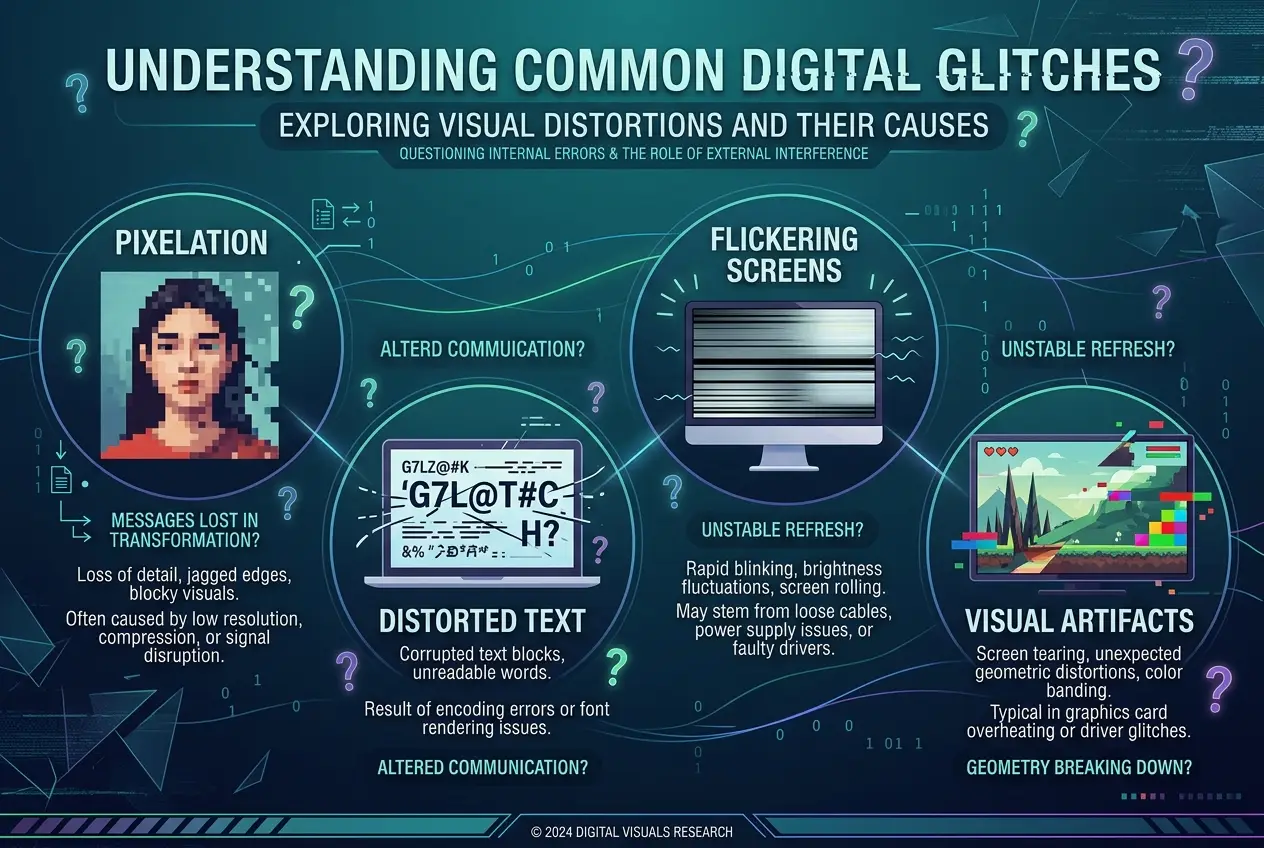
Think about it. In a perfectly designed digital system, every input should yield a predictable output. While bugs are inevitable due to human programming errors or hardware limitations, the truly *random* and transient nature of some glitches can feel almost… foreign. They manifest, they disappear, leaving no trace in log files, defying easy reproduction. This elusiveness is what sparks my curiosity. Could these ephemeral disruptions be evidence of our reality interacting with others?
Quantum Mechanics: The Gateway to Multiverses
To entertain the idea of parallel worlds, we must first turn to quantum mechanics, the branch of physics that governs the bizarre rules of the universe at its smallest scales. Here, particles can exist in multiple states simultaneously (superposition) until observed, and two entangled particles can influence each other instantaneously, regardless of distance. These phenomena are so counter-intuitive that even Albert Einstein struggled with them, famously calling entanglement "spooky action at a distance."
One of the most profound and mind-boggling interpretations of quantum mechanics is the **Many-Worlds Interpretation (MWI)**, proposed by physicist Hugh Everett III in 1957. According to MWI, every time a quantum measurement is made, or a choice is presented, the universe "splits" into multiple parallel universes, each representing a different possible outcome. In one universe, the electron spins up; in another, it spins down. In one, you chose coffee; in another, tea. This implies an infinite number of parallel universes, constantly branching, all co-existing but generally unable to interact with each other. You can learn more about the complexities of the Many-Worlds Interpretation on its [Wikipedia page](https://en.wikipedia.org/wiki/Many-worlds_interpretation).
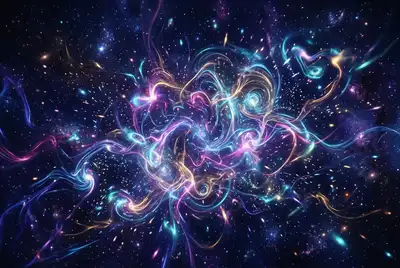
If the MWI holds, then "our" reality is just one of an infinite tapestry of realities. What if, just occasionally, these realities aren't perfectly isolated? What if there's a tiny leak, a momentary quantum fluctuation that allows information from an adjacent universe to bleed into ours, manifesting as a digital glitch? It’s a bold thought, I know, but the fundamental weirdness of quantum mechanics certainly opens the door to such possibilities.
The Universe as a Computer: Simulation Theory and Holographic Principles
Another intriguing line of thought that lends itself to the idea of "glitches" from other realities is **Simulation Theory**. Popularized by philosophers and even physicists, this hypothesis suggests that our entire universe, down to its fundamental particles, might be a highly advanced computer simulation. If this were true, then digital glitches could be interpreted literally: errors in the code of our simulated reality.
You might be thinking, "How is that related to parallel worlds?" Well, if our universe is a simulation, it stands to reason that other simulations could exist, perhaps running on the same supercomputer, or even interacting with ours. A glitch could be a data corruption event, or even a deliberate "hack" from a neighboring simulation. For a deeper dive into this fascinating concept, consider exploring our blog post: [Is Our Reality a Digital Simulation? Decoding the Universe's Code]( /blogs/is-our-reality-a-digital-simulation-decoding-the-universes-code-9313).
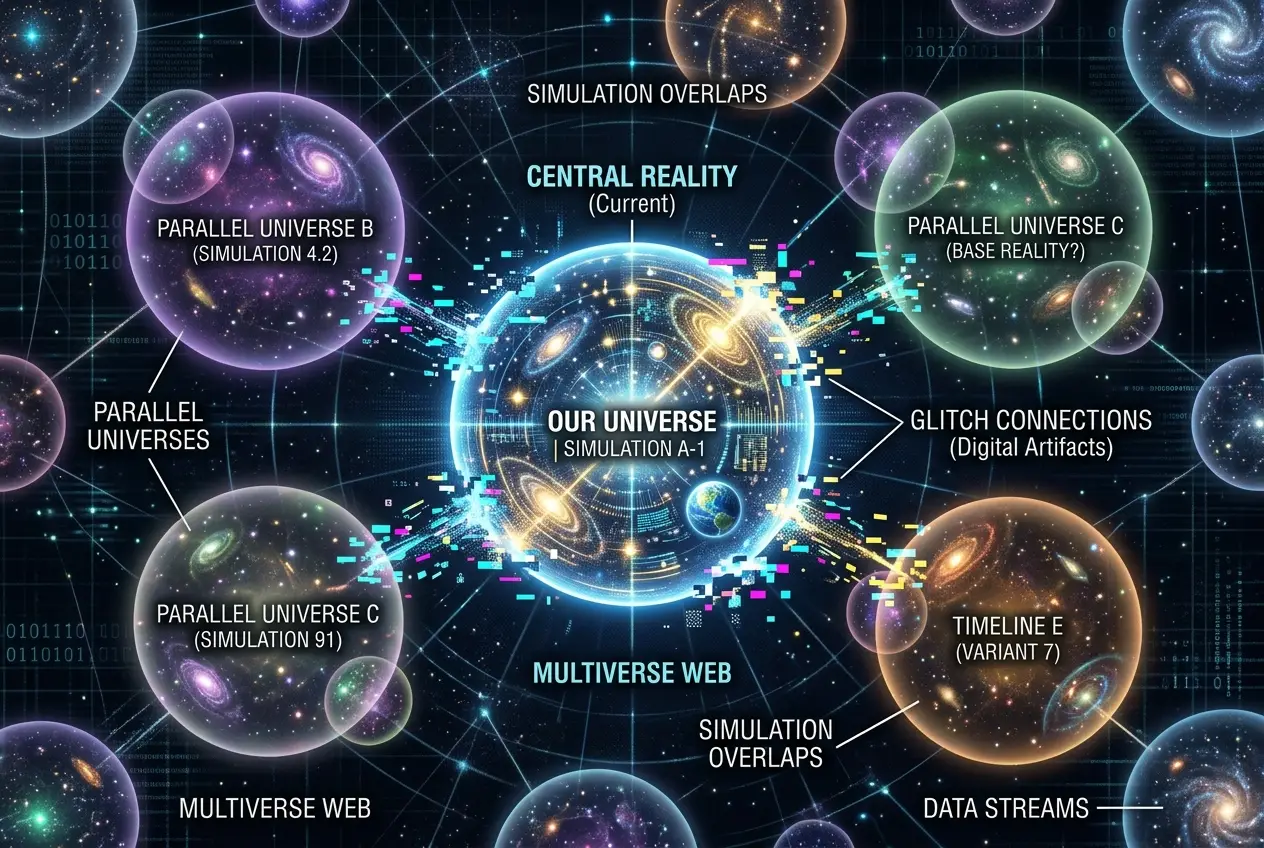
Adding another layer of complexity is the **Holographic Principle**, a theoretical concept in quantum gravity which suggests that the entire universe can be described as information encoded on a distant two-dimensional surface, much like a hologram projects a 3D image from a 2D plate. If our 3D reality is merely a projection, then what happens when there's an error in the underlying 2D data? Could these manifest as the digital glitches we experience? You can read more about the Holographic Principle on [Wikipedia](https://en.wikipedia.org/wiki/Holographic_principle).
In a holographic universe, a glitch might not be an error within our immediate perceived space, but a distortion from the fundamental information layer, potentially reflecting anomalies from other projections or "universes" sharing the same informational substrate.
Could Glitches Be Just… Glitches? The Sane Explanations
Of course, it's crucial to ground ourselves in reality. The vast majority of digital glitches have perfectly rational, albeit sometimes complex, explanations. They are often due to:
* **Software Bugs:** Errors in programming code, leading to unexpected behavior.
* **Hardware Malfunctions:** Deteriorating components, overheating, power surges, or manufacturing defects.
* **Electromagnetic Interference:** External electromagnetic fields affecting sensitive electronics. For instance, did you know that even [cosmic rays can secretly glitch our tech]( /blogs/do-cosmic-rays-secretly-glitch-our-tech-3330)?
* **Data Corruption:** Errors during data transmission or storage.
* **Human Error:** Incorrect input, accidental deletions, or improper handling.
These explanations are parsimonious and often verifiable. The problem arises with the glitches that defy easy explanation, the ones that seem to come and go without a trace, leaving technicians scratching their heads. It's in these persistent anomalies that the mind starts to wander towards more extraordinary possibilities.
For a comprehensive understanding of what constitutes a "glitch" in electronics, the [Wikipedia article on Glitch (electronics)](https://en.wikipedia.org/wiki/Glitch_(electronics)) provides an excellent overview.
The Search for Evidence: Beyond Anecdote
While anecdotal evidence of strange glitches is abundant, hard scientific proof linking them to parallel universes remains elusive. However, the very nature of quantum mechanics, with its inherent probabilities and non-deterministic outcomes, suggests that our reality might not be as singular and fixed as we perceive it. The search for evidence of parallel universes continues, with scientists exploring theories that range from subtle gravitational effects to cosmic background radiation anomalies.
Could digital glitches, then, be akin to a faint echo, a subtle ripple across the boundaries of these realities? Perhaps as our technology becomes more sophisticated and sensitive, capable of detecting even the most minute quantum fluctuations, we might one day develop instruments that can reliably distinguish between a mundane bug and a genuine "inter-universal" artifact. Until then, I find myself looking at every unexpected digital anomaly with a renewed sense of wonder, asking: Is this just a flaw in the code, or a fleeting glimpse into somewhere else?
The universe, in its vastness and complexity, continues to surprise us. The blend of technology and fundamental physics offers us new lenses through which to view these mysteries. And for me, the next time my screen flickers inexplicably, I'll be pondering not just the state of my drivers, but the very nature of reality itself.
Frequently Asked Questions
Currently, there is no direct scientific evidence definitively linking digital glitches to parallel universes. This idea is largely theoretical and speculative, drawing inspiration from interpretations of quantum mechanics and philosophical concepts like simulation theory. Most glitches have conventional explanations.
The Many-Worlds Interpretation (MWI) posits that every quantum event causes the universe to split into multiple parallel realities. If these realities aren't perfectly isolated, a 'leak' or interaction between them could theoretically manifest as a digital glitch, although this interaction mechanism is purely hypothetical.
Yes, the vast majority of digital glitches are attributable to software bugs, hardware malfunctions, electromagnetic interference, or data corruption. The premise of them being hints of parallel worlds focuses on those rare, unexplainable, transient anomalies that defy conventional troubleshooting.
If our universe is a simulation, other simulations could exist. A glitch might be an error in the simulation's code or a momentary data corruption from an interacting or adjacent simulation running on the same underlying computational system, conceptually similar to different programs interacting.
The Holographic Principle suggests our 3D reality is a projection from information encoded on a 2D surface. In this context, a glitch could be a distortion in that fundamental 2D information layer, potentially reflecting anomalies from other projections or 'universes' that share the same informational substrate, causing a momentary disruption in our perceived reality.
Verified Expert
Alex Rivers
A professional researcher since age twelve, I delve into mysteries and ignite curiosity by presenting an array of compelling possibilities. I will heighten your curiosity, but by the end, you will possess profound knowledge.
Leave a Reply
Comments (0)
No approved comments yet. Be the first to share your thoughts!
 Join Us

 Unknown Author



























Leave a Reply
Comments (0)