

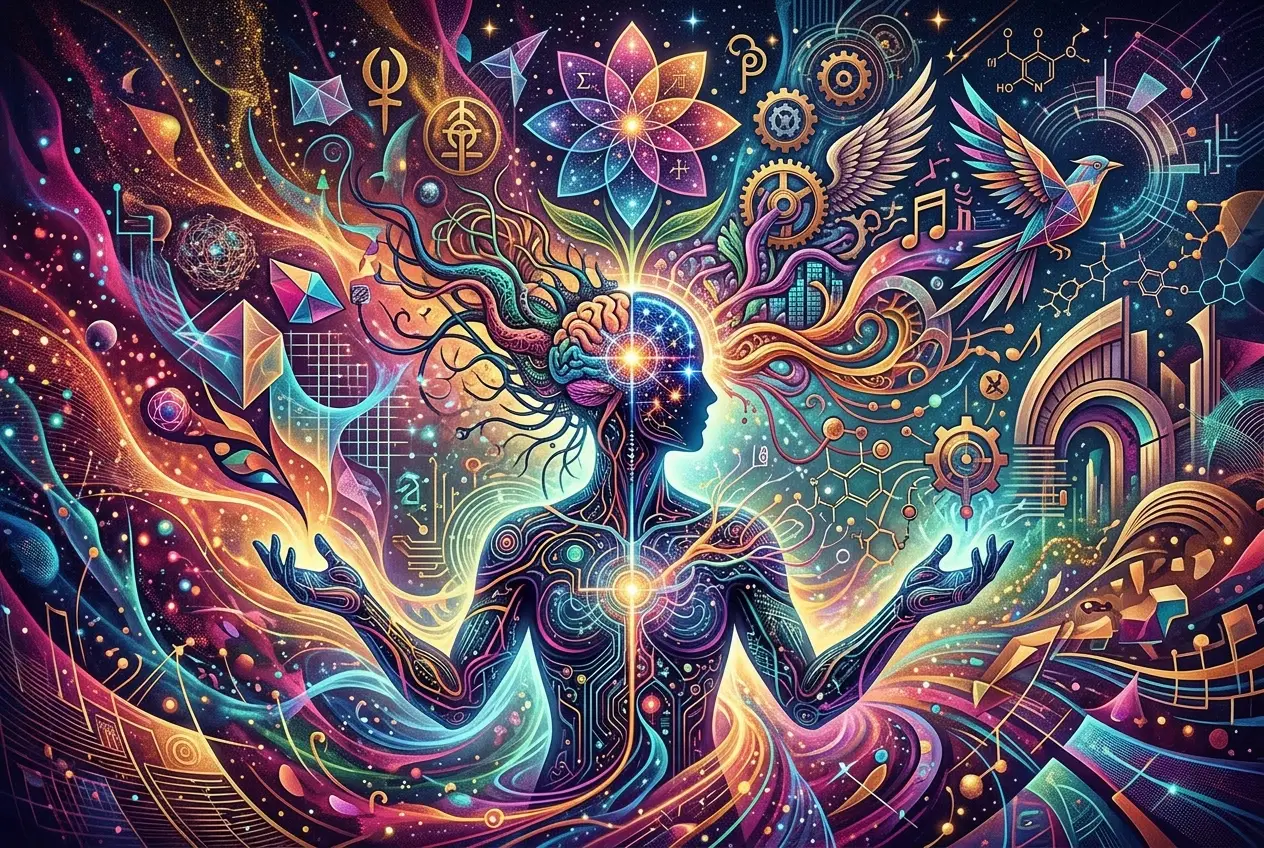
I recently found myself standing in front of a digital canvas, utterly captivated. It was a piece that twisted familiar landscapes into surreal dreamscapes, blurring the lines between photography and painting, realism and abstraction. The vibrant colors and intricate details suggested an artist with a profound understanding of light, shadow, and emotional depth. Yet, what truly astonished me was learning the creator wasn’t human. It was an artificial intelligence. This encounter forced me to confront a question that many in the tech and art worlds are now grappling with: Can AI create truly original art that challenges our very definition of creativity and originality?
This isn't about AI simply replicating styles or mimicking existing works. We’ve moved far beyond that. Modern generative AI systems are producing visuals, music, and text that feel genuinely new, often surprising their human developers. It's a phenomenon that has sparked intense debate, excitement, and a touch of existential dread among artists and technologists alike.
The Dawn of Algorithmic Artists
For centuries, art has been considered a uniquely human endeavor, a reflection of consciousness, emotion, and personal experience. Machines, we believed, could never truly "create" because they lacked these intrinsic qualities. Early attempts at algorithmic art were often rigid, mathematical, and predictably patterned. However, the advent of deep learning and sophisticated neural networks has dramatically shifted this paradigm.
I’ve followed the journey of AI in creative fields for years, and the progress is breathtaking. Remember when AI could barely recognize a cat? Now, it can paint one in the style of Van Gogh, compose a symphony, or write a compelling short story. This leap is largely due to architectures like Generative Adversarial Networks (GANs), which consist of two neural networks, a generator and a discriminator, locked in a continuous game of cat and mouse. The generator creates art, and the discriminator tries to tell if it's real or fake. This adversarial process refines the generator’s ability to produce increasingly realistic and novel outputs, pushing the boundaries of machine creativity. You can learn more about how these networks function on their Wikipedia page on GANs (opens in a new tab).
What Defines "Originality"?
To understand if AI can be original, we first need to wrestle with what "originality" truly means in art. Is it a unique combination of existing elements? A novel expression of an emotion? A breakthrough in technique? Even human originality is rarely absolute. Every artist is influenced by those who came before them, building upon traditions, reacting against conventions, or blending disparate styles. Pablo Picasso famously said, "Good artists copy; great artists steal."
The challenge with AI lies in its learning process. AI models are trained on vast datasets of existing human-created art. Critics argue that anything an AI produces is merely a sophisticated remix or extrapolation of its training data. How can something be truly original if its entire understanding of "art" is derived from what humans have already made?
Yet, I often wonder if this criticism is too harsh. When a human artist learns by studying masterworks, attending art school, and being exposed to diverse cultural influences, we don't accuse them of lacking originality. We call it learning and inspiration. The human brain itself is a complex network, constantly processing and combining information from our experiences. Is an AI's neural network so different in principle, albeit operating at a different scale and with different mechanisms?
Beyond the Algorithm: AI's Unexpected Outputs
What truly makes AI's artistic ventures compelling is its capacity for unpredictability. Unlike a human, an AI doesn’t have intentions or personal experiences in the way we understand them. It doesn't set out to create a "sad" painting or a "revolutionary" sculpture. Instead, it explores the latent space of its training data, finding connections and generating forms that often surprise even its creators.
I've seen AI art pieces that combine disparate styles in ways no human might think to, or that evoke emotions through entirely novel visual language. For instance, neural style transfer allows an AI to apply the artistic style of one image onto the content of another. This isn’t just copying; it’s a reinterpretation that can yield surprisingly profound and often beautiful results. Consider the intricate detail in some of the generated images, where familiar forms appear with an alien twist, or abstract patterns gain an unexpected coherence. This type of exploration can lead to genuine innovation, opening up new aesthetic avenues for human artists to explore. For more on neural style transfer, you can visit its Wikipedia page (opens in a new tab).
This reminds me of conversations about whether an AI can truly "dream," or possess a digital subconscious. Just like human dreams, AI-generated images can be surreal, fragmented, and symbolic, hinting at processes beyond simple data recombination. If you’re curious about this, you might enjoy reading our previous blog post: Can AI Dream? Unpacking the Digital Subconscious.
The Human-AI Collaboration: A New Artistic Frontier
Perhaps the most fascinating aspect of this burgeoning field isn't AI replacing human artists, but rather the potential for human-AI collaboration. Many artists are now using AI as a tool, a digital muse, or even a co-creator. They prompt the AI with initial ideas, styles, or concepts, and then interpret, refine, or even "curate" the AI's output.
I’ve had discussions with artists who describe AI as an extension of their imagination, capable of exploring vast creative possibilities much faster than a human ever could. This partnership allows artists to break through creative blocks, experiment with new aesthetics, and push the boundaries of their personal styles. It's not about the AI dictating the art, but about the artist guiding the AI and then stamping their own unique vision onto the results. This symbiotic relationship suggests a future where art is not just human-made or machine-made, but human-augmented.
The Legal and Ethical Labyrinth: Copyright and Ownership
The rise of AI art has thrown a wrench into established legal and ethical frameworks, particularly concerning copyright and ownership. If an AI creates a piece, who owns the copyright? The programmer who wrote the code? The user who prompted the AI? The AI itself (a concept fraught with legal complexities given AI's current lack of legal personhood)?
Jurisdictions around the world are grappling with these questions. Some propose that only works created by human authors can be copyrighted, while others suggest a "sweat of the brow" approach where the effort of the human in guiding the AI confers ownership. This legal ambiguity highlights just how profoundly AI is challenging our traditional notions of authorship and creative labor. For a deeper dive into the legal implications, I recommend exploring the Wikipedia article on AI art (opens in a new tab), which covers copyright issues.
Another ethical concern revolves around the training data. If an AI is trained on copyrighted material without permission, does its output constitute derivative work or even infringement? These are complex questions with no easy answers, and I believe they will continue to shape the landscape of AI art for years to come.
The Turing Test for Creativity?
We often assess AI's intelligence using variants of the Turing Test. Could we devise a "Creativity Turing Test" for art? If an expert panel couldn't reliably distinguish between human-made and AI-generated art, what would that say about the AI's originality?
I believe we're already approaching this point in many domains. The lines are blurring, and often, it's the sheer novelty or unexpectedness of an AI piece that makes it stand out, not necessarily a lack of "humanity." The question then shifts from "Can AI be original?" to "What unique forms of originality can AI bring to the table?" It's not about matching human creativity, but perhaps about discovering a different, complementary form of it.
The very essence of what makes us human – our emotions, our experiences, our subjective perceptions – are often cited as the unbridgeable gap between human and machine creativity. But as AI models become more sophisticated, even delving into understanding and generating human-like emotions, this gap might shrink. You might find our discussion on digital empathy thought-provoking: Can AI Truly Feel? Decoding Digital Empathy. The development of AI that can reason and behave with more self-awareness could also further complicate this debate, a topic we touched upon in Are AI's Neural Networks Self-Aware?
The Future of Art in an AI-Driven World
The implications are vast. AI art could democratize art creation, allowing individuals without traditional artistic skills to realize their creative visions. It could also lead to an explosion of new artistic styles and movements, constantly evolving at an unprecedented pace. I foresee a future where galleries feature collaborative human-AI exhibitions, and where "AI-assisted" becomes a recognized genre.
Ultimately, whether AI art is "original" might be less important than whether it moves us, provokes thought, or offers a fresh perspective. Art's purpose has always been to reflect and challenge humanity, and AI's emerging role in this mirror is incredibly profound. It forces us to reconsider not just the nature of art, but also the unique spark of human creativity itself. The conversation is far from over, and I, for one, am excited to see what masterpieces these digital muses dream up next.

Conversation0
No comments yet. Be the first to share a thought — the best questions often become new stories.