I remember first hearing about "eternal lamps" in a hushed whisper, a captivating tale from an old archaeology documentary. The idea itself felt like something out of a fantastical novel: ancient civilizations possessing a lost technology capable of creating light that burned indefinitely, without fuel or human intervention. Could it be true? Could the ancients have stumbled upon secrets that even our modern science struggles to comprehend?
The notion of perpetual light sources has haunted the imaginations of historians, alchemists, and scientists for centuries. From the tombs of pharaohs to forgotten Roman temples, legends abound of lamps found burning brightly after millennia, seemingly defying the laws of physics. It's a tantalizing thought, one that challenges our understanding of historical technological capabilities and prompts us to question the limits of ancient ingenuity.
### The Allure of Perpetual Illumination
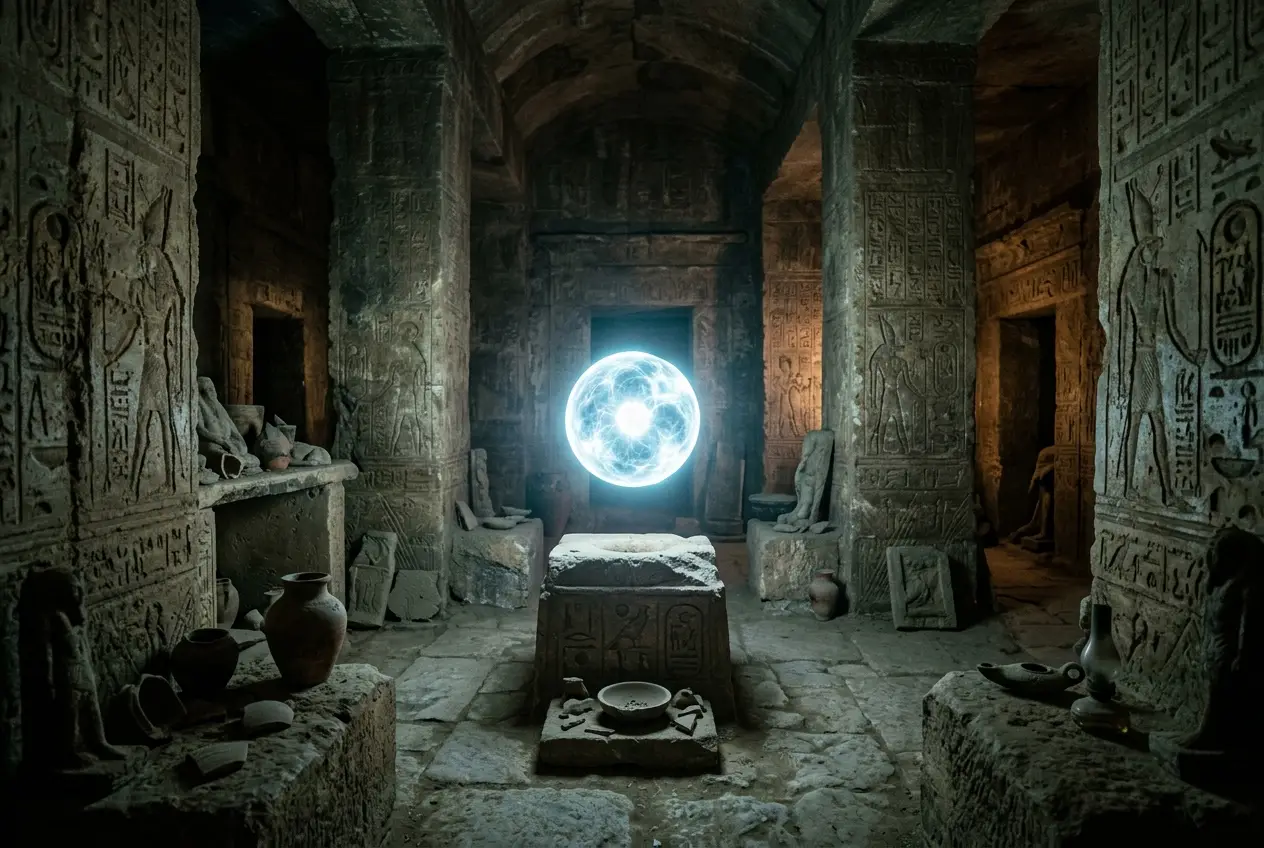
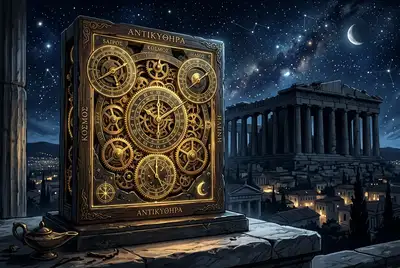
Imagine walking into a sealed tomb, untouched for thousands of years, and finding a lamp still casting its gentle glow. Such stories are not merely modern fabrications; they are woven into the fabric of historical texts and ancient folklore. Roman writers like **Plutarch** and **St. Augustine** recounted tales of lamps discovered in temples and sepulchers that, despite ages of isolation, continued to burn.
One of the most frequently cited accounts comes from the 2nd century AD, describing a lamp in the temple of Venus at APHRODISIAS, said to have burned for hundreds of years. Another oft-repeated story speaks of a lamp discovered in the tomb of Pallas, son of King Evander, which was extinguished only when air entered the chamber. These anecdotes, passed down through generations, served to fuel the mystique of a lost, miraculous technology.
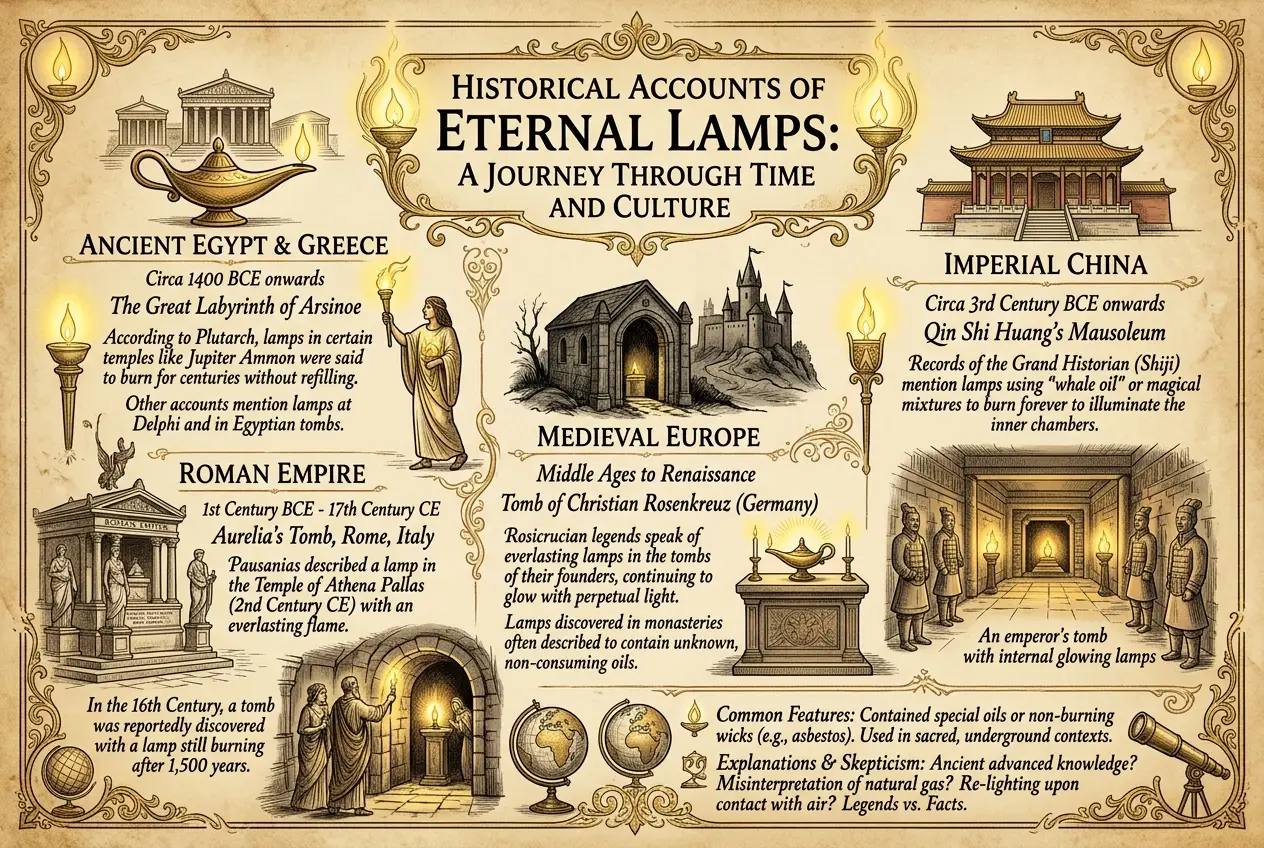
The fascination isn't just with the light itself, but what it implies: a profound understanding of chemistry, mechanics, or perhaps even unknown energy sources that enabled such a feat. It hints at a world where ancient scientists and engineers might have possessed knowledge we’ve either lost or are only just beginning to rediscover.
### Unpacking the Legends: Science vs. Speculation
While the romantic notion of a truly "eternal" lamp—one that defies the conservation of energy—is alluring, modern scientific consensus points towards more grounded explanations. The challenge lies in separating genuine archaeological anomalies from exaggerated folklore, mistranslations, or outright hoaxes.
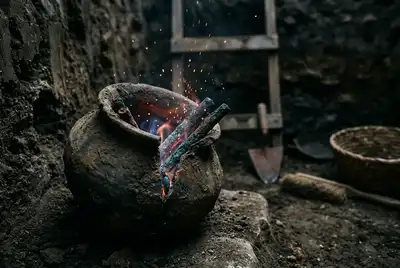
**1\. Long-Lasting, Not Eternal:** Many ancient lamps, particularly those designed for tombs or temples, were remarkably well-engineered for longevity. They often used high-quality, slow-burning fuels such as asphalt, pitch, or refined oils. When placed in sealed, oxygen-deprived environments, the rate of combustion would be incredibly slow. "The principle of a lamp burning for an extraordinarily long time is not entirely implausible if the conditions are precisely controlled," explains one historian. "A sealed environment, a very slow-burning fuel, and a minimal oxygen supply could allow a lamp to glow for centuries, though not perpetually." This doesn't mean infinite light, but certainly light that could persist far beyond a typical lifespan, perhaps even outliving the memory of its original ignition.
**2\. Phosphorescence and Chemiluminescence:** Could some "eternal lights" have been natural phenomena? Phosphorescence, where certain substances absorb light and then re-emit it slowly over time, is a known natural process. While it doesn't create light from nothing, a phosphorescent material might appear to glow for an extended period in darkness after exposure to light. Chemiluminescence, the emission of light from a chemical reaction without significant heat, is another candidate. Think of modern glow sticks. Certain natural minerals or compounds, when exposed to specific conditions, might have produced a faint, lasting glow. However, sustaining this for centuries without external energy input remains highly improbable. For more on these fascinating light phenomena, you can consult the Wikipedia page on [Chemiluminescence](https://en.wikipedia.org/wiki/Chemiluminescence).
**3\. Gases and Ventilation Systems:** Some theories propose that ancient engineers tapped into natural gas vents or created sophisticated ventilation systems that supplied a continuous, albeit small, amount of fuel to a lamp. Imagine a carefully constructed wick drawing methane from the earth's crust. While complex, ancient civilizations like the Chinese were known to use natural gas for lighting and heating centuries ago.
**4\. Optical Illusions and Reflective Surfaces:** In some instances, what appeared to be an eternal flame might have been an optical trick or the clever use of highly reflective materials. Polished metals or obsidian could amplify ambient light or moonlight, creating the illusion of an internal glow within a structure. We've explored other ancient optical technologies, such as those discussed in our blog on /blogs/could-obsidian-mirrors-decode-ancient-skies-2688, which shows the ancients' mastery of light manipulation.
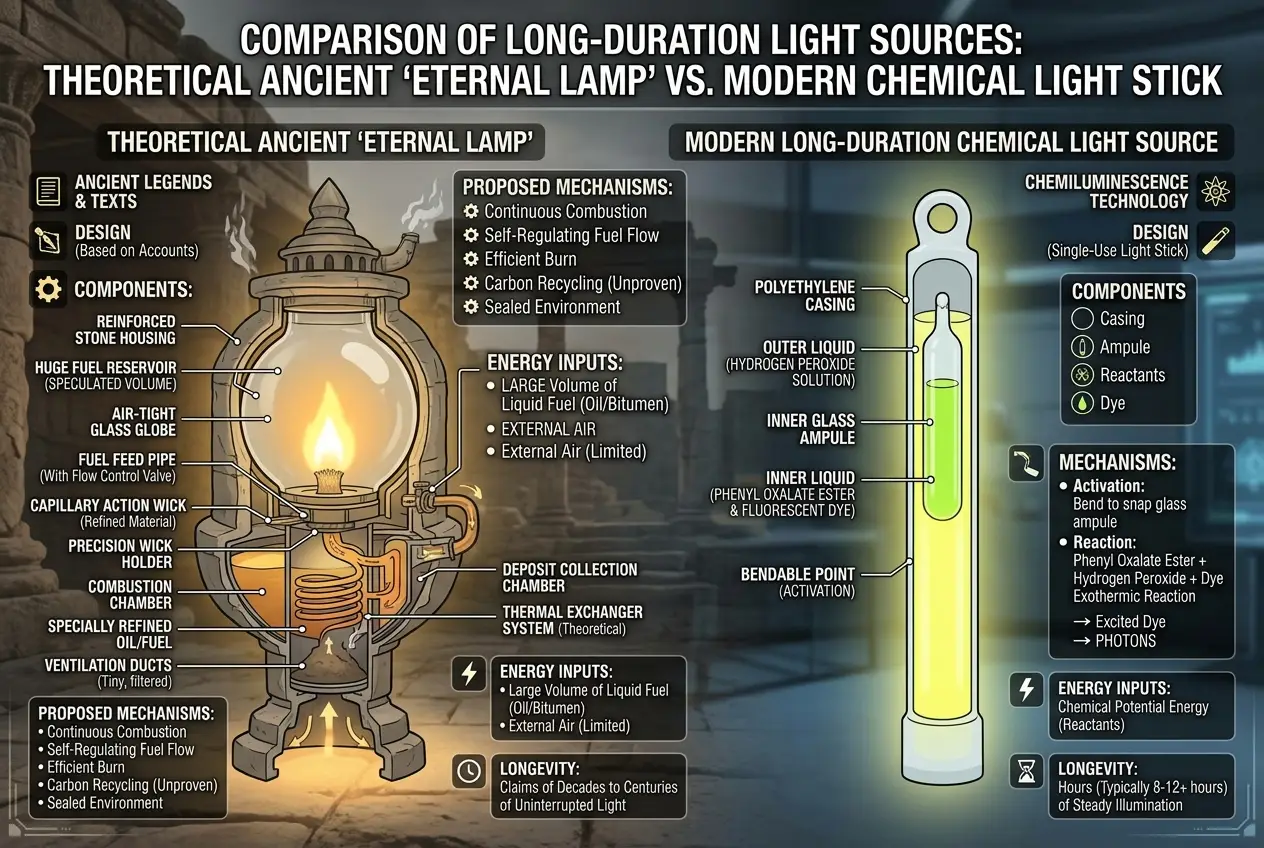
**5\. Hoaxes and Folklore Amplification:** It's also important to consider the human element. The desire for the miraculous, the awe inspired by the unknown, and the power of a good story can all contribute to the embellishment of facts. A lamp that burned for a remarkably long time could easily become "eternal" in popular retelling. Some instances might even have been deliberate hoaxes by priests or alchemists to enhance their reputation or mystique. The allure of a hidden, powerful knowledge was a strong motivator, much like the interest in the Baghdad Battery, which we discussed in /blogs/baghdad-battery-did-ancients-spark-our-electric-age-7832.
### The Role of Ancient Chemistry and Material Science
Beyond the fantastical, the pursuit of "eternal" light highlights a sophisticated, if sometimes misunderstood, understanding of material science and chemistry in antiquity. Ancient artisans were masters of their craft, capable of creating durable pigments, long-lasting cements, and advanced metallurgy. It's not a stretch to imagine them experimenting with various substances to achieve prolonged combustion or luminescence.
Consider the meticulous methods used in ancient embalming, which preserved organic matter for millennia. This level of environmental control and chemical understanding could certainly have been applied to creating sealed containers that minimized fuel consumption or oxygen exposure for a lamp.
Could they have processed certain oils to resist degradation or mixed them with other compounds to slow their burning rate to an almost imperceptible crawl? The answer, based on their other achievements, is a qualified "possibly." Their knowledge of materials and processes was often empirical and passed down through guilds, making it difficult for us to fully reconstruct today. Delving into the specific compounds they used, for instance, in their dyes, might reveal deeper chemical insights, as suggested in /blogs/did-ancient-dyes-hold-quantum-secrets-8243.
### Modern Parallels and Scientific Quest
While a truly "eternal" lamp remains in the realm of science fiction, the quest for long-duration, low-maintenance light sources continues today. We have nuclear-powered lights (RTGs – Radioisotope Thermoelectric Generators) that can glow for decades, powering distant space probes. Bioluminescence, seen in fireflies and deep-sea creatures, shows how life itself can create light without combustion.
The legend of eternal lamps serves as a powerful reminder of humanity's enduring fascination with pushing boundaries, whether through scientific innovation or the creation of captivating myths. It forces us to ask: what forgotten principles might the ancients have known, and what could we still learn from their observations and experiments?
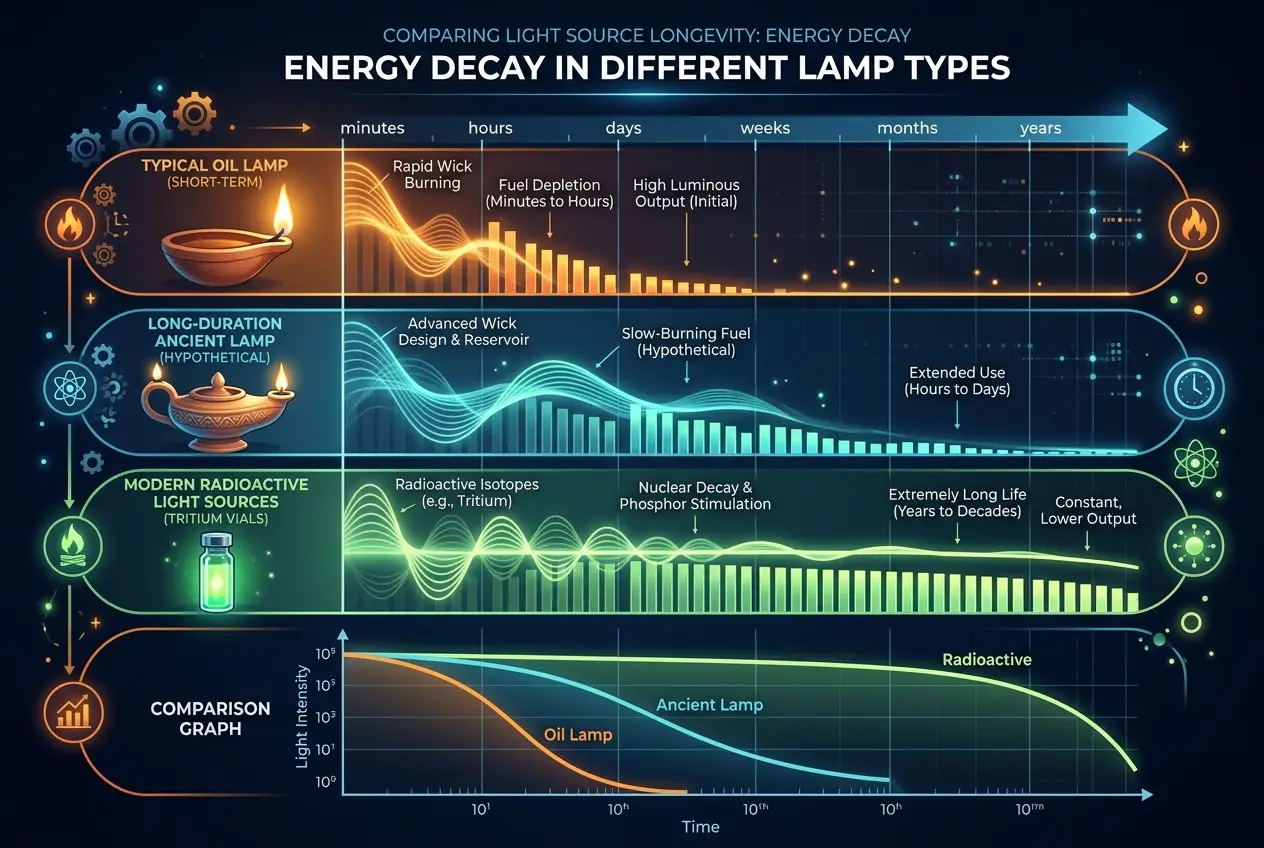
The legacy of the eternal lamp isn't about a hidden conspiracy; it's about the remarkable ingenuity of ancient civilizations and our own ongoing quest to understand the universe's fundamental laws. Perhaps the true eternal light is the flame of human curiosity itself, forever burning, driving us to explore, discover, and question.
### Conclusion
The idea of ancient eternal lamps might be more rooted in fascinating folklore and the impressive longevity of some ancient technologies under specific conditions than in actual perpetual motion. Yet, these legends are invaluable. They push us to examine historical accounts with a critical yet open mind, inspiring us to look for subtle scientific understandings within ancient practices that we might otherwise overlook. The truth may not be a lamp that burns forever, but the stories themselves are a testament to humanity’s ancient ingenuity and enduring fascination with light, life, and the mysteries that lie just beyond our grasp.
&meta\_title; Ancient Lamps: Unraveling the Myth of Eternal Light &meta\_title; &meta\_description; Did ancient civilizations truly possess the lost technology to create lamps that burned eternally? Dive into the historical accounts, scientific theories, and cultural legends behind perpetual illumination and discover what science has to say about these captivating mysteries. &meta\_description;
&faqs;{"faqs":\[{"id":1,"question":"What are the most famous historical accounts of eternal lamps?","answer":"Some of the most well-known accounts come from Roman writers like Plutarch and St. Augustine, who described lamps found burning in temples or tombs after centuries. Specific mentions include a lamp in the temple of Venus at Aphrodisias and another in the tomb of Pallas, son of King Evander."},{"id":2,"question":"Could any known ancient technology achieve long-lasting light?","answer":"Yes, ancient lamps designed for specific purposes (like tombs) could have achieved remarkably long durations. Using high-quality, slow-burning fuels (like purified oils or bitumen) in sealed, oxygen-deprived environments could allow a lamp to burn for decades or even centuries, though not perpetually."},{"id":3,"question":"What scientific explanations exist for the 'eternal lamp' phenomenon?","answer":"Besides slow-burning fuels in sealed environments, scientific explanations include natural phenomena like phosphorescence (materials glowing after light exposure), chemiluminescence (light from chemical reactions without heat), or even the clever use of natural gas vents to provide continuous fuel. Optical illusions and deliberate hoaxes are also considered possibilities."},{"id":4,"question":"Has modern science ever replicated a truly 'eternal' light source?","answer":"No, a truly 'eternal' light source that defies the laws of thermodynamics (creating light indefinitely without any energy input) has not been replicated. Modern technologies like Radioisotope Thermoelectric Generators (RTGs) can power lights for many decades using nuclear decay, but they still rely on a finite energy source."},{"id":5,"question":"Why were the legends of eternal lamps so persistent across different cultures?","answer":"The legends persisted due to a combination of factors: genuine discoveries of long-burning lamps, the human fascination with the miraculous, the desire for spiritual symbolism (eternal light often represented divine presence or immortality), and the oral transmission of exaggerated stories. These tales spoke to universal human hopes and curiosities."}\]}&faqs;
Frequently Asked Questions
Some of the most well-known accounts come from Roman writers like Plutarch and St. Augustine, who described lamps found burning in temples or tombs after centuries. Specific mentions include a lamp in the temple of Venus at Aphrodisias and another in the tomb of Pallas, son of King Evander.
Yes, ancient lamps designed for specific purposes (like tombs) could have achieved remarkably long durations. Using high-quality, slow-burning fuels (like purified oils or bitumen) in sealed, oxygen-deprived environments could allow a lamp to burn for decades or even centuries, though not perpetually.
Besides slow-burning fuels in sealed environments, scientific explanations include natural phenomena like phosphorescence (materials glowing after light exposure), chemiluminescence (light from chemical reactions without heat), or even the clever use of natural gas vents to provide continuous fuel. Optical illusions and deliberate hoaxes are also considered possibilities.
No, a truly 'eternal' light source that defies the laws of thermodynamics (creating light indefinitely without any energy input) has not been replicated. Modern technologies like Radioisotope Thermoelectric Generators (RTGs) can power lights for many decades using nuclear decay, but they still rely on a finite energy source.
The legends persisted due to a combination of factors: genuine discoveries of long-burning lamps, the human fascination with the miraculous, the desire for spiritual symbolism (eternal light often represented divine presence or immortality), and the oral transmission of exaggerated stories. These tales spoke to universal human hopes and curiosities.
Verified Expert
Alex Rivers
A professional researcher since age twelve, I delve into mysteries and ignite curiosity by presenting an array of compelling possibilities. I will heighten your curiosity, but by the end, you will possess profound knowledge.
Leave a Reply
Comments (0)
No approved comments yet. Be the first to share your thoughts!
 Join Us
 Unknown Author



















Leave a Reply
Comments (0)