I recently found myself diving deep into the life of a man whose name is synonymous with innovation: Thomas Alva Edison. While many know him primarily for the light bulb, I quickly realized that his story is a sprawling epic of relentless experimentation, fierce business acumen, and an unshakeable belief in the power of practical invention. This isn't just a blog post; it’s a comprehensive journey through the life of a true titan, so settle in – this is going to be a very long and detailed exploration of the man who, in many ways, built the blueprint for our electrified, interconnected modern world.
Edison wasn't born into privilege or academic grandeur. He was a product of the burgeoning American industrial age, a self-made genius who defied conventional education and instead carved his own path through sheer will and an insatiable curiosity. His life story isn't just a chronicle of inventions; it’s a masterclass in perseverance, problem-solving, and transforming audacious ideas into tangible realities that fundamentally changed how we live, work, and communicate. As we delve into the intricate tapestry of his existence, I invite you to discover the lesser-known facets of this extraordinary individual, beyond the iconic image of the electric light.
## Early Life & Childhood Struggles
Born on February 11, 1847, in Milan, Ohio, Thomas Alva Edison was the seventh and last child of Samuel Ogden Edison Jr. and Nancy Matthews Elliott. His early years were far from smooth, marked by a constant struggle against formal education. Thomas, or "Al" as his family called him, displayed an inquisitive and restless mind from a very young age, often asking questions that frustrated his schoolteachers. He reportedly asked so many questions and had difficulty focusing on lessons that his teacher labeled him "addled" – a term for mentally confused. This led to a pivotal moment in his life when, after only about three months of formal schooling at the age of seven, he was brought home by his mother, Nancy.
Nancy Matthews Elliott, a former schoolteacher herself, became the primary force behind young Al's education. She taught him at home, fostering his innate curiosity and encouraging him to read widely. This period of self-directed learning, away from the rigid structures of a traditional classroom, proved to be instrumental in shaping his unique approach to problem-solving and invention. Instead of rote memorization, he developed a practical, hands-on methodology. He devoured books on chemistry and mechanical engineering, conducting experiments in the basement of their Port Huron, Michigan, home. It was here that he began his lifelong journey of trial and error, a process he would later famously articulate as "I have not failed. I've just found 10,000 ways that won't work."
His entrepreneurial spirit also emerged early. At the age of 12, to earn money and fuel his experiments, he took a job selling newspapers and candy on the Grand Trunk Railroad line between Port Huron and Detroit. This venture not only provided him with a small income but also exposed him to the fast-paced world of communications and news dissemination. He even set up a small laboratory and printing press in a baggage car, conducting experiments and publishing his own newspaper, the "Grand Trunk Herald," until a chemical fire incident led to his dismissal from the car. This early brush with danger, and the loss of his initial mobile laboratory, did little to deter his enthusiasm for discovery.
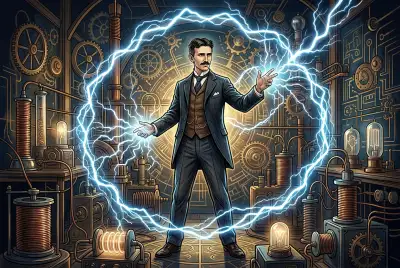
During his teenage years, Edison also experienced significant hearing loss, a condition believed to be the result of scarlet fever in childhood and an untreated ear infection, possibly aggravated by an incident where he was lifted by his ears onto a moving train. While often seen as a disability, Edison himself sometimes viewed it as an advantage, as it allowed him to concentrate more deeply on his work without external distractions. This period of his life laid the foundation for his formidable work ethic and his unwavering dedication to practical innovation, a commitment that would define his entire career. You might find his single-minded focus reminiscent of other great minds like Nikola Tesla, whose biography can be explored at
Nikola Tesla: The Enigmatic Genius Who Wired Our Modern World.
## The Telegrapher: A Spark Ignites Innovation
Edison's foray into the world of technology began in earnest with the telegraph. At 15, he saved a station agent’s son from being run over by a train. In gratitude, the agent taught Edison how to operate the telegraph, a skill that would become his first professional trade and a critical stepping stone in his inventive career. From 1863 to 1868, Edison traveled across the Midwest as an itinerant telegrapher, working for Western Union and other companies. This experience was invaluable; it not only honed his practical skills in electrical engineering but also gave him a deep understanding of the telegraph system's limitations and inefficiencies.
He was fascinated by the mechanics and electrical principles behind the telegraph, often spending his spare time tinkering and experimenting to improve the devices. His restless mind saw opportunities where others saw mere routine. While working the night shift, he would often read scientific journals and conduct experiments, sometimes to the detriment of his assigned duties. Stories abound of him inventing devices to automatically send "all well" signals to the central office so he could nap or work on his projects without interruption.
His first patent, granted in 1869, was for an electric vote recorder, a device designed to quickly count votes in legislative bodies. However, much to his disappointment, legislators preferred the slower, traditional method as it allowed time for political maneuvering. This early failure taught Edison a crucial lesson: invention, no matter how clever, must also meet a perceived market need or solve a practical problem that people *want* solved. This insight would guide his future endeavors, shifting his focus from simply what *could* be invented to what *should* be invented.
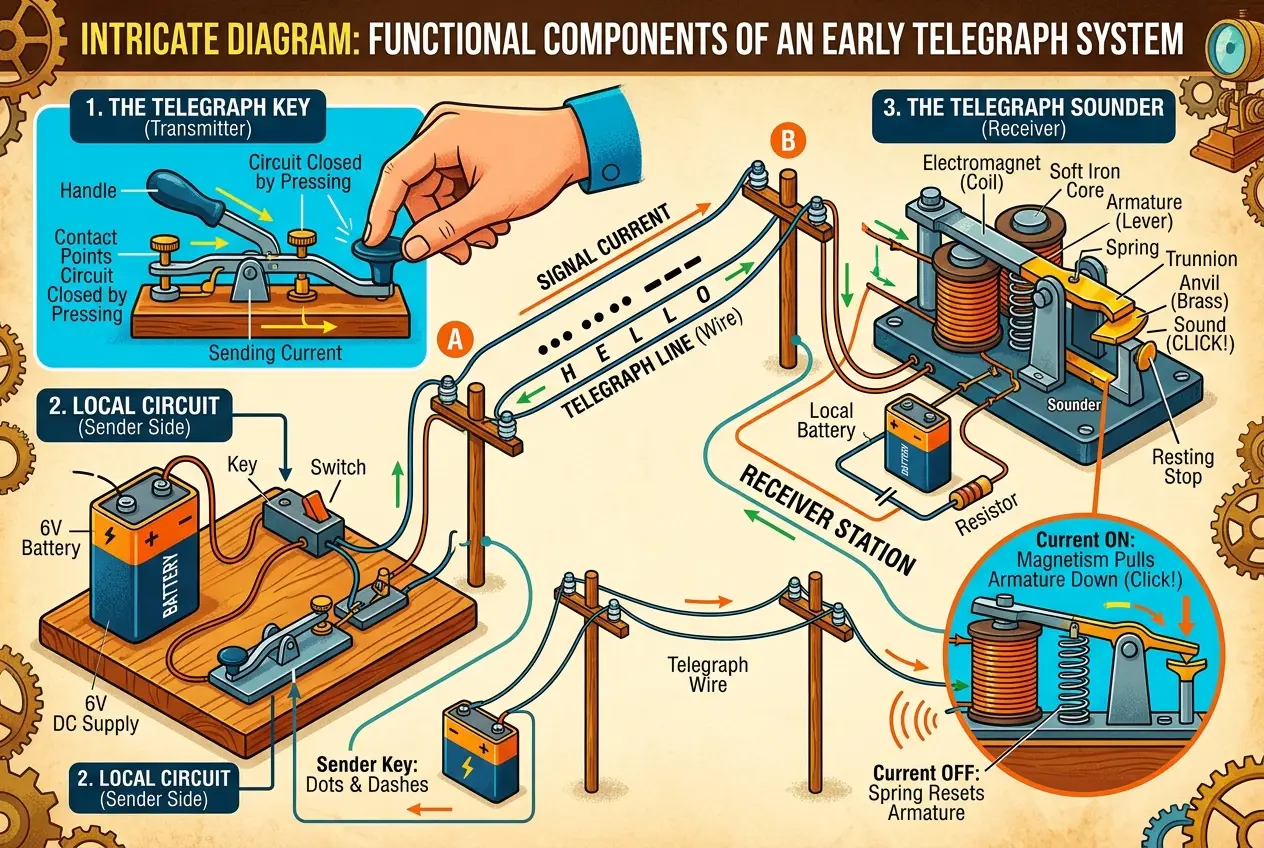
He moved to New York City in 1869, nearly penniless but brimming with ideas. He found employment at a telegraph company, and it was there he made his first significant breakthrough: improving the stock ticker. The existing gold and stock tickers were unreliable, often breaking down during peak trading hours. Edison, through observation and rapid problem-solving, designed an improved Universal Stock Ticker. This invention was a resounding success and, importantly, his first major commercial triumph. He sold the rights to the Gold and Stock Telegraph Company for an astounding $40,000 – a fortune at the time. This capital finally provided him with the financial freedom to pursue his inventive dreams full-time and establish his own workshop.
## Menlo Park: The Invention Factory Rises
With the financial success of the Universal Stock Ticker, Edison was able to realize a groundbreaking vision: a laboratory specifically dedicated to systematic invention. In 1876, he established his famous research and development facility in Menlo Park, New Jersey. This wasn't just a workshop; it was, arguably, the world's first industrial research laboratory, a place where innovation was approached as a collaborative, systematic process rather than merely the result of solitary genius. It was a place designed to churn out inventions, earning it the moniker "The Invention Factory."
I imagine the atmosphere at Menlo Park must have been electric, filled with the hum of machinery, the scent of chemicals, and the intense focus of brilliant minds. Edison assembled a diverse team of skilled machinists, engineers, and scientists, fostering an environment of intense experimentation, long hours, and relentless pursuit of solutions. Unlike individual inventors working in isolation, the Menlo Park approach was to tackle problems with a team, share knowledge, and iterate rapidly through prototypes. It was a precursor to modern R&D departments in corporations.
The goal at Menlo Park was clear: to produce "a minor invention every ten days and a big thing every six months or so." This ambitious target reflected Edison's belief that innovation could be industrialized. The laboratory was equipped with state-of-the-art tools, including lathes, presses, and a vast library, providing his team with everything they needed to bring ideas to life. The methodical approach and the sheer volume of experiments conducted set a new standard for technological development. This environment encouraged not just invention, but also the continuous improvement of existing technologies.
It was within the bustling walls of Menlo Park that some of Edison's most iconic inventions would come to fruition, fundamentally altering human civilization. The success of Menlo Park demonstrated that organized, collaborative research could accelerate the pace of technological progress dramatically, moving beyond the individual tinkerer to a collective force of innovation. His methodology was less about sudden flashes of insight and more about methodical hard work. As he famously stated, "Genius is one percent inspiration and ninety-nine percent perspiration."
## The Phonograph: Capturing Sound, Capturing Imagination
One of the most astonishing breakthroughs to emerge from Menlo Park, and one that deeply resonated with the public's imagination, was the phonograph. In 1877, Edison was working on improving telegraphic communication, specifically a machine that could automatically record telegraph messages. During his experiments, he noticed that the rapid movement of the telegraph needle produced a "musical" noise. This observation sparked a revolutionary idea: could sound itself be recorded and reproduced?
He quickly pivoted, sketching out a design for a device that would record sound vibrations onto a tinfoil-wrapped cylinder. The first successful demonstration of the phonograph in December 1877 was nothing short of miraculous. Edison recited "Mary Had a Little Lamb" into the mouthpiece, cranked the handle, and moments later, the machine played back his voice. The world had never heard anything like it.
I can only imagine the sheer wonder and disbelief of those first witnesses. The ability to capture and replay the ephemeral nature of sound seemed almost magical. It was an invention that immediately captured global attention, earning Edison the nickname "The Wizard of Menlo Park." The phonograph wasn't just a novelty; it opened up entirely new industries: music recording, dictation, and even talking books. It was a device that promised to preserve voices for posterity, a concept that was truly mind-boggling at the time.
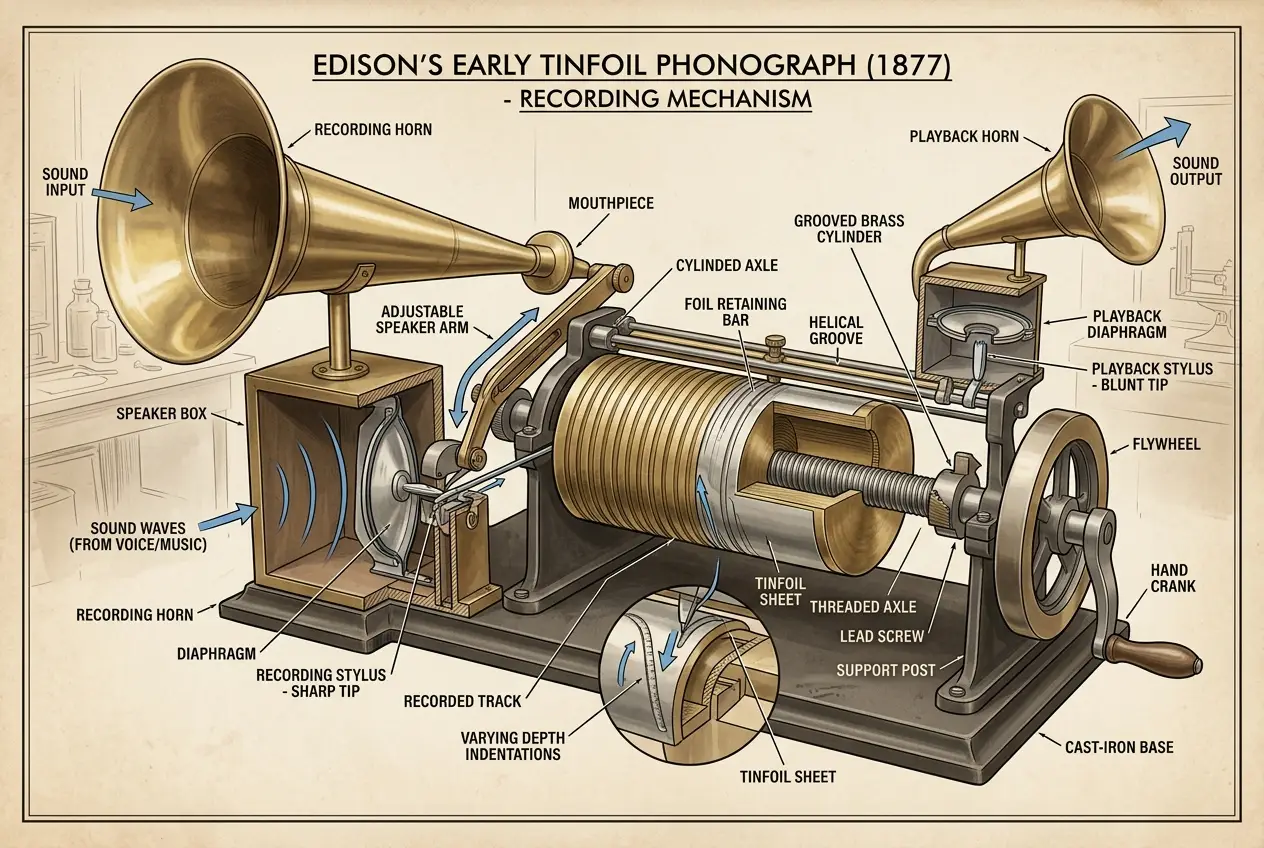
Initially, Edison envisioned many practical applications for the phonograph beyond entertainment, including dictation for businesses, "phonographic books" for the blind, family records, and even teaching elocution. However, it was its potential for entertainment and music that would eventually dominate its commercial success. The phonograph's invention was a profound milestone in human history, fundamentally changing how we interact with sound and culture. It paved the way for all subsequent audio recording technologies, from vinyl records to digital audio files. Without it, the modern music industry as we know it would simply not exist. For more on ancient sound concepts, you might explore
Did Ancients Program Reality Using Sound?.
## The Incandescent Light Bulb: Illumination for the Masses
Perhaps Edison's most famous and impactful invention, the commercially viable incandescent light bulb, was not a singular stroke of genius but the culmination of thousands of experiments and improvements upon existing concepts. Electric lights existed before Edison, but they were either impractical, short-lived, or too expensive for widespread domestic use. Edison's genius lay in his systematic approach to create a **complete, practical, and affordable lighting system**.
His team at Menlo Park focused on three critical areas: finding a long-lasting filament, developing a vacuum pump to remove air from the bulb (to prevent filament oxidation), and creating an entire electrical distribution system to power the bulbs. The quest for the perfect filament was legendary, with Edison testing thousands of materials – from plant fibers to human hair. He tried various metals and eventually returned to carbonized filaments. In October 1879, after countless trials, his team achieved a breakthrough with a carbonized cotton thread filament that burned for over 13 hours. This was swiftly followed by a carbonized bamboo filament that could last for over 1200 hours.
This wasn't just about the bulb itself. Edison understood that for electric lighting to be adopted, it needed to be part of an integrated system. This meant developing generators, meters, cables, fuses, and sockets – essentially, the entire infrastructure required to bring electricity from a central power plant into homes and businesses. This holistic approach was revolutionary. He didn't just invent a product; he invented an industry.
On December 31, 1879, Edison demonstrated his new electric lighting system to the public at Menlo Park. Thousands flocked to witness the spectacle, marveling at the clean, bright, and safe light that didn't rely on dangerous gas or messy oil. The effect was transformative. The ability to have safe, reliable light on demand fundamentally changed society – extending working hours, enhancing safety, and paving the way for urbanization and industrial expansion.
The commercialization of his lighting system began with the formation of the Edison Electric Light Company in 1878, which later became General Electric. In 1882, the first commercial central power station, the Pearl Street Station in lower Manhattan, began operation, illuminating homes and businesses with Edison’s DC (direct current) system. This marked the dawn of the age of widespread electricity, an era that continues to define our modern world. Without his tireless efforts, the very concept of flicking a switch to banish darkness might have remained a distant dream for much longer. For a look into earlier attempts at continuous light, see
Ancient Lamps: Did Lost Tech Create Eternal Light?.
## The War of the Currents: Edison vs. Tesla
While Edison's DC (Direct Current) system was successfully deployed, a formidable challenger emerged: Alternating Current (AC). This period, known as "The War of the Currents," pitted Edison and his DC proponents against Nikola Tesla and George Westinghouse, who championed AC. The core of the conflict was over which electrical transmission system was superior for widespread distribution.
Edison's DC system had a significant drawback: it could only transmit electricity efficiently over short distances. To power a city, numerous power stations would be needed close to consumers, leading to high infrastructure costs. Nikola Tesla, a brilliant Serbian-American inventor who had briefly worked for Edison, developed and advocated for AC, which could be transmitted at high voltages over long distances and then stepped down to lower, safer voltages for local use via transformers. This made AC far more efficient and economical for large-scale power distribution.
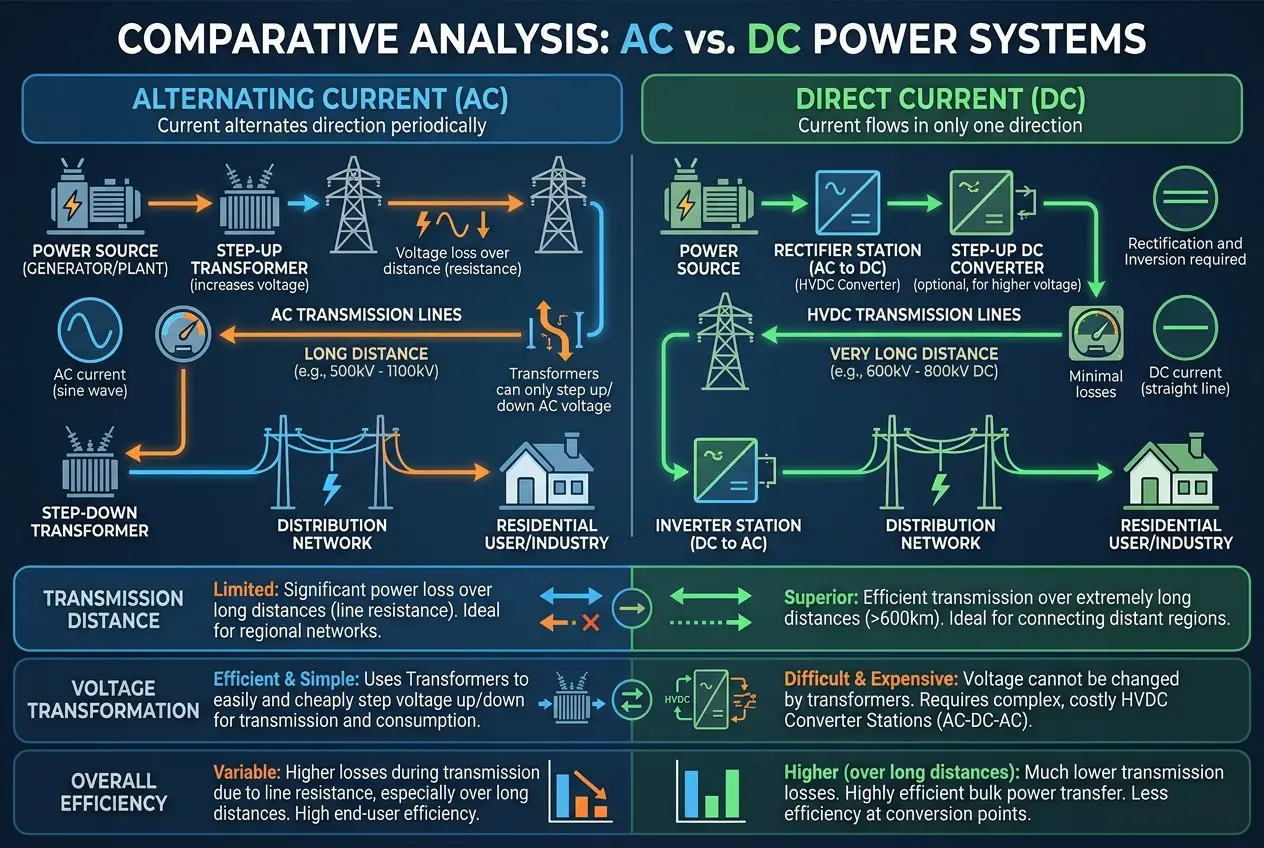
The rivalry was intense and often dirty. Edison, fearing the obsolescence of his DC system and the vast investments he had made, launched a smear campaign against AC. He publicly demonstrated the dangers of high-voltage AC by electrocuting animals, including an elephant, and even played a role in the development of the electric chair, deliberately using AC to highlight its lethality. His aim was to brand AC as inherently more dangerous than DC, even though both could be fatal if misused.
However, the technical and economic advantages of AC were undeniable. Westinghouse, backed by Tesla's patents and engineering, secured major contracts, including the illumination of the 1893 World's Columbian Exposition in Chicago and, crucially, the power generation project at Niagara Falls. These victories effectively sealed the fate of the War of the Currents in favor of AC. While DC continued to be used for specialized applications, AC became the standard for power transmission, a decision that still underpins our modern electrical grids. The legacy of this "war" highlights that even the most innovative minds can cling to their own advancements, sometimes resisting the very progress they typically champion. The story of Nikola Tesla, Edison's rival, is equally fascinating and can be explored further in
Nikola Tesla: The Enigmatic Genius Who Wired Our Modern World.
## Motion Pictures: Bringing Images to Life
Beyond sound and light, Edison's inventive curiosity extended to the realm of moving images. Inspired by the work of Eadweard Muybridge and Étienne-Jules Marey, who had experimented with capturing sequential photographs, Edison envisioned a device that could record and display these images to create the illusion of motion. He tasked his assistant, William Kennedy Laurie Dickson, with developing a practical system.
This led to the invention of the Kinetograph (a motion picture camera) and the Kinetoscope (an individual viewing device). The Kinetograph, developed in the late 1880s and early 1890s, used Eastman Kodak celluloid film strips to capture rapid sequences of images. The Kinetoscope, patented in 1891, was essentially a peep-show device where one person at a time could view a continuous loop of film through an eyepiece. These early films were short, often depicting vaudeville acts, sporting events, or simple narratives, lasting only about 20 to 30 seconds.
The first public demonstration of the Kinetoscope took place in 1893, and Kinetoscope parlors soon popped up across the United States. These parlors, essentially rows of coin-operated viewing machines, offered a novel form of entertainment. While not projecting images onto a screen for a mass audience, the Kinetoscope was a critical step in the development of cinema. It standardized the 35mm film gauge, a format that would remain dominant in filmmaking for decades.
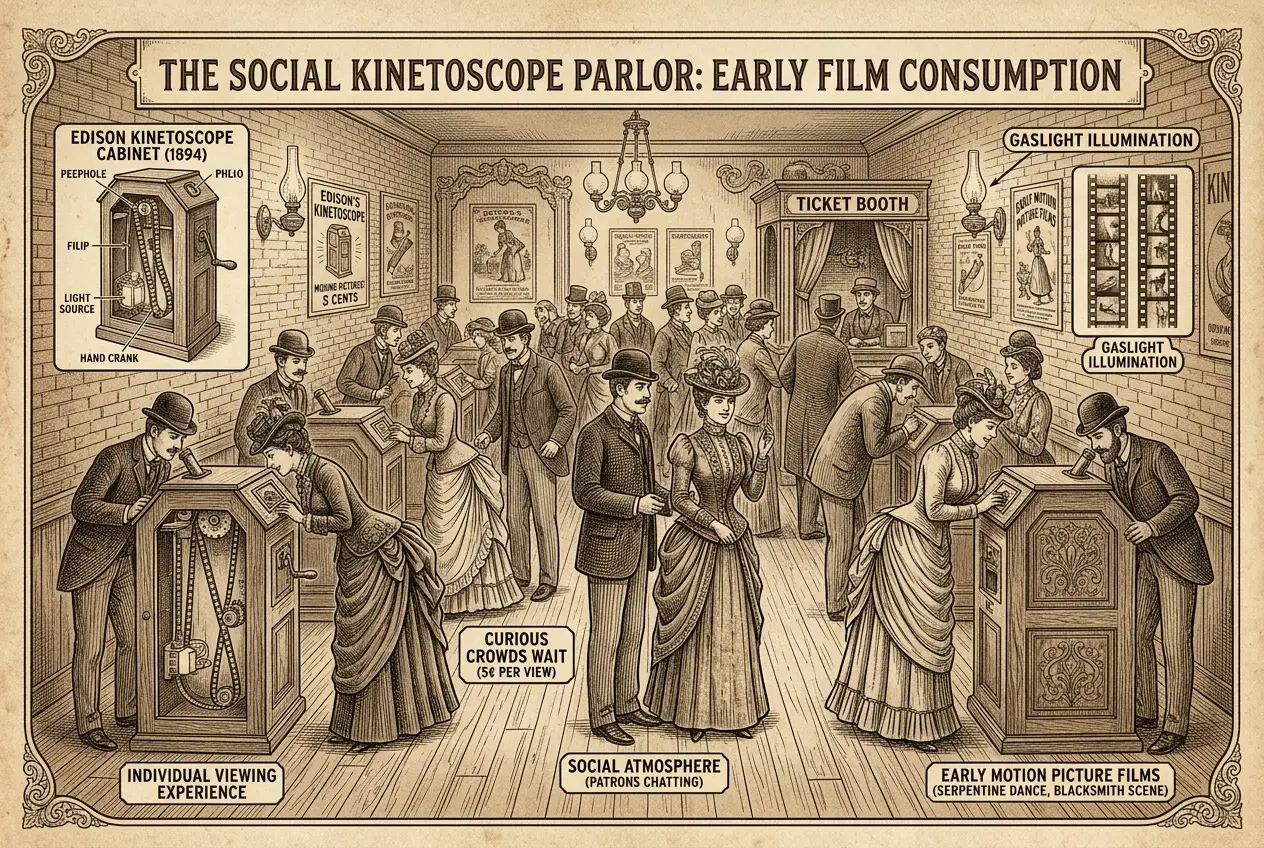
Edison initially resisted projecting films onto a screen, believing that individual viewing would be more profitable. However, other inventors soon developed projection systems, notably the Lumière brothers in France with their Cinématographe. Edison eventually developed his own projector, the Vitascope, introduced in 1896, which allowed films to be shown to larger audiences. His contributions were fundamental to the birth of the film industry, laying the groundwork for the global phenomenon that cinema would become. The principles established in those early Kinetograph and Kinetoscope designs continue to echo in modern cinematography, making him a true pioneer of visual storytelling.
## Later Innovations & Entrepreneurial Empire
Edison's inventive output didn't cease with his major breakthroughs in sound, light, and motion pictures. Throughout his life, he continued to pursue a wide array of projects, demonstrating an insatiable appetite for practical problem-solving. While Menlo Park closed in 1886, he established a much larger and more sophisticated laboratory in West Orange, New Jersey. This facility, significantly bigger and more comprehensively equipped, became his primary research hub for the rest of his life, functioning much like a modern corporate R&D center.
At West Orange, Edison continued his relentless work, often simultaneously pursuing multiple projects with large teams of researchers. Some of his notable later endeavors included:
* **Mining Operations:** He invested heavily in iron ore processing, developing techniques for magnetic ore separation. Although this venture ultimately proved commercially unsuccessful due to the discovery of richer ore deposits elsewhere, it showcased his willingness to tackle large-scale industrial challenges and apply inventive thinking to diverse fields.
* **Storage Batteries:** Recognizing the need for portable power, Edison dedicated years to developing a robust and reliable storage battery. His nickel-iron alkaline battery, patented in 1901, was a significant improvement over existing lead-acid batteries, known for its durability and longer lifespan. It found widespread use in electric vehicles (before gasoline cars dominated), railway signaling, and marine applications.
* **Cement Production:** Edison was also a pioneer in the cement industry, developing new processes for manufacturing Portland cement. He used cement to construct many buildings, including his own factory and office buildings, showcasing its versatility. He even developed a unique process for prefabricating concrete houses.
* **Synthetic Rubber:** During World War I, with natural rubber supplies threatened, Edison worked on finding a domestic source of rubber, experimenting with various plants to extract rubber compounds. This effort, though not leading to a mass-produced solution, highlighted his commitment to national self-sufficiency through scientific and technological innovation.
Edison was not merely an inventor; he was a shrewd entrepreneur. He understood that an invention's true value lay in its commercial application. He founded numerous companies, including the Edison General Electric Company (which merged to become General Electric), Edison Illuminating Company, and Edison Manufacturing Company, to produce and market his inventions. His business strategies were often aggressive, including extensive patent litigation to protect his intellectual property. He believed fiercely in the value of his inventions and worked tirelessly to ensure their widespread adoption and profitability. This fusion of inventive genius with business acumen cemented his legacy as a true industrialist and a force in shaping modern commerce. His ability to build an empire from his ideas is a testament to his vision.
## Edison's Philosophy & Work Ethic
To truly understand Thomas Edison, one must grasp the core of his philosophy and his legendary work ethic. He was not a traditional academic, but a relentless pragmatist who believed in observation, experimentation, and persistence above all else. His laboratory was less a place of theoretical contemplation and more a forge of practical solutions.
His most famous quote, "Genius is one percent inspiration and ninety-nine percent perspiration," encapsulates his entire approach. He believed that breakthroughs rarely came from sudden divine inspiration but were the result of painstaking, methodical, and often repetitive hard work. He was known for his astonishing stamina, often working 18-20 hours a day, sometimes sleeping on a lab bench for short periods before resuming his experiments. His dedicated staff often found themselves working equally grueling hours, driven by Edison's own relentless pace and enthusiasm.
Edison embraced failure not as an endpoint, but as a critical part of the learning process. "I have not failed. I've just found 10,000 ways that won't work," he reportedly said regarding his light bulb experiments. This mindset of iterative improvement, where each failed attempt provided valuable data, was revolutionary in a time when many inventors guarded their work jealously and feared publicizing their setbacks. He viewed mistakes as stepping stones to success, an essential part of the discovery process.
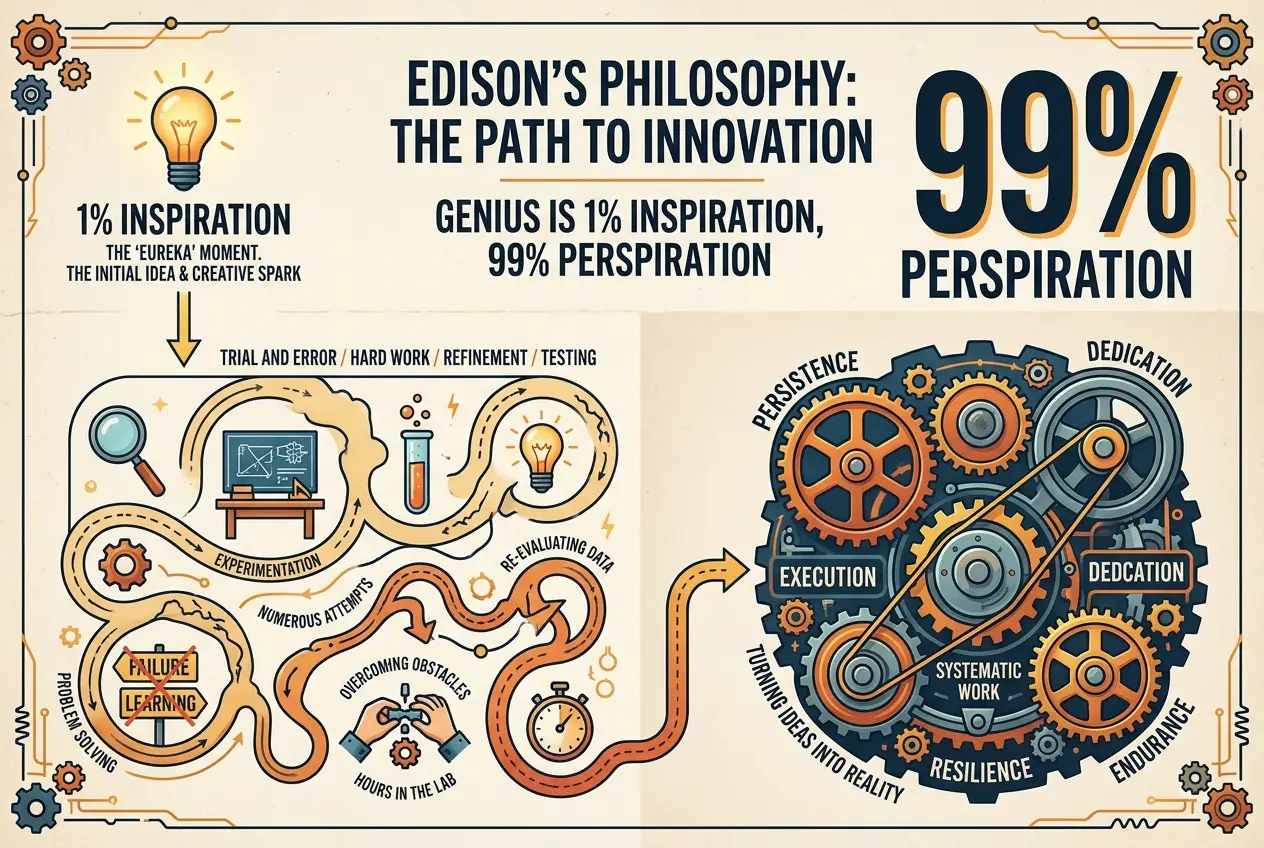
His philosophy also emphasized the importance of teamwork. While he often received the sole credit, his laboratories at Menlo Park and West Orange were bustling hubs of collaborative effort. He employed a diverse group of engineers, chemists, machinists, and assistants, each contributing their specialized skills to the collective goal. Edison acted as the visionary leader, manager, and sometimes the hands-on experimenter, guiding his team through countless trials and errors. He fostered an environment where ideas were tested rigorously, and problems were dissected from multiple angles. This collaborative, industrial approach to invention was a key element of his success, distinguishing him from many individual inventors of his era. It’s a lesson in collective intelligence that resonates even today.
## Legacies and Controversies
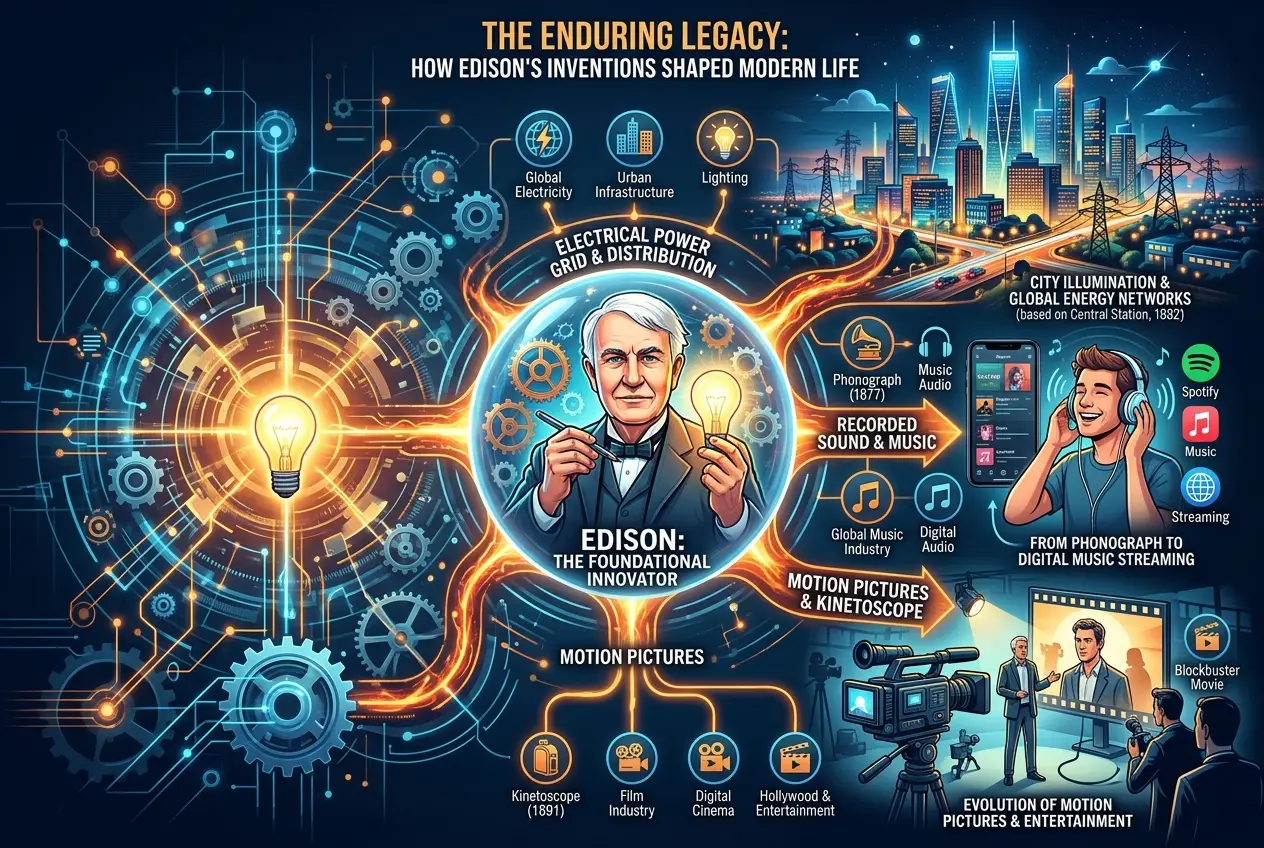
Thomas Edison's legacy is vast and undeniably transformative, yet it is also complex, tinged with controversies and overshadowed by the sheer magnitude of his achievements. He accumulated an astonishing 1,093 U.S. patents in his lifetime, a record that remains largely unmatched. His inventions not only created new products but also new industries, fundamentally reshaping global economies and daily life. The electric light, the phonograph, and the motion picture camera were not just gadgets; they were catalysts for entirely new cultural, social, and industrial paradigms.
**Positive Legacies:**
* **Industrial Research:** Edison’s greatest organizational legacy is arguably the establishment of the industrial research laboratory. Menlo Park and West Orange set the precedent for systematic, collaborative R&D, moving invention from the isolated workshop to an organized, goal-oriented process that is still the model for modern corporations and scientific institutions.
* **Electrification of the World:** His work on the incandescent light bulb and, crucially, the development of the complete electrical distribution system, ushered in the age of widespread electricity. This transformed homes, factories, and cities, making modern living possible.
* **Media and Entertainment:** The phonograph and motion picture camera laid the groundwork for the recording industry, radio, and cinema, fundamentally changing how humans experience and share culture, news, and entertainment.
* **Entrepreneurial Spirit:** Edison was a savvy businessman who understood the critical link between invention and commercialization. His ability to build companies and market his products demonstrated that innovation was not just about discovery but also about practical application and distribution.
**Controversies and Criticisms:**
* **Credit for Inventions:** While Edison held the patents, the "Wizard of Menlo Park" title often obscured the collaborative nature of his work. Many of his inventions were the result of significant contributions from his skilled team of researchers and engineers. Critics argue that he sometimes took more credit than was due, diminishing the roles of his employees.
* **The War of Currents:** His aggressive and sometimes unethical tactics during the "War of the Currents" against AC power proponents like Nikola Tesla and George Westinghouse remain a stain on his reputation. His public demonstrations of electrocuting animals to discredit AC were particularly controversial.
* **Legal Battles:** Edison was notorious for his litigiousness, frequently engaging in patent infringement lawsuits to protect his inventions and assert his dominance in emerging industries, particularly in film. While a common practice, his relentless pursuit of legal action sometimes stifled competition and drew criticism.
* **Stifling Innovation:** Some historians argue that Edison's focus on refining and commercializing existing technologies, rather than pursuing purely theoretical or fundamental scientific research, sometimes led him to overlook or dismiss truly groundbreaking concepts, such as Tesla's AC system or Marconi's wireless telegraphy.
Despite these criticisms, Edison’s impact on human progress is undeniable. He embodied the American spirit of ingenuity and self-reliance, transforming the world not just with individual inventions but with an entire system for bringing new technologies to life. His legacy compels us to consider the multifaceted nature of genius and the complex interplay between invention, industry, and human progress.
## The Twilight Years & Enduring Impact
Thomas Edison’s final decades were characterized by continued, though less prolific, inventive activity, a deepening interest in certain scientific questions, and a growing status as a revered national icon. He became a symbol of American ingenuity and industrial might, often sought out for his opinions and insights.
In his later years, Edison continued to experiment, particularly focusing on finding a domestic source for rubber during the early 20th century. With the support of industrialists Henry Ford and Harvey Firestone, he conducted extensive research, testing thousands of plant species to find a viable alternative to imported rubber. While his efforts didn't yield a commercially successful replacement, they demonstrated his unwavering commitment to solving practical problems, even in old age. His friendship with Ford and Firestone, a trio often dubbed "The Vagabonds," highlights his enduring connections to the industrial giants of his era.
Edison passed away on October 18, 1931, at the age of 84, at his estate, Glenmont, in West Orange, New Jersey. The world mourned the passing of a legend. As a tribute to his contributions to human civilization, many communities across the United States temporarily dimmed their lights on the night of his funeral, a poignant symbol of the darkness he had so brilliantly banished.
His impact reverberates across every aspect of modern life. Without Edison, our world would be fundamentally different:
* **Our homes and cities would be darker**, still reliant on inefficient and dangerous forms of illumination.
* **Our ability to communicate and share culture would be severely limited**, lacking recorded sound and the vast visual medium of cinema and television.
* **The very concept of industrial research and development** as an organized, systematic endeavor might have evolved far more slowly.
Edison's legacy is more than just a list of inventions; it’s a testament to the power of human curiosity, relentless effort, and the vision to transform raw ideas into tangible realities. He wasn't just an inventor; he was an architect of the modern world, laying down the fundamental building blocks of our electrified, media-rich, and technologically advanced society. His life reminds us that true progress often comes not from a single flash of brilliance, but from persistent, iterative work, a willingness to fail, and the courage to industrialize imagination.
He challenged the status quo, pushed the boundaries of what was thought possible, and in doing so, illuminated the path for generations of innovators to follow. His story continues to inspire, reminding us that with enough grit, imagination, and tireless effort, one person can indeed change the world. Perhaps this extensive dive into his life has ignited a spark of curiosity in you, urging you to explore more great minds like
Albert Einstein: The Mind Who Rewrote Reality or
Michael Faraday: The Mind Who Illuminated Our Modern World.
 Join Us



 Unknown Author


























Leave a Reply
Comments (0)