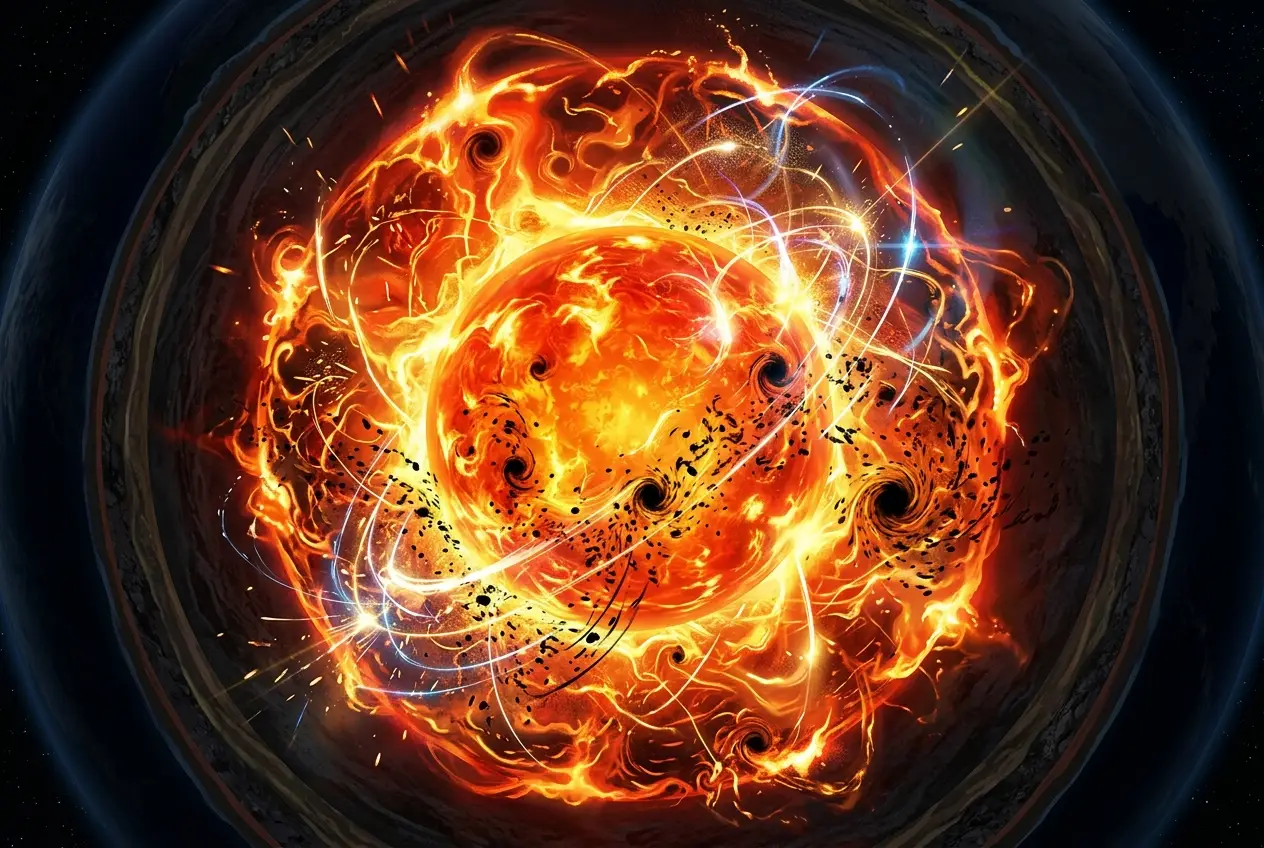
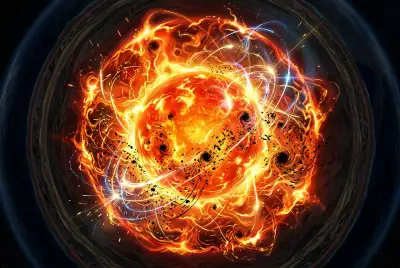
I remember the first time I really grasped the sheer power encapsulated within Earth’s core. It wasn't just molten rock; it was a churning, immense dynamo, a metallic heart under pressures so extreme they warp our everyday understanding of matter. For decades, scientists have probed its depths, trying to understand its mysteries – from generating our protective magnetic field to influencing seismic activity. But recently, a more audacious question crossed my mind, one that seems ripped straight from a sci-fi novel: **could the unimaginable conditions at the Earth's very center spontaneously create something as enigmatic as a micro black hole?**
It sounds outlandish, I know. Black holes are cosmic devourers, remnants of collapsed stars, pulling in everything, even light. The idea of one lurking beneath our feet feels profoundly unsettling. Yet, when we talk about *micro* black holes, the science gets a little more nuanced, a little more intriguing, and a lot less apocalyptic. These aren't the supermassive monsters at galactic centers, but theoretical entities on a subatomic scale, born from extreme energy concentrations, much like those replicated in particle accelerators.
### **The Earth's Core: A Natural Extreme Laboratory**
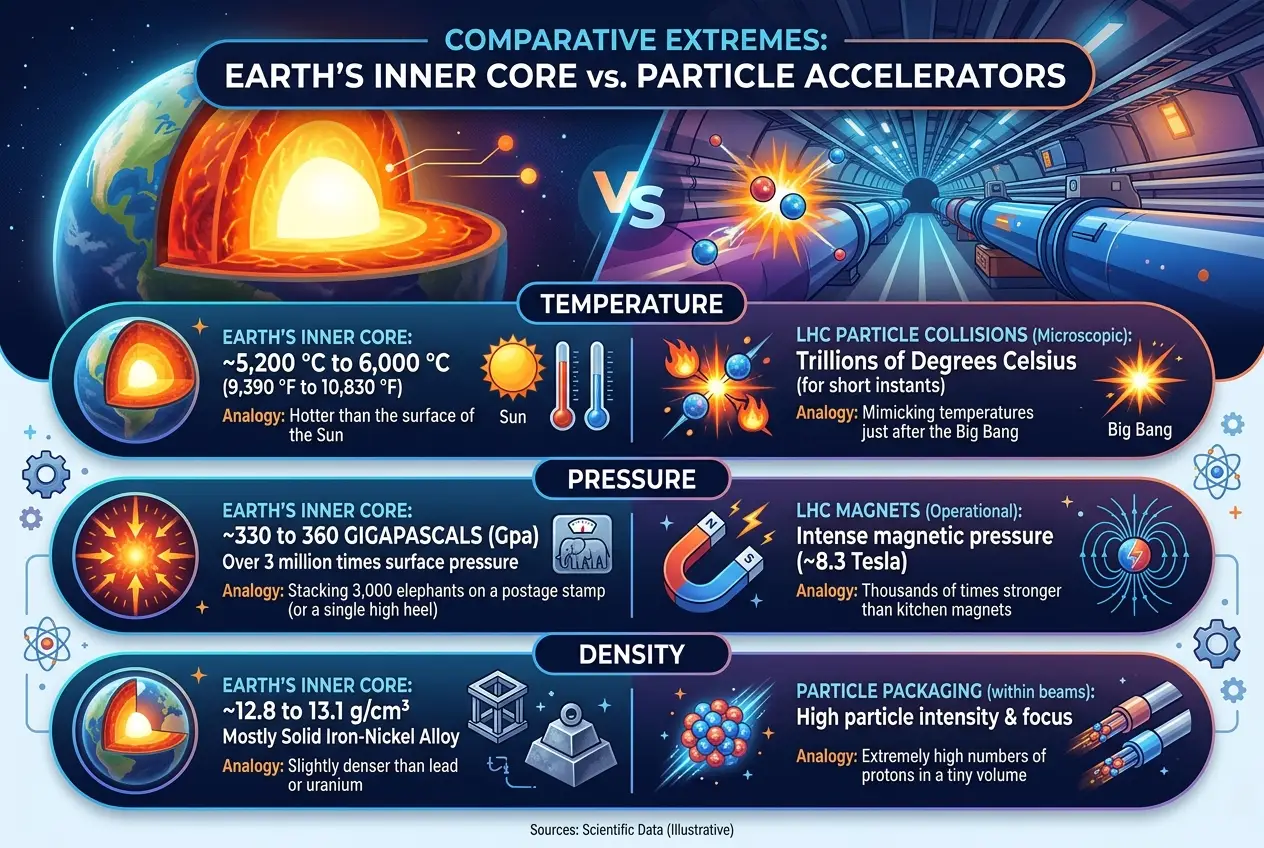
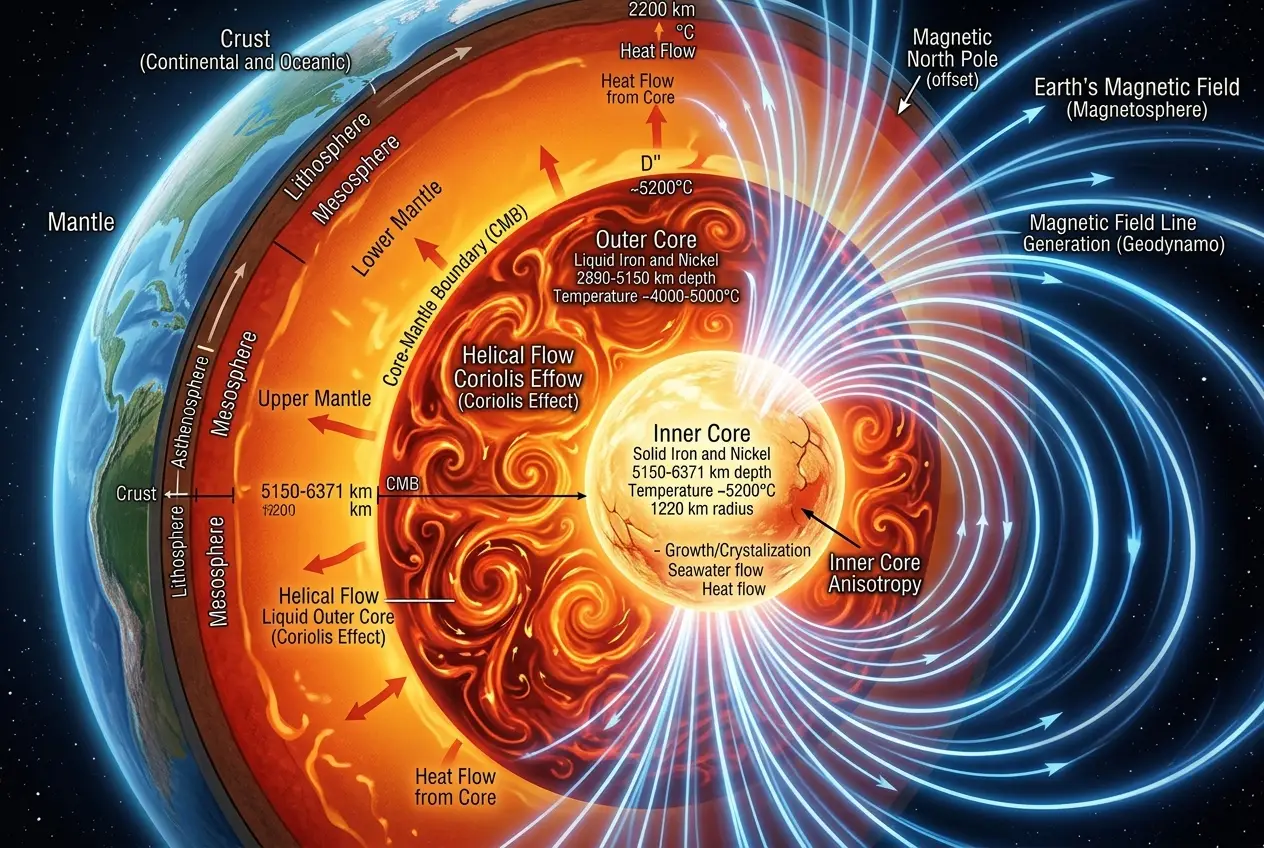
To even begin to entertain the thought of micro black holes in Earth's core, we first need to appreciate the truly mind-boggling environment down there. Our planet's heart, roughly 2,900 kilometers (1,800 miles) below the surface, is a place of unfathomable extremes. The **inner core** is a solid ball of iron and nickel, while the **outer core** is liquid. Temperatures soar to an estimated 5,700 Kelvin (about 9,940 °F or 5,430 °C), comparable to the surface of the Sun.
But it’s the pressure that truly defies comprehension. At the Earth's center, the pressure reaches an astonishing 3.6 million atmospheres. To put that into perspective, imagine the entire weight of the Eiffel Tower concentrated onto a single fingertip – and then multiply that by millions. Under such immense forces, matter behaves in ways we can barely simulate in a lab, let alone observe directly. Atoms are squeezed into states unlike anything found on the surface, their electron shells deforming, their nuclei potentially interacting in entirely new ways. This extreme environment is crucial, as it provides the raw ingredients for high-energy phenomena. For more details on this incredible geological engine, you might want to read our previous article, ["What Fuels Earth's Core? Unpacking Our Living Planet"](/blogs/what-fuels-earths-core-unpacking-our-living-planet-4849).
### **Micro Black Holes: A Brief Primer**
Before we plunge deeper into the core, let's clarify what a "micro black hole" is in the context of scientific discussion. Theoretical physicists, notably Stephen Hawking, proposed the existence of **primordial black holes** shortly after the Big Bang. These aren't formed from stellar collapse but from density fluctuations in the very early universe. Some theories suggest these could range in size from subatomic particles to tens of thousands of solar masses. The smaller ones, especially those with masses akin to a mountain, would theoretically evaporate over time through a process called Hawking radiation.
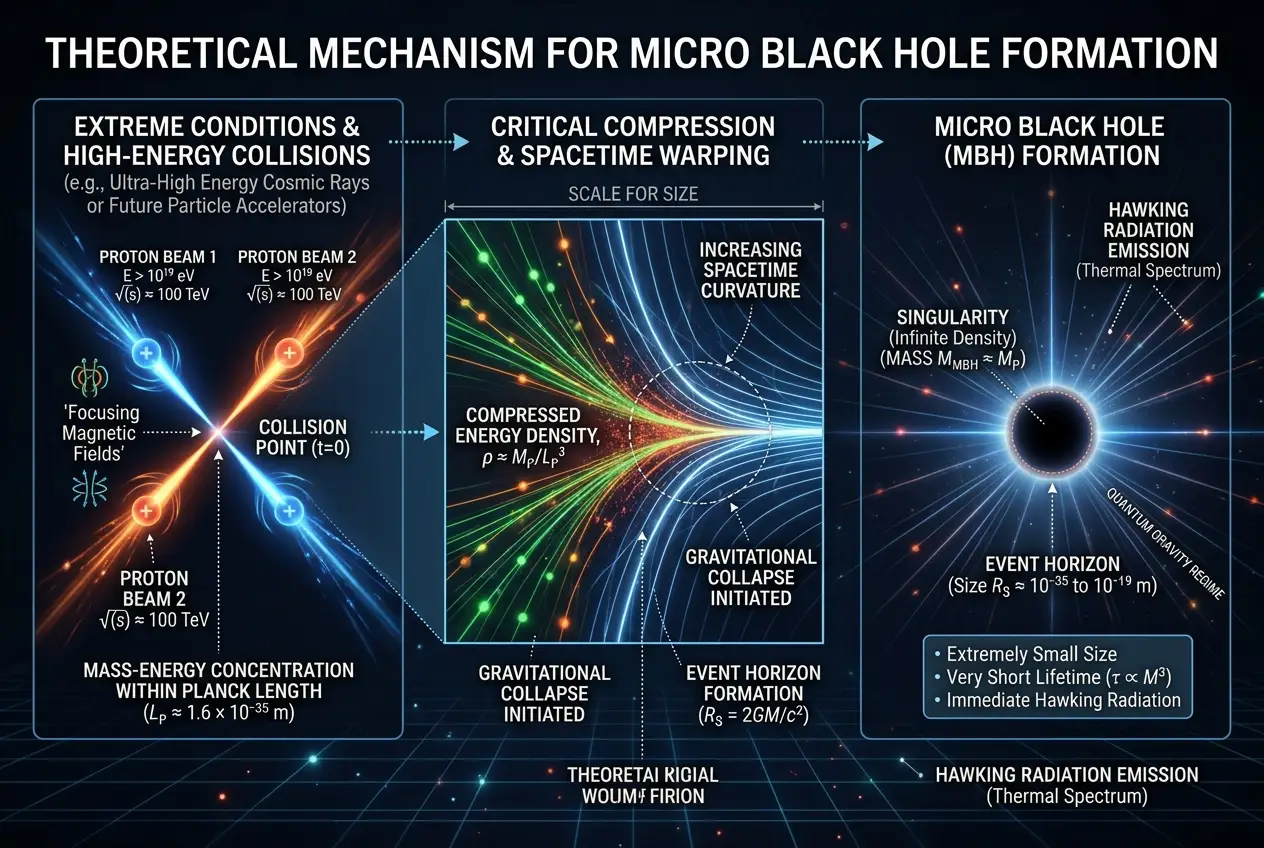
The kind of micro black holes we're discussing in relation to Earth’s core or particle accelerators are often even smaller, sometimes called **quantum black holes**. These are hypothetical entities that might form if energy could be concentrated into an incredibly small space, sufficient to warp spacetime to such an extent that an event horizon appears. Crucially, their existence is highly dependent on theories of **quantum gravity**, which attempts to reconcile general relativity with quantum mechanics.
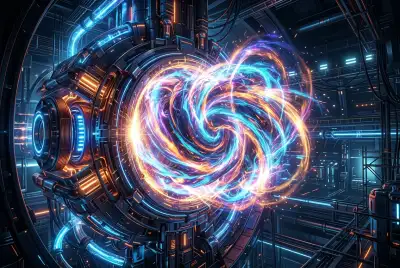
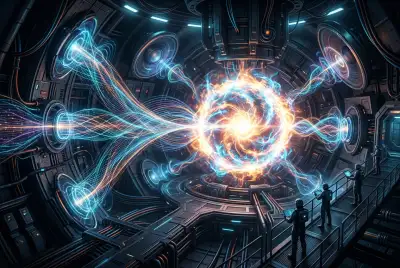
Particle accelerators, like the Large Hadron Collider (LHC) at CERN, are designed to smash particles together at near-light speeds, creating extreme energy densities. For years, there has been speculation (and public concern) that these experiments *could* create micro black holes. The consensus among physicists, however, is that if they were created, they would be incredibly short-lived, evaporating almost instantly via Hawking radiation, posing no threat. You can learn more about laboratory-created black holes in our blog, ["Can Labs Forge Micro Black Holes? Powering Future Tech"](/blogs/can-labs-forge-micro-black-holes-powering-future-tech-9343).
### **The Quantum Gravity Connection**
The leap from extreme pressure to black hole formation requires a fundamental understanding of gravity at its smallest scales. In general relativity, a black hole forms when a mass is compressed to a density where its escape velocity exceeds the speed of light. For large stars, this is straightforward. For subatomic particles, it’s far less so.
The **Planck scale** is a theoretical realm where quantum effects of gravity become significant. It’s where spacetime itself is thought to become "foamy" and quantum mechanics truly reigns. The energy required to probe this scale is astronomically high, far beyond what even the LHC can achieve. If extra spatial dimensions exist, as proposed by some string theories, the Planck scale might be "lowered," making it theoretically easier to create micro black holes. However, these remain highly speculative theories.
So, for Earth's core to produce a micro black hole, we would need either:
1. **Unforeseen Quantum Gravity Effects:** Conditions at the core somehow trigger quantum gravity phenomena that lower the energy threshold for black hole formation in a localized region.
2. **Exotic Matter States:** The extreme pressure and temperature could create states of matter or exotic particles that behave in ways entirely outside our current understanding, potentially facilitating such an event.
3. **Primordial Remnants:** The black hole wasn't *formed* by the core, but a tiny primordial black hole (from the early universe) somehow became trapped within the Earth during its formation and migrated to the core. This is highly improbable, given the expected evaporation rates of such small objects.
### **The Argument Against: Why It's Unlikely**
Despite the alluring curiosity, the scientific consensus leans heavily against the spontaneous formation of micro black holes in Earth's core for several compelling reasons:
* **Insufficient Energy Density:** While Earth's core is incredibly hot and dense, it's not a particle accelerator. The energy density, even at millions of atmospheres, is orders of magnitude lower than what’s required to achieve the Planck scale, or even the collision energies generated at the LHC. We're talking about fundamental energy differences that aren't overcome simply by pressure.
* **Absence of Collision Events:** Micro black holes, if they could form at reachable energy scales, are usually theorized to arise from high-energy particle collisions. Earth's core is dynamic, but it's a bulk environment, not a site of individualized, high-velocity particle impacts at the required energies.
* **Stability and Evaporation:** Even if a micro black hole were somehow to form, extremely tiny ones are predicted to evaporate almost instantaneously due to Hawking radiation. This means they wouldn't persist long enough to grow or cause any observable macroscopic effects.
* **Gravitational Effects:** If even a stable, mountain-mass micro black hole were lurking in our core, its gravitational influence, however small, would subtly alter Earth's rotation, seismic patterns, or even the movement of tectonic plates. No such anomalies have been definitively linked to an internal black hole. Studies of Earth's internal structure rely on seismic waves, and they don't show anything resembling a black hole.
### **What If? The Hypothetical Scenario**
Let’s indulge in a moment of pure speculation, just for the thrill of it. *What if* a highly improbable quantum fluctuation, or an unforeseen interaction under extreme core conditions, *did* briefly generate a stable micro black hole?
Initially, it would likely be so small as to be undetectable. Over immense geological timescales, it might slowly accrete matter, growing infinitesimally. A stable micro black hole would be incredibly difficult to detect, as its gravitational pull would be localized. It wouldn't "swallow" the Earth like a cosmic giant, but its long-term effects could be profound. It could act as an internal heat source, accelerate geological processes, or even subtly shift Earth's center of mass. This hypothetical scenario pushes the boundaries of current physics and remains firmly in the realm of science fiction.
### **The Real Mysteries of Earth's Core**
While micro black holes in our planet's core remain a fascinating but improbable notion, the real mysteries of Earth’s interior are no less captivating. Scientists are still grappling with fundamental questions:
* **The "Iron Snow" Theory:** Some theories suggest a continuous "iron snow" falls from the outer core onto the inner core, influencing its growth and dynamics.
* **Core-Mantle Interaction:** The boundary between the core and the mantle is incredibly active and plays a crucial role in volcanism, plate tectonics, and Earth’s magnetic field.
* **Anomalies in Seismic Data:** There are still unexplained seismic wave propagation anomalies that hint at even more complex structures or materials within the core than we currently understand. For instance, some data suggest a more complex, multi-layered inner core, or even regions where the iron crystal structure is highly unusual.
* **Earth's Magnetic Field Reversals:** The core's dynamics are directly responsible for the geodynamo that generates our magnetic field. Understanding its intricate flow is key to predicting and understanding magnetic field reversals, which can have significant implications for life and technology. We've explored some of these consequences in, ["Earth's Magnetic Flip: How Will Our Tech Survive?"](/blogs/earths-magnetic-flip-how-will-our-tech-survive-7587).
The idea that Earth’s core could birth micro black holes is a testament to human curiosity and our drive to explore the extreme boundaries of physics. While current scientific understanding makes it highly improbable, the question itself forces us to consider the incredible forces at play within our own planet and the exotic phenomena that might be possible under conditions so far removed from our everyday experience. It’s a reminder that even the most grounded scientific endeavors often begin with a wild, imaginative "what if?" This quest for understanding is what drives scientists to build ever more powerful instruments and to delve deeper into the quantum realm, hoping to unlock secrets that could reshape our understanding of the cosmos, from the smallest subatomic particles to the largest cosmic structures.
Ultimately, while the thought of a micro black hole in the Earth's core might ignite the imagination, it’s the **real, observable, and deeply complex science** of our planet's inner workings that continues to provide endless fascination and critical insights into the very nature of our home in the universe. Who knows what other incredible discoveries await us as we continue to unlock the secrets of our deep Earth?
**External Sources:**
* [Wikipedia: Earth's inner core](https://en.wikipedia.org/wiki/Inner_core)
* [Wikipedia: Micro black hole](https://en.wikipedia.org/wiki/Micro_black_hole)
* [Wikipedia: Planck scale](https://en.wikipedia.org/wiki/Planck_scale)
* [Wikipedia: Large Hadron Collider](https://en.wikipedia.org/wiki/Large_Hadron_Collider)
Frequently Asked Questions
A micro black hole is a hypothetical black hole with a very small mass, possibly on the scale of elementary particles. Unlike stellar black holes, they are theorized to form from extreme energy concentrations rather than stellar collapse, and if they exist, would likely be incredibly short-lived due to Hawking radiation.
Earth's inner core reaches temperatures similar to the Sun's surface, around 5,700 Kelvin (9,940 °F or 5,430 °C). The pressure is even more extreme, estimated at 3.6 million atmospheres, causing matter to behave in highly unusual ways.
Current scientific understanding suggests the energy density in Earth's core, while immense, is still far too low compared to what would be needed to reach the Planck scale, where quantum gravity effects could lead to micro black hole formation. Also, such tiny black holes are predicted to evaporate almost instantly.
If a micro black hole were stable and substantial enough to remain trapped, its gravitational effects would be observable through changes in Earth's rotation or seismic activity. However, given current physics, any micro black hole formed would be too tiny and short-lived to pose any threat.
Scientists are actively researching the complex dynamics of the core-mantle boundary, the precise composition and crystalline structure of the inner core, the mechanisms behind Earth's magnetic field reversals, and unexplained seismic wave anomalies that hint at further unknown structures or material behaviors within the core.
Verified Expert
Alex Rivers
A professional researcher since age twelve, I delve into mysteries and ignite curiosity by presenting an array of compelling possibilities. I will heighten your curiosity, but by the end, you will possess profound knowledge.
Leave a Reply
Comments (0)
No approved comments yet. Be the first to share your thoughts!
 Join Us
 Unknown Author

















Leave a Reply
Comments (0)