I was recently performing a routine diagnostic on my old laptop when an odd thought struck me. We spend so much time worrying about digital threats, viruses, and malware, but what about the physical environment? What about the microscopic particles that constantly bombard our planet and everything on it? I'm talking about cosmic dust—tiny motes of matter from beyond Earth, often unseen, yet ever-present. Could these minute invaders, far from the digital realm, be subtly interfering with the sensitive electronics that define our modern world?
It might sound like a premise for a sci-fi thriller, but the interaction between cosmic dust and technology is a legitimate area of scientific inquiry. From the satellites orbiting Earth to the microchips in our smartphones, our electronic ecosystem is surprisingly vulnerable to elements far grander and far smaller than we often imagine.
## The Unseen Swarm: What Exactly is Cosmic Dust?
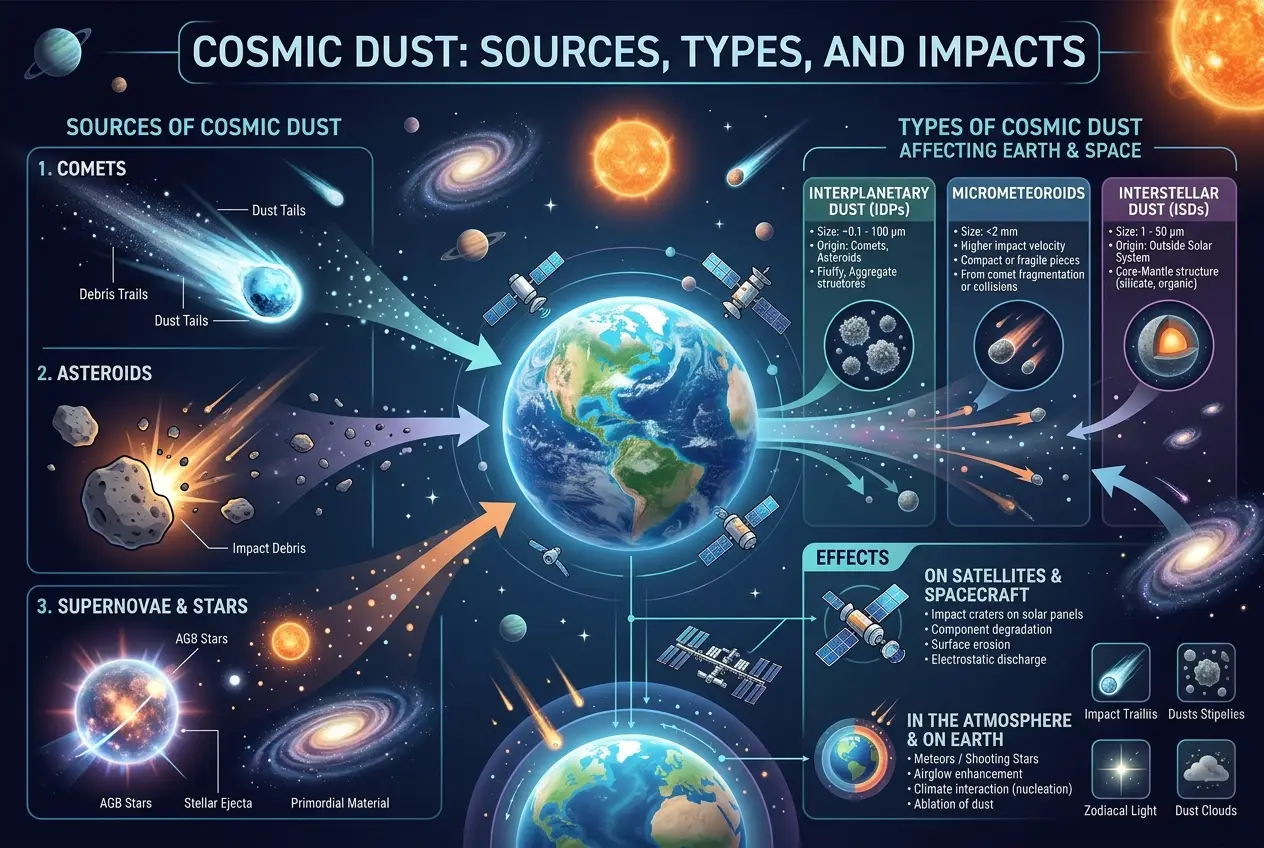
When I mention "cosmic dust," what comes to mind? Perhaps vast nebulae or the shimmering tails of comets. While those are certainly sources, the dust we're concerned with here is a far more intimate, terrestrial phenomenon. Cosmic dust refers to microscopic particles of extraterrestrial origin that constantly fall onto Earth. These specks can come from various sources:
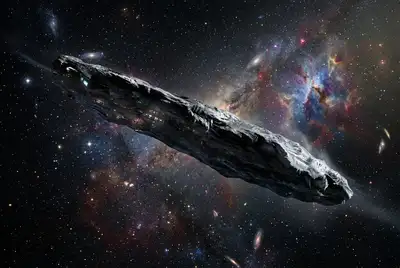
* **Asteroids and Comets:** As these celestial bodies travel through space, they shed material, creating a steady stream of dust.
* **Interplanetary Dust:** Fine particles found throughout our solar system, leftover from its formation.
* **Interstellar Dust:** Even smaller grains that originate from outside our solar system, sometimes carried by the solar wind.
Most of these particles are incredibly tiny, often smaller than a human hair, ranging from nanometers to micrometers in size. They enter Earth's atmosphere at incredibly high speeds, typically vaporizing due to atmospheric friction, but a significant amount still makes it to the surface, accumulating over millennia. It’s estimated that between 30,000 to 100,000 tons of cosmic dust fall on Earth each year. That’s a lot of extraterrestrial debris!
## Above the Atmosphere: The High-Stakes Environment of Space Electronics
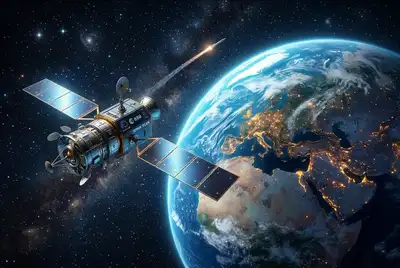
While the atmospheric shield protects us on the ground, electronics in orbit face the brunt of cosmic dust directly. Satellites, the backbone of our global communication, GPS, and weather forecasting systems, operate in a relentless cosmic firing range. These machines are engineered to withstand extreme conditions, but even the smallest high-velocity particle can pose a threat.
### The Impact of Micrometeoroids
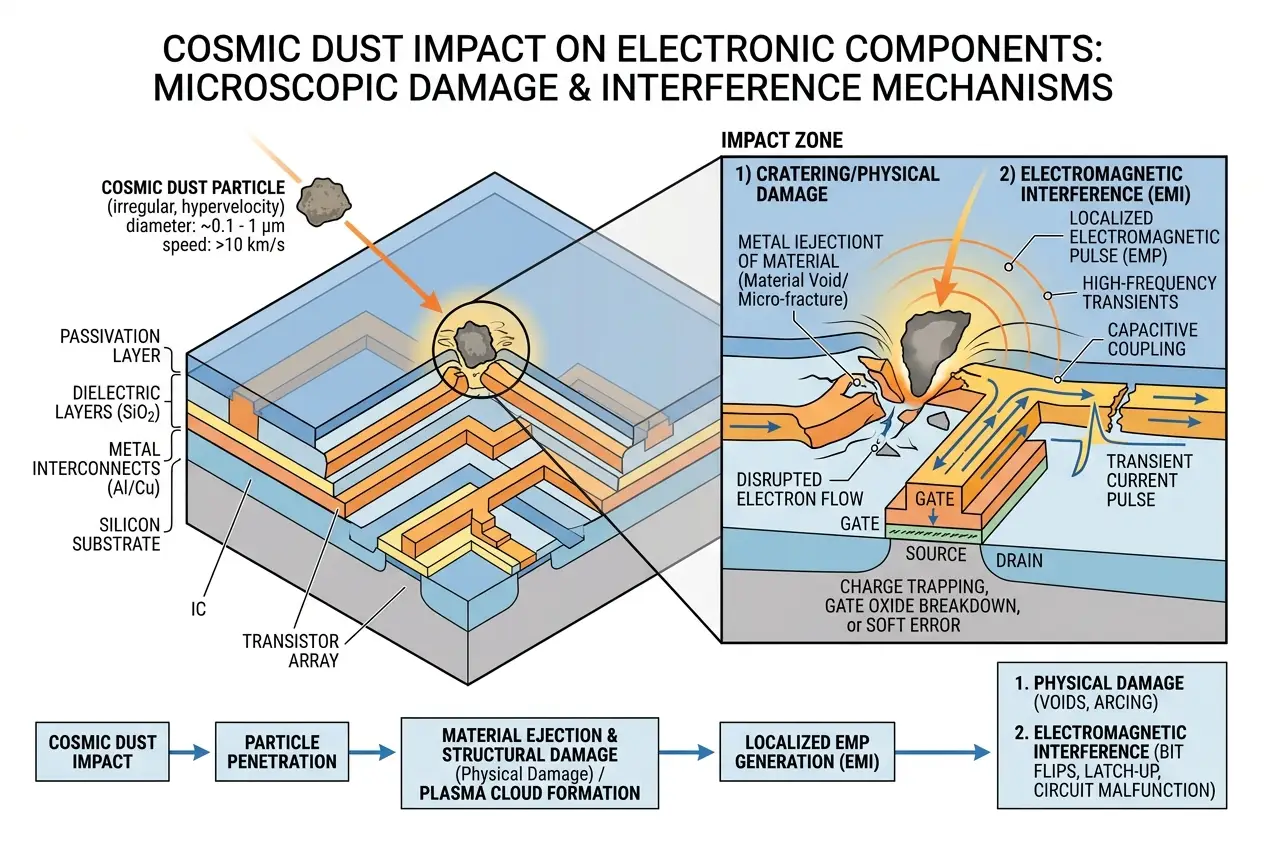
Larger cosmic dust particles, often referred to as **micrometeoroids**, can strike spacecraft at speeds exceeding 10 kilometers per second. Even a particle the size of a grain of sand can pack the kinetic energy of a bowling ball dropped from a significant height. I recall reading about instances where such impacts have caused:
* **Pitting and Erosion:** Gradual wear and tear on solar panels, optical lenses, and thermal blankets, reducing their efficiency over time.
* **Component Damage:** Direct strikes can damage sensitive electronic components, leading to malfunctions or even catastrophic failures.
* **Plasma Formation:** The extreme energy of an impact can ionize the material of both the particle and the spacecraft, creating a cloud of plasma. This plasma can interfere with onboard electronics, leading to transient electrical shorts or data corruption.
"Even millimeter-sized particles can pose a severe threat to spacecraft and their components, necessitating sophisticated shielding and design considerations," notes a Wikipedia article on micrometeoroids. It's a constant battle for engineers to design durable systems that can survive this cosmic bombardment. You might be interested to know that similar space debris is a growing concern for orbital integrity, as discussed in "Is Earth's Orbit Becoming a Digital Minefield?".
## On the Ground: A More Subtle, Yet Pervasive Threat?
While space agencies invest heavily in shielding and designing for micrometeoroid impacts, what about the electronics we use daily here on Earth? For terrestrial devices, direct high-velocity impacts from cosmic dust are practically non-existent due to atmospheric deceleration. However, the sheer volume of dust that settles on Earth raises other intriguing questions.
### The Problem with Miniaturization
Modern electronics are all about miniaturization. Processors are packed with billions of transistors, each measured in nanometers. The gaps between components are incredibly small, making them highly susceptible to any foreign matter. This is where cosmic dust, even after slowing down and mixing with terrestrial dust, could potentially cause problems.
* **Contamination:** Microscopic dust can accumulate on circuit boards, within cooling systems, or even inside sealed components if the seal isn't perfect. This contamination can lead to:
* **Overheating:** Dust acts as an insulating layer, trapping heat and causing components to run hotter, which degrades performance and lifespan.
* **Short Circuits:** Electrically conductive dust, though less common for cosmic dust than industrial dust, could bridge tiny gaps between traces on a circuit board, leading to shorts.
* **Optical Interference:** For devices relying on optical sensors (like cameras or LiDAR), dust on lenses or sensors can degrade image quality or functionality.
I've often seen my computer fans clogged with dust, but the idea that some of that dust might have journeyed from another star system adds a new layer of intrigue. While terrestrial dust is the primary culprit for such issues, distinguishing between the two without specialized analysis is nearly impossible for the average user.
## Beyond Physical Damage: Electromagnetic and Radiation Effects
The influence of cosmic elements on our tech isn't limited to physical collisions. The broader cosmic environment also plays a role.
### Galactic Cosmic Rays and Our Chips
Cosmic dust often travels with or is accompanied by other cosmic phenomena, such as **galactic cosmic rays (GCRs)**. These high-energy particles, primarily protons and atomic nuclei, originate from outside our solar system and can penetrate Earth's atmosphere. When a GCR strikes a silicon atom in a microchip, it can cause a "single event upset" (SEU), flipping a bit from 0 to 1 or vice-versa.
While SEUs are more common in high-altitude aircraft or spacecraft, they can occur at sea level. The frequency is low, but as devices become more sensitive and power consumption drops (requiring lower operating voltages), the susceptibility to cosmic ray-induced errors might increase. It’s an invisible form of interference that could lead to subtle data corruption or unexpected software glitches. This phenomenon is a fascinating aspect of "Do Cosmic Rays Secretly Glitch Our Tech?".
### The Role of Electrostatic Charges
Cosmic dust, like other fine particles, can carry electrostatic charges. In sensitive electronic environments, accumulated static charges or sudden discharges could potentially interfere with circuitry. While this is more of a concern in vacuum environments (like on the Moon or Mars), where dust can be highly charged, it's a minor consideration on Earth where humidity and other factors dissipate charge. However, the principle highlights the subtle ways tiny particles can interact with electrical systems.
## Mitigating the Cosmic Threat: Strategies for Resilient Tech
So, what can we do about an invisible, constant shower of extraterrestrial particles? For space-based systems, the solutions are rigorous:
* **Shielding:** Multi-layered shielding (like Whipple shields) can dissipate the energy of incoming particles, protecting critical components.
* **Redundancy:** Duplicating critical systems ensures that if one component fails due to an impact, a backup can take over.
* **Robust Materials:** Using materials that are more resistant to erosion and impact damage.
For terrestrial electronics, the focus shifts to good design and maintenance practices:
* **Sealed Enclosures:** Designing devices with better sealing to prevent dust ingress, especially for critical components.
* **Improved Filtration:** More efficient air filters in electronics, particularly in data centers and industrial control systems, can reduce overall dust accumulation.
* **Conformal Coatings:** Applying protective coatings to circuit boards can help prevent conductive dust from causing shorts.
I believe that as our technology becomes increasingly advanced and miniaturized, the seemingly minor influence of cosmic dust might become a more significant design consideration, pushing us to create even more resilient and self-cleaning systems. We are already seeing the increasing impact of space weather, such as solar storms, on our infrastructure, as explored in "Could Solar Storms Ignite Digital Chaos?".
## A New Perspective on Our Digital Lives
Ultimately, the direct interference of cosmic dust with our everyday electronics on Earth is likely minimal compared to terrestrial dust, electromagnetic interference, or software bugs. Yet, the very idea that particles from the far reaches of space are constantly settling around us, potentially touching our devices, offers a profound shift in perspective.
It reminds me that our technological advancements, as sophisticated as they are, are still inextricably linked to the grand, often chaotic, cosmic environment. The next time your computer mysteriously freezes, or your satellite navigation briefly glitches, it might not be a bug, but a whisper from the cosmos itself—a tiny, physical reminder of our place in an expansive and dusty universe. It makes me wonder about all the other unseen forces shaping our technological future, doesn't it?
Frequently Asked Questions
Cosmic dust consists of microscopic particles of extraterrestrial origin, primarily from asteroids, comets, and interplanetary space. It constantly falls onto Earth and its surrounding environment.
In space, larger cosmic dust particles (micrometeoroids) can strike spacecraft at high velocities, causing physical damage like pitting, erosion, component damage, and even generating plasma that interferes with electronics.
Direct physical interference from high-velocity cosmic dust is negligible for terrestrial electronics due to atmospheric shielding. However, once settled, it contributes to overall dust accumulation, which can cause overheating or contamination issues in miniaturized components, similar to terrestrial dust.
Galactic Cosmic Rays are high-energy particles (mostly protons) from outside our solar system. While distinct from dust, they are part of the broader cosmic environment. GCRs can penetrate electronics and cause 'single event upsets' (bit flips) in microchips, especially in sensitive, miniaturized devices.
For spacecraft, measures include advanced shielding (e.g., Whipple shields), component redundancy, and robust materials. For terrestrial electronics, good design practices like sealed enclosures, improved filtration, and conformal coatings help mitigate general dust contamination.
Verified Expert
Alex Rivers
A professional researcher since age twelve, I delve into mysteries and ignite curiosity by presenting an array of compelling possibilities. I will heighten your curiosity, but by the end, you will possess profound knowledge.
Leave a Reply
Comments (0)
No approved comments yet. Be the first to share your thoughts!
 Join Us


 Unknown Author































Leave a Reply
Comments (0)