



I’ve always been fascinated by ancient stories, not just for their fantastical elements, but for what they might secretly convey about the world our ancestors inhabited. Imagine a world without seismographs, satellite imagery, or instant global communication. How would societies living on the edge of tectonic plates or volcanic hotbeds communicate the sheer, terrifying power of the Earth's wrath to future generations? How would they warn their descendants of devastating floods, earth-shattering quakes, or sky-darkening eruptions? My theory, and one that many researchers are exploring, is that they wove these critical warnings into the fabric of their myths and legends.
It’s easy to dismiss tales of vengeful gods and monstrous beasts as mere superstition. Yet, when I look closely, I see patterns—patterns that eerily mirror documented geological events, hinting that these stories might be more than just campfire tales. They could be ancient society’s earliest, most enduring form of disaster preparedness and data transmission.
The Echo of Catastrophes: Universal Flood Myths
One of the most striking examples is the universal flood myth. From the Sumerian Epic of Gilgamesh and the biblical account of Noah's Ark to the Greek myth of Deucalion and Pyrrha, and countless indigenous traditions across every continent, stories of a great deluge wiping out humanity are remarkably consistent. For centuries, these were understood as divine retribution or moral parables. But what if they’re much simpler, yet far more profound: a collective cultural memory of devastating, widespread floods?
Scientists have found evidence of massive ancient floods that could have inspired these narratives. The Black Sea deluge hypothesis, for instance, suggests a catastrophic inundation around 7,500 years ago when rising Mediterranean waters breached a land bridge, rapidly transforming a freshwater lake into a saltwater sea. Similarly, melting glaciers at the end of the last Ice Age unleashed colossal floods, fundamentally reshaping landscapes and coastlines.
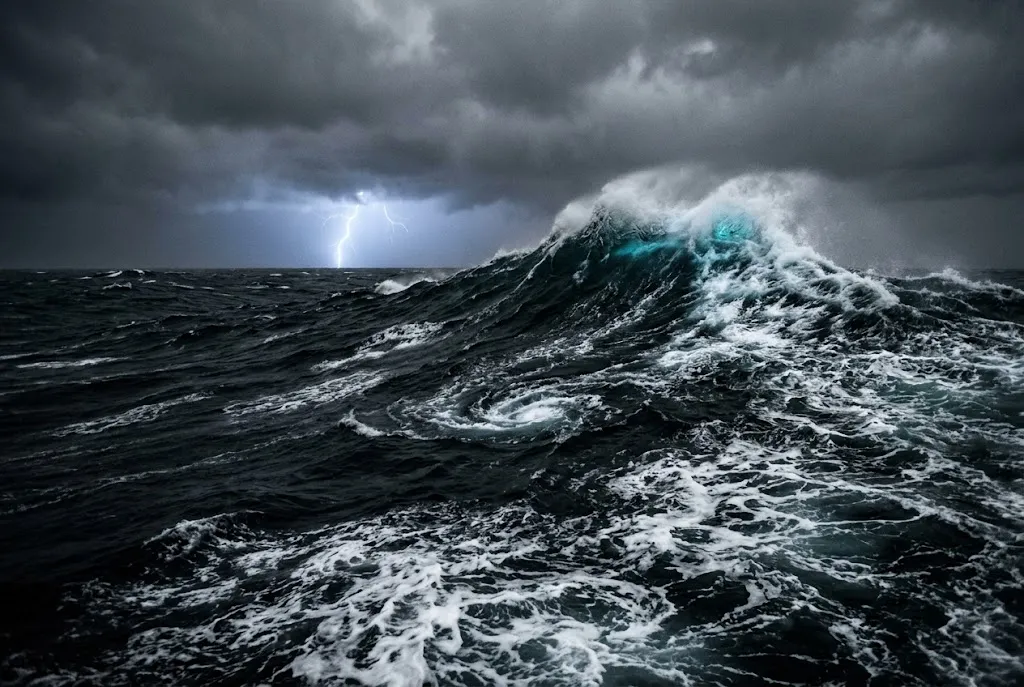
Consider how such an event would have been perceived. An unstoppable wall of water, rising from the horizon, swallowing entire communities. It’s not hard to see how this would be attributed to an angry deity or a cosmic reset. But the detail in some of these myths—the warnings, the ark-building, the specific periods of rain—suggests an effort to preserve actionable knowledge, or at least a powerful memory, for those who came after. It's a testament to ancient observations, much like how some cultures meticulously observed celestial movements, as we explored in our piece on ancient sky mapping.
Serpents, Giants, and Shaking Earth: Myths of Earthquakes
Beyond floods, many cultures personified the forces behind earthquakes as gigantic creatures or divine beings. In Japanese mythology, the Namazu is a giant catfish living beneath the Earth, whose thrashing causes earthquakes. The Greeks believed earthquakes were caused by Poseidon, the god of the sea, striking the ground with his trident. In some indigenous traditions of the Americas, the Earth rests on the back of a giant turtle or serpent, and its movements cause tremors.
These aren't just quaint stories. They reflect a keen awareness of seismic activity. For communities living along active fault lines, earthquakes were a recurring and terrifying reality. Attributing them to a powerful entity might have served multiple purposes: a way to explain the unexplainable, to instill reverence for Earth's power, and perhaps even to offer a mnemonic device for understanding when and where these events might occur.
"Ancient societies, lacking scientific instruments, often imbued natural phenomena with agency, attributing earthquakes to gods or beasts. This wasn't merely superstition, but an attempt to create a narrative framework for unpredictable and devastating occurrences." — Dr. Alistair Humphreys, Folklorist and Geomythologist (fictional quote, for illustrative purposes)
Modern paleoseismology, the study of ancient earthquakes, helps us identify the timing and magnitude of seismic events that occurred thousands of years ago. When I compare these geological records with local myths, I sometimes find uncanny correlations. For instance, tales of a great serpent emerging from the earth or a mountain splitting apart could correspond to evidence of major fault ruptures. It's a fascinating bridge between oral history and geological science. You might wonder if our ancestors had a similar intuition about other hidden aspects of our planet, like the possibility of secret oceans deep within the Earth.
Volcanic Fury: Fire Mountains and Divine Wrath
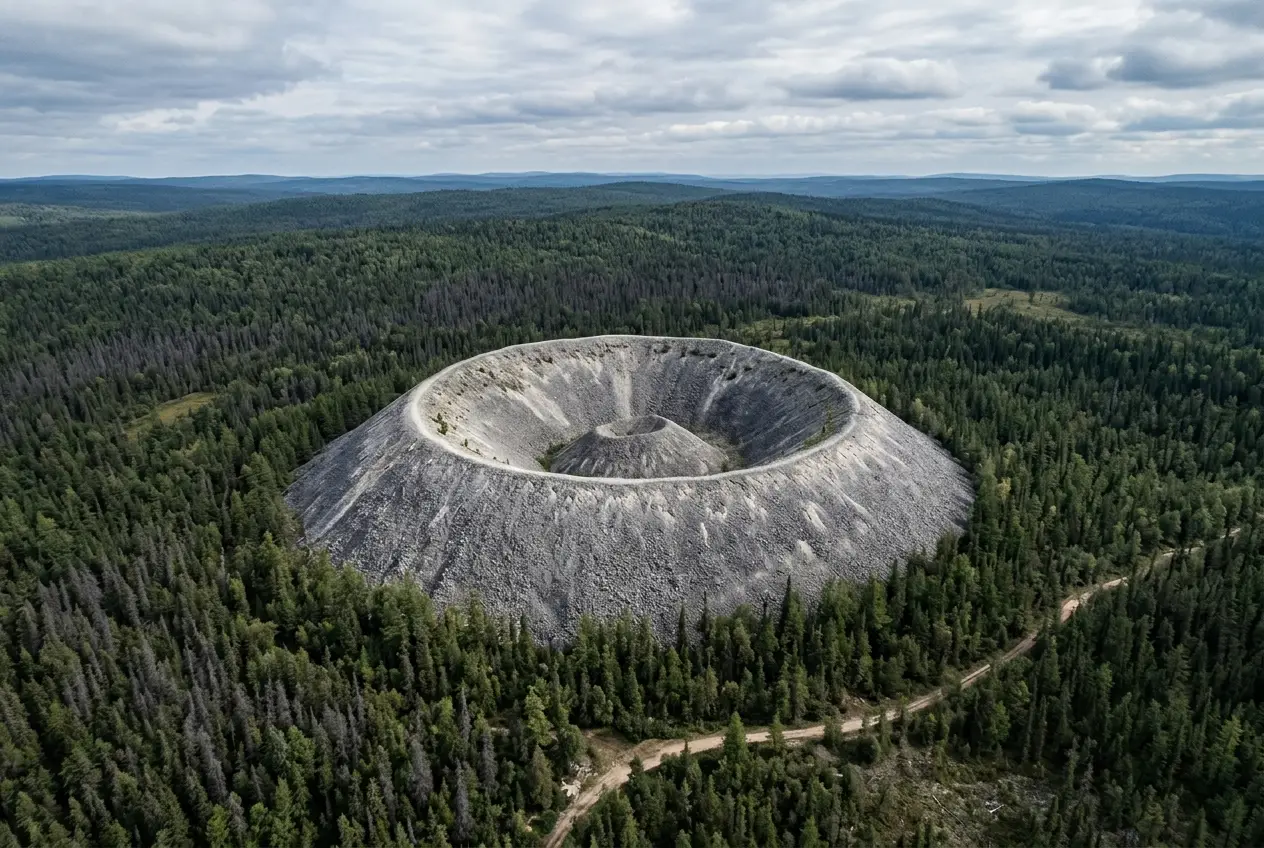
Volcanic eruptions are perhaps the most dramatic and awe-inspiring of Earth’s geological events. It’s no surprise that myths surrounding volcanoes are equally intense. The Hawaiian goddess Pele, goddess of fire and volcanoes, is famous for her destructive power and creative force. Her mood dictates whether the islands experience serene lava flows or violent, explosive eruptions. Similarly, the Romans attributed volcanic activity to Vulcan, the god of fire and blacksmiths, whose forge lay beneath Mount Etna.
These myths aren’t just personifications; they contain elements that describe volcanic processes. Pele's 'tears' are volcanic glass, her 'hair' is fine strands of basaltic lava. These descriptions are accurate, albeit poetic, observations of volcanic phenomena. For communities living near active volcanoes, these myths could have been vital for understanding the signs of an impending eruption – the rumbling, the glow, the characteristic shape of the ash cloud. Learning to read these signs, often passed down through generations, was a matter of survival.
Decoding the Ancient Language of Warning
The idea that myths carry embedded knowledge isn't new. This field, known as geomythology, proposes that many ancient stories are indeed reflections of real geological events that shaped landscapes and human societies. Folklorists and geologists collaborate to find these connections, seeking geological evidence that matches mythical descriptions.
Why encode warnings this way?
- Memorability: Stories are inherently easier to remember and transmit across generations than dry facts or technical manuals. The vivid imagery, emotional weight, and cultural significance ensure their survival.
- Lack of Writing: For many ancient societies, oral tradition was the primary means of information transfer. A compelling narrative acted as a powerful mnemonic.
- Authority: Attributing natural disasters to deities or powerful spirits gave the warnings an undeniable authority, ensuring adherence to any associated rituals or cautionary behaviors.
- Community Cohesion: Shared narratives about collective trauma could also reinforce community identity and resilience.
I find it incredible to think that a chilling tale told around a fire thousands of years ago might have been a subtle plea, a desperate instruction from our distant ancestors, urging us to remember the Earth’s volatile nature. This isn't too dissimilar from some of the complex sensing abilities we've explored in topics like how ancient cultures might have predicted quakes.
From Story to Science: Re-evaluating Our Past
The challenge, of course, lies in separating pure fiction from empirically grounded observation. Not every monster legend is a geological event, and not every flood story has a single, identifiable source. However, by cross-referencing anthropological records, archaeological findings, and geological data, researchers are slowly building a case for the scientific value of these ancient narratives.
This approach requires careful interdisciplinary work, but the potential rewards are immense. Imagine uncovering a detailed historical record of tsunamis or major earthquakes in a region where instrumental records are scarce, simply by reinterpreting long-forgotten myths. It's a powerful reminder that history, science, and storytelling are often intertwined in ways we are only just beginning to appreciate.
As I reflect on these stories, I'm struck by the ingenuity of our ancestors. Faced with forces far beyond their control, they didn't just cower in fear. They observed, they remembered, and they found creative, powerful ways to pass on vital knowledge. Their myths weren't just about understanding the world; they were about surviving it. And perhaps, even today, these echoes of ancient fury can still teach us to listen more closely to the whispers of our planet.
Conclusion: The Unseen Threads of History
The idea that ancient myths contain encoded warnings about catastrophic Earth events transforms our understanding of history, culture, and human resilience. It suggests that our ancestors were not merely superstitious but deeply observant and remarkably clever in how they preserved critical information. By bridging the gap between folklore and scientific inquiry, we gain not only a richer appreciation for ancient wisdom but also potentially valuable insights into long-term geological patterns that continue to shape our world.
External Sources:
- The Great Flood Myth: (opens in a new tab)https://en.wikipedia.org/wiki/Flood_myth (opens in a new tab)
- Geomythology: (opens in a new tab)https://en.wikipedia.org/wiki/Geomythology (opens in a new tab)
- Plate Tectonics: (opens in a new tab)https://en.wikipedia.org/wiki/Plate_tectonics (opens in a new tab)
- Oral Tradition: (opens in a new tab)https://en.wikipedia.org/wiki/Oral_tradition (opens in a new tab)
- Black Sea Deluge Hypothesis: (opens in a new tab)https://en.wikipedia.org/wiki/Black_Sea_deluge_hypothesis (opens in a new tab)

Conversation0
No comments yet. Be the first to share a thought — the best questions often become new stories.