


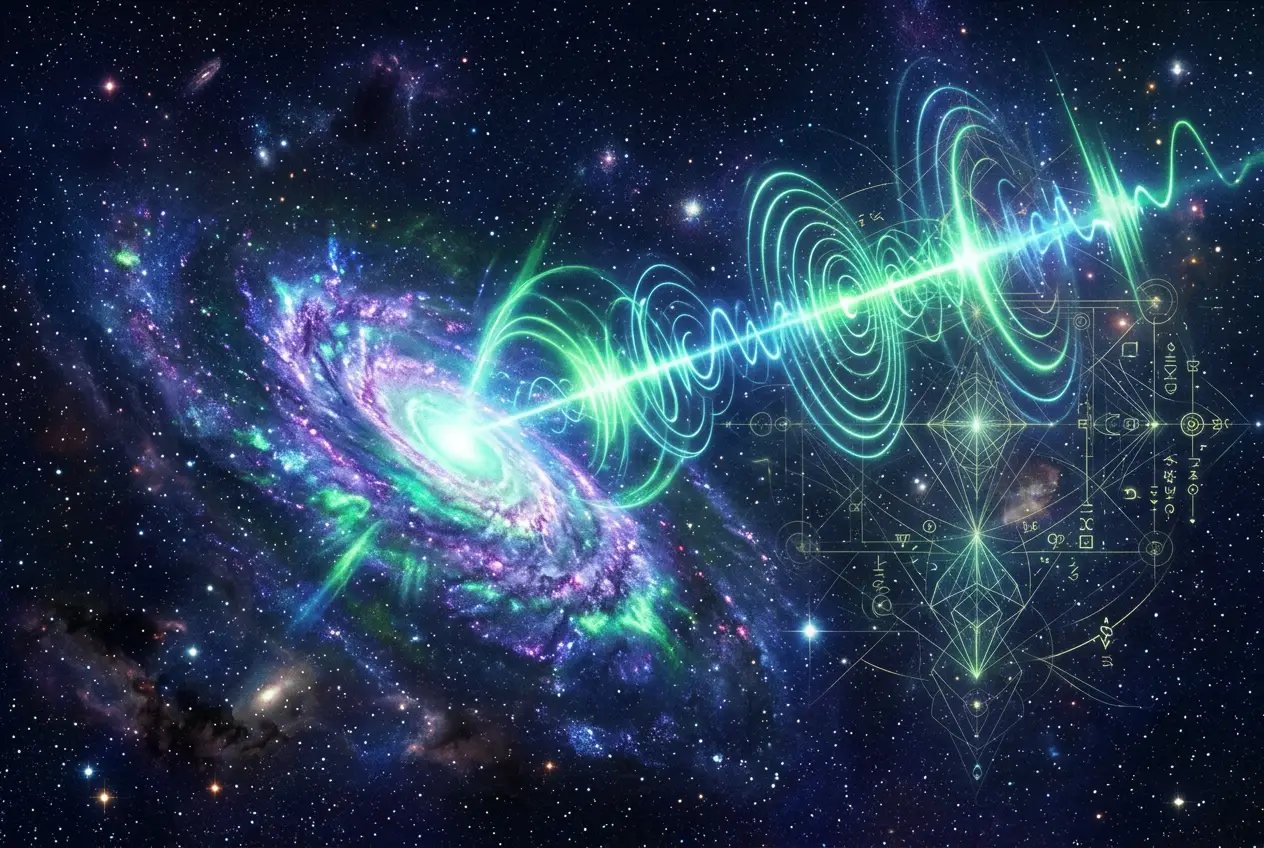
I remember staring up at the night sky as a child, wondering if anyone else was out there, looking back. That profound sense of cosmic loneliness mixed with hopeful anticipation has never quite left me. It's a feeling I believe many of us share—a silent yearning to connect with something beyond our terrestrial confines. What if, for decades, the universe has been sending us postcards, powerful cosmic signals, only we haven't quite figured out how to read them?
This isn't the stuff of science fiction anymore. For over a decade, astronomers have been grappling with one of the most perplexing phenomena in astrophysics: Fast Radio Bursts (FRBs). These incredibly powerful, millisecond-long flashes of radio waves originate from billions of light-years away, carrying energy equivalent to what our Sun produces in a full day. And here's the kicker: some scientists, myself included, can't help but ask if these enigmatic bursts could be signals from advanced extraterrestrial civilizations.
The Cosmic Enigma: What Exactly Are FRBs?
Imagine a cosmic flashbulb, brighter than a hundred million suns, blinking for a mere thousandth of a second. That's a Fast Radio Burst. The first FRB was serendipitously discovered in 2007 by Duncan Lorimer and his team while sifting through archival data from the Parkes Observatory in Australia. It was so unusual that it took years and more detections before the scientific community fully accepted them as a genuine astrophysical phenomenon.
These bursts are characterized by their extreme dispersion—meaning different frequencies arrive at different times—which is a tell-tale sign they’ve traveled vast cosmic distances through intergalactic plasma. The more plasma a signal travels through, the more dispersed it becomes, allowing astronomers to estimate their immense distances. To get a deeper understanding of these fascinating bursts, you can refer to the comprehensive article on Wikipedia about Fast Radio Bursts (opens in a new tab).
Decoding the Universe's Postcards: Non-Repeating vs. Repeating Bursts
Initially, all detected FRBs appeared to be one-off events, flashing once and then disappearing forever. This made them even more mysterious, as it was difficult to pinpoint their exact locations or understand their origins. However, in 2016, astronomers detected FRB 121102, the first repeating fast radio burst. This discovery was a game-changer. Suddenly, scientists had a chance to study a single source over time, allowing for more detailed observations and eventually, pinpointing its origin to a dwarf galaxy three billion light-years away.
The existence of repeating FRBs opened up new avenues for research and simultaneously deepened the mystery. If some FRBs repeat, what about the others? Are they truly one-off events, or are our telescopes just not sensitive enough to catch their subsequent flashes? This distinction is crucial when considering potential sources.
Natural Explanations: The Usual Suspects
Before jumping to the conclusion of alien intelligence, scientists rigorously explore all possible natural astrophysical phenomena. The sheer power required to generate these bursts means the source must involve incredibly energetic processes or extreme objects. Here are some leading candidates:
- Magnetars: These are a type of neutron star with incredibly powerful magnetic fields, billions of times stronger than any magnet on Earth. They are known for their unpredictable flares and outbursts. In 2020, an FRB was detected originating from a magnetar within our own Milky Way, lending significant weight to this hypothesis. This was a crucial step, but it doesn't explain all FRBs.
- Neutron Star Mergers: When two neutron stars collide, they create immense gravitational waves and could potentially generate powerful radio bursts. However, these are one-off events, which might explain non-repeating FRBs but not the repeaters.
- Black Holes: The extreme environment around supermassive black holes could also generate FRBs through various mechanisms, though specific models are still being developed.
- Pulsars: Rapidly spinning neutron stars that emit beams of electromagnetic radiation. While pulsars are well-understood, the extreme brightness and short duration of FRBs suggest a more energetic mechanism than typical pulsar activity. You can explore more about these fascinating stellar remnants in this Wikipedia article on Pulsars (opens in a new tab).
While these natural explanations are compelling for many FRBs, they struggle to account for certain characteristics, especially the precise periodicity observed in some repeating bursts.
The "Alien Tech" Hypothesis: Is Someone Calling?
This is where the idea of extraterrestrial intelligence steps in, quietly whispering in the minds of some researchers. The Search for Extraterrestrial Intelligence (SETI) has been actively scanning the skies for decades. You can learn more about their efforts here: SETI Institute (opens in a new tab). While typically looking for continuous, narrow-band signals, FRBs present a new, tantalizing possibility. Could they be powerful beacons, propulsion systems, or even waste energy from advanced alien technology?
Consider FRB 20180916B, which captivated the scientific community due to its remarkable periodicity. It emits bursts for about four days, then goes silent for twelve days, only to resume its activity with startling regularity. Such a precise, repeating pattern is incredibly difficult to explain with known natural astrophysical processes. While some magnetars show periodic activity, the regularity of FRB 20180916B suggests a highly controlled or engineered mechanism.
What kind of technology could produce such signals?
- Beacons: An advanced civilization might use FRBs as powerful beacons to signal their presence across vast cosmic distances. The energy required is immense, suggesting a highly developed civilization.
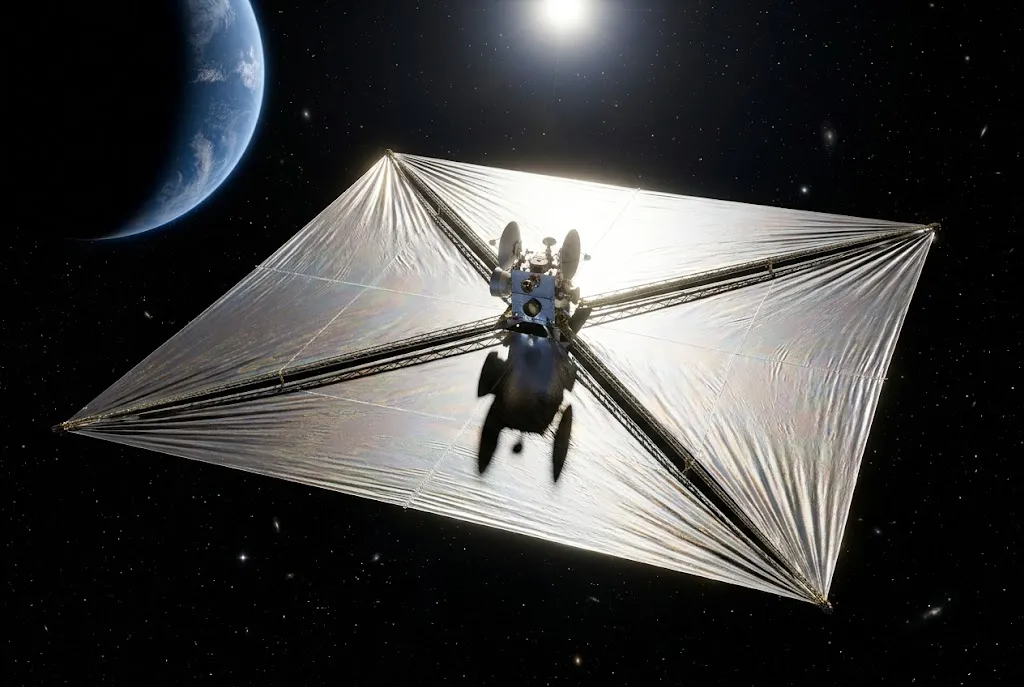
- Propulsion Systems: Some theories suggest FRBs could be byproducts of advanced propulsion systems, such as "light sails" pushed by powerful energy beams. Could this relate to ideas like the Dyson sphere, where an advanced civilization could capture an entire star's energy to power such endeavors?
- Interstellar Communication: Perhaps FRBs are part of an interstellar communication network, far more powerful and sophisticated than anything we can currently imagine. This leads me to wonder about the fundamental nature of communication across cosmic distances, and how different intelligences might perceive and interpret information.
The Challenges and Skepticism
While the alien tech hypothesis is thrilling, the scientific community approaches it with extreme caution. The principle of Occam's Razor dictates that the simplest explanation is usually the best. Attributing a phenomenon to alien technology is complex and requires overwhelming evidence.
"Extraordinary claims require extraordinary evidence," a sentiment often attributed to Carl Sagan, perfectly encapsulates the skepticism. Every time a new FRB is detected or a peculiar pattern emerges, scientists first exhaust all possible natural explanations before even considering the 'alien' option. The challenge lies in our limited understanding of extreme astrophysical environments. There could be natural phenomena far more complex and energetic than we currently grasp.
We must also be careful not to fall into the trap of anthropocentrism—assuming alien technology would operate in ways analogous to our own. Perhaps we're just interpreting cosmic noise through a human lens. The search for life beyond Earth is a profound endeavor, one that constantly pushes the boundaries of our knowledge, even leading us to ponder whether our reality itself could be a simulation.
The Future of FRB Research
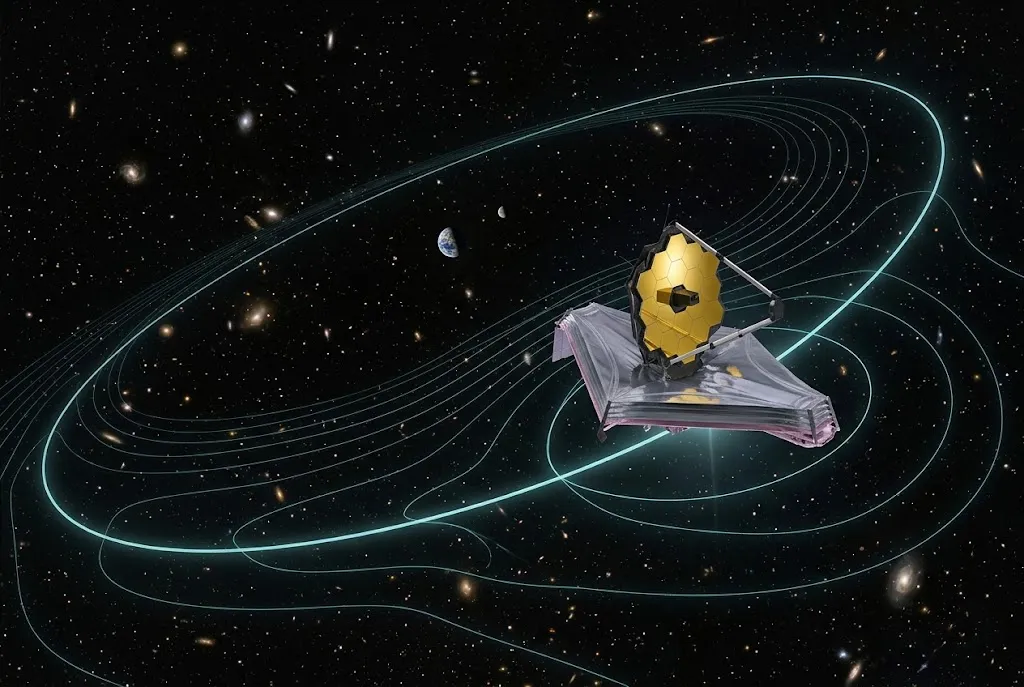
The mystery of Fast Radio Bursts is far from solved. New telescopes, like the Canadian Hydrogen Intensity Mapping Experiment (CHIME), are revolutionizing FRB detection, discovering hundreds of new bursts and pinpointing their locations with unprecedented accuracy. Machine learning algorithms are also playing a crucial role in sifting through vast amounts of radio data, identifying patterns that human eyes might miss.
As we continue to unravel these cosmic signals, we might one day find undeniable proof of extraterrestrial technology. Or, we might discover a completely new branch of astrophysics, revealing the universe to be even stranger and more wonderful than we ever imagined. The journey of discovery is just beginning, and with every new FRB detected, we get a little closer to understanding the true nature of these captivating whispers from the cosmos. Perhaps one day we will even learn to unlock animal tongues with AI, a much closer endeavor than interstellar communication, but one that also involves decoding complex patterns.
Conclusion: A Universe Full of Questions
Fast Radio Bursts represent humanity’s ongoing quest to understand its place in the universe. Whether they are the enigmatic death throes of ancient stars, the birth cries of new cosmic phenomena, or indeed, the deliberate signals of an advanced civilization, they undeniably ignite our deepest sense of curiosity. I find myself constantly captivated by these powerful, fleeting messages. They remind me that the cosmos is a boundless realm of discovery, where the most extraordinary answers might be hidden in the simplest of blips. The universe is speaking; are we ready to listen?
Conversation0
No comments yet. Be the first to share a thought — the best questions often become new stories.