



I remember standing at the foot of the Great Pyramid of Giza, feeling an overwhelming sense of awe. The sheer scale, the precision, the mind-boggling effort required to stack millions of colossal stone blocks, some weighing over 80 tons – it simply defies easy explanation. How did ancient civilizations, without cranes, steel, or modern machinery, accomplish such monumental feats? For centuries, this question has puzzled historians, archaeologists, and engineers alike, giving rise to theories that range from the ingenious to the utterly fantastic.
While mainstream science offers compelling explanations involving ramps, sledges, and immense human labor, a more intriguing, often whispered theory persists: Did ancient cultures possess a lost knowledge of sound energy or acoustic levitation to move these gigantic stones? It sounds like something out of a science fiction novel, or perhaps an Indiana Jones movie, but let's dive into the fascinating world where ancient mysteries meet the cutting edge of modern physics.
The Colossal Challenge: Moving Mountains with Muscle
First, let's truly grasp the magnitude of the problem. Consider the Great Pyramid of Giza. It’s composed of approximately 2.3 million stone blocks. The average block weighs about 2.5 tons (5,000 pounds), which is roughly the weight of a large SUV. But here's the kicker: some of the granite blocks, particularly those used in the King's Chamber and for structural elements, weigh anywhere from 25 to 80 tons. That's equivalent to 5 to 16 adult African elephants for a single stone!
To put it in perspective, imagine trying to lift or drag even a 2.5-ton object today without heavy machinery. It's a logistical nightmare. Now imagine doing that repeatedly, for millions of blocks, over several decades, often uphill, to construct a structure that stands as tall as a 48-story building. Traditional theories often point to:
- Ramps: Long, winding, or straight ramps built around the pyramid, gradually extending as the structure grew. The challenge here is the sheer volume of material needed for the ramp itself, often exceeding the pyramid's volume.
- Sledges and Rollers: Hauling stones on wooden sledges over lubricated surfaces, possibly using water or milk.
- Levers and Rockers: Using simple machines to lift and position blocks.
- Massive Manpower: Thousands of skilled workers, slaves, or a combination, pulling together.
These methods, meticulously detailed by Egyptologists, are undeniably plausible for the majority of the blocks. Historical records, though scarce, do offer glimpses into organized labor. However, for the truly massive stones, especially those positioned with incredible precision at great heights, questions persist. How did they achieve such exact placement without damaging the stones or injuring workers? This is where the allure of alternative explanations truly takes hold.
The Whisper of Acoustic Levitation: A Lost Art?
The concept of using sound to move objects isn't entirely science fiction. Acoustic levitation is a real, albeit nascent, technology in our modern world. Scientists today can use focused sound waves (ultrasound, which is beyond the range of human hearing) to suspend small objects, like water droplets, insects, or even tiny particles of material, against gravity. This works by creating standing waves, where specific points of intense sound pressure can exert enough force to counteract gravity. For a deeper dive into the science, you can check out the Wikipedia article on Acoustic Levitation.
Could ancient civilizations have discovered a way to scale this technology to lift stones weighing dozens of tons? This is where the theory shifts from established science to speculation, yet it's fueled by some tantalizing, albeit unverified, accounts and observations.
Evidence and Anecdotes (or the lack thereof):
- Lost Texts and Oral Traditions: Some proponents of this theory point to ancient texts or unverified oral traditions that speak of "vibrations," "tones," or "magical flutes" used in construction. However, concrete archaeological evidence to support these claims is virtually non-existent.
- Architectural Anomalies: The incredible precision of some ancient megalithic structures, where massive stones fit together so tightly you can't insert a credit card, suggests a level of control that seems almost superhuman. This precision, some argue, might be easier to achieve with a levitation technique than with brute force and levers.
- The Coral Castle Mystery: In the 20th century, an eccentric Latvian immigrant named Edward Leedskalnin single-handedly built Coral Castle in Florida, moving and carving massive coral blocks (some weighing up to 30 tons) without modern machinery. He claimed to know the "secrets of the pyramids," hinting at a knowledge of magnetism or "perpetual motion holder" rather than sound, but his methods remain a modern enigma. While not directly about sound, it highlights how individuals might possess forgotten knowledge.
- The Tibetan Monks Story: Perhaps the most famous (and highly debated) anecdote comes from a 1939 German article by engineer Jarl who claimed to have witnessed Tibetan monks levitating heavy stones by using a precise arrangement of drums and trumpets directed at the stones. The account is captivating but lacks independent verification and is widely considered a pseudoscientific claim.
It's crucial to distinguish between modern acoustic levitation, which works on small objects, and the hypothetical ancient application to enormous stones. The energy required to levitate an 80-ton block using sound would be astronomical – far beyond anything we can currently generate or control, let alone what ancient people could have produced.
Beyond Pyramids: Other Megalithic Marvels
The mystery isn't confined to Egypt. Across the globe, similar challenges present themselves:
- Stonehenge (England): Massive sarsen stones (up to 30 tons) and bluestones (up to 4 tons) transported many miles and erected.
- Baalbek (Lebanon): Features the "Stone of the Pregnant Woman," a megalith weighing over 1,000 tons, partially quarried and left in place, alongside other stones weighing hundreds of tons perfectly integrated into temples.
- Puma Punku (Bolivia): Exhibits incredibly complex and precise stonework, with interlocking blocks that could only have been shaped with tools far more advanced than archaeologists typically attribute to ancient Andean civilizations. The stone types (andesite and diorite) are exceptionally hard.
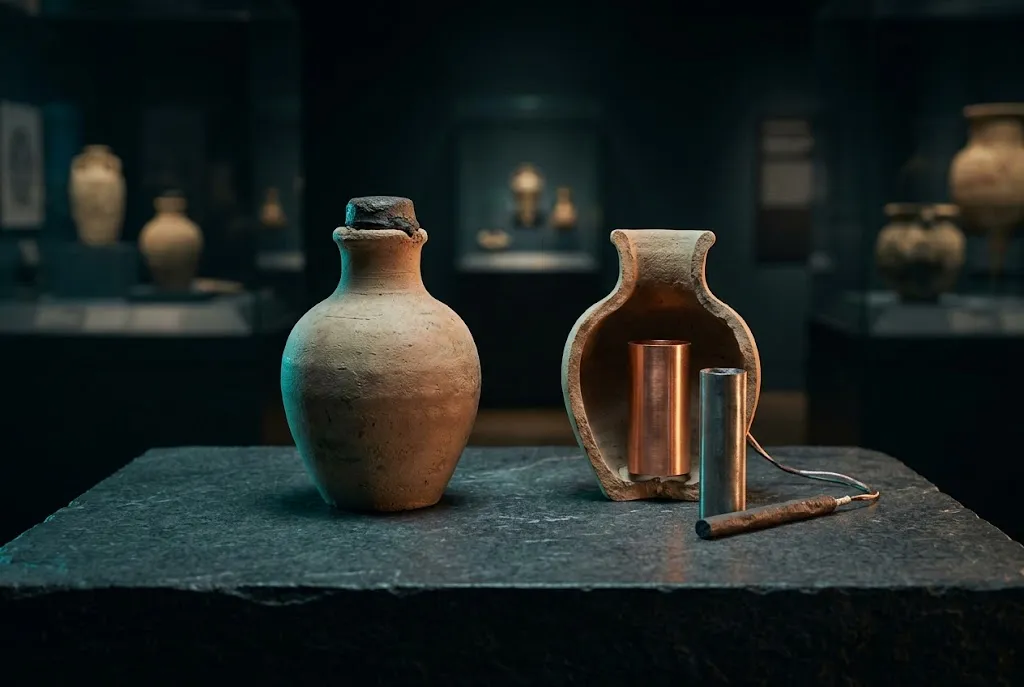
Each site presents unique engineering puzzles. While the 'sound energy' theory gains little traction in mainstream archaeology, the unanswered questions at these sites continue to fuel alternative hypotheses. For those interested in other historical technological anomalies, I've previously explored the intriguing case of The Baghdad Battery: Could Ancient Iraqis Power a Lost Civilization? [/blogs/the-baghdad-battery-did-ancient-iraqis-power-a-lost-civilization-9975] which similarly challenges our understanding of ancient capabilities.
The Scientific Perspective: What We Do Know
Mainstream archaeology and engineering largely agree that ancient mega-structures were built through a combination of:
- Ingenious Planning and Organization: A highly structured society capable of managing vast labor forces, resources, and logistics.
- Simple Machines: Levers, ramps, rollers, and sledges, used with incredible effectiveness and understanding of physics.
- Specialized Tools: Copper, bronze, and later iron tools for quarrying and shaping, combined with abrasive sand for polishing.
- Time and Dedication: Projects spanning decades, sometimes generations.
Recent experiments and archaeological findings have continually refined our understanding of these methods. For instance, a 2014 study suggested that Egyptians may have made it easier to drag heavy sledges over sand by wetting the sand in front of the sledge, effectively reducing friction by 50%. You can read more about this discovery and traditional theories on Wikipedia's Ancient Egyptian Construction Techniques.
However, the sheer difficulty of these tasks, even with advanced understanding of simple machines, remains staggering. The question isn't just how they moved them, but why they chose such an arduous path if simpler, albeit unknown, methods existed.
Conclusion: A Symphony of Ingenuity or a Silent Art?
So, did ancient civilizations build pyramids and other megalithic wonders using the unseen force of sound? While the idea of acoustic levitation or sound energy in ancient construction is a captivating thought, currently, there is no credible archaeological or scientific evidence to support it. The existing theories, meticulously built on centuries of research and modern experimental archaeology, point towards the incredible ingenuity, organizational skills, and perseverance of ancient peoples, utilizing fundamental physics with mastery.
Yet, the persistent questions keep the door slightly ajar for the truly extraordinary. Perhaps, like the concept of capturing a star's entire energy with a Dyson Sphere [/blogs/dyson-sphere-could-we-capture-a-stars-entire-energy-9620], the idea of harnessing sound for megalithic construction belongs to a future technology we are yet to fully grasp, rather than a lost ancient art. Or perhaps, the truth is a blend – a subtle application of vibrational knowledge alongside known methods, too nuanced for our current detection.
The allure of a lost ancient technology, especially one as futuristic as acoustic manipulation, remains a powerful testament to the enduring mystery of our past and humanity’s endless capacity for innovation. It makes us question our own assumptions about what was possible, then and now. And in a world where we can even ponder if Could Our Reality Be a Simulation? [/blogs/could-our-reality-be-a-simulation-decoding-the-matrix-hypothesis-4299], the idea that ancient builders might have tapped into unseen forces isn't just fantasy – it's a testament to the boundless curiosity that drives us to explore the unknown.



Conversation0
No comments yet. Be the first to share a thought — the best questions often become new stories.