



I’ve always been fascinated by the sheer scale of the universe, and with that wonder comes the inevitable question: what kind of technology will humanity need to truly thrive among the stars? We talk about colonizing Mars, lunar bases, and even interstellar travel. But when I zoom out and consider the ultimate energy source—our sun—I can’t help but ponder one of the most audacious engineering concepts ever conceived: the Dyson Sphere. It’s not just a sci-fi dream; it's a theoretical megastructure that could redefine our place in the cosmos by capturing nearly all of a star's energy output.
Imagine a civilization so advanced, so boundless in its ambition, that it literally envelops its home star to harness every single photon of energy. That's the vision articulated by physicist Freeman Dyson in 1960. He wasn't necessarily proposing a solid shell (a "Dyson Shell," which has its own insurmountable material challenges), but rather a "Dyson Swarm": a vast constellation of independent orbital collectors and habitats surrounding a star. This concept goes beyond mere solar panels on a rooftop; it’s about taking the entire energy budget of a star and putting it to work for civilization. It’s a concept that truly makes you say, "wow, I didn’t know this!"
What Exactly is a Dyson Sphere?
At its core, a Dyson Sphere is a hypothetical megastructure that completely encompasses a star to capture a significant fraction of its radiant energy. The idea was first popularized by Freeman Dyson, who posited that a technologically advanced civilization would eventually require an immense amount of energy for its survival and expansion. He suggested that such a civilization would seek to capture the entire energy output of its parent star. You can read more about his original paper on the concept on Wikipedia's Dyson Sphere page (opens in a new tab).
There are a few key variations on the Dyson Sphere concept:
- Dyson Shell: This is the most iconic, albeit least practical, version. It's a solid, rigid shell built around a star. The engineering challenges here are staggering. For one, the structural integrity required to withstand the star's gravity and prevent tidal forces from tearing it apart would be immense. Also, where would you get enough material? And how would you deal with waste heat?
- Dyson Swarm: This is what Freeman Dyson actually envisioned. Instead of a solid shell, it's a vast collection of independent solar collectors, orbital habitats, and industrial complexes orbiting the star. These individual components could be designed to maintain stable orbits, exchange energy, and even move around. This distributed approach avoids many of the structural and material problems of a solid shell.
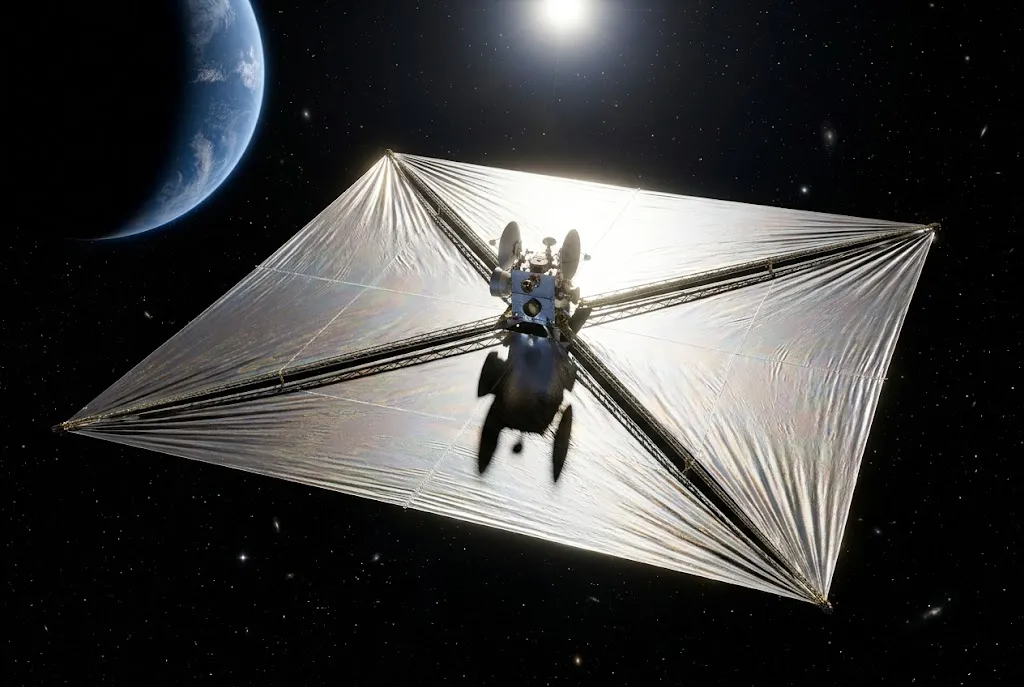
- Dyson Bubble: A variation of the swarm, where the collectors are stationary, suspended by light sails and radiation pressure from the star. This would be a less dense, more diffuse collection of receivers.
The Energy Imperative: Why Build One?
Why would any civilization embark on such a monumental project? The answer, I believe, lies in energy. Our current energy consumption on Earth is massive, and it’s only growing. We tap into fossil fuels, nuclear power, and renewable sources like wind and conventional solar. But even if we covered vast deserts with solar panels, we'd only be capturing a tiny fraction of the sun's total output.
The scale of energy available from a Dyson Sphere is almost unimaginable. To put it into perspective, the Earth receives only about one-billionth of the sun’s total energy output. A Dyson Sphere could theoretically capture 100% of it. This isn’t just about powering our cities; it’s about fueling interstellar travel, terraforming planets, running advanced AI systems at an unprecedented scale, or even altering the very fabric of space-time for purposes we can barely comprehend today. For more on how advanced energy could fuel AI, you might find our blog on /blogs/super-ai-what-if-earths-power-fueled-it-1676 interesting.
This concept of harnessing stellar energy is also directly linked to the Kardashev Scale, a method for classifying civilizations based on their energy consumption.
- Type I Civilization: Can harness all the energy available on its home planet. We’re currently a Type 0.7 civilization, still working our way up.
- Type II Civilization: Can harness the total energy output of its home star. This is precisely what a Dyson Sphere would enable.
- Type III Civilization: Can harness the total energy output of its entire galaxy.
Building a Dyson Sphere would firmly place humanity (or any other species) into the Type II category, a truly cosmic leap in power and capability.
The Immense Challenges: More Than Just Bricks and Mortar
While the concept is electrifying, the practicalities are daunting, to say the least. As an observer of technological advancements, I often wonder about the sheer audacity required to even plan such a project.
1. Material Acquisition: Where do you get enough material to build a structure that encompasses a star? Our sun, for example, is massive. Even a Dyson Swarm would require quadrillions of tons of material. We'd likely need to dismantle entire planets, or at least a significant portion of them, within the solar system. Mining asteroids extensively would be a start, but eventually, moons and smaller planets might become quarries. This raises immediate ethical questions, even if we assume we're harvesting 'dead' celestial bodies.
2. Construction:
The logistics of building anything in space on this scale are mind-boggling. We'd need self-replicating robots and AI-driven automated construction fleets operating over centuries or millennia. Imagine assembling billions of individual solar collectors, each miles wide, ensuring they maintain their orbits, and constantly repairing and upgrading them. This process would require a level of advanced robotics and artificial intelligence that far exceeds our current capabilities. For a deeper dive into the potential of self-replicating tech, check out our piece on /blogs/can-ai-build-itself-the-dawn-of-self-replicating-tech-1610.
3. Heat Management: A star emits tremendous heat. A Dyson Sphere, designed to capture this energy, would inevitably absorb a lot of heat itself. If it’s a solid shell, the inner surface would be incredibly hot, and the outer surface would radiate energy into space. This would effectively turn the entire structure into a giant, albeit dim, star in the infrared spectrum. This "waste heat" is actually a key potential signature for astronomers looking for alien megastructures – the so-called "Tabby's Star" anomaly, for example, once sparked speculation about a partial Dyson Swarm due to its unusual dimming patterns (though natural explanations are now favored).
4. Gravitational Stability (for Shells): A true Dyson Shell cannot be static. It would be in an unstable equilibrium. The slightest perturbation would cause it to drift and eventually crash into the star. For it to work, it would either need active propulsion systems constantly correcting its position (which consumes energy) or rely on rotational forces and incredible structural strength. This is why Dyson Swarms are generally considered more feasible, as individual components can orbit independently, much like planets do.
5. Communication and Coordination: Managing a structure composed of trillions of components, spread across hundreds of millions of kilometers, would require an ultra-advanced communication network operating at the speed of light, possibly even with quantum entanglement for instant communication (if feasible over such distances, which is currently theoretical for information transfer). The data generated, the coordination required, and the maintenance schedule would be an enormous logistical undertaking.
The Search for Cosmic Architects: Are They Out There?
The theoretical existence of Dyson Spheres has profound implications for the Search for Extraterrestrial Intelligence (SETI). If advanced civilizations exist, and if their energy needs mirror our own projections, then Type II civilizations should be building Dyson Spheres. And if they are, we should be able to detect them.
As mentioned earlier, a Dyson Sphere would primarily radiate energy in the infrared spectrum due to its waste heat. Astronomers can look for stars that exhibit unusual infrared signatures – stars that are otherwise visible but have an excess of infrared radiation, suggesting they are surrounded by a warm, non-stellar object. This is a key part of the search for alien megastructures, a topic we’ve explored in /blogs/alien-megastructures-are-we-missing-cosmic-architects-6667.
So far, despite numerous searches, definitive evidence for a Dyson Sphere has eluded us. The famous Tabby's Star (KIC 8462852) did capture the public imagination with its inexplicable, dramatic dimming events. While initially, some speculated about alien megastructures, more conventional explanations like dust clouds or cometary debris are now generally accepted. Still, the fact that astronomers considered a Dyson Swarm as a plausible (if exotic) explanation shows the scientific community’s openness to such grand possibilities. You can read more about Tabby's Star and the debate surrounding it on its Wikipedia page (opens in a new tab).
Beyond Energy: What Else Could a Dyson Sphere Be?
While energy collection is the primary motivation, a Dyson Sphere could serve other incredible purposes:
- Massive Habitats: A Dyson Swarm isn't just power collectors; it could be home to quadrillions of sentient beings. Imagine entire civilizations living on habitats orbiting their star, each with its own controlled environment, artificial gravity, and resources.
- Cosmic Data Centers: The processing power required to manage such a complex system could turn the entire sphere into a galactic supercomputer, far beyond anything we can conceive. This ties into ideas of advanced computation and potentially even simulating entire universes.
- A "Failsafe" for Stellar Death: As stars age and eventually die, a Dyson Swarm could theoretically be reconfigured or moved to another, younger star, ensuring the long-term survival of the civilization. This would be the ultimate insurance policy against cosmic catastrophe.
Our Future Among the Stars
I believe the concept of a Dyson Sphere represents the pinnacle of humanity’s potential for technological achievement and expansion. It forces us to think beyond our terrestrial constraints and consider what truly advanced civilizations might look like. While it remains firmly in the realm of theoretical physics and science fiction for now, it's a testament to human curiosity and ingenuity that we can even conceive of taming a star.
Will future generations of humans build one? Only time will tell. But the journey toward becoming a Type II civilization, whether through Dyson Spheres or other unforeseen breakthroughs, promises to be one of the most exciting sagas in our history. Perhaps our continuous quest for limitless energy, like the pursuit of /blogs/zero-point-energy-is-space-a-hidden-powerhouse-3639, is just the first step on this incredible path.


Conversation0
No comments yet. Be the first to share a thought — the best questions often become new stories.