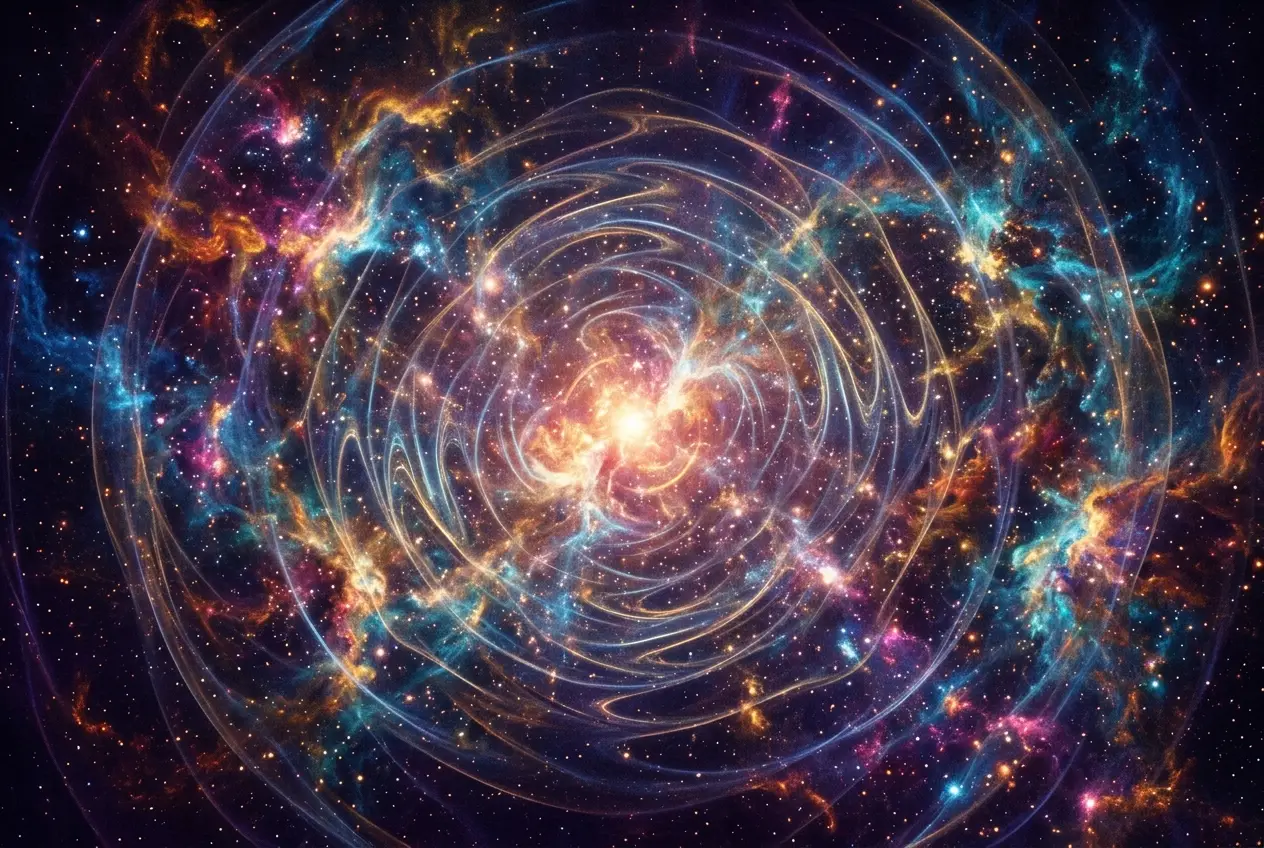
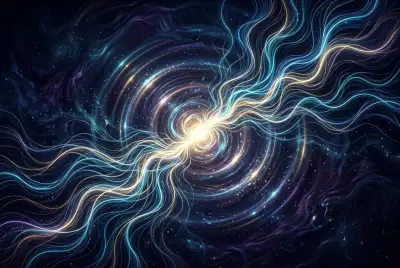
The universe, as we experience it, is largely a realm of silence. Planets spin, stars burn, and galaxies drift through a vast vacuum where sound, as we know it, cannot travel. Yet, what if I told you that the cosmos itself might be singing a forgotten song, an ancient hum echoing from the very dawn of time? It’s a notion that triggers profound curiosity – a sound not of stars or planets, but of creation itself, a primordial symphony that could rewrite our understanding of the universe’s earliest moments.
Recently, I’ve been fascinated by the idea that while light from the Big Bang has been beautifully captured in the Cosmic Microwave Background (CMB), there might also be an acoustic imprint, a vibrational echo, waiting for us to decipher. Imagine listening back to the moments just after the Big Bang, not with light, but with sound. This isn't just a poetic thought; it's a serious frontier in cosmology, exploring whether the universe’s violent birth left behind ripples so fundamental that they continue to resonate, imperceptibly, even today.
The Universe’s First Whispers: A Superheated Symphony
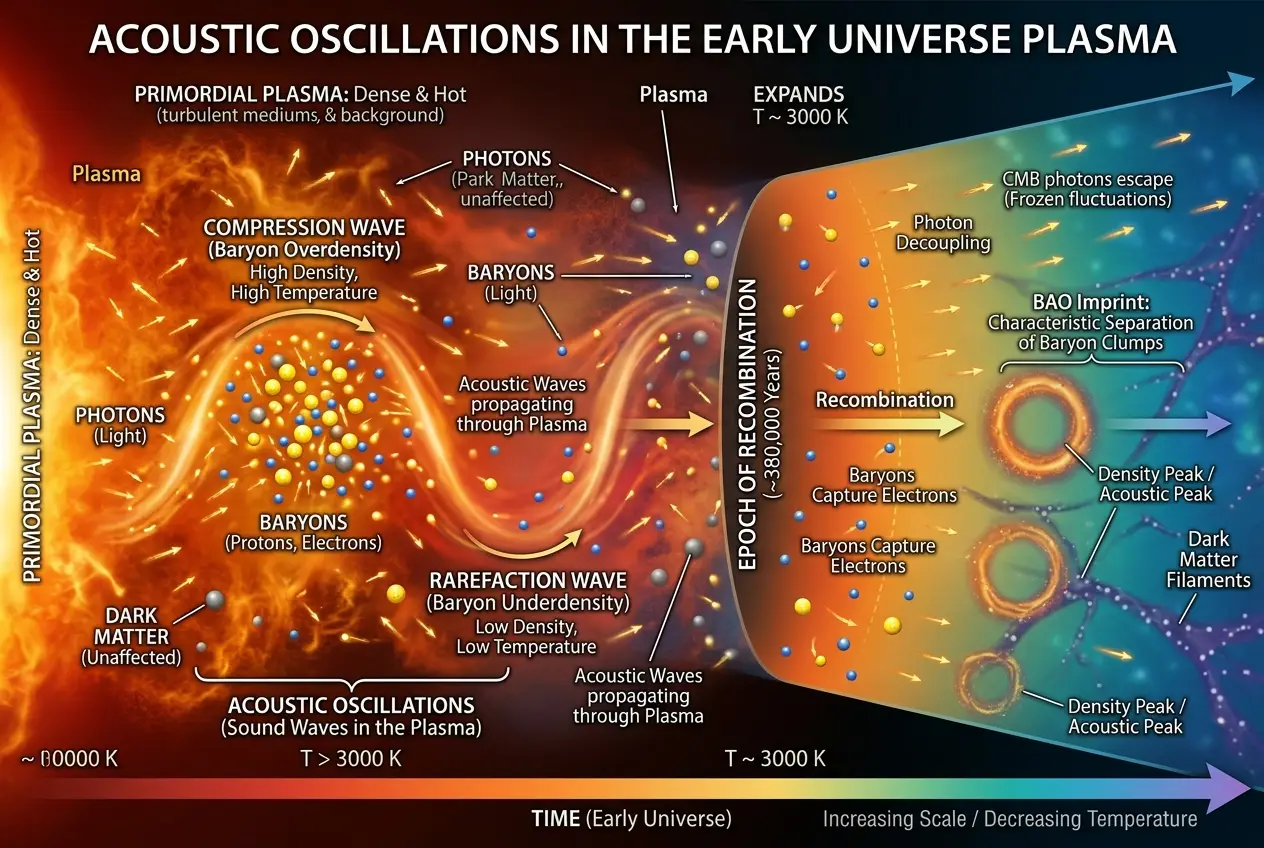
To understand this cosmic hum, we need to rewind billions of years to a time when the universe was less than 400,000 years old. This wasn't the cold, dark vacuum we know today. Instead, it was an incredibly hot, dense plasma – a soup of protons, electrons, and photons, so opaque that light couldn't travel freely. Think of it as being inside a star, but on a cosmic scale. Within this primordial soup, gravity was already working its magic, pulling matter together, while radiation pressure pushed it apart. This constant tug-of-war created **acoustic oscillations**, much like sound waves propagating through water.
I picture it as a massive, turbulent ocean, where matter and energy sloshed back and forth. These weren't sounds we could ever hear with our ears, as there was no medium to transmit audible vibrations in the conventional sense. Instead, these were density fluctuations, pressure waves moving through the cosmic plasma at nearly the speed of light. As the universe expanded and cooled, these waves played a crucial role in shaping the large-scale structure we observe today, seeding the formation of galaxies and galaxy clusters.
Decoding the Light Echo: The Cosmic Microwave Background
For decades, scientists have "listened" to the universe's past primarily through light, specifically the Cosmic Microwave Background (CMB). This ancient light, first predicted by George Gamow and later accidentally discovered by Arno Penzias and Robert Wilson in 1964, is often called the "afterglow" of the Big Bang. It's the moment when the universe cooled enough for electrons to combine with protons, forming neutral hydrogen atoms. This event, known as **recombination**, made the universe transparent, allowing photons to travel freely. The CMB is essentially a snapshot of the universe at about 380,000 years old, red-shifted into the microwave spectrum by billions of years of expansion.
When I look at the stunning maps of the CMB captured by missions like COBE, WMAP, and Planck, I see patterns – tiny temperature fluctuations that correspond directly to those primordial acoustic oscillations. Hotter spots were denser regions where gravity was winning, and cooler spots were more diffuse. These variations are the seeds of all structure in the universe. It’s a literal echo of the universe's infancy, but an echo of light, not sound. For more details on this groundbreaking discovery, you can check out the Wikipedia page on the [Cosmic Microwave Background](https://en.wikipedia.org/wiki/Cosmic_Microwave_Background).
Beyond Light: Gravitational Waves – The Universe’s True Sound?
So, if the CMB is the universe's light echo, what about a true "sound" echo? This is where **gravitational waves** enter the picture. Unlike light or plasma waves, gravitational waves are ripples in spacetime itself, travelling at the speed of light. Albert Einstein predicted their existence in his theory of general relativity over a century ago, and they were finally directly detected by LIGO in 2015, originating from merging black holes.
The crucial difference is that gravitational waves interact incredibly weakly with matter and energy. This means they can propagate through the opaque, superheated plasma of the very early universe, long before the CMB was formed. I find this absolutely mind-boggling: if we can detect primordial gravitational waves, we could be "hearing" events from the very first fractions of a second after the Big Bang, a time completely inaccessible to us via light. This is truly the realm of the universe's earliest, deepest hum.
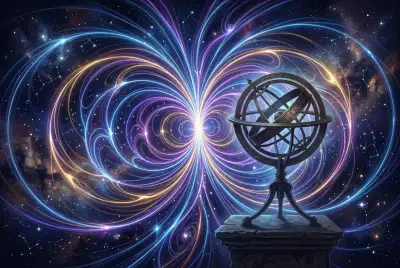
Imagine the universe not as a static canvas, but as a vibrating membrane. Events like **cosmic inflation** – a hypothetical period of exponential expansion immediately after the Big Bang – would have generated a background of primordial gravitational waves. These waves would be a continuous, low-frequency hum, a **stochastic gravitational wave background** permeating all of spacetime. It would be a direct "sound" of the universe stretching and tearing itself into existence. You can read more about gravitational waves on their [Wikipedia page](https://en.wikipedia.org/wiki/Gravitational_wave).
The Quantum Origins of the Cosmic Hum
The physics gets even more exotic when we consider the origins of these gravitational waves. During inflation, quantum fluctuations – tiny, random jitters in the fabric of spacetime – would have been stretched to cosmic scales, becoming the seeds of both the CMB fluctuations and, crucially, the primordial gravitational wave background. It’s like the universe’s earliest sounds were born from the quantum foam itself, a fascinating intersection of the very small and the unimaginably vast. For a deeper dive into quantum fluctuations, our blog, "Do Quantum Fluctuations Code Our Reality?" might offer some insights into these tiny jitters: [Do Quantum Fluctuations Code Our Reality?](https://curiositydiaries.com/blogs/do-quantum-fluctuations-code-our-reality-4385).
How Do We "Listen" for This Primordial Hum?
Detecting this cosmic hum is an immense challenge. It's not about microphones in space. Instead, scientists are employing highly sophisticated instruments and techniques:
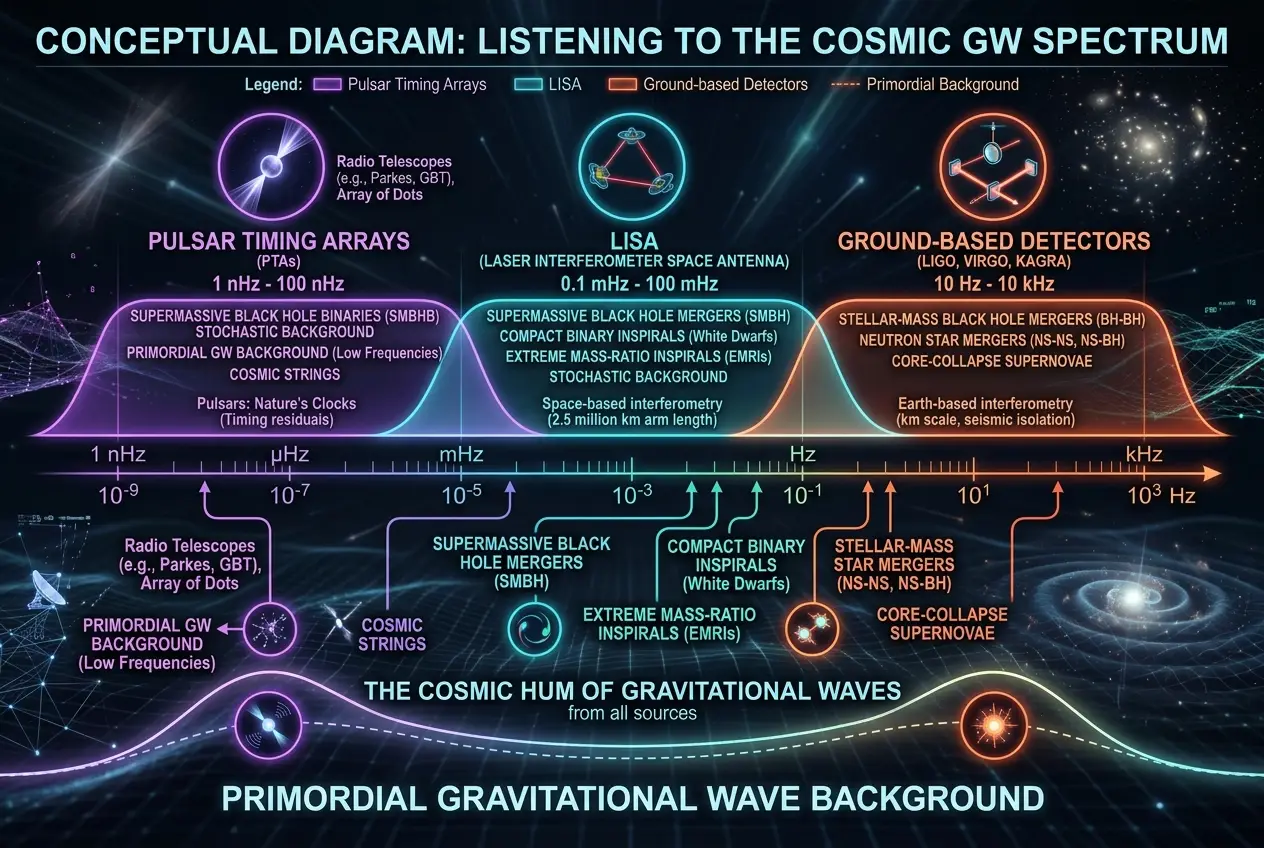
1. **CMB Polarization (B-modes):** While the CMB temperature fluctuations are well-mapped, scientists are also looking at its polarization. Gravitational waves have a unique signature on the polarization of the CMB, called **B-modes**. These swirling patterns in the CMB's polarized light would be direct evidence of primordial gravitational waves generated during inflation. It’s like detecting the distortion a sound wave makes on a surface, rather than the sound itself. Projects like BICEP/Keck Array and future missions like LiteBIRD are meticulously searching for these elusive patterns.
2. **Pulsar Timing Arrays (PTAs):** For lower-frequency gravitational waves, scientists use arrays of pulsars – rapidly spinning neutron stars that emit extremely regular radio pulses. These pulsars act as incredibly precise cosmic clocks. If a gravitational wave passes between Earth and a pulsar, it subtly stretches or compresses spacetime, altering the arrival time of the pulsar’s pulses. By monitoring many pulsars across the sky, astronomers hope to detect the minute, collective deviations caused by a primordial gravitational wave background. The discovery of a common signal by NANOGrav in 2023 strongly hints at a stochastic gravitational wave background, though its exact origin (primordial vs. astrophysical) is still under investigation. Our previous post, "Pulsars: Can These Cosmic Clocks Guide Future Explorers?" explores more about these fascinating objects: [Pulsars: Can These Cosmic Clocks Guide Future Explorers?](https://curiositydiaries.com/blogs/pulsars-can-these-cosmic-clocks-guide-future-explorers-1057).
3. **Space-based Interferometers (LISA):** Future missions like the Laser Interferometer Space Antenna (LISA) will deploy three spacecraft in a triangular formation, separated by millions of kilometers. Lasers exchanged between them will precisely measure tiny changes in their separation. LISA will be sensitive to gravitational waves in a frequency range different from ground-based detectors like LIGO and PTAs, potentially allowing it to probe further back into the universe’s history for this primordial hum.
The Significance of a Cosmic Hum
Why does this pursuit matter so much? Detecting a primordial cosmic hum, specifically from gravitational waves, would be nothing short of revolutionary.
* **Confirming Cosmic Inflation:** It would provide direct evidence for the theory of cosmic inflation, which explains many puzzles about the early universe, such as its flatness and uniformity.
* **Probing the Earliest Moments:** It would allow us to "see" (or "hear") the universe at an epoch far earlier than the CMB, potentially within the first trillionth of a second after the Big Bang, offering a window into extreme physics well beyond what particle accelerators can achieve.
* **Unveiling New Physics:** It could reveal entirely new physics at ultra-high energies, potentially shedding light on theories of quantum gravity, string theory, or even extra dimensions.
* **Understanding Dark Matter and Dark Energy:** The nature of this background hum could also offer clues about the mysterious components of our universe, dark matter and dark energy, which dominate its composition but remain elusive.
A Grand Unification of Echoes
I think about the universe as a grand historical archive, written in different languages. We’ve become adept at reading the language of light, through the CMB and telescopic observations. But the language of gravity, particularly the primordial gravitational wave background, holds even older, deeper secrets. It's a different kind of echo, a vibrational memory encoded directly into the fabric of spacetime itself.
The pursuit of this cosmic hum isn't merely a scientific endeavor; it’s a philosophical one. It’s about our innate human desire to understand our origins, to listen for the faint echoes of creation, and to piece together the grand narrative of existence. Could the very first sounds of the universe be humming around us, patiently waiting for our advanced technology to finally tune in? I believe the answer is a resounding "yes," and the journey to hear it is one of the most exciting quests in modern science.
Conclusion
The quest to detect the universe’s primordial hum is a testament to humanity’s enduring curiosity and technological ingenuity. From analyzing subtle polarization patterns in the CMB to precisely timing distant pulsars and designing space-based observatories, we are building instruments capable of "hearing" the universe in entirely new ways. This isn't just about finding another signal; it's about pushing the boundaries of what we can know about our cosmic beginnings, potentially revealing the ultimate soundtrack of creation.
Frequently Asked Questions
The primordial hum refers to the theoretical acoustic oscillations and gravitational waves generated in the extremely hot, dense plasma of the very early universe, long before stars or galaxies existed. It's considered the 'sound' of the universe's birth, though not audible in the traditional sense.
The CMB is the 'light echo' of the Big Bang, a snapshot of the universe when it became transparent to photons around 380,000 years old. The primordial hum, particularly from gravitational waves, represents ripples in spacetime that could have propagated even earlier, from the first fractions of a second after the Big Bang, a period inaccessible to light.
No, not with human ears. The 'hearing' refers to detecting these ancient vibrations using highly sensitive scientific instruments. We look for indirect evidence like specific polarization patterns (B-modes) in the CMB, subtle changes in pulsar timing, or direct detection by gravitational wave observatories like LISA.
Cosmic inflation, a period of rapid expansion immediately after the Big Bang, is theorized to have stretched tiny quantum fluctuations into cosmic-scale gravitational waves. Detecting these primordial gravitational waves would provide strong evidence for the inflation theory and a direct link to the universe's earliest moments.
Detecting the primordial hum would offer unprecedented insights into the physics of the very early universe, potentially confirming cosmic inflation, revealing new physics beyond the Standard Model, and providing clues about the nature of dark matter and dark energy. It's a way to probe the universe's origins at an epoch far earlier than what light can show us.
Verified Expert
Alex Rivers
A professional researcher since age twelve, I delve into mysteries and ignite curiosity by presenting an array of compelling possibilities. I will heighten your curiosity, but by the end, you will possess profound knowledge.
Leave a Reply
Comments (0)
No approved comments yet. Be the first to share your thoughts!
 Join Us

 Unknown Author





















Leave a Reply
Comments (0)