I remember lying on my back on a clear summer night, gazing up at the Milky Way. The sheer scale of it, the countless stars, the occasional streak of a meteor – it always filled me with a sense of profound wonder and, if I’m honest, a touch of cosmic insignificance. It's a feeling that has resonated with humanity for millennia. But what if our ancient ancestors, those who meticulously charted the heavens long before telescopes and computers, didn't just marvel at the stars? What if they possessed a sophisticated understanding that allowed them to **foresee cataclysmic cosmic events**, like comet impacts?
The notion might sound like something out of a sci-fi novel, a blend of historical mystery and advanced scientific intuition. Yet, as I delve deeper into the annals of ancient astronomy and cultural lore, I find myself asking: could our predecessors have deciphered patterns and omens that hinted at celestial collisions, long before we even understood the mechanics of our solar system? This isn't about mere superstition; it's about exploring the possibility of acute observation, sophisticated calendrical systems, and a deep, intuitive connection to the cosmos that we might have underestimated.
### The Unpredictable Wanderers: A Cosmic Threat
Comets, often dubbed "dirty snowballs," are celestial bodies made of ice, dust, and rock that orbit the Sun. Unlike the predictable, orderly dance of planets, comets often follow highly eccentric paths. When they swing close to the Sun, their ice vaporizes, creating the spectacular tail that has captivated and terrified sky-watchers for millennia. Historically, these sudden, bright apparitions were often seen as **harbingers of doom**, portents of war, famine, or the death of kings. Their unpredictable nature, combined with their dramatic appearance, made them perfect candidates for awe and fear.
But beyond the fear, there was intense observation. Ancient astronomers in civilizations across the globe meticulously tracked these cosmic wanderers. For them, the sky was not just a canvas of twinkling lights, but a living, breathing entity, its movements dictating earthly fortunes. The meticulous records kept by these cultures suggest a level of astronomical sophistication that goes far beyond simple star-gazing.
### Ancient Observatories: Windows to Cosmic Foresight?
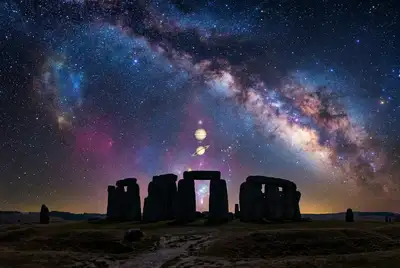
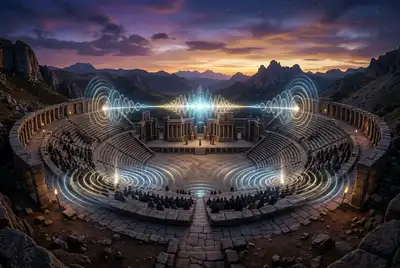
From the megalithic structures of Stonehenge to the sophisticated observatories of the Maya and Babylonians, ancient cultures invested immense resources in understanding the sky. These structures were often aligned with significant celestial events, tracking solstices, equinoxes, and planetary movements. But could they have also served as tools to predict the less predictable?
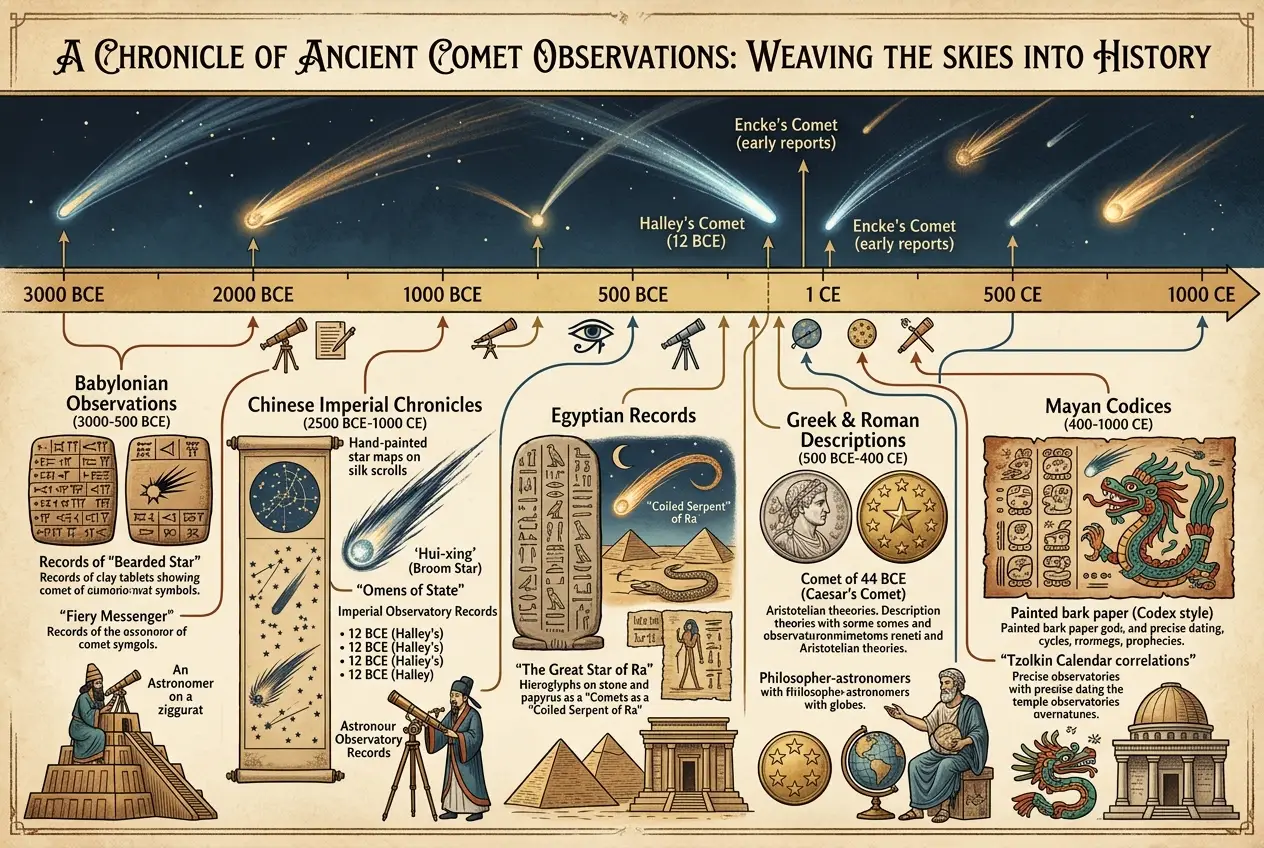
The **Babylonians**, for instance, are renowned for their detailed astronomical diaries and ephemerides. They developed complex mathematical methods to predict lunar and planetary positions with astonishing accuracy. Their cuneiform tablets contain records of various celestial phenomena, including comets, which they called "bearded stars" or "stars with a tail." While their primary focus was often on divination, their ability to meticulously record and catalog these events over centuries provided a rich dataset. You can explore more about their incredible achievements on [Wikipedia's page on Babylonian Astronomy](https://en.wikipedia.org/wiki/Babylonian_astronomy).
Similarly, the **ancient Chinese astronomers** were exceptional record-keepers. Their chronicles detail hundreds of comet appearances, often noting their paths, colors, and the duration of their visibility. They identified different types of comets, predicting their reappearance cycles where possible. This extensive catalog became a powerful tool, not just for foretelling mundane events, but potentially for recognizing patterns that might indicate a closer, more dangerous encounter. Could these "guest stars," as they sometimes called them, have been tracked for potential impact trajectories?
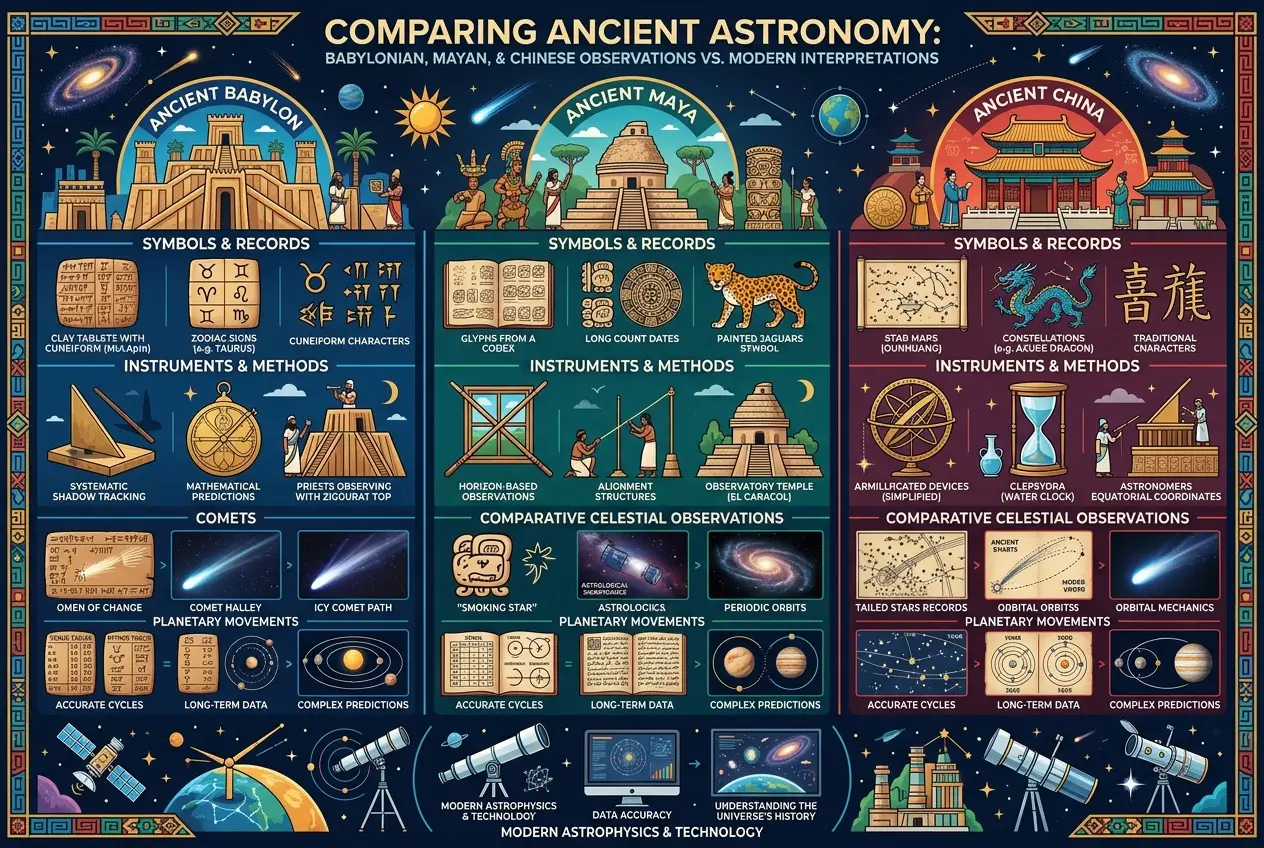
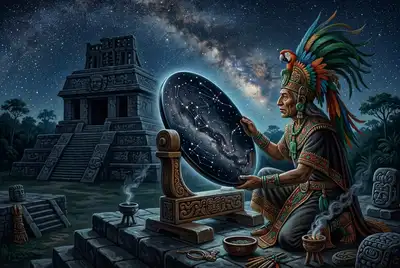
The **Maya civilization** in Mesoamerica also possessed an advanced understanding of celestial mechanics. Their sophisticated calendar systems, particularly the Long Count, demonstrate an intricate knowledge of time and astronomical cycles. While many of their surviving texts focus on planetary cycles and calendrical calculations, the precision of their observations hints at a broader celestial awareness. Perhaps their understanding of cosmic cycles led them to recognize anomalies that diverged from typical patterns, anomalies that might have suggested an impending collision. It makes me wonder how much of their understanding of the cosmos we’re still trying to fully decode today, similar to how we're still piecing together insights from historical tech like the Antikythera Mechanism, which I explored in a previous blog about [Greece's ancient cosmic computer](/blogs/the-antikythera-greeces-ancient-cosmic-computer-6564).
### Myths and Legends: Echoes of Catastrophe?
Many ancient cultures wove celestial events into their mythologies and spiritual beliefs. Often, comets were seen not just as omens, but as direct agents of divine will, bringing destruction or radical change. Could these myths be more than just stories? Could they be distorted memories or encoded warnings of actual comet impacts or near-misses that deeply affected human civilizations?
Consider the widespread flood myths found in almost every ancient culture around the globe. While many are attributed to heavy rainfall, some researchers propose that a catastrophic impact event, perhaps by a comet or asteroid breaking up, could have caused massive tsunamis and climatic shifts, leading to these shared narratives of global deluge. The **Younger Dryas Impact Hypothesis**, though controversial, suggests that an extraterrestrial impact around 12,900 years ago could have plunged Earth into a sudden cooling period, radically altering early human societies and ecosystems. While not directly "predicted," the memory of such an event could have profoundly influenced subsequent celestial observations and warnings. You can read more about the Younger Dryas impact on [Wikipedia](https://en.wikipedia.org/wiki/Younger_Dryas_impact_hypothesis).
One intriguing example comes from a Sumerian tablet, the **Kish Tablet**, sometimes interpreted as describing a cosmic impact. While highly speculative, it hints at the possibility that some ancient texts, cloaked in mythological language, might contain descriptions of actual celestial events that caused widespread destruction. I'm always fascinated by how ancient cultures interpreted these grand cosmic narratives, much like my previous thoughts on whether [ancient myths encode advanced cosmic data](/blogs/did-ancient-myths-encode-advanced-cosmic-data-7417).
### Decoding the Past with Modern Tools
Today, **archaeoastronomy** is the interdisciplinary field that helps us bridge the gap between ancient observations and modern science. By studying ancient structures, artifacts, and texts, researchers attempt to reconstruct the astronomical knowledge and practices of past civilizations. They look for alignments, patterns, and symbols that could reveal deeper insights into ancient celestial understanding. This involves meticulous work, from mapping ancient observatories to deciphering cryptic inscriptions.
One of the challenges is distinguishing between symbolic representation and literal astronomical data. However, the sheer precision of some ancient calendars and celestial alignments makes a compelling case for advanced observational capabilities. If they could predict eclipses and planetary conjunctions with remarkable accuracy, it's not a huge leap to consider they might have recognized patterns in comet behavior that hinted at danger.
### When History Collides with the Cosmos
While direct "predictions" of comet impacts with precise dates and coordinates are unlikely to be found in ancient records, there is anecdotal and inferential evidence that suggests an acute awareness of cosmic threats. The most famous "recent" impact event, the **Tunguska event** of 1908, occurred in a remote part of Siberia. Had it struck a populated area, the devastation would have been immense. It serves as a stark reminder of the power of even relatively small cosmic objects. While no ancient records speak of Tunguska, the existence of such events in recent memory underscores the constant cosmic ballet playing out above us.
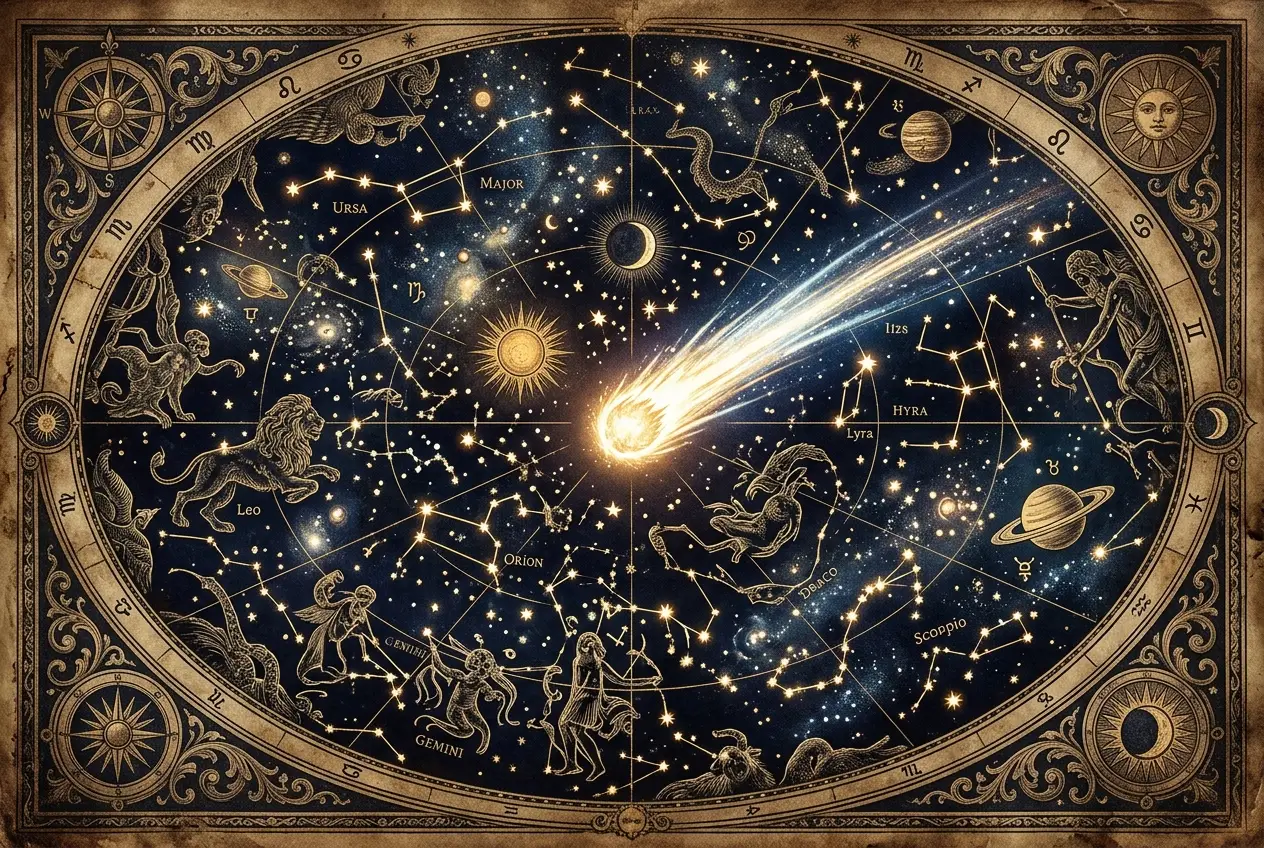
Could ancient cultures have observed a similar near-miss or even a smaller impact? Perhaps. The "rain of fire" or "stars falling from the sky" motifs in various mythologies might not just be poetic descriptions of meteor showers, but echoes of more significant atmospheric entry events. As I've explored before, the idea that [ancient star maps predicted cosmic events](/blogs/did-ancient-star-maps-predict-cosmic-events-9973) is a powerful one, and comet impacts would certainly fall into that category.
### From Ancient Foresight to Modern Safeguards
Our modern efforts to track **Near-Earth Objects (NEOs)** – asteroids and comets that pass close to Earth – are a testament to our contemporary understanding of impact risks. Projects like NASA's Planetary Defense Coordination Office employ sophisticated telescopes and computational models to identify potential threats. We use terms like "impact probability" and "kinetic impactor" – scientific language far removed from ancient omens and prophecies.
However, the underlying motivation remains remarkably similar: to understand, track, and potentially mitigate cosmic threats. The difference lies in our tools and our scientific framework. Yet, I find myself thinking that perhaps the ancients, lacking our technology, compensated with a profound intimacy with the night sky, passing down warnings through generations in the only way they knew how – through stories, rituals, and the careful construction of their sacred spaces.
### Conclusion: A Legacy of Cosmic Awareness
The question of whether ancient cultures foresaw comet impacts doesn't have a simple yes or no answer. What is clear is their incredible dedication to astronomical observation and their deep integration of celestial phenomena into their worldview. From the intricate calendars of the Maya to the meticulous records of the Babylonians and Chinese, our ancestors were not merely passive observers; they were keen students of the cosmos.
They might not have had the mathematical models to predict a comet's precise trajectory, but their sustained observation over millennia, combined with their understanding of cosmic cycles, could have led to a wisdom that recognized anomalous, potentially dangerous celestial patterns. In a world without light pollution and constant digital distractions, the night sky was their greatest teacher, and its lessons, I believe, were far more profound than we often imagine. Perhaps, in their myths and monuments, they left us not just tales of wonder, but subtle, encoded warnings of the universe’s enduring power.
Frequently Asked Questions
Ancient civilizations, particularly the Babylonians, Maya, and Chinese, achieved remarkable accuracy in observing and recording celestial events. They tracked planetary movements, predicted eclipses, and developed sophisticated calendars with impressive precision, often without modern instrumentation. Their detailed records and architectural alignments showcase a deep understanding of cyclical astronomical phenomena.
Direct, explicit predictions of comet impacts are rare in ancient texts. However, evidence includes widespread flood myths and cataclysmic destruction narratives, which some theories link to impact events. Meticulous comet records, particularly by the Chinese, indicate long-term tracking. The Younger Dryas impact hypothesis also suggests an ancient, significant impact event that would have left cultural memory, influencing later celestial interpretations.
Modern scientists use archaeoastronomy, an interdisciplinary field, to study ancient astronomical knowledge. This involves analyzing the alignments of ancient structures (like temples and observatories), deciphering ancient texts and artifacts, and correlating archaeological findings with astronomical data to reconstruct past celestial observations and beliefs.
While comets were frequently associated with ill omens, disaster, and divine displeasure in many cultures (due to their unpredictable and dramatic appearance), their interpretation could vary. In some contexts, they might have been seen as signs of significant change, new beginnings, or even the birth of a great leader, though the destructive aspect often predominated.
Ancient celestial observation was primarily focused on understanding cycles, predicting seasonal changes, and interpreting divine will. While they may have recognized patterns hinting at cosmic threats, they lacked the scientific framework and technology for precise prediction or mitigation. Modern planetary defense efforts, like NASA's, use advanced telescopes and computational models to specifically identify, track, and potentially deflect Near-Earth Objects, a capability entirely beyond ancient civilizations.
Verified Expert
Alex Rivers
A professional researcher since age twelve, I delve into mysteries and ignite curiosity by presenting an array of compelling possibilities. I will heighten your curiosity, but by the end, you will possess profound knowledge.
Leave a Reply
Comments (0)
No approved comments yet. Be the first to share your thoughts!
 Join Us


 Unknown Author
























Leave a Reply
Comments (0)