


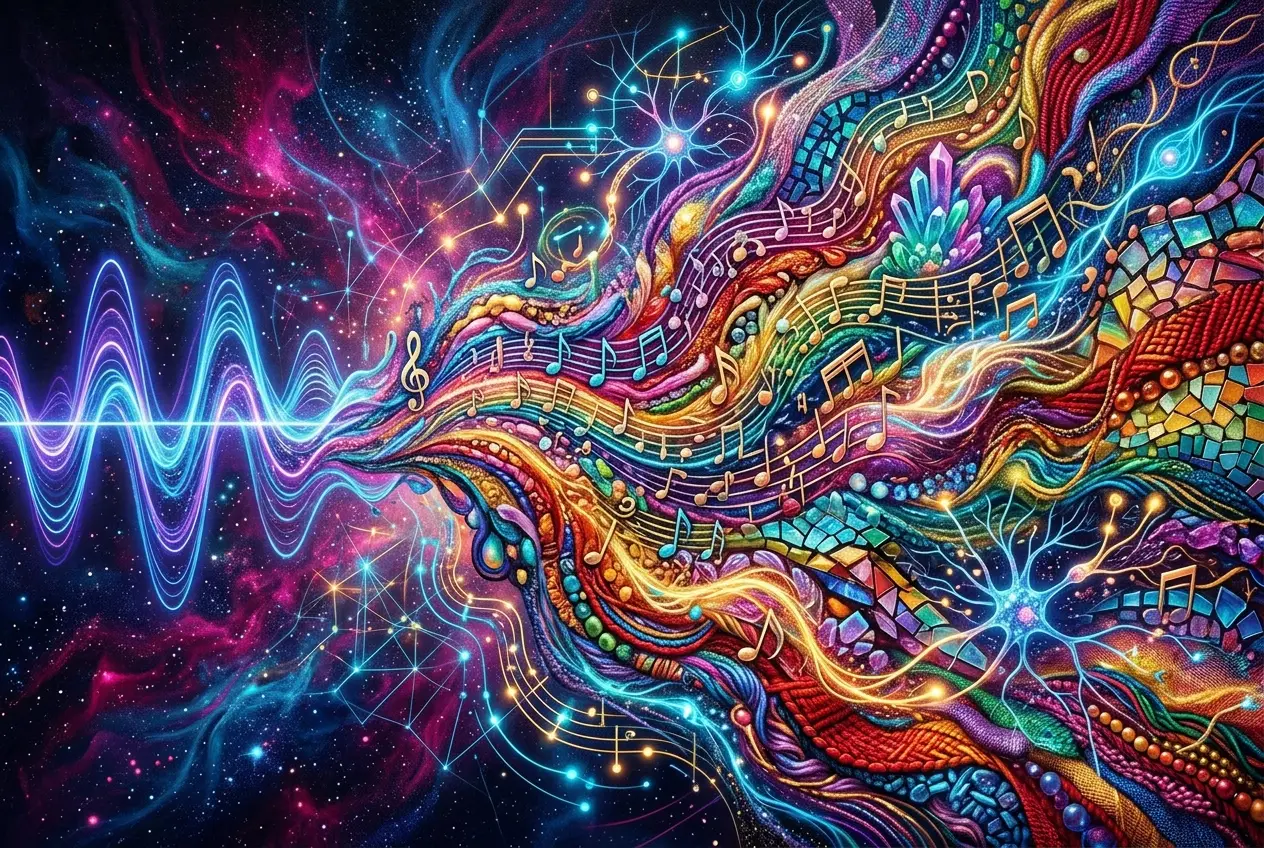
I remember sitting in a lecture hall once, completely engrossed as a neuroscientist described synesthesia. She spoke of individuals who "see" music as flowing colors, "taste" words as distinct flavors, or "feel" numbers as spatial arrangements. It wasn't poetic metaphor; it was their literal, everyday reality. I found myself wondering, what if we could all experience the world like that? What if technology could bridge the sensory gaps, not just for those born with unique neurological wiring, but for everyone? This isn't just about perceiving more; it's about perceiving differently, opening up entirely new dimensions of existence.
Our senses are our windows to the universe, but they are also profoundly limiting. We perceive a tiny fraction of the electromagnetic spectrum, hear only a narrow range of frequencies, and can only touch what's physically present. But what if those windows could be expanded? What if we could design new senses, or even borrow the extraordinary sensory capabilities of other species? The idea of technologically augmented perception is quickly moving from science fiction to the realm of serious scientific inquiry, promising a future where our reality is richer, deeper, and perhaps, more truly understood.
The World Through a Synesthete's Eyes: An Introduction to Cross-Modal Perception
Imagine listening to a symphony and not just hearing the notes, but seeing them swirl around you in a kaleidoscope of colors. Or reading a book and having each character’s name register as a distinct flavor on your tongue. This is the reality for people with synesthesia, a neurological phenomenon where stimulation of one sensory or cognitive pathway leads to automatic, involuntary experiences in a second sensory or cognitive pathway. It's not a disorder, but rather a unique way of experiencing the world, thought to affect between 2% and 4% of the population.
The forms of synesthesia are incredibly varied. Grapheme-color synesthesia, where letters or numbers are perceived as intrinsically colored, is one of the most common. There’s also chromesthesia (sound-color synesthesia), lexical-gustatory synesthesia (words evoking tastes), and even touch-emotion synesthesia. For centuries, these accounts were often dismissed as poetic fancy or even mental illness, but modern neuroscience has confirmed its genuine physiological basis. Brain imaging studies have shown increased connectivity and activity in specific brain regions associated with these cross-modal experiences. If you're curious about the deeper science, Wikipedia provides an excellent overview of Synesthesia (opens in a new tab).
Why Augment Our Senses? Beyond Mere novelty
The immediate allure of experiencing sound as color or words as taste might seem like a mere novelty, a party trick for an enhanced reality. But the implications of sensory augmentation stretch far beyond entertainment.
Enhanced Understanding & Creativity: Imagine architects who can literally "feel" the stress points in a building design, or musicians who can manipulate colors directly to compose melodies. Artists like Wassily Kandinsky, who reportedly experienced chromesthesia, famously translated his musical perceptions into groundbreaking abstract paintings. For us, a deepened, multi-sensory understanding could unlock unprecedented levels of creativity and problem-solving.
Accessibility and Rehabilitation: For individuals with sensory disabilities, technology already offers life-changing solutions. Consider devices like "The vOICe," which converts camera images into soundscapes, allowing blind users to "see" through sound. Further augmenting senses could lead to even more intuitive and integrated experiences, offering new avenues for those with hearing or visual impairments to navigate and interact with the world.
New Forms of Communication: If we could share sensory experiences directly, communication would transcend language barriers. Imagine directly conveying the "feeling" of a sunset or the "taste" of a new dish without words. This could revolutionize human interaction, leading to profound empathy and understanding.
Unlocking New Data Streams: Our world is awash with information that remains invisible or inaudible to us. Think of magnetic fields, radio waves, or even the subtle biometrics of other living organisms. Augmenting our senses could allow us to tap into these streams, giving us a "sixth sense" for environmental changes, hidden dangers, or even new scientific discoveries.
The Tech Frontier: How Can We Achieve This?
The path to widespread sensory augmentation is multifaceted, involving a blend of hardware, software, and a deep understanding of neuroscience.
Sensory Substitution Devices (SSDs)
These devices are perhaps the most mature form of sensory augmentation, translating information from one sense into another that we already possess. The vOICe, mentioned earlier, is a prime example. Another fascinating device is the North Sense, a small wearable that vibrates when its wearer faces magnetic North, essentially giving them a "compass sense." These devices work by exploiting the brain's remarkable neuroplasticity, its ability to reorganize itself by forming new neural connections throughout life. Our brains are incredibly adaptable, and with consistent exposure, they can learn to interpret new sensory inputs as naturally as our innate senses. For more on how our brains adapt, explore Neuroplasticity (opens in a new tab) on Wikipedia.
Brain-Computer Interfaces (BCIs)
This is where the future truly gets exciting – and complex. BCIs aim to create a direct communication pathway between the brain and an external device. Instead of relying on existing senses, BCIs could theoretically feed new sensory information directly into the brain, bypassing traditional sensory organs altogether.
Current BCI research explores various approaches:
- Non-invasive BCIs: Devices like EEG caps read brain activity from the scalp. While useful for controlling prosthetics or cursors, the bandwidth for complex sensory input is limited.
- Invasive BCIs: Electrodes implanted directly into the brain offer much higher fidelity and bandwidth. Research is ongoing in areas like restoring sight to the blind by stimulating the visual cortex or creating artificial tactile sensations for prosthetic limbs. The potential for direct neural input of novel sensory experiences, like seeing Wi-Fi signals or hearing changes in atmospheric pressure, is a bold but plausible long-term goal. For a deeper dive into the world of BCIs, check out Brain-Computer Interfaces (opens in a new tab).
- This technology also touches on the capabilities discussed in blogs like Can Brain-Computer Interfaces Read Your Dreams?, showing how intimately connected our minds can be with digital interfaces.
AI and Advanced Algorithms
The sheer volume of data required to simulate complex sensory experiences, or to translate external phenomena into perceivable forms, demands powerful AI. AI could be used to:
- Interpret and filter data: Differentiating meaningful patterns from noise in environmental data (e.g., thermal signatures, chemical compositions).
- Generate sensory experiences: Creating realistic visual representations of sound, or tactile feedback for abstract data.
- Personalize augmentation: Adapting the sensory translations to an individual’s unique neurological makeup and preferences.
The Ethical Labyrinth and Potential Pitfalls
As with any technology that promises to fundamentally alter human experience, sensory augmentation comes with a host of ethical questions and potential challenges.
- Sensory Overload: Our brains are already constantly filtering an enormous amount of sensory input. Introducing entirely new senses could lead to debilitating overload, anxiety, or even psychosis if not carefully managed.
- Identity and Reality: If our perceptions are deeply tied to our sense of self, how would fundamentally altering them affect our identity? What is "real" when our senses can be so easily augmented, or even manipulated? This question echoes discussions on topics like Is Our Reality a Digital Simulation?.
- Equity and Access: Will these augmentations be available to everyone, or will they create a new divide between the "sensory rich" and the "sensory poor"?
- Safety and Control: Invasive BCIs carry risks of infection and tissue damage. Furthermore, who controls the sensory input? Could governments or corporations subtly influence our perceptions?
These are not trivial concerns, and the journey toward sensory augmentation must be guided by careful ethical frameworks and a deep understanding of human biology and psychology. Our understanding of how external factors like Does Earth's Magnetic Field Affect Our Minds? influences our perception also highlights the delicate balance of our sensory systems.
The Future of Perception: A Bold New Frontier
The concept of expanding our human senses isn't just about mimicry; it’s about transcending biological limitations. Imagine:
- Infrared Vision for Everyone: Navigating perfectly in the dark, detecting heat signatures, understanding energy flows.
- Detecting Chemical Signatures: Sensing pollutants in the air, identifying specific diseases through scent, like a dog's keen nose.
- Electromagnetic Awareness: Directly perceiving radio waves, Wi-Fi signals, and magnetic fields, opening up a living map of our technological world.
This isn't just about seeing better or hearing more clearly; it's about developing entirely new ways of interacting with the universe. It’s about merging biological and artificial intelligence, not to replace what it means to be human, but to expand it, allowing us to experience a reality far richer and more nuanced than we can currently imagine.
The scientific consensus on Sensory substitution (opens in a new tab) clearly shows the brain's incredible capacity to adapt and learn new sensory inputs. This adaptability is the bedrock upon which the future of augmented senses will be built. As technology advances, the boundaries of what our senses can perceive will inevitably blur, promising a future where seeing sound and tasting color are not just rare phenomena, but perhaps, common, technologically-enhanced realities. The journey will be complex, filled with challenges and breakthroughs, but the destination—a world of richer, multi-dimensional perception—is one that surely sparks the deepest human curiosity.




Conversation0
No comments yet. Be the first to share a thought — the best questions often become new stories.