I vividly remember a dream from last week. It was one of those surreal, vivid narratives where I was flying over a city made of liquid light, chasing a talking raven that held the secret to endless pizza. Waking up, I couldn't help but wish I could have recorded it, played it back, or even shared the exact experience with someone else. For centuries, dreams have been our private theaters, a realm of the mind inaccessible to others, a frontier of consciousness we can barely decipher ourselves. But what if that's changing? What if the rapid advancements in **Brain-Computer Interface (BCI)** technology are bringing us closer to a future where our most intimate nocturnal visions could be "read" or even reconstructed?
It sounds like something straight out of science fiction, doesn't it? The idea of a machine peering into the deepest recesses of our subconscious, pulling out images, sounds, and even emotions from our dreams. Yet, the convergence of neuroscience, artificial intelligence, and advanced signal processing is pushing these boundaries, turning what was once pure fantasy into a tangible area of scientific exploration. I believe we're standing on the precipice of understanding not just *how* we dream, but potentially *what* we dream, directly from our brain activity.
### The Unseen World: A Brief History of Dream Science
Before diving into the tech, let's acknowledge the profound mystery that dreams represent. From ancient shamans interpreting omens in sleep visions to Sigmund Freud's monumental work on "The Interpretation of Dreams," humanity has long been fascinated by these nightly narratives. Carl Jung expanded on this, introducing the concept of the collective unconscious and archetypes manifesting in our dreams. For a deeper dive into the historical perspectives on dreams, you might find this Wikipedia article on the
history of dream interpretation insightful.
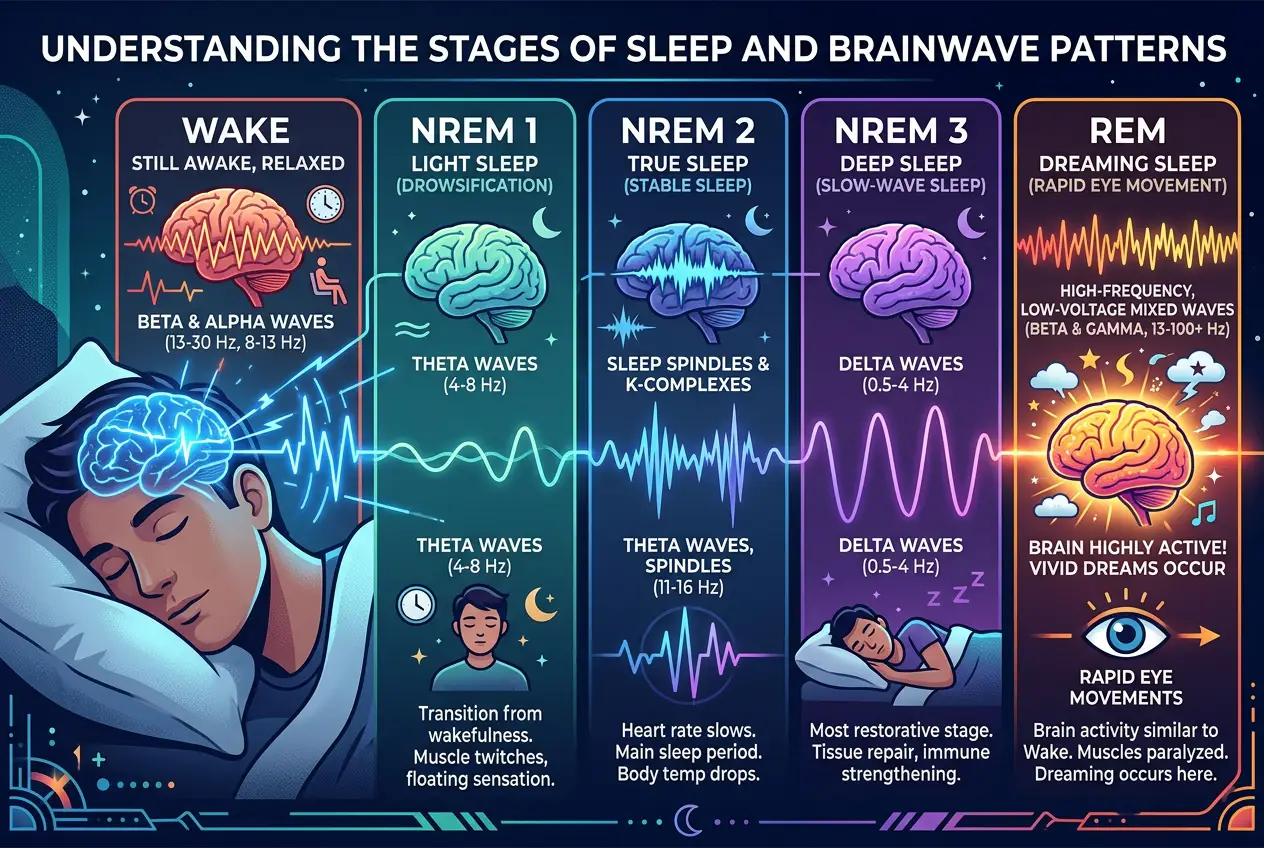
Modern sleep science has moved beyond purely psychoanalytic interpretations, focusing on the biological functions of dreams. We know dreams are most prevalent during **Rapid Eye Movement (REM) sleep**, a period characterized by intense brain activity, muscle paralysis, and, as the name suggests, rapid eye movements. During REM, our brain is incredibly active, consolidating memories, processing emotions, and even simulating potential threats or scenarios. This flurry of activity leaves behind electrical and chemical signatures that scientists are now trying to decode.
### How Do Brain-Computer Interfaces (BCIs) Work?
At its core, a BCI is a direct communication pathway between an enhanced or wired brain and an external device. It bypasses conventional motor output, allowing thoughts or intentions to control technology directly. There are primarily two types:
* **Non-invasive BCIs:** These include technologies like **Electroencephalography (EEG)**, which measure electrical activity from electrodes placed on the scalp. While safe and relatively easy to use, EEG has limited spatial resolution, meaning it's hard to pinpoint exactly where in the brain a signal is coming from.
* **Invasive BCIs:** These involve surgically implanting electrodes directly into the brain. While riskier, they offer much higher resolution and clearer signal quality, directly recording the firing of individual neurons.
To understand more about the fundamental principles, you can explore the
Brain–computer interface Wikipedia page. Researchers are applying these techniques, coupled with sophisticated algorithms and **Artificial Intelligence (AI)**, to unravel the intricate patterns associated with dream experiences. If you're curious about how AI can interpret complex human experiences, you might also like to read our blog on
Can AI Truly Learn From Human Intuition?.
### The Current State: Decoding the Visuals and Beyond
The journey to "reading" dreams began not with dreams themselves, but with waking visual perception. Early breakthroughs in the 2000s showed that by analyzing brain activity using **functional Magnetic Resonance Imaging (fMRI)**, scientists could reconstruct simple images a person was viewing. fMRI measures changes in blood flow to different parts of the brain, providing a high-resolution map of neural activity. For more on fMRI, refer to its
Wikipedia article.
Researchers at Kyoto University, for instance, showed subjects a series of images (like cars or airplanes) and recorded their fMRI brain patterns. Then, when a subject viewed a *new* image, the AI could predict what they were seeing based on previously learned patterns. This was a monumental step.
**From Waking Visions to Dreamscapes:**
The leap from decoding waking visuals to dreams is complex. During dreams, we're not receiving external sensory input. Instead, the brain is generating its own internal reality. However, the brain regions involved in visual processing during waking hours are often active during dreams as well.
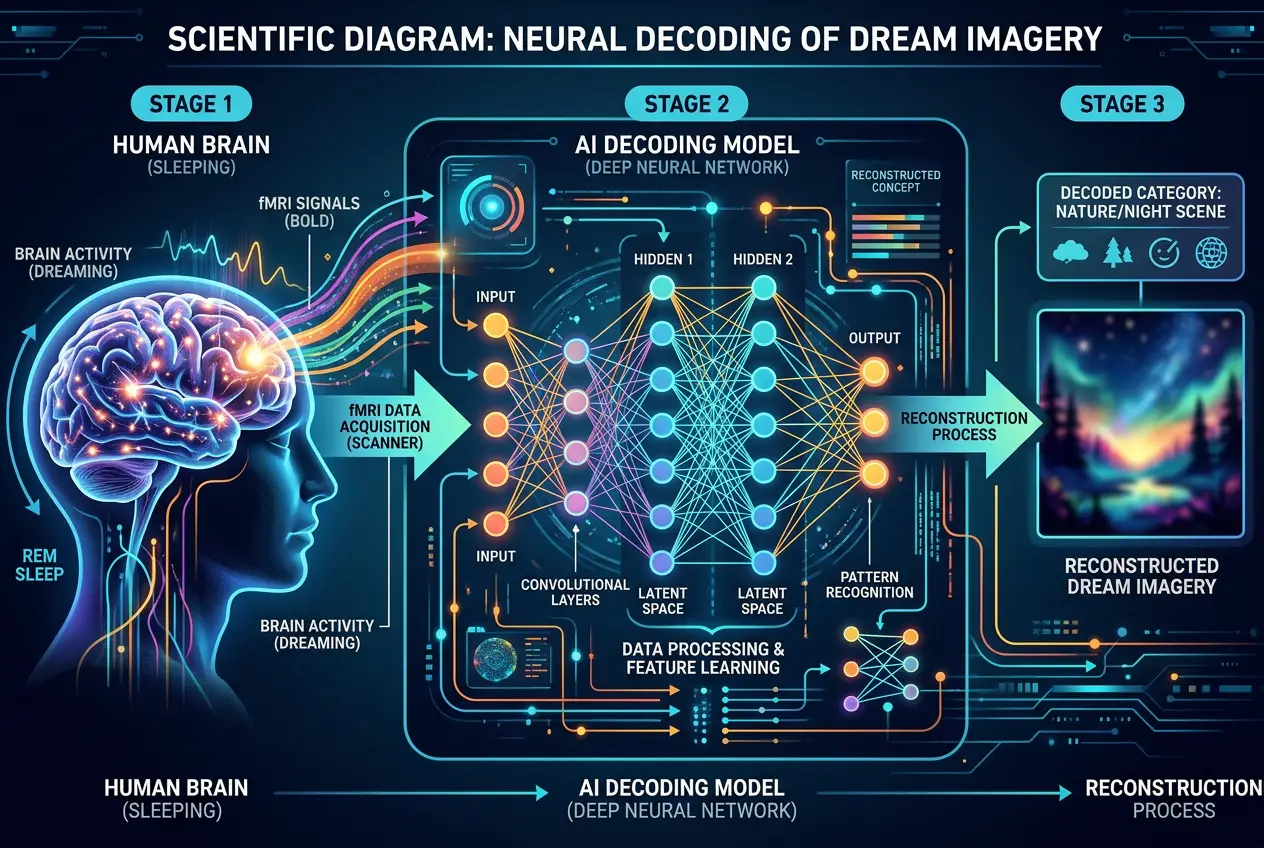
Pioneering work by teams like that of Dr. Yukiyasu Kamitani at Kyoto University has demonstrated some success in this area. They used fMRI to monitor brain activity during the early stages of sleep (when people sometimes have hypnagogic imagery, a transitional dream-like state) and then later during full REM sleep.
* **Method:** Participants were trained to wake up and report what they were seeing immediately after specific brain activity patterns were detected.
* **Results:** By correlating reported dream content (e.g., "a person," "a building") with the fMRI data, their AI model could predict, with a certain degree of accuracy, the *category* of objects or scenes being dreamt. While not a direct "playback," it was a significant step towards decoding semantic content.
More recently, research has explored the possibility of decoding not just images, but also other sensory information or even emotions. The challenge is immense because dreams are subjective, often illogical, and highly personalized. One person's dream of "flying" might involve a completely different set of neural activations than another's.
### The AI's Role in Unlocking the Subconscious
AI is the indispensable partner in this endeavor. The sheer volume and complexity of brain data are beyond human analytical capabilities. Machine learning algorithms, particularly deep learning neural networks, excel at finding subtle patterns in vast datasets.
* **Pattern Recognition:** AI can identify recurring neural signatures associated with specific dream elements.
* **Predictive Modeling:** Once trained on enough data (brain activity + self-reported dream content), AI can start predicting dream categories or characteristics from raw brain signals.
* **Generative Models:** Some researchers are even experimenting with generative AI models that can *create* visual representations based on decoded brain activity, moving closer to a "dream playback."
This intersection of human cognition and advanced algorithms is fascinating. It makes me wonder about the deeper nature of our own minds and how technology might help us understand it. We've even explored similar concepts in our article:
Is Our Brain a Quantum Machine? which touches on the complexity of brain function.
### Challenges and Ethical Labyrinths
While the progress is thrilling, the road to true dream reading is fraught with challenges:
1. **The Subjectivity of Dreams:** My talking raven might be a unique construct, not a universal symbol. How do we standardize neural patterns for highly personal, often bizarre, dream narratives?
2. **Signal Noise and Complexity:** The brain is an incredibly noisy environment. Isolating dream-specific signals from other ongoing brain processes is incredibly difficult.
3. **The "Ground Truth" Problem:** How do we verify if the decoded dream accurately reflects what the person experienced? Current methods rely heavily on self-reporting upon waking, which is notoriously unreliable (we often forget dreams quickly or embellish them).
4. **Invasiveness vs. Resolution:** Non-invasive methods like EEG are safe but lack precision. Invasive BCIs offer better data but come with surgical risks and ethical dilemmas.
5. **Ethical Implications:** This is perhaps the biggest hurdle.
* **Privacy:** If BCIs can read dreams, who owns that information? Could it be used by advertisers, governments, or even for criminal investigations? The thought of my deepest subconscious being exposed is unsettling.
* **Consent:** Can someone truly consent to having their dreams read if they're unconscious?
* **Manipulation:** If we can read dreams, could we eventually influence or even *inject* dreams? This opens a Pandora's box of possibilities, both therapeutic and terrifying.
* **Identity:** Our dreams are deeply intertwined with our sense of self. What happens when that private realm becomes public or manipulable?
These are not trivial questions. As we move closer to truly understanding and interfacing with the brain, the ethical frameworks must evolve at an equal pace. The discussion around these neuroethical concerns is becoming increasingly urgent.
### The Future of Dream Reading: A Glimpse
Despite the challenges, the potential applications of dream reading technology are profound.
* **Therapeutic Uses:** For individuals suffering from PTSD or recurring nightmares, being able to analyze and potentially modify dream content could be revolutionary. It might offer new pathways for psychological healing.
* **Creative Inspiration:** Imagine artists or writers being able to extract visual or narrative elements from their dreams, using them directly in their work.
* **Understanding Consciousness:** Dreams offer a unique window into consciousness itself – how the brain creates reality, narrative, and self without external input. Decoding them could unlock fundamental secrets of the mind.
* **Enhanced Learning:** Could we review information or practice skills while we sleep, with BCIs monitoring and reinforcing the dream content?
It's a future where the line between thought and digital data blurs even further. Just as we explored in
Can Brain Interfaces Upload Our Memories?, the ability to interact with the brain at this level promises both incredible advancement and significant societal change.
### Conclusion: A Dream Deferred, Not Denied
The idea of Brain-Computer Interfaces reading our dreams is no longer just a fantasy. It's a complex, multi-disciplinary scientific frontier that tantalizes with its potential and challenges with its ethical dilemmas. While a full "dream playback" machine remains firmly in the future, the foundational research is being laid, brick by neural brick.
I believe that as technology advances, our understanding of the brain will deepen exponentially. The question isn't *if* we'll gain more insight into our dreams through technology, but *how* we choose to wield that knowledge responsibly. Our subconscious, it seems, may not be so private for much longer. What do you think? Would you want your dreams to be read? The conversation is just beginning.
 Join Us

 Alex Rivers
































Leave a Reply
Comments (0)