


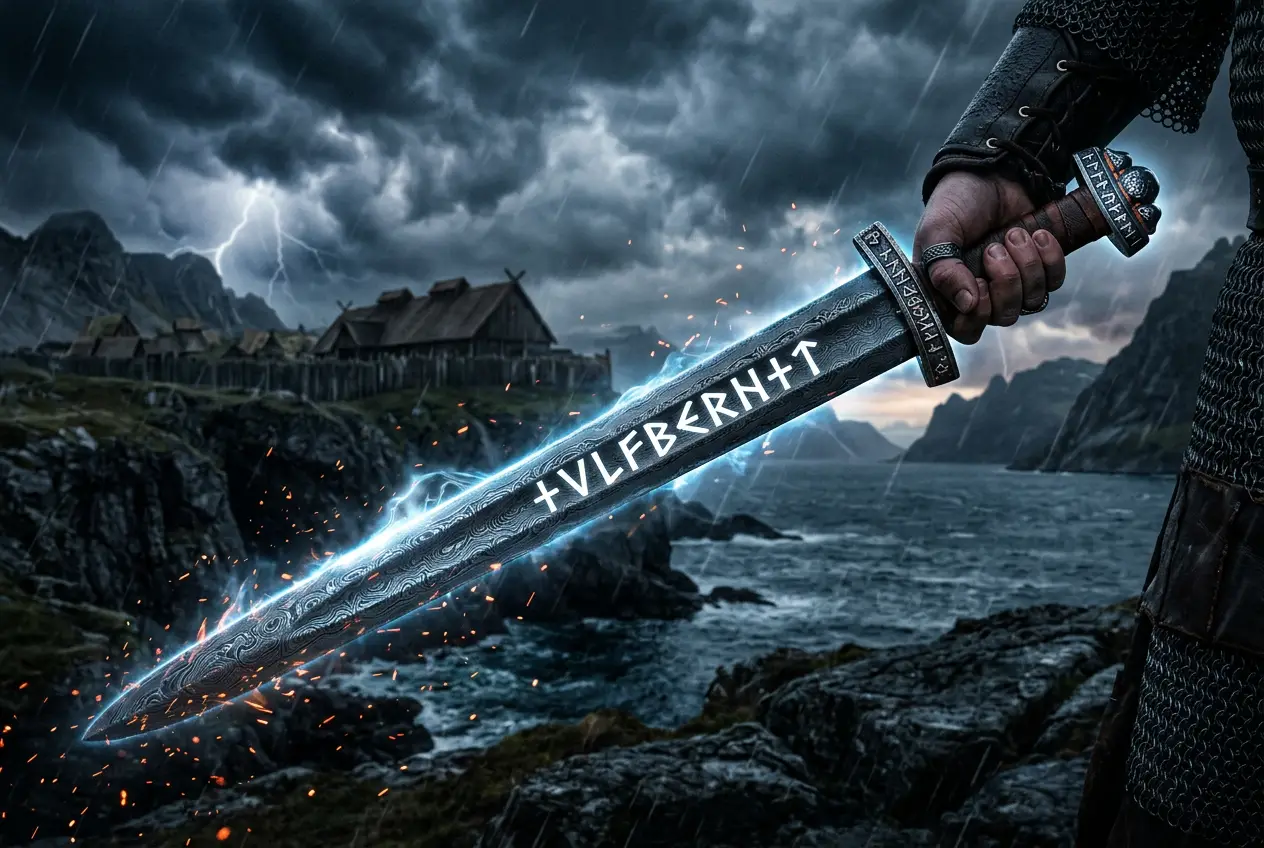
I remember the first time I stumbled upon the legend of the Ulfberht swords. My mind conjured images of horned helmets and longboats, but never did I imagine that these fearsome Viking warriors might have wielded blades that were, for their era, technological marvels. For centuries, these swords, bearing a cryptic inscription, have puzzled archaeologists and metallurgists alike. They seem to defy the very understanding of what was possible in the early medieval period.
Imagine holding a sword forged over a thousand years ago, a weapon so strong, so sharp, and so resilient that its metallurgical composition wouldn't be consistently replicated until the Industrial Revolution. This isn’t a fantasy tale; it’s the reality of the Ulfberht swords. These aren't just any old artifacts; they represent a profound historical and scientific anomaly, challenging our perceptions of ancient craftsmanship and the slow march of technological progress.
The Mystery of the "+ULFBERH+T" Blade
Between 800 AD and 1000 AD, during the height of the Viking Age, an estimated 170 swords have been discovered across Europe, predominantly in Scandinavia. What sets them apart from other blades of their time is not just their meticulous craftsmanship, but the distinctive " +ULFBERH+T " inscription, often accompanied by a cross symbol, etched into their blades. This mark signifies a quality and origin that scientists are still trying to fully comprehend.
Initially, scholars thought "Ulfberht" might be a person's name, a master smith, or perhaps a place of manufacture. However, the sheer number of swords, coupled with slight variations in the inscription (some even misspell it, like "+ULFBERHT+"), suggests something more complex. It's now widely believed that Ulfberht was likely a brand, a hallmark of exceptional quality, much like a modern premium brand would signify superior engineering. But what made these swords so superior?
Metallurgical Marvel: What Made Them Special?
The true enigma of Ulfberht swords lies deep within their molecular structure. Modern analysis, often involving scanning electron microscopy and spectrographic analysis, reveals that many genuine Ulfberht blades contain a remarkably high carbon content—around 0.6% to 0.8%. This might not sound groundbreaking to us today, but for a thousand years ago, it was nothing short of revolutionary.
To put this into perspective, most swords from the Viking era were made from "pattern-welded" iron. This involved forging together several strips of iron, sometimes with low-carbon steel, to create a blade that was relatively flexible but also contained numerous impurities (slag) and lacked uniform hardness. While visually appealing, these blades were prone to bending or breaking under extreme stress. They were adequate, but far from perfect.
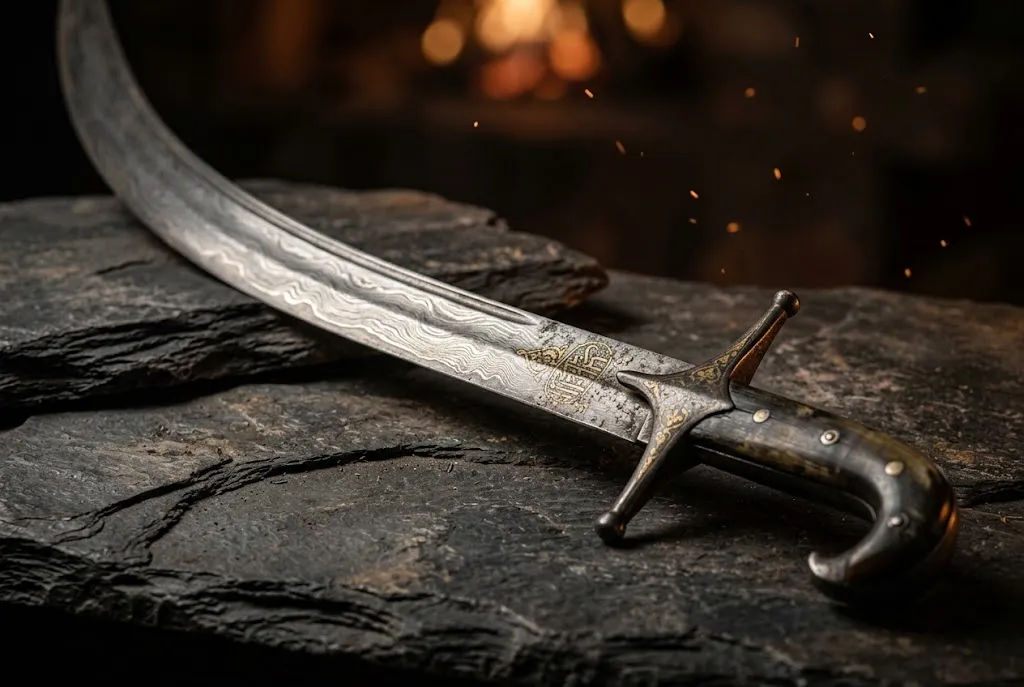
Ulfberht blades, on the other hand, were made from high-carbon crucible steel, a material far purer and stronger. Crucible steel (often referred to as Wootz steel, famously used in Damascus swords, though the two are distinct processes) requires temperatures exceeding 1,600°C (2,912°F) to melt raw iron and carbon together, allowing impurities to float to the surface and be skimmed off. This process results in a homogenous, high-quality steel that can be hardened to an incredible degree while retaining flexibility. Such temperatures were almost impossible to achieve in medieval Europe without advanced furnace technology and a deep understanding of metallurgy.
"The Ulfberht swords represent a significant leap in ferrous metallurgy, showcasing a level of material science that was essentially lost for centuries in Europe," notes Dr. Alan Williams, a renowned expert in historical metallurgy from the Wallace Collection.
Where Did This Advanced Knowledge Come From?
This brings us to the core question: How did the Vikings, or the artisans manufacturing these blades for them, acquire this advanced metallurgical knowledge? The consensus among historians and scientists points eastward.
The most plausible theory suggests that the raw material for Ulfberht blades, the high-carbon crucible steel, originated from Persia or Central Asia. Regions like modern-day Uzbekistan and Iran had been producing Wootz steel (a form of crucible steel) for centuries, creating legendary blades known for their strength and distinct patterns. The Vikings, through their vast trade networks stretching across Eastern Europe and into the Middle East (the "Volga Trade Route"), likely acquired these steel ingots.
Evidence supports this. Archaeological findings along the Volga River have unearthed trade goods, including coins and artifacts, demonstrating active contact between Viking traders and the Abbasid Caliphate, a powerhouse of scientific and technological advancement at the time. It’s conceivable that along with furs, amber, and slaves, ingots of this advanced steel found their way into Viking hands. While the Vikings themselves were formidable warriors and innovators in shipbuilding, their metallurgy, while good, wasn't typically at this level. This suggests they were skilled assemblers and finishers of imported high-quality raw materials, rather than the original innovators of the crucible steel process itself.
However, even if the raw material was imported, forging it into a sword still required immense skill. Working with high-carbon steel is tricky; it can become brittle if not handled correctly. The Ulfberht smiths had to understand how to heat treat, temper, and finish these blades to unlock their full potential. This would have been a closely guarded secret, perhaps passed down through generations of a master smithing guild or family.
The Legacy of Ulfberht and Broader Implications
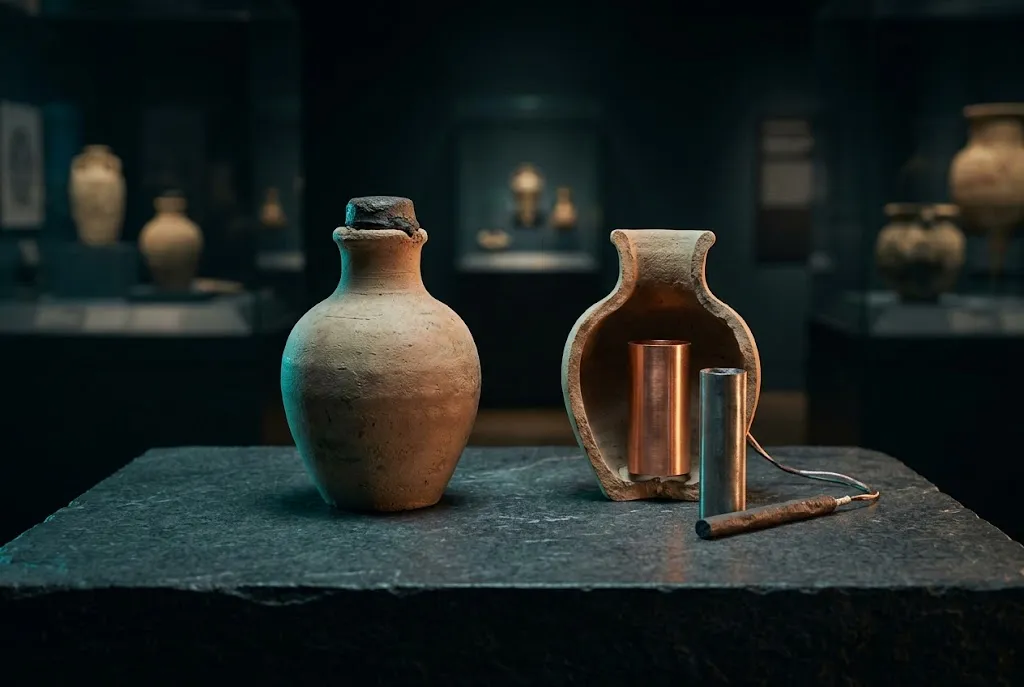
The mystery of the Ulfberht swords speaks volumes about the interconnectedness of the ancient world. It reminds us that technological innovation wasn’t always linear or confined to single regions. Ideas, materials, and techniques traveled vast distances, often defying geographical and cultural boundaries. This echoes other historical anomalies, like the puzzling advanced engineering behind the Baghdad Battery or the seemingly impossible construction feats of ancient megaliths, which often point to lost knowledge or unexpected cross-cultural exchanges.
The Ulfberht swords are not merely weapons; they are silent witnesses to a complex era of trade, innovation, and perhaps, a degree of industrial espionage. They challenge our conventional narrative that advanced metallurgy only truly blossomed in Europe much later. The Viking Age, often romanticized for its seafaring and raiding, was also an era of sophisticated networks that could acquire and utilize cutting-edge materials.
The study of these blades continues, with new analytical techniques offering ever deeper insights into their composition and manufacturing. As I delve into these findings, I’m consistently amazed at how a single artifact can rewrite entire chapters of technological history. It makes me wonder what other 'impossible' artifacts are out there, waiting to reveal their secrets and challenge our understanding of the past.
For more on how ancient cultures displayed surprising technological prowess, you might find our article on the Vimana: Did Ancient India Invent Flying Machines? particularly intriguing. The Ulfberht saga is a potent reminder that the past is far from fully understood, and ancient cultures often possessed knowledge and capabilities that we are only just beginning to appreciate.
Conclusion: A Glimpse into Ancient Innovation
The Ulfberht swords stand as a testament to early medieval ingenuity and global trade networks. They weren't just exceptional weapons; they were symbols of status, power, and a mastery of materials that was centuries ahead of its time in Western Europe. Whether forged by Viking smiths with imported steel or by European artisans who learned the secret of crucible steel, these blades represent a pinnacle of ancient metallurgy. They are a compelling reminder that the "dark ages" weren't always so dark, and that the human quest for better tools, better weapons, and better technology is a continuous, universal journey. And I believe we still have much more to learn from the ancient world's quiet, formidable achievements.
External Sources:

Conversation0
No comments yet. Be the first to share a thought — the best questions often become new stories.