



The year is 2077. I'm sitting in my apartment, powered entirely by a device no larger than a car battery, humming quietly in the corner. Its secret? A contained micro-black hole, generating energy with an efficiency that was once the stuff of science fiction. While this scenario might sound like something ripped from a cyberpunk novel, the underlying physics exploring the potential of micro-black holes is a fascinating area of research that could genuinely revolutionize our energy future.
Recently, I was discussing the limits of renewable energy with a friend, and the conversation drifted to the truly exotic. "What if," he mused, "we could harness something as fundamental as a black hole?" I admit, the idea initially sounded absurd, like something out of a theoretical physicist's wildest dream. But the more I looked into it, the more I realized that micro-black holes, tiny theoretical remnants from the early universe or even potentially created in a lab, might not just be a cosmic curiosity. They could represent the ultimate power source.
The Allure of the Micro-Black Hole
When we think of black holes, images of colossal cosmic devourers come to mind—stellar giants that swallow light and distort spacetime. These are the macroscopic black holes, ranging from a few solar masses to supermassive behemoths at the centers of galaxies. But theoretical physics also posits the existence of primordial black holes, much smaller and potentially formed in the extreme conditions of the early universe. These could be anywhere from asteroid-sized to microscopic, some potentially no larger than a single atom.
Why are these tiny titans so interesting for future tech? It boils down to a phenomenon called Hawking Radiation. In 1974, Stephen Hawking proposed that black holes aren't entirely black. They slowly evaporate by emitting radiation. The smaller the black hole, the faster it evaporates and the more powerfully it radiates energy. A black hole with the mass of a large mountain could theoretically emit energy at a rate equivalent to a large power plant.
Hawking Radiation: A Black Hole's Paradoxical Glow
Imagine a quantum dance happening at the event horizon of a black hole. Particle-antiparticle pairs constantly pop into existence and annihilate each other. Sometimes, one particle falls into the black hole while its partner escapes. The escaping particle is what we perceive as Hawking radiation. This radiation carries away energy, causing the black hole to lose mass over time.
For massive black holes, this process is incredibly slow—slower than the age of the universe. But for micro-black holes, especially those with masses significantly less than our moon, the evaporation could be incredibly rapid and energetic. A black hole with a mass of about 10^11 kg (roughly the mass of a moderate asteroid) would have a lifetime of only a few years and radiate energy at a rate of 1.6 x 10^16 watts – more than the entire world's current power consumption. This sheer energy output is why the idea of a micro-black hole power source is so compelling. You can read more about it on Wikipedia's page on Hawking Radiation (opens in a new tab).
The Engineering Challenge: Containment and Control
The theoretical potential is staggering, but the practical challenges are immense, to say the least. The primary hurdle is containment. How do you contain something that exerts such immense gravitational pull and radiates energy at extreme temperatures?
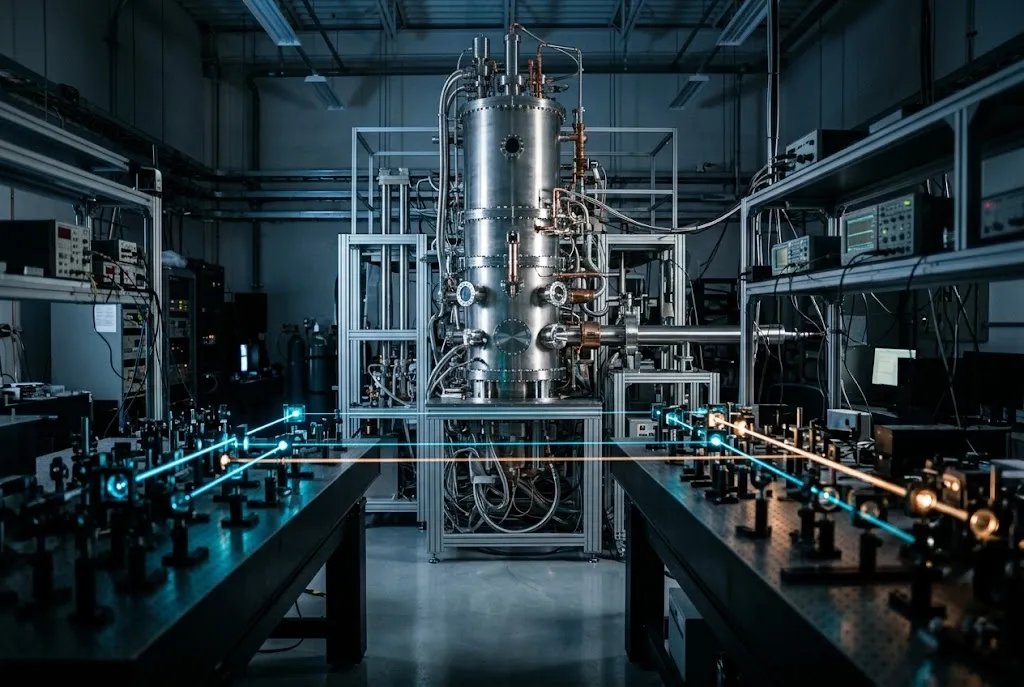
Current proposals involve using powerful magnetic fields or intricate systems of matter-energy manipulation to trap and stabilize a micro-black hole. Think of it like a miniature version of fusion reactors attempting to contain plasma—but orders of magnitude more extreme. The black hole would need to be held in a precise location, preventing it from interacting with the reactor walls or, worse, falling into the planet itself.
Another challenge is feeding the black hole. A micro-black hole would need a constant supply of mass to prevent it from evaporating too quickly and violently. This 'fuel' would be precisely delivered to sustain a controlled reaction, much like regulating fuel in a conventional nuclear reactor. This careful balance between evaporation and feeding would be crucial for stable power generation. The concept is explored in theoretical physics and would require breakthroughs far beyond our current capabilities, but the vision of an ultimate power source pushes us to consider these extremes. For those interested in how we get things into space, which is a prerequisite for advanced energy harvesting, I recommend checking out our blog on From Earth to Orbit: How Satellites Reach Space.
Creating Micro-Black Holes: A Near-Impossible Feat
If naturally occurring primordial black holes are rare and difficult to find, could we create them? In theory, yes. The conditions required to compress matter sufficiently to form a black hole are extreme. For an object to become a black hole, its mass must be compressed into a region smaller than its Schwarzschild radius. For something with the mass of, say, Mount Everest, its Schwarzschild radius would be impossibly tiny—much smaller than an atomic nucleus.
To achieve this, we would need energies far beyond anything attainable by current particle accelerators like the Large Hadron Collider (LHC). The LHC can recreate conditions similar to those microseconds after the Big Bang, but it's still insufficient to produce stable micro-black holes of the type that could be harnessed for energy. The energy density required is astronomical. This quest for creating new states of matter and understanding extreme physics is also mirrored in our exploration of Beyond Our Universe: What Types of Multiverses Exist?.
The Safety and Ethical Dimension
The very mention of creating or harnessing black holes raises immediate and serious safety concerns. What if containment fails? A runaway micro-black hole, even a tiny one, could theoretically consume matter at an accelerating rate, posing an existential threat. It's the ultimate "what if?" scenario. The scientific community would need to establish incredibly stringent safety protocols and thoroughly understand the physics before any such experiment could even be considered.
Moreover, the ethical implications are profound. If such a power source were ever developed, it would grant humanity unprecedented energy freedom, but also immense power. Who would control it? How would it be distributed? These are questions that echo other discussions around advanced technologies, from AI to genetic engineering. The discussions surrounding anomalies, like the one in Is Earth's Core a Giant Crystal? Decoding Seismic Clues, highlight how much we still have to learn about even our own planet's extreme conditions.
Beyond Power: Micro-Black Holes for Space Travel?
Beyond terrestrial power generation, the concept of micro-black holes ignites dreams of interstellar travel. If we could control and direct the intense radiation from a micro-black hole, it could act as an incredibly efficient propulsion system. Imagine a spacecraft accelerating to a significant fraction of the speed of light, powered by a contained black hole engine.
This is still purely speculative, of course, but the principles of physics don't entirely rule it out. The sheer power density offers a theoretical pathway to overcome the vast distances of space, potentially making human colonization of other star systems a more tangible dream. This ties into the broader discussions about pushing the boundaries of physics, similar to how researchers investigate seemingly impossible concepts like the EmDrive: Does an Impossible Engine Break Physics?.
The Road Ahead: From Theory to Reality (or Not)
The journey from theoretical curiosity to a practical power source for micro-black holes is littered with monumental challenges. We need:
- New Physics: A deeper understanding of quantum gravity and the interplay between quantum mechanics and general relativity at extreme scales.
- Advanced Materials: Materials capable of withstanding unimaginable temperatures and radiation levels.
- Containment Technology: Revolutionary breakthroughs in magnetic or gravitational confinement.
- Precision Control: Unprecedented levels of precision in manipulating and feeding such a volatile object.
While the dream of micro-black hole power remains firmly in the realm of theoretical physics and science fiction for now, it's a testament to human curiosity and ingenuity that we even contemplate such possibilities. The exploration of these extreme ideas often pushes the boundaries of our understanding, leading to unexpected discoveries along the way. Whether we ever harness the power of a contained black hole or not, the pursuit of such grand challenges invigorates scientific inquiry and continues to inspire future generations to look to the cosmos for answers, just as we ponder if Rogue Planets Could Earth Become a Wandering World?.
The future of energy is an evolving narrative, and while micro-black holes present perhaps the most extreme solution, they certainly remind us that the universe holds secrets far beyond our current grasp. And I, for one, am always excited to peer into those potential futures, no matter how distant.
The pursuit of understanding micro-black holes, whether for power or pure knowledge, exemplifies humanity's relentless drive to push the boundaries of what is possible. Who knows what other exotic phenomena, currently confined to the pages of theoretical physics, might one day unlock the next great leap for our civilization?



Conversation0
No comments yet. Be the first to share a thought — the best questions often become new stories.