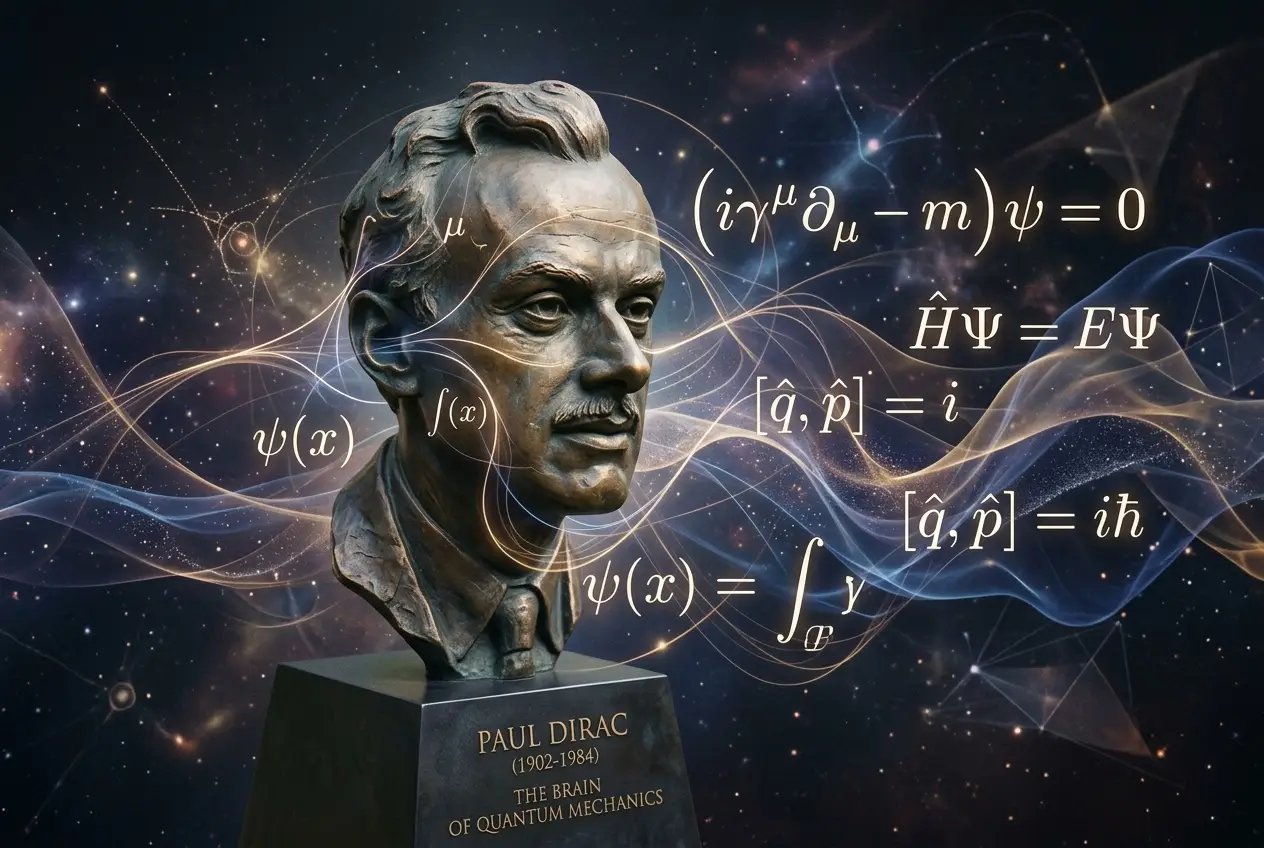
If I were to pick a figure from the annals of 20th-century science whose intellect felt almost alien in its precision and foresight, it would undoubtedly be Paul Adrien Maurice Dirac. His name might not resonate as loudly in popular culture as Einstein or Hawking, yet his contributions to quantum mechanics and theoretical physics are, in many ways, just as foundational, if not more so, for our modern understanding of the universe. He was a man of profound silences and even more profound insights, a true pioneer who dared to trust the beauty of mathematics over the prevailing intuitions of his time. This blog post will be an extensive journey, delving deep into the life, mind, and unparalleled legacy of P.A.M. Dirac, aiming to uncover the man behind the monumental equations and the silent genius who shaped our quantum world.
### The Formative Years: An Unconventional Upbringing
Paul Adrien Maurice Dirac was born on August 8, 1902, in Bristol, England. His upbringing was, to say the least, unconventional, heavily influenced by his Swiss father, Charles Adrien Ladislas Dirac, a strict and authoritarian French teacher. His English mother, Florence Hannah Dirac, was more lenient and provided a softer counterpoint in the household. I often wonder how much a child's early environment shapes their intellectual development, and in Dirac’s case, it seems pivotal.
His father insisted that only French be spoken at the dinner table, and if Paul couldn't express himself correctly, he was to remain silent. This strict regimen, while perhaps stifling in some ways, instilled in young Paul a profound economy of words, a trait that would become legendary throughout his life. He learned to think meticulously before speaking, valuing precision and conciseness above all else. This early discipline, I believe, directly translated into his scientific work, where elegance and mathematical beauty were his guiding stars.
Dirac attended Bishop Road Primary School and later the Merchant Venturers' Technical College, an institution that emphasized practical, technical subjects. It wasn’t a classical education focused on humanities, but rather one deeply rooted in engineering principles and scientific rigor. This foundation would later serve him well, providing a pragmatic grounding for his highly abstract theoretical pursuits.

### The Path Less Traveled: From Engineering to Physics
Dirac initially pursued an electrical engineering degree at the University of Bristol, graduating with first-class honours in 1921. At this juncture, a career in engineering seemed his destined path. However, the economic aftermath of World War I made finding employment challenging. This twist of fate, a seemingly unfortunate circumstance, proved to be a stroke of immense luck for the world of physics.
With limited job prospects, Dirac decided to continue his education, albeit with a slight shift. He began a mathematics degree at Bristol University, which he completed in 1923. It was during this period that he encountered the nascent and bewildering concepts of relativity and the emerging quantum theory. I can only imagine the intellectual ferment of that era, with the classical Newtonian worldview beginning to crack under the weight of new experimental evidence.
His exceptional mathematical talent quickly became apparent, catching the eye of academics. This led to a crucial recommendation: pursue doctoral studies at St John's College, Cambridge. Cambridge, at the time, was a crucible of scientific innovation, attracting some of the brightest minds in the world. It was there, under the guidance of Ralph Fowler, a renowned expert in statistical mechanics and quantum theory, that Dirac's true genius would blossom.
### The Dawn of Quantum Mechanics: A Revolution in the Making
The 1920s were a period of extraordinary upheaval in physics. Classical mechanics and electromagnetism, while successful in describing the macroscopic world, utterly failed at the atomic and subatomic scales. New theories were desperately needed to explain phenomena like atomic spectra, black-body radiation, and the photoelectric effect. This led to the rapid, sometimes chaotic, development of quantum mechanics.
In 1925, Werner Heisenberg published his groundbreaking paper on matrix mechanics, an abstract formulation of quantum theory. Just months later, Erwin Schrödinger introduced his wave mechanics, an alternative, seemingly more intuitive, approach. Physicists were grappling with two different, yet equally revolutionary, descriptions of the quantum world.
It was into this swirling maelstrom of new ideas that Dirac stepped. He was uniquely positioned, with his profound mathematical intuition and his engineering-honed logical precision, to make sense of the emerging chaos. I often reflect on how serendipitous such moments in history are, when the right mind meets the right problem at the right time.
### Dirac's Groundbreaking Ph.D.: Forging the Foundations
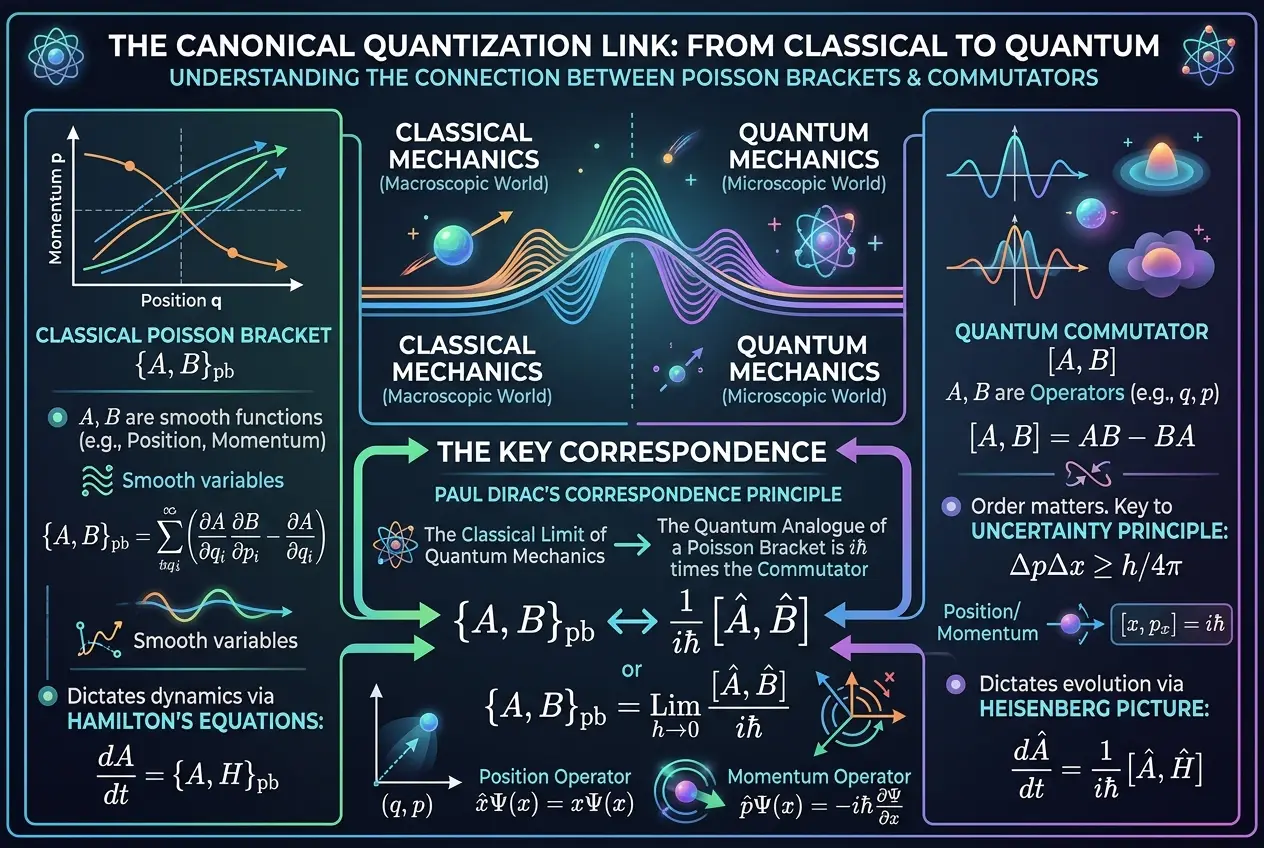
Dirac's doctoral research, under Fowler, focused on developing a more general and elegant mathematical framework for quantum mechanics. While others were exploring matrix and wave mechanics, Dirac sought a deeper, more unified principle. He introduced the concept of **Poisson brackets** from classical mechanics into quantum theory, transforming them into **commutators**, which are fundamental to understanding non-commuting operators in quantum mechanics.
His thesis, "Quantum Mechanics," completed in 1926, was a tour de force. It presented a generalized transformation theory that elegantly showed how Heisenberg's and Schrödinger's formulations were merely different representations of a single, more fundamental theory. This was a crucial step in solidifying the foundations of quantum mechanics, demonstrating its internal consistency and mathematical coherence. It was a testament to his ability to see the underlying structure where others saw only disparate pieces.
One of his early key insights was the realization that the fundamental principles of quantum mechanics could be expressed in terms of **abstract algebraic relations** rather than specific representations like matrices or wave functions. This abstract approach was revolutionary and paved the way for the development of quantum field theory.
### The Dirac Equation (1928): Unifying Relativity and Quantum Mechanics
If I had to pinpoint Dirac's single most iconic achievement, it would be the **Dirac Equation**. Published in 1928, this equation was a monumental leap forward, a testament to his unwavering faith in mathematical beauty and consistency.
At the time, physicists were struggling to reconcile quantum mechanics with Albert Einstein's special theory of relativity. Schrödinger's wave equation, while incredibly successful, was non-relativistic. It worked well for electrons moving at slow speeds, but it broke down when electrons approached the speed of light, as they often do within atoms. The attempt to create a relativistic version of the Schrödinger equation (the Klein-Gordon equation) suffered from problems, including the prediction of negative probabilities.
Dirac set out to find a relativistic wave equation for the electron that would preserve the positive probability interpretation of quantum mechanics and accurately describe electron spin, a property that had previously been introduced ad hoc. He wanted an equation that was linear in both energy and momentum, much like the Schrödinger equation is linear in energy, but also symmetric with respect to space and time, as demanded by relativity.
His genius led him to introduce a set of four-component wave functions and a series of four 4x4 matrices (now known as Dirac matrices). The resulting equation elegantly unified quantum mechanics and special relativity, and, almost magically, intrinsic **electron spin** emerged naturally from its very structure, rather than being an added postulate. It was as if the universe itself was whispering its secrets through Dirac's pen.
The Dirac Equation describes the behavior of relativistic electrons (and other spin-1/2 particles like quarks and neutrinos). It is given by:
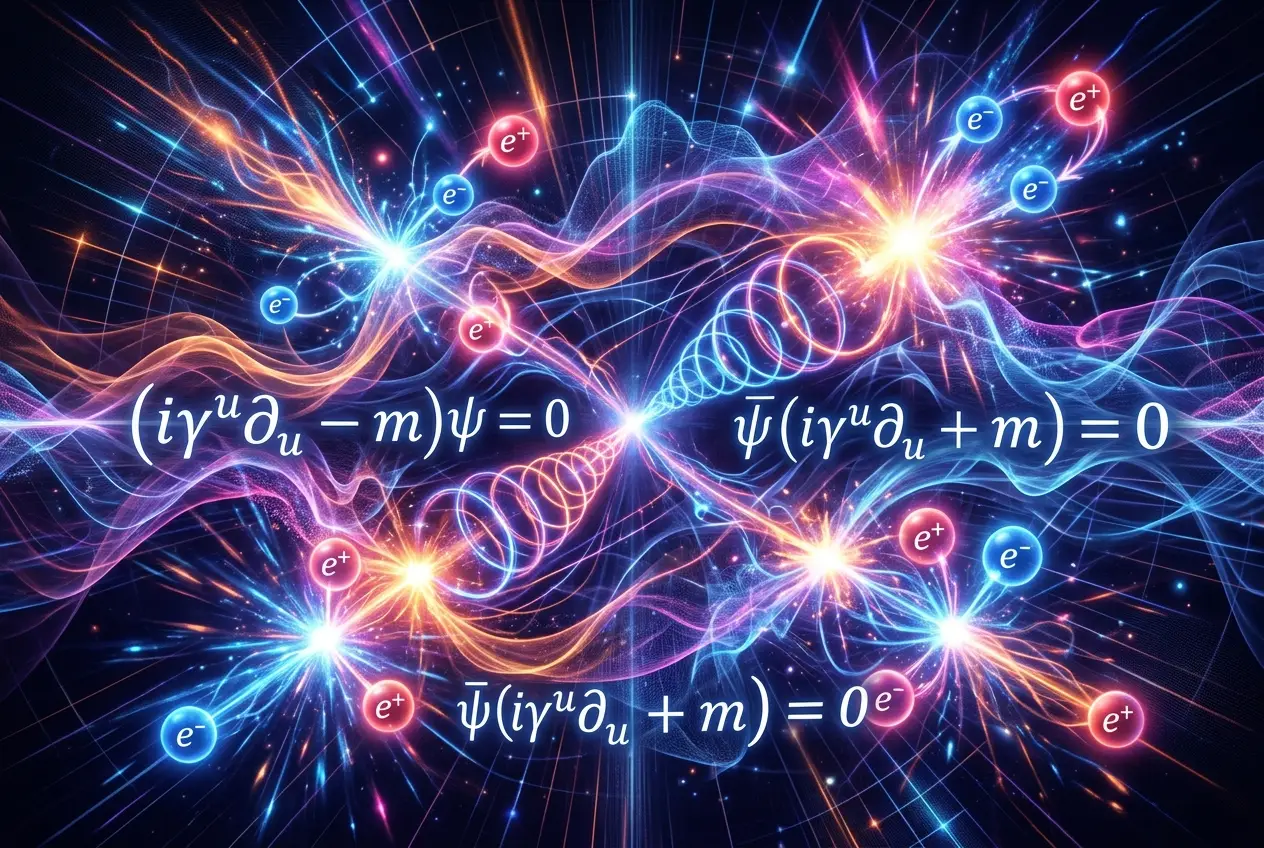
$\left(i\hbar\gamma^\mu \partial_\mu - mc\right)\psi = 0$
Where:
* $i$ is the imaginary unit.
* $\hbar$ is the reduced Planck constant.
* $\gamma^\mu$ are the Dirac gamma matrices.
* $\partial_\mu$ is the four-gradient (a relativistic differential operator).
* $m$ is the mass of the electron.
* $c$ is the speed of light.
* $\psi$ (psi) is the four-component Dirac spinor (wave function).
This equation is one of the most beautiful and profound equations in all of physics. It didn't just explain known phenomena; it *predicted* new ones. For a deeper dive into the mathematical elegance of similar foundational physics, you might find our blog on `is-the-universe-a-giant-neural-network-2907` intriguing, as it touches on the fundamental structures that govern our reality.
### The Prediction of Antimatter: A Startling Revelation
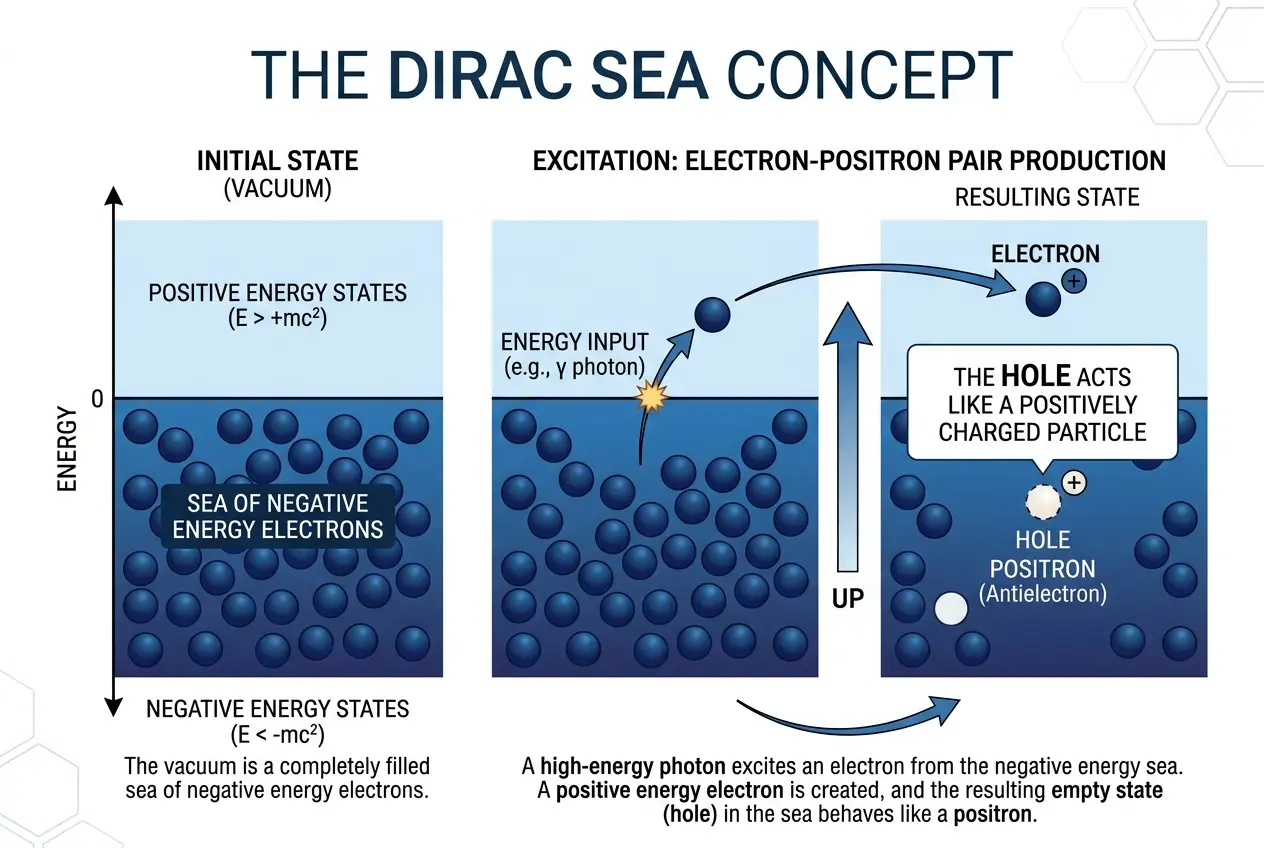
The most astonishing consequence of the Dirac Equation wasn't its elegant description of electron spin or its relativistic consistency, but its uncanny prediction of **antimatter**. When Dirac solved his equation, he found that it yielded solutions for particles with positive energy (the ordinary electron) but also solutions for particles with *negative* energy.
Initially, Dirac was perplexed. Negative energy solutions for a free particle seemed nonsensical in classical physics. He tried to dismiss them, thinking they might represent protons, but the calculations showed they should have the same mass as electrons, which protons clearly do not.
However, Dirac's unwavering commitment to the mathematical consistency of his theory prevented him from simply discarding these solutions. He hypothesized that all negative energy states were already filled, forming an infinite "sea" of electrons. This became known as the **Dirac Sea**. If enough energy was supplied, an electron could be excited from this negative energy sea to a positive energy state, leaving behind a "hole." This hole, he reasoned, would behave like a particle with positive charge and positive energy – an **antielectron** or **positron**.
This prediction, made in 1931, was initially met with skepticism. The very idea of antimatter seemed like science fiction. Yet, just a year later, in 1932, Carl Anderson experimentally discovered the positron in cosmic rays, precisely matching Dirac's prediction in terms of mass and charge. It was a triumph of theoretical physics, demonstrating the incredible predictive power of deep mathematical reasoning.
This discovery opened up an entirely new realm of physics, leading to the understanding that every particle has a corresponding antiparticle. Antimatter is now a cornerstone of modern particle physics and even has practical applications in medical imaging, such as Positron Emission Tomography (PET) scans. The profound concept of antimatter and its implications for cosmic phenomena can be further explored in `does-dark-matter-hide-a-universe-we-cant-see-2793`, where we discuss particles beyond our current detection.
### Relativistic Quantum Mechanics: A New Paradigm
Dirac's work didn't just unify quantum mechanics and special relativity; it effectively created the field of **relativistic quantum mechanics**. Before him, physicists struggled with ad hoc solutions and inconsistencies when combining these two pillars of modern physics. The Dirac Equation provided a consistent and elegant framework, directly addressing issues like electron spin and paving the way for future developments.
His approach fundamentally altered how physicists thought about elementary particles. They were no longer just tiny billiard balls but complex entities whose behavior was governed by abstract mathematical symmetries and quantum field properties. The Dirac Equation, by demonstrating the necessity of antimatter, also hinted at a deeper symmetry between matter and antimatter in the universe, a concept that continues to be a profound area of research today.
### Pioneering Quantum Electrodynamics (QED)
After establishing relativistic quantum mechanics, Dirac continued to push the boundaries of theoretical physics. His work laid much of the groundwork for **Quantum Electrodynamics (QED)**, the first successful quantum field theory. QED describes how light (photons) and matter (electrons) interact.
In 1927, Dirac published a paper on the quantum theory of emission and absorption of radiation, effectively laying the foundation for QED. He introduced the concept of **second quantization**, treating the electromagnetic field itself as a quantum field, and demonstrated how particles could be created and annihilated. This was a radical departure from classical physics, where particles were conserved entities.
While Richard Feynman, Julian Schwinger, and Shin'ichirō Tomonaga are largely credited with the full development of QED in the late 1940s (for which they shared the Nobel Prize in 1965), Dirac's early contributions were indispensable. His insights into quantizing fields and the creation/annihilation of particles were essential precursors. QED is arguably the most successful theory in physics, capable of predicting physical quantities to an extraordinary degree of precision, often matching experimental results to ten decimal places. You can learn more about how fundamental theories like QED connect to the underlying fabric of existence by exploring our discussion on `is-empty-space-a-quantum-computer-9021`.
### The Enigma of Magnetic Monopoles
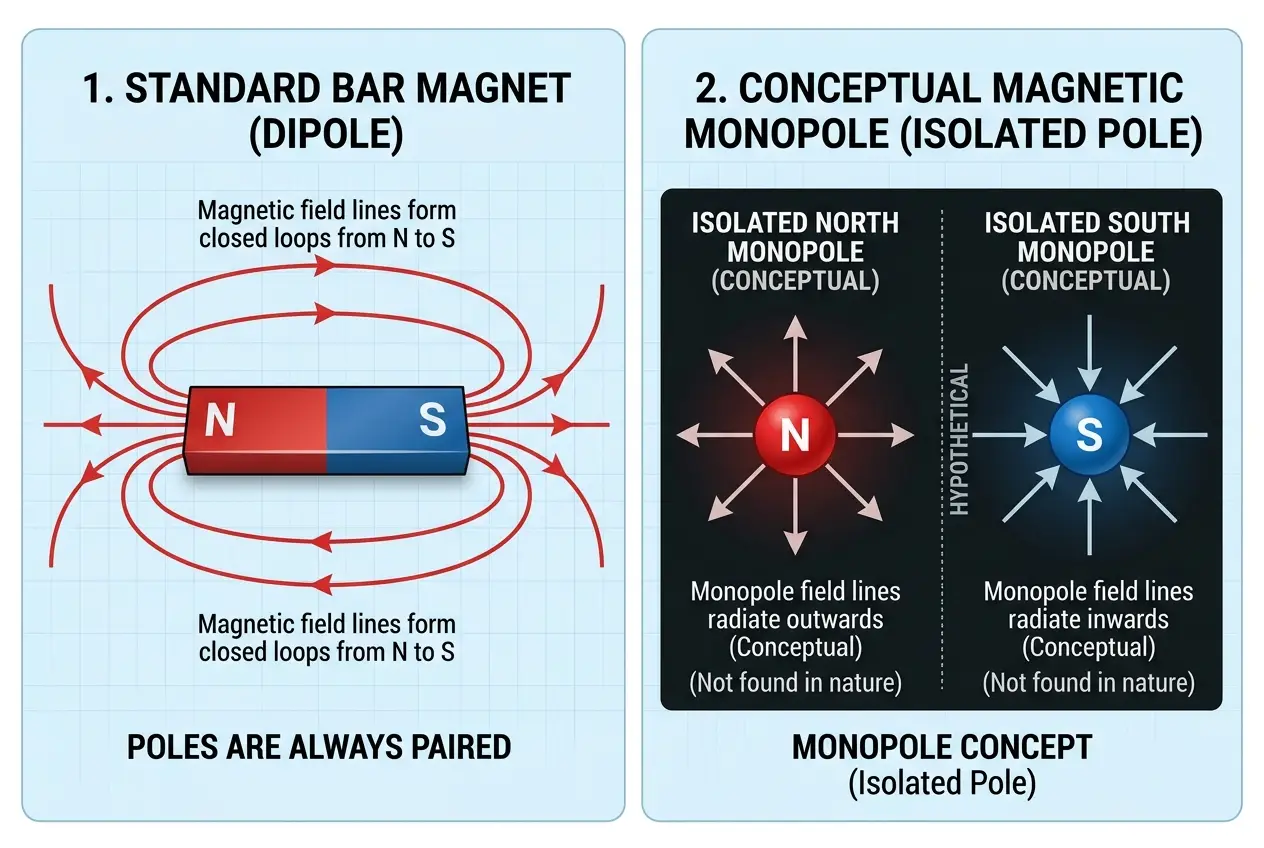
Dirac's fascination with mathematical elegance led him to another profound, albeit still unconfirmed, prediction: the existence of **magnetic monopoles**. In a 1931 paper, he showed that if even a single magnetic monopole existed in the universe, then electric charge would necessarily be quantized. This means that electric charge would come in discrete units (like the charge of an electron) rather than being able to take any arbitrary value.
The quantization of electric charge was a well-known experimental fact, but Dirac offered a deep theoretical explanation for it. He reasoned that if a magnetic monopole existed, an electron moving around it would pick up a phase factor in its wave function, and for this phase factor to be uniquely defined, the product of the elementary electric charge and the elementary magnetic charge must be an integer multiple of Planck's constant. This implied that magnetic charge would also be quantized.
Despite extensive experimental searches, no magnetic monopole has ever been definitively detected. However, the mathematical beauty and profound implications of Dirac's monopole hypothesis continue to inspire theoretical physicists. Its potential connection to grand unified theories and string theory keeps the search alive. For more on theoretical concepts that push the boundaries of what we can currently detect, our blog on `do-tachyons-exist-decoding-faster-than-light-travel-4797` explores other speculative but mathematically sound particles.
### The Lucasian Professor: Teaching and Mentorship
In 1932, at the remarkably young age of 30, Dirac was appointed the Lucasian Professor of Mathematics at the University of Cambridge, a position previously held by Isaac Newton and later by Stephen Hawking. This was a testament to his extraordinary contributions to physics, even at such an early stage in his career. He held this prestigious chair until his retirement in 1969.
Despite his legendary shyness and economy of words, Dirac was a dedicated lecturer. His lectures were known for their clarity, precision, and logical structure. He rarely deviated from his notes, and questions were often met with thoughtful, concise answers. He didn't engage in small talk or dramatic flair; his focus was purely on the physics, delivered with unwavering intellectual honesty.
While not a typical mentor in the traditional sense, his rigorous approach to physics and his insistence on mathematical beauty profoundly influenced generations of students. Many of his students went on to become prominent physicists themselves, carrying forward his legacy of precision and deep theoretical insight.
### A Peculiar Personality: The "Dirac Jokes"
Dirac's personality was as unique as his physics. He was famously quiet, introverted, and literal-minded. His colleagues often recounted "Dirac jokes" – anecdotes that highlighted his inability to grasp social nuances or engage in conventional conversation.
One famous story involves Wolfgang Pauli, another giant of quantum mechanics, asking Dirac if he had a wife. Dirac replied, "That is not a proper scientific question." Years later, upon marrying Margit Wigner, he supposedly informed Pauli, "Pauli, I have a wife."
His profound literalism extended to his view of language. He believed words should be used with the same precision as mathematical symbols. If a statement wasn't absolutely precise, he preferred silence. This trait, while amusing to some, was also a reflection of his deep intellectual integrity and his relentless pursuit of clarity in thought. He didn't speak unless he had something definitive to say, a principle I often wish more people adhered to!
His colleague, Peter Kapitza, once described him as having "a heart of gold, a mind of steel." This perfectly encapsulates the paradox of Dirac: a man who was deeply humane yet intellectually unyielding.
### Awards and Recognition: The Nobel Prize
Dirac's groundbreaking work quickly garnered international recognition. In 1933, he was awarded the Nobel Prize in Physics, jointly with Erwin Schrödinger, "for the discovery of new productive forms of atomic theory." He was only 31 years old.
His acceptance speech, delivered with characteristic brevity, focused on the intellectual journey rather than personal accolades. He famously almost refused the Nobel Prize, stating he disliked publicity, and only accepted when told that refusing would generate even more publicity.
Beyond the Nobel, Dirac received numerous other honors, including being elected a Fellow of the Royal Society in 1927, receiving the Royal Medal in 1939, and the Copley Medal in 1952. He was appointed to the Order of Merit in 1973, one of the highest civilian honors in the United Kingdom. These awards reflect the profound impact his work had on the scientific community and the world at large.
| Year | Scientist(s) | Key Contribution(s) |
| :--- | :----------- | :------------------ |
| 1900 | Max Planck | Postulated energy quantization (black-body radiation) |
| 1905 | Albert Einstein | Explained photoelectric effect (light quanta) |
| 1913 | Niels Bohr | Model of atomic structure (quantized electron orbits) |
| 1925 | Werner Heisenberg | Developed matrix mechanics |
| 1926 | Erwin Schrödinger | Developed wave mechanics; Schrödinger Equation |
| 1926 | P.A.M. Dirac | Unified matrix and wave mechanics; transformation theory |
| 1928 | P.A.M. Dirac | Formulated the Dirac Equation (relativistic electron, spin, antimatter) |
| 1931 | P.A.M. Dirac | Predicted magnetic monopoles |
| 1932 | Carl Anderson | Discovered the positron (antimatter) |
| 1940s | Feynman, Schwinger, Tomonaga (and Dirac's early work) | Developed Quantum Electrodynamics (QED) |
### Later Years and Reflections: A Mind Still Probing
After his retirement from Cambridge in 1969, Dirac moved to Florida State University, where he continued his research, albeit at a slower pace. He maintained his distinctive approach to physics, often pursuing problems that others considered outside the mainstream, always guided by his profound sense of mathematical elegance.
He remained a keen observer of the ongoing developments in physics. While he greatly admired the elegance of the Standard Model of particle physics, he also expressed some reservations about its increasing complexity. He believed that the ultimate theory of everything would be characterized by profound simplicity and beauty, echoing his lifelong philosophy.
Dirac passed away on October 20, 1984, in Tallahassee, Florida, at the age of 82. His passing marked the end of an era, but his ideas continue to resonate and inspire.
### Dirac's Enduring Legacy: Shaping Modern Physics
Paul Dirac's legacy is immense and multifaceted, permeating almost every corner of modern theoretical physics.
1. **Foundation of Quantum Field Theory:** His work on second quantization and the creation/annihilation of particles laid the bedrock for all subsequent quantum field theories, including QED, Quantum Chromodynamics (QCD), and the electroweak theory. Without Dirac's early insights, the Standard Model of particle physics, our most successful description of fundamental particles and forces, would be unthinkable. For more on the fundamental building blocks of the universe, consider reading `are-tiny-strings-the-universes-secret-code-1701`.
2. **Antimatter:** The prediction and subsequent discovery of the positron was a paradigm shift. Antimatter is now an integral part of our understanding of cosmology (the matter-antimatter asymmetry of the universe), particle physics experiments (e.g., at CERN), and medical technology.
3. **Electron Spin:** The natural emergence of electron spin from the Dirac Equation solidified its role as an intrinsic quantum property, crucial for understanding atomic structure, magnetism, and the behavior of materials.
4. **Mathematical Elegance as a Guiding Principle:** Dirac's unwavering belief in the beauty and consistency of mathematics as a guide to physical truth has profoundly influenced generations of physicists. He often emphasized that equations should be beautiful before they are correct, a philosophy that has proven remarkably successful in the development of fundamental theories.
5. **Magnetic Monopoles:** Even without experimental verification, his theory of magnetic monopoles continues to be a fertile area of research, linking fundamental constants and hinting at deeper symmetries in nature.
I can't help but feel that Dirac's impact, though less sensationalized, is as profound as Einstein's. While Einstein showed us the universe's grand spacetime tapestry, Dirac revealed the intricate, probabilistic, and elegantly structured quantum threads from which it is woven.
### The Elegant Mind: A Final Reflection
P.A.M. Dirac was a man apart. His intellect operated on a plane of abstraction and elegance that few could match. He didn't seek fame or adulation; he sought truth, guided by the immutable logic and beauty of mathematics. His silences were not empty but pregnant with profound thought, and his rare words carried the weight of deep understanding.
His legacy is not just a collection of equations and discoveries, but an enduring testament to the power of a mind unafraid to challenge convention, to trust in the unseen symmetries of the universe, and to let mathematics lead the way. He stands as a towering figure in 20th-century physics, an architect of the quantum age, whose elegant mind unveiled some of the universe's most startling and beautiful secrets.
His work continues to inspire new generations of physicists striving for a unified theory, pushing the boundaries of our understanding of reality, and searching for that ultimate elegance that Dirac so cherished. As a testament to his intellectual rigor, his classic textbook, "The Principles of Quantum Mechanics," remains a standard reference even today.
Frequently Asked Questions
Paul Dirac's most significant contribution was the Dirac Equation, which unified quantum mechanics and special relativity, intrinsically accounted for electron spin, and, most remarkably, predicted the existence of antimatter (specifically the positron) before it was experimentally discovered.
The Dirac Sea is a theoretical model proposed by Dirac to explain the negative energy solutions of his equation. He hypothesized that all negative energy states are filled with an infinite 'sea' of electrons. A 'hole' in this sea, created when an electron is excited to a positive energy state, would behave like a positively charged particle – the positron.
While Dirac's pioneering work on quantum field theory and the development of quantum electrodynamics laid crucial foundations for the Standard Model, he predated its full formulation. He was influential in establishing the theoretical tools and concepts upon which the Standard Model was later built.
Dirac's quiet and literal nature is often attributed to his strict upbringing, where his father encouraged speaking only when one could express themselves precisely. This led him to value extreme precision in language and thought, often resulting in amusing anecdotes about his social interactions.
Dirac's hypothesis of magnetic monopoles suggests that if such a particle exists, it would provide a deep theoretical explanation for the observed quantization of electric charge. Although magnetic monopoles have not yet been experimentally confirmed, the hypothesis remains an important and elegant concept in theoretical physics.
The Lucasian Professorship of Mathematics at Cambridge is one of the most prestigious academic positions in the world, previously held by Isaac Newton and later Stephen Hawking. Dirac's appointment to this chair at the age of 30 underscored his exceptional brilliance and confirmed his status as a leading figure in physics.
Verified Expert
Alex Rivers
A professional researcher since age twelve, I delve into mysteries and ignite curiosity by presenting an array of compelling possibilities. I will heighten your curiosity, but by the end, you will possess profound knowledge.
Leave a Reply
Comments (0)
No approved comments yet. Be the first to share your thoughts!
 Join Us

 Unknown Author
























Leave a Reply
Comments (0)